
NEWS
Tinubu Decorates Acting COAS Oluyede with New Rank


President Bola Tinubu on Tuesday honoured the acting Chief of Army Staff (COAS), Maj.-Gen. Olufemi Oluyede, by promoting him to the rank of Lieutenant General during a ceremony held at the State House, Abuja.The decoration of the acting army chief was held at the President’s office, Mr Bayo Onanuga, the President’s spokesman, said in a statement.
Tinubu commended the military for its unwavering courage, dedication, and patriotism in maintaining the nation’s security. “It is both an honour and a privilege to decorate you today,” the President stated.“This recognition reflects your commitment and service to the Nigerian military, which speaks volumes through your exemplary record.“We recognise all that you have been doing to ensure the country is safe and stable,” the President said.He assured the military that the government would always listen to their advice and keep the country on the path of peace and prosperity.“We are facing challenges, but progress is being made,” he added.The President attributed the success recorded in tackling terrorism and banditry to the “synergy’’ in the armed forces and urged the service chiefs to sustain harmony in their relationship for the betterment of the country.“The synergy among you has calmed the country, and we need that stability to continue. We need to assure all citizens that prosperity is not far from them,” President Tinubu stated.Oluyede expressed gratitude and acknowledged the solemnity of the occasion.He reiterated his commitment to upholding the vision of the Chief of Army Staff, Lt.-Gen. Taoreed Lagbaja, and to maintaining peace across the country.Oluyede was granted Regular Combatant Commission as second lieutenant, member of the 39 Regular Course, on Sept. 19, 1992, with seniority in the same rank effective Sept. 12, 1987.He participated in several operations, including the Economic Community of West African States Monitoring Group mission in Liberia, Operation Harmony IV in Bakassi, and Operation Hadin Kai in the North East. (NAN)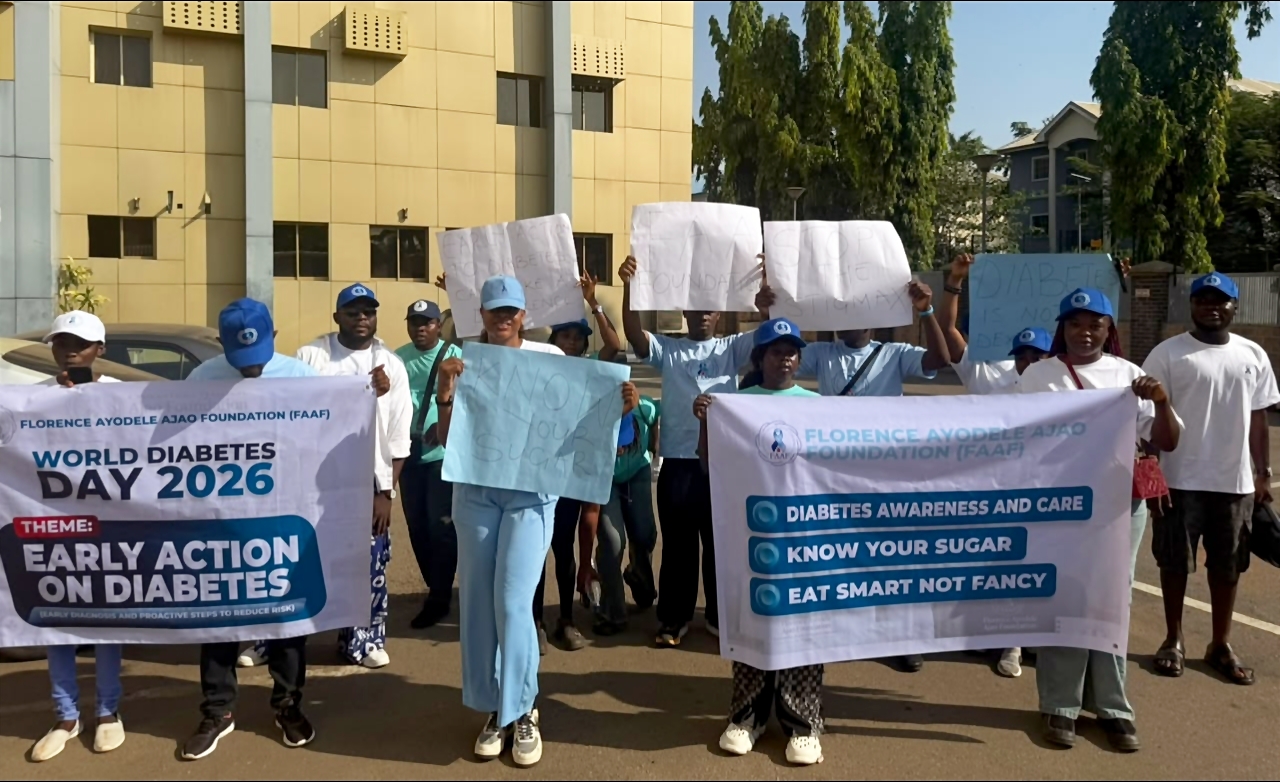
By David Torough, Abuja
The Florence Ayodele Ajao Foundation (FAAF) has called for increased awareness and early detection of diabetes to prevent complications and improve patients’ quality of life.
It also stressed the need to make treatment and disease management more affordable, particularly through access to locally sourced food, regular blood sugar monitoring and emotional support.
The foundation’s founder, Olayinka Deborah Ajao, made the call at an event organised by the foundation in Abuja to mark the 2026 World Diabetes Day, with the theme, “Early Action on Diabetes”.
She said the foundation was introducing food support and glucose monitoring devices for people living with diabetes as part of efforts to promote affordable and effective disease management.
Ajao explained that the initiative would identify locally sourced foods that patients could afford and incorporate into their diets without compromising their health.
She said the intervention would complement medications prescribed by medical professionals, noting that the high cost of living had made it difficult for some patients to maintain recommended diets.
“We are trying to tell people that there are some locally sourced foods that are cheaper and available in the market. We are giving them these foods to help manage their sugar levels through portion control and moderation,” she said.
The founder added that the foundation would distribute glucometers to beneficiaries to enable them to monitor and keep records of their blood sugar levels.
She, however, clarified that FAAF would not provide medication, explaining that its intervention would focus on nutritional support, awareness and encouragement for patients.
Ajao said the foundation was established in honour of her late mother, Florence Ayodele Ajao, who lived with diabetes before her death.
She disclosed that losing a friend to the disease in 2021 also strengthened her determination to promote awareness, adding that she had sustained the campaign since November 14 of that year.
According to her, the foundation initially offered emotional support through visits to patients in hospital diabetes wards but would now expand its activities following its formal launch this year.
She also identified ignorance and stigmatisation as major challenges confronting people living with diabetes, urging Nigerians to demonstrate empathy towards those managing chronic illnesses.
Ajao said the foundation included cardiopulmonary resuscitation (CPR) training in its activities to equip participants with basic knowledge of emergency response.
Speaking at the event, a medical practitioner, Dr Chinasa Tony, urged Nigerians to undergo regular medical checks, particularly those with a family history of diabetes.
Tony, who said her interest in diabetes awareness was influenced by the loss of two loved ones and her mother’s experience with the condition, described diabetes as manageable with appropriate medical care and lifestyle adjustments.
She identified healthy eating, regular exercise and portion control as important measures for preventing and managing the condition.
“Diabetes is not a death sentence. It can be prevented, controlled and managed,” she said.
The medical practitioner stressed that patients must adhere to prescribed medications and ensure that insulin treatment was properly monitored to prevent dangerously low blood sugar levels.
She also advised people to monitor their blood glucose levels regularly rather than wait until they developed symptoms before seeking medical attention.
Also speaking, a counselling psychologist and resource person at the event, Chibuzor Stella, highlighted the psychological challenges associated with diabetes, including denial, anxiety, depression and feelings of hopelessness.
She said early detection was important because it helped patients understand their condition and take the necessary steps towards managing it.
According to her, accepting the diagnosis was the first step towards effective self-management, followed by medication adherence, appropriate nutrition and proper medical care.
Stella urged family members and caregivers to provide emotional support instead of subjecting patients to constant criticism or restrictions.
She also cautioned healthcare professionals against adopting an excessively harsh approach when advising diabetic patients, saying this could increase their anxiety and discourage them from managing their condition.
“Medical personnel should not be like food police. You see most of them saying, ‘Don’t, don’t, don’t,’ thereby putting fear, anxiety, depression and a state of hopelessness in the patient,” she said.
She advocated counselling for patients struggling with medication adherence or dietary restrictions, adding that healthcare workers should encourage moderation rather than resort to intimidation.
Earlier in the day, participants embarked on a morning road walk as part of activities to promote diabetes awareness and encourage healthier lifestyles.
World Diabetes Day is observed annually on November 14 as the leading global awareness campaign on diabetes mellitus.
The World Health Organisation (WHO) estimates that nearly three out of every four adults living with diabetes in Africa are unaware of their condition, exposing millions to potentially life-threatening complications.
Globally, one in nine adults is currently living with diabetes, while the number is projected to reach 853 million by 2050.
From Attah Ede, Makurdi
The Benue State Government has told the newly inducted medical doctors of Benue origin to return home and contribute their expertise to strengthening healthcare delivery in the state.
The Commissioner for Health and Human Services, Dr.
Paul Ejeh Ogwuche, made the call at the weekend, during the induction and oath-taking ceremony of newly qualified medical doctors at the University of Jos, held at the Jos University Teaching Hospital (JUTH), Plateau State.A total of 67 medical graduates were inducted into the medical profession after successfully completing their Bachelor of Medicine and Bachelor of Surgery (MBBS) programme and final qualifying examinations.
Of this number, 15, representing about 22.4 per cent, are indigenes of Benue State.Ogwuche, who was represented by the Director of Medical Laboratory Services in the state Ministry of Health, Anyebe Ameh Boniface, congratulated the inductees and commended the significant representation of Benue indigenes.
He highlighted Governor Hyacinth Alia’s commitment to revitalising the state’s health sector through investment in human resources, improved workers’ welfare and equitable deployment of medical personnel across the 23 local government areas.
The commissioner said the administration had prioritised prompt payment of salaries, clearance of inherited arrears and improved welfare to restore the dignity of public service and make the state attractive to professionals.
He explained that the state’s Medical Doctors’ Bond Programme was introduced to address the shortage of doctors and the challenge of brain drain, with the aim of ensuring access to medical services across all local government areas.
According to him, the programme should not be seen as a punishment or restriction but as a commitment between the government and young medical professionals to give back to the society that contributed to their education and development.
Ogwuche encouraged the newly inducted doctors to embrace rural postings as opportunities to make meaningful contributions to society rather than viewing them as professional setbacks.
He illustrated the importance of their services by highlighting the plight of a pregnant woman in Guma requiring emergency obstetric care, a child battling severe malaria in Logo and an accident victim in Oju, whose survival could depend on the timely availability of qualified medical personnel.
Drawing from his experience as an alumnus of the University of Jos, the commissioner urged the young doctors to return to Benue, stressing that their expertise was urgently needed, particularly in underserved communities.
The commissioner also held an interactive session with the leadership of the Benue Medical Students Association (BEMSA), where the benefits and implementation of the Medical Doctors’ Bond Scheme were discussed alongside challenges facing medical students and prospective beneficiaries.
The engagement provided an opportunity for the students to express their concerns and obtain clarification from the state government on the programme.
The 15 Benue indigenes among the newly inducted doctors are expected to form part of the young professionals the government hopes to attract into the state’s healthcare workforce to strengthen staffing in general hospitals and primary healthcare facilities.
Ogwuche reaffirmed the state government’s commitment to improving the welfare of health workers and creating a conducive environment for medical professionals to practise, develop their careers and contribute to better healthcare delivery in Benue.
From Mike Tayese, Yenagoa
As the world marks World Diabetes Day 2026 on November 14, under the theme “Early Action on Diabetes,” Corporate Accountability and Public Participation Africa (CAPPA) has called on the federal and state governments to incorporate clinical treatment and tackle the commercial and structural drivers of Nigeria’s escalating diabetes burden.
In a statement issued and signed by Robert Egbeb Media and Communications Officer CAPPA,
emphasized that while early screening and timely medical care are vital, genuine “early action” begins with primary prevention, particularly transforming Nigeria’s food environment so that healthy, nutritious, and culturally appropriate whole foods are affordable and accessible to every citizen before chronic illness takes hold.
According to the International Diabetes Federation (IDF), Nigeria has the highest number of adults (20-79 years) with diabetes in Africa, while nearly three in four adults on the continent remain undiagnosed, according to the WHO, leaving millions vulnerable to life-threatening complications such as kidney failure, blindness, stroke, and amputations. Meanwhile, Nigerian households already spend an estimated N1.92 trillion annually out-of-pocket treating diet-linked non-communicable diseases (NCDs), pushing vulnerable families deeper into poverty.
CAPPA’s Executive Director, Akinbode Oluwafemi, stressed that diabetes prevention is beyond mere individual discipline or willpower, arguing that the Nigerian food environment is increasingly being shaped by aggressive marketing, misleading product claims, unhealthy food affordability and commercial interests that often allowed to take precedence over public health.
To stem the tide of diet-related diseases and protect future generations, CAPPA urged policymakers and regulatory agencies to take immediate action on five priority fronts:
It called for the finalisation and enforcement of a pending pro-health Sugar-Sweetened Beverage (SSB) Tax. The organisation urged that following the Senate’s passage of the SSB tax review bill earlier this year, the House of Representatives and the Executive must swiftly conclude legislative action to institute an inflation-adjusted excise tax of at least 20 percent of the final retail price, in line with World Health Organization (WHO) recommendations.
CAPPA also advocated mandatory Front-of-Pack Labels Warning (FOPL), urging the Federal Ministry of Health and Social Welfare (FMoH&SW) and the National Agency for Food and Drug Administration and Control (NAFDAC) to expedite action on introducing mandatory, easy-to-read FOPWL on pre-packaged products high in sugar, sodium, and unhealthy fats.
CAPPA also called for a ban on predatory marketing especially to children, and use of child acts in marketing/commercials, as well as an enforcement of healthy school food environments.
Additionally, it canvassed the rejection of ultra-processed food industry interference in healthy food policies and “healthwashing”, a deceptive marketing practice where the industry uses misleading health claims, buzzwords, or lifestyle imagery to make a product appear healthy or nutritious.
The organisation called on policymakers to safeguard nutrition and public health policymaking from the ultra-processed food industry lobbyists who push ineffective voluntary self-regulation or use deceptive “fortification” claims to mask the harms of high-sugar, high-sodium products.
The organisation called for the strengthening of primary healthcare and support for local food systems.
CAPPA called on federal and state governments to expand budgetary allocations to equip Primary Healthcare Centres (PHCs) with free or subsidized blood glucose testing, essential medicines, and local insulin production, while redirecting agricultural incentives toward smallholder farmers producing indigenous fruits, vegetables, and whole grains.




World Diabetes Day: FAAF Advocates Early Detection, Affordable Care
ShareBy David Torough, Abuja The Florence Ayodele Ajao Foundation (FAAF) has called for increased awareness and early detection of diabetes...


WHO Recommends Multiple Daily Insulin Injections to Manage Type 1 Diabetes
ShareThe World Health Organisation has recommended that people with type 1 diabetes receive insulin injections several times per day, with...
Benue Begs Newly Inducted Doctors to Return Home, Tackle Shortage of Medical Personnel
ShareFrom Attah Ede, Makurdi The Benue State Government has told the newly inducted medical doctors of Benue origin to return...
World Diabetes Day: Nigeria Must Fix Food Environment to Curb Diabetes Burden, Says CAPPA
ShareFrom Mike Tayese, Yenagoa As the world marks World Diabetes Day 2026 on November 14, under the theme “Early Action...


Pope Says Inca Heartland ‘Suffering’ as Villages Empty
SharePope Leo XIV warned Saturday that the heartland of the ancient Inca Empire was “suffering,” as the remote, poverty-stricken communities...
Pope Says Inca Heartland ‘Suffering’ as Villages Empty
SharePope Leo XIV warned Saturday that the heartland of the ancient Inca Empire was “suffering,” as the remote, poverty-stricken communities...
Kaduna Civil Service Union, Backs Tinubu, Uba Sani for 2027
ShareFrom Shabanyan Kantiok, Kaduna The Nigeria Civil Service Union (NCSU), Kaduna State Council, has passed a vote of confidence in...


Sixteen Nigerians Die in Ethiopia over High Altitude
ShareBy Laide Akinboade Abuja The Federal Government at the weekend cautioned Nigerians, particularly those with pre-existing medical conditions, to exercise...


2027: Tinubu Pledges to Rebuild Displaced Plateau Communities
ShareFrom Jude Dangwam, Jos President Bola Tinubu has assured Nigerians of peaceful elections in 2027, promising to strengthen security operations,...


Lagos Thugs, London Protesters and the Chaos before the Ballot
ShareBy Adeola Akinremi On Thursday, 12 November, two incidents with red flags for the 2027 elections emerged. In London, the...