
NEWS
Tinubu ‘In Great Shape’ after Brief Mishap in Ankara, On Turkiye Visit – Presidency

By David Torough, Abuja
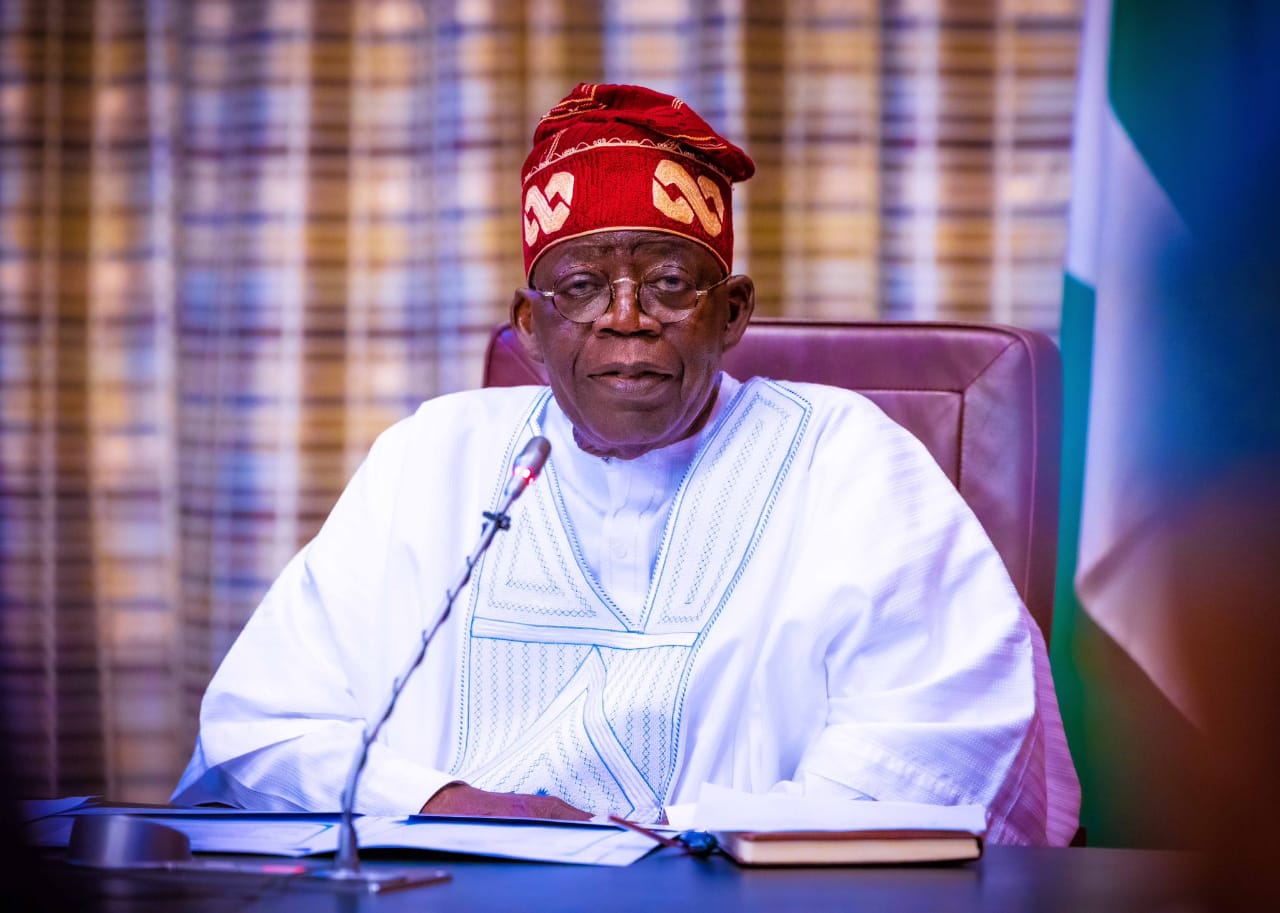
President Bola Tinubu briefly stumbled and fell yesterday during an official reception ceremony in Ankara, Turkey, but quickly recovered and went on with scheduled bilateral engagements, Nigerian officials said.
The incident occurred as Tinubu walked alongside Turkish President Recep Tayyip Erdoğan after inspecting a ceremonial guard of honour.
Video footage from the event shows the Nigerian leader moving to his right before losing his footing and falling, with aides and protocol officers immediately stepping in to assist him. A review of the footage suggested the movement of a cameraman close to the president may have triggered the stumble.Presidential aides moved swiftly to allay public concern, insisting the 73-year-old leader was not injured. Presidential spokesperson Sunday Dare said Tinubu was “in great shape” and continued with closed-door talks with President Erdoğan shortly after the ceremony.
“President Tinubu is in great shape as the state visit proceeds smoothly,” Dare said in a post on X, noting that the bilateral meetings and other official engagements remained on schedule.
The reception, which began around 5:00 pm local time, featured the playing of both national anthems and a 21-gun salute. Following the formalities, both leaders withdrew for discussions expected to focus on strengthening diplomatic, economic, and security cooperation.
This is not the first time President Tinubu has drawn public attention after a fall at a ceremonial event. During the June 12 Democracy Day celebrations in 2024, he tripped while mounting a parade vehicle at Eagle Square in Abuja. He later joked about the incident, describing it as a “swagger” and playfully referencing popular dance moves, a response that drew both sympathy and humour from Nigerians across the political divide.
Tinubu’s visit to Turkey is his first official trip to the country and comes as a reciprocal engagement following President Erdoğan’s visit to Nigeria in October 2021. According to the presidency, the visit is aimed at consolidating long-standing cordial relations and expanding cooperation in areas including finance, trade, investment, energy, defence, media, and scientific research.
The President’s Special Adviser on Information and Strategy, Bayo Onanuga, said the agenda includes meetings between senior officials of both countries and the signing of several memoranda of understanding. A business forum is also planned to connect Nigerian and Turkish investors and unlock new economic opportunities.
Senior Nigerian officials on the trip include; the Attorney-General of the Federation and Minister of Justice, Lateef Fagbemi (SAN); the Minister of Finance and Coordinating Minister of the Economy, Wale Edun; the Minister of Solid Minerals Development, Dele Alake; and the Minister of Defence, General Christopher Musa (retd).
Despite the brief mishap at the ceremony, the Presidency insisted the state visit remains firmly on track, with both governments focused on deepening a mutually beneficial partnership.
From Mike Tayese, Yenagoa
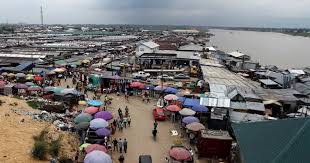
Odi community in Kolokuma-Opokuma Local Government Area of Bayelsa State is facing renewed distress due to severe landslides and coastal erosion.
Residents are raising urgent alarms that their village risks being completely lost if immediate intervention is not provided.
Recent incidents include shoreline homes and roads destroyed leaving many displaced.
A community member describes the situation as increasingly worrisome, with fears that “one day the people will wake up to see their village vanish”.
In heartfelt pleas circulating on social media and local reports, affected residents are calling on the Bayelsa State Government, led by His Excellency, Governor Senator Douye Diri, and the Federal Government under President Asiwaju Bola Tinubu to come to their aid urgently.
They emphasise the need for swift measures to halt the environmental degradation, which has been exacerbated by heavy rains, riverbank instability, and perennial coastal threats in the Niger Delta region.
The Bayelsa State Government has previously responded to similar incidents in Odi, including on-the-spot assessments of landslide damage in areas like Isonbiri Compound.
However, locals insist that more comprehensive, sustained action—including erosion control projects and federal support through agencies like the NDDC—is critical to prevent further loss.
Another person wrote on social media “Odi People need help—please come and help us. Pasisei”
By David Torough, Abuja
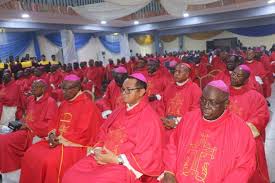
The Catholic Bishops’ Conference of Nigeria (CBCN) has called on the National Assembly to urgently amend the Electoral Act to mandate real-time electronic transmission of election results, warning that dwindling voter turnout threatens the legitimacy of Nigeria’s democracy.
The call came at the opening of the 2026 First Plenary Meeting of the bishops in Abuja, where Church leaders voiced deep concern over what they described as a steady erosion of public trust in the electoral process.
President of the CBCN and Archbishop of Owerri, Lucius Ugorji, revealed that voter participation has dropped dramatically from 69 per cent in 2003 to just 23 per cent in 2023.
“This decline says a lot about citizens’ trust in the electoral process and calls into question the legitimacy of elected officials in a democratic dispensation with the mandate of an ever-decreasing minority,” he said.
Ugorji urged federal lawmakers to make the transmission of results from the Bimodal Voter Accreditation System (BVAS) directly to the INEC Result Viewing (IReV) portal compulsory, arguing that such a provision would prevent “human tampering with the expressed will of the electorate.”
He criticised what he termed inconsistent legislative positions on digital transparency, noting that while lawmakers endorsed mandatory digital processes in the 2025 Tax Act, they appeared reluctant to fully entrench electronic safeguards in elections. “The world is watching. Above all, God is also watching,” he warned.
In his homily at the opening Mass, the Catholic Archbishop of Abuja, Ignatius Kaigama, decried what he described as a culture of seeking power without accountability.
“In our country, we have seen leaders who desire power but not responsibility; titles and positions but not service,” Kaigama said, adding that many Nigerians believe elections have been manipulated and justice undermined.
He expressed concern over rising youth unemployment, noting that he frequently receives appeals from highly qualified graduates unable to secure jobs. He urged young people to direct their demands to elected officials, emphasising that religious institutions lack constitutional authority to provide employment.
Kaigama also advocated the full deployment of modern electronic systems in future elections and expressed hope that the 2027 general polls would mark a departure from past irregularities.
Beyond electoral reform, the bishops lamented worsening insecurity and cited the killing of over 200 persons in Kwara State as evidence of persistent violence. Ugorji also highlighted the impact of illegal mining, which reportedly costs the country an estimated $9 billion annually.
Former Director-General of the National Orientation Agency, Dr Mike Omeri, called for “servant leadership” to bridge inequality, while Emeritus Archbishop of Abuja, John Cardinal Onaiyekan, expressed optimism that the four-day deliberations would promote justice and peace.
The plenary will conclude on February 25 with a communiqué addressing the state of the Church and the nation.
In a goodwill message, Secretary to the Government of the Federation, George Akume, reaffirmed the Federal Government’s commitment to strengthening ties with the Catholic Church in promoting peace, social cohesion, and national development.
Akume, representing President Bola Tinubu, described the Church as a moral compass whose pastoral letters often reflect the conscience of the nation.
He acknowledged Nigeria’s socio-economic and security challenges and assured the bishops that the administration remains focused on economic reform, institutional strengthening, youth empowerment, and social protection for vulnerable citizens.
“The prayers and moral support of the Church are invaluable,” Akume said, pledging continued constructive engagement between government and faith-based institutions.
The high point of the opening session was Archbishop Ugorji’s announcement that he would step down as CBCN President at the close of the plenary, thanking fellow bishops for their support during his tenure as “chief servant.”
As deliberations continue, expectations are high that the bishops’ final communiqué will address electoral integrity, accountable governance, national security, and economic justice — issues they say are critical to safeguarding Nigeria’s democracy and restoring public confidence in leadership.
From Joseph Amedu, Lokoja
The Kogi State Government, in the wake of the new tax laws, has rolled out new tax rates for the State Ministries, Departments and Agencies (MDAs) in the State.
The State Internal Revenue Service on Wednesday convened a high‑level stakeholders’ engagement with the State MDAs to unveil the newly harmonized tax rates under the Tax Administration Act of 2025.
The Executive Chairman of the Revenue Service, Sule Salihu Enehe, while giving the comprehensive overview of the new tax law and its implications for Federal, States and Local Governments’ revenue streams, emphasised the national significance of the harmonized rates.
He described them as a critical step toward a more transparent, equitable and efficient tax system while declaring that printed copies of the updated rates will be distributed to all relevant MDAs to guarantee uniform implementation.
Dr. Enehe stressed that the fiscal landscape of Nigeria is evolving rapidly, and so States can no longer rely predominantly on federal allocations.
“To secure our economic future, we must strengthen our internally generated revenue base, making it the central pillar of our State’s sustainability”, he added.
Hassanat Enehezeyi Salawu, the Director of MDAs at KGIRS, delivered a technical briefing on the new tax rates as compiled by the Joint Revenue Board (JRB).
She noted that KGIRS has fully adopted and domesticated the rates, tailoring them to Kogi’s economic realities while preserving national consistency.
Held at the KGIRS Board Room, the meeting gathered senior government officials, policy‑makers, revenue‑generation experts, permanent secretaries, directors and heads of various MDAs and parastatals, signaling the State’s decisive move towards fiscal reform and a sustainable internally generated revenue of the State.
Hon. Timothy Ojomah, the State Commissioner for Agriculture and Food Security, speaking on behalf of the Stakeholders, expressed unequivocal support for the new tax regime while commending KGIRS for its proactive leadership and pledged close collaboration to ensure smooth adoption and compliance.

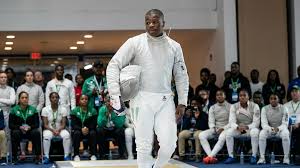

Nigerian Fencer Brou Ranks Top 10 Globally
ShareNigeria’s fencing sensation Inkosi Brou has achieved a groundbreaking milestone, becoming the first Nigerian to be ranked among the top 10 junior fencers in...

UniAbuja Senate Expels 28 Students over Disciplinary Offences
ShareThe Senate of the University of Abuja, has approved the expulsion of 28 students, over various disciplinary offences. The university disclosed this in a statement by...
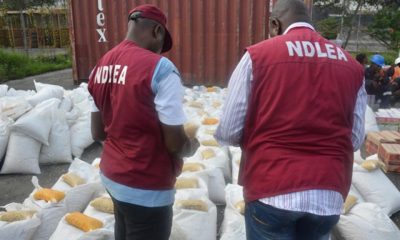

NDLEA Busts Woman with Drugs in Fake Pregnancy
ShareOperatives of the National Drug Law Enforcement Agency (NDLEA) have foiled bizarre plots by two suspected drug traffickers to move consignments of cocaine and...

Bayelsa Community Cries Out Over Worsening Landslide, Erosion Threat
ShareFrom Mike Tayese, Yenagoa Odi community in Kolokuma-Opokuma Local Government Area of Bayelsa State is facing renewed distress due to severe landslides and coastal...

TAJBank Earns A1 Credit Ratings by Agusto, Datapro
ShareBy Tony Obiechina, Abuja TAJBank Limited, Nigeria’s biggest non-interest banking services provider, has again blazed new trails in world-class ethical...
Soldiers Kill 29, Crush Insurgent Onslaught in North-East
ShareBy David Torough, Abuja Troops of Operation Hadin Kai have killed 29 terrorists and repelled coordinated attacks in Borno and...

Catholic Bishops Demand Electoral Overhaul, e- Transmission of Results
ShareBy David Torough, Abuja The Catholic Bishops’ Conference of Nigeria (CBCN) has called on the National Assembly to urgently amend...
Troops Foil Suspected IPOB/ESN Kidnap Attempt, Rescue Five in Swift Night Operation
ShareBy David Torough, Abuja Troops of the Joint Task Force Southeast (JTF SE) Operation UDO KA have foiled a suspected...

New NSCDC Commandant Vows to Fight Crime in Kwara
ShareThe new Commandant, Nigeria Security and Civil Defence Corps (NSCDC) in Kwara, Bala Bodinga has pledged to fight crime in...

Olukoyede Emphasises Collaboration as Catalyst in Fight against Corruption
Share The Chairman, Economic and Financial Crimes Commission (EFCC), Ola Olukoyede, has called for closer collaboration among anti-corruption agencies in...