
NEWS
Tinubu Intervenes in EFCC Osun Account Freeze, Directs Re- open

By David Torough, Abuja
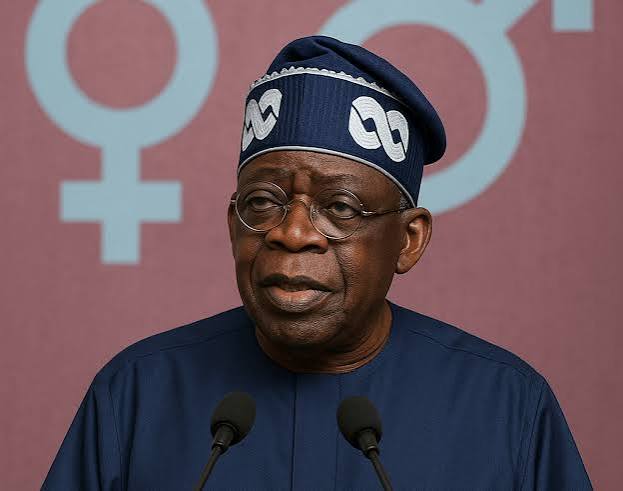
President Bola Tinubu on Thursday ordered the Economic and Financial Crimes Commission (EFCC) to immediately return to court and vacate the order freezing the bank accounts of the Osun State Government, describing the timing of the action as embarrassing and capable of undermining public confidence in the democratic process.
The President, in a statement issued by the State House, stressed that while he remained committed to the operational independence of anti-corruption agencies, the decision to freeze the state’s accounts just days before the Osun governorship election created an unfortunate perception that federal institutions could be influencing the electoral process.
Tinubu said he was not questioning the EFCC’s statutory powers or the legality of its investigation but was compelled to intervene because every action of a federal institution is ultimately attributed to the Presidency.
“I feel deeply embarrassed not by the EFCC’s exercise of its mandate backed by a court order, but by the timing of the agency’s action,” the President said, adding that he had not been fully briefed on the circumstances leading to the commission’s decision.
He reiterated that since assuming office, he had deliberately refrained from interfering in the operations of the EFCC and other law enforcement agencies, insisting that independent institutions are essential to the rule of law and democratic governance.
However, Tinubu said the proximity of the Osun governorship election made it imperative to avoid any action capable of creating the impression that the Federal Government was using the EFCC to influence the outcome of the poll.
“Nothing ought to be done to give an impression that the EFCC or any other agency of the Federal Government is being used to interfere with the election,” he said.
Consequently, the President directed the anti-graft agency to immediately return to court to vacate the freeze order and discontinue the action against the Osun State Government in the overriding public interest.
The EFCC had secured the court order as part of an ongoing investigation into the alleged diversion of about N11 billion in public funds by the Osun State Government.
The commission maintained that its action was lawful and unrelated to the forthcoming governorship election, arguing that investigators uncovered suspicious transfers from government accounts into several corporate entities and had to act swiftly to prevent further movement of funds.
EFCC spokesman and Director of Public Affairs, Wilson Uwujaren, also defended the commission’s powers, insisting that under the law, the agency could place temporary restrictions on suspicious accounts before obtaining judicial approval for an extended freeze.
The commission further rejected allegations that its intervention was politically motivated.
The account freeze, however, drew widespread criticism from the Osun State Government, opposition parties, the Nigerian Bar Association and legal practitioners, who questioned both the timing and legality of the action.
Governor Ademola Adeleke denied allegations of financial misconduct, dismissed claims that his administration diverted public funds and directed the state’s Attorney-General to challenge the freeze order in court.
Tinubu’s intervention is expected to ease political tensions ahead of the governorship election, while renewing debate over the balance between anti-corruption enforcement and the need to safeguard public confidence in the electoral process.
By David Torough, Abuja
The Independent Corrupt Practices and Other Related Offences Commission (ICPC) has uncovered two additional fictitious government agencies in its investigation into the controversial Presidential Foreign Investment Promotion Council (PFIPC), as President Bola Tinubu received the commission’s interim report recommending the prosecution of the alleged mastermind, Adeniyi Matthew Adeyemi.
Briefing State House correspondents after presenting the report at the Presidential Villa, Abuja, ICPC Chairman, Dr.
Musa Adamu Aliyu, said investigations established that Adeyemi was never appointed by the Federal Government and that the PFIPC, also referred to in some documents as the Presidential Foreign Intervention Promotion Council, had no legal backing, having neither been created by an Act of the National Assembly nor by an Executive Order.Aliyu disclosed that the appointment letter and other documents used by Adeyemi were forged, while the syndicate unlawfully occupied the offices of the defunct Presidential Economic Advisory Council (PEAC), using the premises to project legitimacy and allegedly deceive government officials, foreign diplomats and other stakeholders.
The ICPC also uncovered two additional fake agencies, the FCT Investment Promotion Agency and the Foreign Investment Promotion Agency/Public-Private Partnership, which were allegedly created with forged legislative instruments and used to open bank accounts for illegal activities.
According to the commission, Adeyemi later altered the name of the organisation from the Foreign Investment Promotion Council to the Foreign Intervention Promotion Council in a bid to broaden its operational scope.
Aliyu, however, stated that investigations found no evidence that Federal Government funds were approved or disbursed to the fake agency, while no security breach was detected within the Presidency or the Central Bank of Nigeria.
The commission identified weaknesses in verification processes, inter-agency coordination and oversight across several Ministries, Departments and Agencies (MDAs), including the Office of the Secretary to the Government of the Federation, the Office of the Head of the Civil Service of the Federation, the Office of the Accountant-General of the Federation, the Budget Office and the National Information Technology Development Agency (NITDA), saying the lapses enabled the syndicate to operate undetected.
The ICPC recommended the prosecution of Adeyemi, disciplinary action against public officials whose acts of omission facilitated the operation of the fake agency, and reforms to strengthen internal controls across government institutions, stressing that investigations remain ongoing to identify additional collaborators.
Meanwhile, the House of Representatives Ad-hoc Committee investigating the PFIPC uncovered fresh inconsistencies in documents used to establish the purported agency during its hearing on Thursday.
Representing the Permanent Secretary, State House, Director of Administration Abdulkadri Idris told lawmakers that the Presidency neither requested the Office of the Accountant-General of the Federation to create a budget code for the council nor authorised its establishment.
He described fraudulent documents purportedly issued by the State House, noting that the signatory identified as “Akande Adewale” had never served as Director of Administration and that no Directorate of Administration and Support Services existed within the Presidency.
Committee Chairman Yusuf Gagdi said the testimony exposed glaring discrepancies between documents obtained from the Accountant-General’s Office and authentic records submitted by the State House, raising further questions over how the council gained official recognition.
The Federal Road Safety Corps (FRSC), however, defended its decision to allocate seven official Federal Government number plates to the PFIPC, explaining that it acted on documents presented by the applicants, verification of a government-domain website and a physical inspection of the organisation’s office.
Corps Marshal Shehu Mohammed said the agency later discovered that the PFIPC was not a legitimate Federal Government body and had commenced steps to retrieve the official number plates while tightening its verification procedures.
Lawmakers directed the FRSC to provide details on the current location and status of all vehicles registered under the council and announced that the committee would conclude its investigation next week.
The House is also probing how the fictitious agency allegedly secured a N1.3 billion allocation in the 2026 Appropriation Act despite lacking any legal foundation. Meanwhile, Adeyemi, who is facing criminal charges bordering on conspiracy, forgery and impersonation, is expected to appear before the Federal High Court later this month.
By David Torough, Abuja
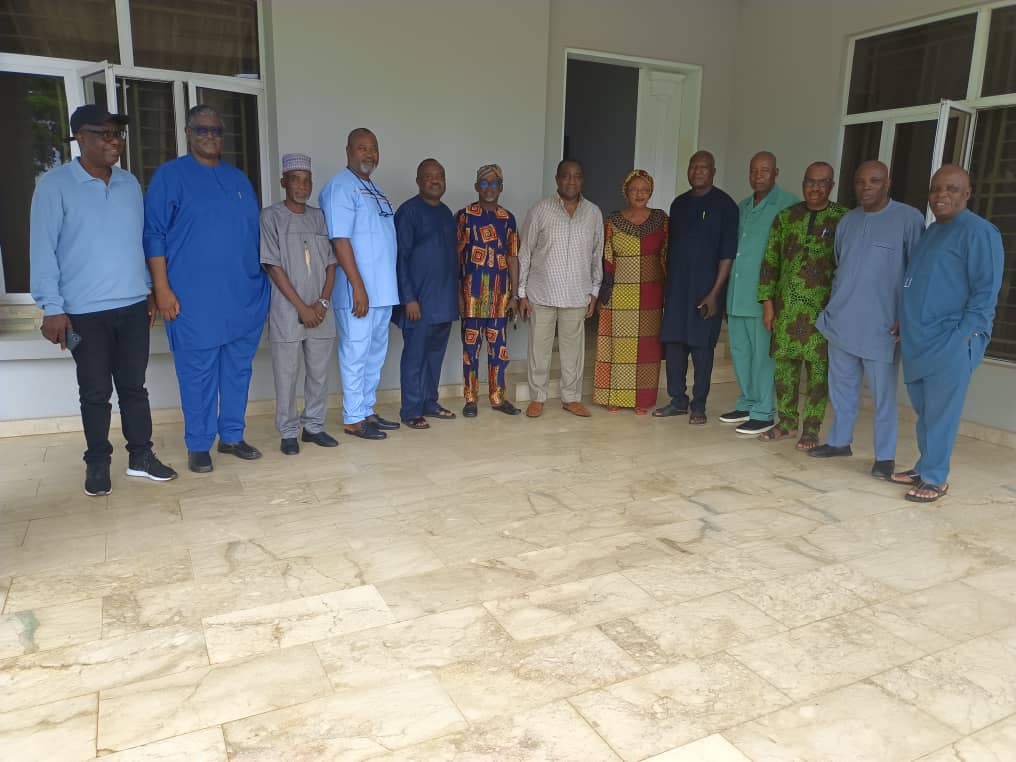
Former Benue State Governor, Senator Gabriel Suswam, has described the killing of former Secretary to the Benue State Government (SSG), Prof. David Salifu, as barbaric, cruel and undeserved, while calling for urgent action to address the country’s worsening security challenges.
Suswam made the remarks during a condolence visit to the family of the late Prof.
Salifu, where he was accompanied by his former deputy, Chief Steven Lawani, and members of the Benue State Executive Council who served under his administration between 2007 and 2015.Paying tribute to the deceased, the former governor described Prof.
Salifu as a peaceful, humble and dedicated public servant whose contributions to governance and the development of Benue State would remain unforgettable.He noted that Salifu served as Secretary to the State Government throughout his administration with integrity, professionalism and unwavering commitment to public service.
Suswam said he received news of the former SSG’s fatal shooting by suspected bandits with profound shock and grief, condemning the killing as a reprehensible act against a man who devoted his life to serving humanity.
He expressed concern over the deteriorating security situation across the country and urged security agencies to intensify efforts to protect lives and property, stressing that no Nigerian should have to live in fear of violent attacks.
The former governor prayed for God’s comfort and strength for Prof. Salifu’s immediate family, his community, the people of Benue State, and the management, staff and students of the Federal University Wukari, where the late academic served as Dean of the Faculty of Management Sciences.
He also encouraged the widow, Mrs. Elizabeth Salifu, to remain steadfast and preserve the unity of the family while taking solace in her husband’s legacy of integrity and service.
Responding on behalf of the family, Mr. Samuel Salifu and Mrs. Elizabeth Salifu thanked Suswam and the former members of the State Executive Council for their support and solidarity since the tragic death of Prof. Salifu.
They prayed for God’s continued blessings and protection upon the former governor and members of his delegation.
Among those who accompanied Suswam on the visit were former Head of the Civil Service, Terna Ahua; former Attorney General and Commissioner for Justice, Dr. Alex Ter Adum; former Chief Economic Adviser, Dr. Sebastian Agbinda; and several other former commissioners and officials who served in the Suswam administration.
NEWS
Nigerian Banks Remain Strong, Secure as Global Cyber Campaign Sweeps Across Sectors, Continents
By David Torough, Abuja
Nigerian banks have moved swiftly to contain the effects of a sophisticated global cyber campaign sweeping across sectors and continents, with industry sources assuring the public that the nation’s financial system remains strong, resilient and secure.
The campaign, described by analysts as one of the most coordinated waves of attacks in years, is neither peculiar to Nigeria nor limited to finance.
Organisations in telecommunications, healthcare, government, energy, technology and corporate registries across Europe, Asia, the Americas and Africa have been targeted by the same wave of intrusions, underscoring the borderless nature of modern cybercrime. The data is stark: CheckPoint, a leading international cybersecurity firm, reports a 115 per cent surge in attacks on the global financial sector last year, with organisations worldwide facing thousands of attempted intrusions weekly. The current campaign has been linked to threat actors that have struck more than 35 organisations across several countries and sectors.Despite the onslaught, banking services and digital channels across Nigeria remain fully operational and customer deposits safe. Banks activated their incident response protocols as soon as reports emerged, working closely with regulators, law enforcement and international cybersecurity partners to investigate and strengthen their defences. Nigerian banks operate some of the most advanced cybersecurity infrastructure on the continent, backed by years of sustained investment in protecting customer information and assets. Experts note that resilience in an era of global cyber warfare lies not in immunity from attack, which no organisation can claim, but in the speed and rigour of response, and on that measure the industry has acted decisively and in full compliance with regulatory requirements.
The banking public is, however, urged to remain vigilant. Fraudsters often exploit moments of heightened attention with fake calls, text messages and emails. Customers should never divulge personal or banking information, including passwords, PINs, One-Time Passwords (OTPs), card details or Bank Verification Numbers (BVNs), to anyone over the telephone, however convincing the caller sounds; no bank will ever ask for these details. They should also avoid opening suspicious emails, clicking unfamiliar links or downloading attachments from unknown senders. Anyone who suspects foul play or unusual account activity should contact their bank immediately, and only through its dedicated official channels: verified customer care lines, official websites, mobile applications or branches.
As governments and corporations worldwide race to shore up their digital defences, the message from the Nigerian banking industry is one of calm and confidence: the system is safe, deposits are secure, and the institutions entrusted with the nation’s savings remain watchful and prepared.



Tinubu Intervenes in EFCC Osun Account Freeze, Directs Re- open
ShareBy David Torough, Abuja President Bola Tinubu on Thursday ordered the Economic and Financial Crimes Commission (EFCC) to immediately return...

PFIPC Scandal: ICPC Uncovers Two More Phantom Agencies
ShareBy David Torough, Abuja The Independent Corrupt Practices and Other Related Offences Commission (ICPC) has uncovered two additional fictitious government...

Suswam Leads Exco Members to Mourn Late Salifu, Condemns Killing as Barbaric
ShareBy David Torough, Abuja Former Benue State Governor, Senator Gabriel Suswam, has described the killing of former Secretary to the...
Tinubu Dismisses One-Party State Claims, Pledges Stronger Partnership with Catholic Bishops
ShareBy David Torough, Abuja The Federal Government has reaffirmed its commitment to strengthening collaboration with the Catholic Bishops’ Conference of...

2027: Nasarawa SDP Boasts of Landslide Victory
ShareThe Social Democratic Party (SDP) in Nasarawa State has expressed confidence that the party would win the governorship seat and...


2027: Sani’s Running Mate Receives Hero’s Welcome after Nomination
ShareJerry Adams, the newly nominated running mate to Gov. Uba Sani of Kaduna for the 2027 election has received a...
Kaduna LG Chairmen Pledge Better Budgeting, Reduce Child Poverty
ShareLocal Governments Chairmen in Kaduna State have pledged to improve budgeting and prioritise investments aimed at reducing child poverty through...

NDC Candidates Commend Dickson’s Role in Resolving Primary Disputes
ShareCandidates of the Nigeria Democratic Congress (NDC) whose names appeared on the Independent National Electoral Commission (INEC) list have commended...


Nwifuru Charges Contractors on Standards on Trans-Sahara Highway
ShareEbonyi State Governor, Francis Nwifuru, has charged contractors handling the trans-Saharan highway project to strictly adhere to approved engineering standards...
NEC: NDC Insists Osayuki Remains Edo South Senatorial Candidate
ShareThe Nigeria Democratic Congress (NDC) said Epelle-Asemota Osayuki remains its duly nominated candidate for the Edo South Senatorial District. The...