
NEWS
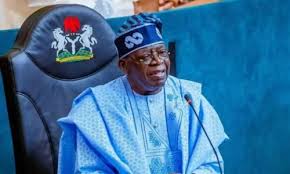
Tinubu Nominates 32 Additional Ambassadors

By James Samuel, Abuja
President Bola Tinubu has sent a second batch of 32 ambassadorial nominees to the Senate for confirmation, after the first batch of three names was sent a few days ago.
In the two separate letters to the Senate President, Godswill Akpabio, Tinubu asked the Senate to consider and confirm expeditiously 15 nominees as career ambassadors and 17 nominees as non-career ambassadors.
In a release by the Special Adviser to the President on Information and Strategy, Bayo Onanuga said the names include four women on the career ambassadors’ list and six women on the non-career ambassadors’ list.
Among the non-career ambassador designates are Barrister Ogbonnaya Kalu from Abia, a former presidential aide, Reno Omokri (Delta), former chairman of the Independent National Electoral Commission (INEC), Mahmud Yakubu, former Ekiti first lady, Erelu Angela Adebayo, and former Enugu governor, Ifeanyi Ugwuanyi.
Others are Tasiu Musa Maigari, the former speaker of the Katsina House of Assembly, Yakubu N. Gambo, a former Commissioner in Plateau State and former deputy executive secretary of the Universal Basic Education Commission (UBEC).
It also includes Professor Nora Ladi Daduut, a former senator from Plateau; Otunba Femi Pedro, a former deputy governor of Lagos State; Chief Femi Fani-Kayode, a former aviation minister from Osun State; and Barrister Nkechi Linda Ufochukwu from Anambra State are on the nomination list.
Also on the list are former First Lady of Oyo, Fatima Florence Ajimobi, former Lagos Commissioner, Lola Akande, former Adamawa Senator, Grace Bent, former governor of Abia, Victor Okezie Ikpeazu, Senator Jimoh Ibrahim, businessman, lawyer and Senator from Ondo State, and the former ambassador of Nigeria to the Holy See, Ambassador Paul Oga Adikwu from Benue State.
Among the nominees for career ambassador and high commissioner-designates are: Enebechi Monica Okwuchukwu (Abia), Yakubu Nyaku Danladi(Taraba), Miamuna Ibrahim Besto(Adamawa), Musa Musa Abubakar (Kebbi), Syndoph Paebi Endoni(Bayelsa), Chima Geoffrey Lioma David(Ebonyi) and Mopelola Adeola-Ibrahim(Ogun).
The other nominees are Abimbola Samuel Reuben(Ondo), Yvonne Ehinosen Odumah(Edo), Hamza Mohammed Salau(Niger), Ambassador Shehu Barde(Katsina), Ambassador Ahmed Mohammed Monguno(Borno), Ambassador Muhammad Saidu Dahiru(Kaduna), Ambassador Olatunji Ahmed Sulu Gambari(Kawara) and Ambassador Wahab Adekola Akande(Osun).
The new nominees are expected to be posted to countries with which Nigeria maintains excellent and strategic bilateral relations, such as China, India, South Korea, Canada, Mexico, the United Arab Emirates, Qatar, South Africa, Kenya, and to Permanent Missions such as the United Nations, UNESCO, and the African Union. All the nominees will know their diplomatic assignments after their confirmation by the Senate.
It would be recalled that last week, President Tinubu sent three ambassadorial nominees for screening and confirmation, and the nominees were Ambassador Ayodele Oke (Oyo), Ambassador Amin Mohammed Dalhatu (Jigawa), and Retired Colonel Lateef Kayode Are (Ogun). All three are in the pot for posting to the UK, USA, or France after their confirmation.
While promised that more nominees for ambassadorial positions will be announced soon.
By Tony Obiechina, Abuja
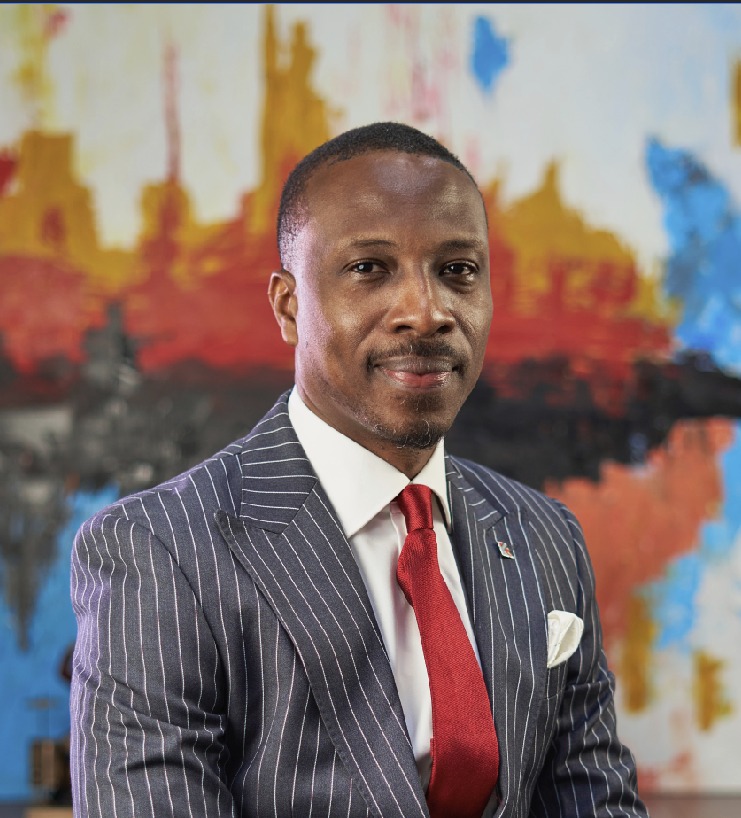
DataPro, a leading credit rating agency and compliance consulting firm in Nigeria, has rated Foremost Capital Limited with BBB+ in its assessment of the company’s key performance indices, marking a major feat in its operations in less than two years.
The latest rating of the company, one of Nigeria’s rapidly growing asset management firms, is an important independent recognition of its financial and operational standards, sending signals to clients, investors, counterparties, regulators and the wider market that the management remains fully committed to world-class standards at all levels of its business operations.
Specifically, the DataPro BBB+ rating of the company provides an independent assessment of its financial strength and operating capacity, a strong liquidity position, supporting its ability to meet financial obligations and manage client investment activities, and improvements in the company’s capitalization, profitability, asset base and overall financial position.
Similarly, with the company’s assets under management growth of 250% from July to December 2025, the rating demonstrates its growing presence and capacity within the investment management industry, a stable outlook and provides a positive indication of the company’s direction and potential for continued improvement.
In addition, this rating by DataPro reflects Foremost Capital’s improving revenue generation and increasing capacity to generate sustainable earnings.
On strong governance and risk management assessment parameters, the BBB+ rating recognized the importance of the company’s governance, risk management, internal control, and compliance structures in supporting sustainable growth.
This is just as the SEC-licensed asset management entity’s rating reinforces its position as a fully compliant participant in Nigeria’s capital market.
Commenting on the company’s latest performance feat, the Managing Director/CEO, Emmanuel Akehomen, said: “This BBB+ rating from DataPro is a significant milestone, validating our robust governance, liquidity and operational resilience. For our clients, it serves as an independent assurance of our stability and capacity for sustainable growth.
“We intend to leverage this strengthened market credibility to attract high-value mandates and optimize portfolio performance. Moving forward, we remain committed to deepening our market share through disciplined risk management and innovative investment strategies that consistently deliver superior, long-term value for our investors”, the investment expert added.
Investment experts believe that the improved rating of the assets management company by DataPro clearly demonstrates the management’s commitment to quality services delivery to its growing clients driven by best practice standards and its futuristic strategies to ensure a win-win experience for all stakeholders in the nation’s assets management system.
Marcus Trescothick has insisted he wants to continue working with England’s Test team even though Mike Hussey has revealed an approach by incoming head coach Stephen Fleming to effectively replace him.
Trescothick has been a member of England’s backroom staff since 2021 and is currently leading the Test side on an interim basis ahead of Fleming’s arrival.
Former opening batsman Trescothick and returning captain Joe Root oversaw an innings and 103-run thrashing of Pakistan in the first Test at Headingley on Friday as the hosts went 1-0 up in a three-match series.
Former Australia international Hussey has said he is considering an offer to work as England’s Test batting coach, effectively Trescothick’s role, after being approached by Fleming, his former boss at Chennai Super Kings.
“I’d love to carry on, of course,” said Trescothick.
The 50-year-old, a member of England’s 2005 Ashes-winning team, added: “I’ve a huge amount of respect for Stephen and what he’s done in the game, he was a fantastic captain and leader, and has done a brilliant job doing what he’s done as a coach.
“It’s really not in my job (description) or position to judge that. We’ll wait until we get the tap on the shoulder.”
Iranian President Masoud Pezeshkian defended a recent memorandum of understanding as the best way for the country to move beyond what he described as a situation of “neither war nor peace.”
In a speech published by state-run IRNA early on Sunday, he said members of Iran’s Supreme National Security Council believed the memorandum represented the best possible agreement based on what he described as dignity, wisdom and the national interest.
“There is not a single provision in this agreement that amounts to capitulation,” Pezeshkian said. “The supreme leader sets the policies, and we will follow that path.
”The deal known as the Memorandum of Understanding that US President Donald Trump signed in June set an ambitious 60-day deadline for ending the war with Iran and reaching an accord on its nuclear program. That period ended last week, but the two sides remain far apart, with no signs of compromise on the crucial issue of reopening the Strait of Hormuz, vital to global shipping.
Pezeshkian also linked the agreement to Iran’s economic prospects, saying the country could not attract investment in this stalled phase.
“Capital and money are extremely sensitive to risk,” he said. “We have to remove this risk from the country.”
Nearly six months into the war with the United States and Israel, the Iranian economy is suffering under sanctions and a naval blockade.
Pezeshkian acknowledged that his country’s citizens face “many problems,” after the United States launched a new wave of sanctions seeking to further isolate its economy.
“I understand we have many problems in society right now. We are trying to prevent these as much as we can,” Pezeshkian said.
Pezeshkian said that, thanks to Trump, Iran was “in a full-scale economic, military and security war.”
“He says he is imposing the most crushing and terrifying sanctions on Iran,” Pezeshkian said.
Meanwhile, the hard-line new leader of Iran’s Supreme National Security Council warned Tehran’s neighbors against joining the new US effort to hurt Iran’s economy.
“If (Trump) wants to do something, we will retaliate in a seismic manner,” Mohsen Rezaei said in an interview with the state broadcaster that aired Saturday.
Rezaei was named this month as part of senior appointments widely seen as hardening Tehran’s political and military stance. His interview with IRIB is his most extensive public statement since then.
Rezaei said Iran would target oil-shipping routes out of the Persian Gulf — alternatives to the Strait of Hormuz — if neighbors join what he described as the economic war against Iran.
Trump in the past week has vowed to increase Iran’s pain by imposing an “unprecedented” level of economic warfare and isolation. Iran has lived under sanctions for years.



Foremost Capital secures investment grade rating of BBB+
ShareBy Tony Obiechina, Abuja DataPro, a leading credit rating agency and compliance consulting firm in Nigeria, has rated Foremost Capital...
Man City Strike Twice Late on to Beat Bournemouth
ShareManchester City scored two late goals to earn Enzo Maresca a win in his first Premier League game in charge...
Man City Strike Twice Late on to Beat Bournemouth
ShareManchester City scored two late goals to earn Enzo Maresca a win in his first Premier League game in charge...
Starc Takes 10 Wickets as Australia Thrash Bangladesh
ShareMitchell Starc took 10 wickets in the match as Australia bounced back from last week’s shock defeat by Bangladesh to...

Mourinho Urges Vinicius Jr to Control Emotions
ShareReal Madrid boss Jose Mourinho said Vinicius Jr needs “great emotional control” after claiming the winger is being bullied on...
Kejelcha Breaks Men’s Half Marathon World Record by 29 Seconds
ShareEthiopia’s Yomif Kejelcha has broken the men’s half marathon world record, winning a World Athletics road race in Buenos Aires...

NSC Celebrates Nigeria Women’s Beach Volleyball Historic Olympic Qualification
ShareThe Director General of the National Sports Commission (NSC), Bukola Olopade, has announced that Nigeria’s Women’s Beach Volleyball team will...
Aiyedatiwa Appoints Chairman for Sports Council
ShareOndo State Governor, Lucky Aiyedatiwa has appointed Oladimeji Abimbola as the Chairman of the Ondo State Sports Council. This was...
Trescothick Eager to Keep England Job Despite Hussey Approach after Pakistan Win
ShareMarcus Trescothick has insisted he wants to continue working with England’s Test team even though Mike Hussey has revealed an...
Iran’s President Says US Memorandum Best Path Out of Stalled War
ShareIranian President Masoud Pezeshkian defended a recent memorandum of understanding as the best way for the country to move beyond...