
NEWS
Tinubu Reports Xenophobic Attacks to AU

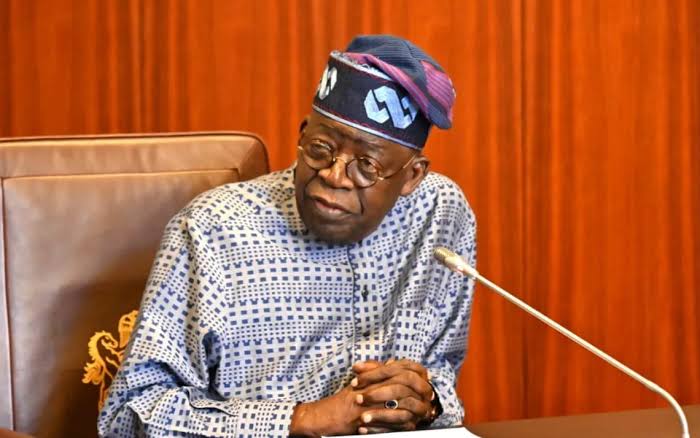
President Bola Tinubu has formally reported recurring xenophobic and Afrophobic attacks against Africans and other nationals in South Africa to the African Union.
Tinubu spoke through Vice President Kashim Shettima on Sunday at the 21st Extraordinary Session of the AU Assembly in Luanda, Angola.
The President warned that the attacks undermine African solidarity, unity and peaceful coexistence, requiring urgent collective attention from continental leaders.
“Nigeria wishes to express its concern over the recurring xenophobic and Afrophobic attacks against Africans and other nationals in South Africa,” Tinubu said.
He called for stronger continental efforts against xenophobia and Afrophobia, emphasising dialogue, preventive diplomacy and collective action to preserve African unity.
Tinubu also acknowledged South Africa’s sovereign right to enforce its immigration laws and recognised the country’s contributions to Africa’s development.
However, he urged African leaders to reaffirm their commitment to protecting the safety, dignity and fundamental rights of all African nationals.
“It is on this note that Nigeria calls on this august Assembly to place the matter on the agenda,” he said.
Tinubu requested that the issue be considered at the AU’s 40th Ordinary Session, scheduled for January 2027, for appropriate continental action.
He said collective intervention was necessary to address recurring attacks and strengthen peaceful coexistence among Africans across national borders.
On continental security, Tinubu supported adoption of the Luanda Action Plan as a practical roadmap for strengthening conflict prevention mechanisms.
He argued that preventing conflicts remained more cost-effective and sustainable than managing crises after violence had already erupted.
“For Nigeria, conflict prevention remains more cost-effective and sustainable than conflict management,” Tinubu said.
The President warned that fragmented peace initiatives and growing external interference could weaken the AU’s conflict-prevention mechanisms and African ownership.
He specifically cited foreign military forces, mercenaries and private defence contractors as factors capable of undermining continent-led approaches to peace and security.
“The growing reliance on external actors risks weakening African institutions and the principle of African ownership,” he said.
Tinubu also urged arms-producing and exporting countries to strengthen cooperation with African states to prevent weapons diversion to terrorist groups.
He called for measures ensuring weapons and ammunition produced within exporting countries’ jurisdictions did not reach terrorists or other non-state armed groups.
The President maintained that the AU possessed robust mechanisms for preventing and resolving conflicts, but limited trust and inconsistent implementation weakened their effectiveness.
He therefore called on member states to renew their commitment to collective responsibility for Africa’s peace and security.
Tinubu urged African leaders to prioritise home-grown solutions, stronger cooperation and shared responsibility in confronting the continent’s security challenges.
“Let us therefore renew our collective commitment to solidarity, cooperation, and shared responsibility as we build the Africa we want,” Tinubu said.
From Attah Ede, Makurdi
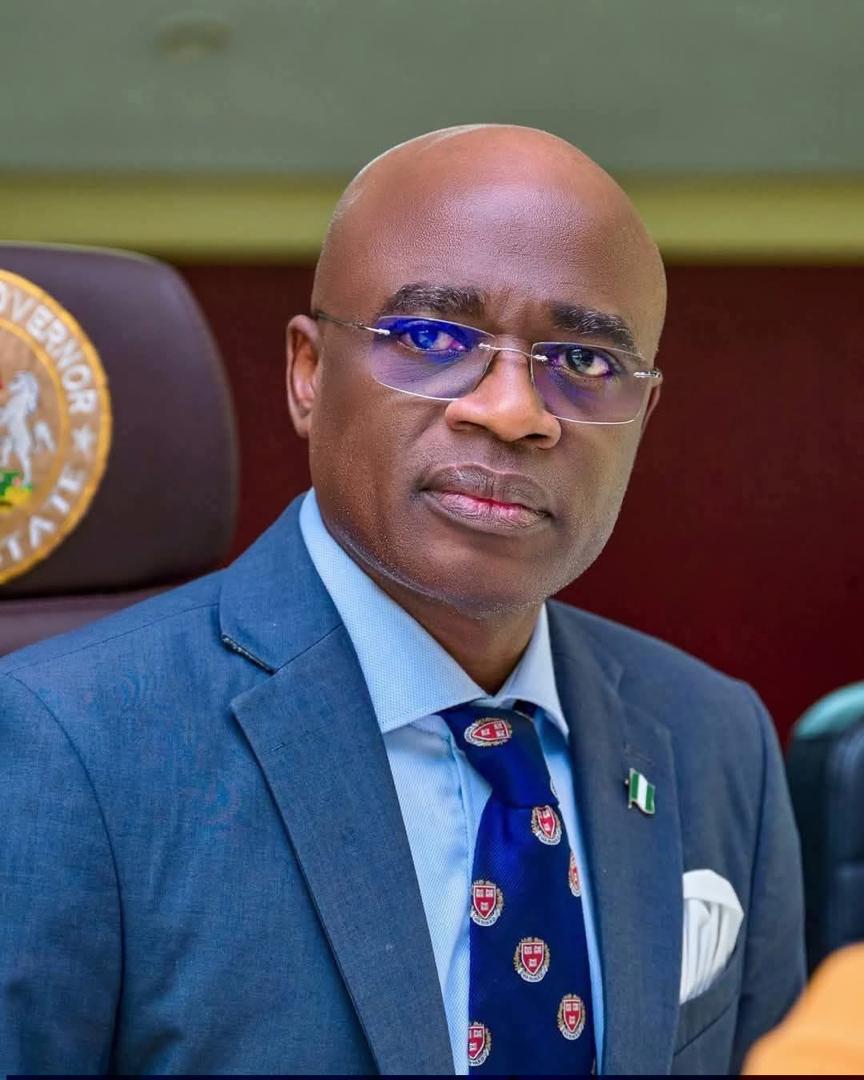
The Chairman of Agatu Local Government Area of Benue State, Melvin Ejeh, has commended Governor Hyacinth Alia for what he described as unprecedented road infrastructure across Agatu and other parts of Benue South Senatorial District.
Ejeh said the ongoing road projects being executed by the Alia administration were opening up communities and addressing infrastructural challenges that had lingered for years.
The council chairman stated this while speaking at the Idoma Day celebration organised by Idoma students of the Federal University of Lafia (FULAFIA), Nasarawa State.
According to him, the scale of road development currently being witnessed in Agatu and other Idoma-speaking local government areas was unprecedented.
Ejeh particularly highlighted the ongoing road project in Agatu, attributing the development to the intervention of Alia government.
He described his strides in Agattu as evidence of the governor’s commitment to extending development to communities in Benue South.
He urged Idoma students to appreciate development beyond partisan considerations and remain focused on issues capable of advancing their communities.
Speaking on identity and leadership, Ejeh charged the students to remain proud of their Idoma heritage and participate actively in activities promoting the unity and development of the Idoma nation.
He said the Idoma people were known for integrity, dignity and respect, noting that many Idoma sons and daughters had continued to distinguish themselves in different fields across Nigeria.
The Agatu chairman also cautioned students against allowing politicians to recruit them into campaigns of insults and attacks against political leaders.
He advised them to prioritise their education and future rather than becoming distracted by political battles that could undermine their personal development.
Ejeh commended the Ochi’doma of FULAFIA and the students for organising the celebration, describing the event as an important platform for promoting Idoma identity, culture and unity.
The council chairman subsequently donated N500,000 to the FULAFIA Idoma community in support of its activities.
From Francis Sadhere, Delta
The Niger Delta Development Commission (NDDC) has commenced the reconstruction of a 15.4-kilometre failed section of the Benin-Sapele Expressway, in a major intervention aimed at restoring one of the Niger Delta’s critical economic corridors and easing the hardship faced by motorists.
The intervention, which was flagged off at Amukpe Roundabout, Sapele, Delta State, weekend, is being executed with rigid concrete pavement by China Civil Engineering Construction Corporation (CCECC) and Ronin and Fan Limited.
The project assumes added significance against the backdrop of the Delta State Government’s disclosure that it has spent more than N300 billion intervening in federal road corridors across the state to keep major routes accessible to residents and motorists.
Speaking at the flag-off, Governor Sheriff Oborevwori, represented by the Commissioner for Works (Rural Roads) and Public Information, Charles Aniagwu, commended the NDDC for taking over the reconstruction of the failed portion of the strategic highway.
Oborevwori described the intervention as a major boost to connectivity, economic activities and the wellbeing of Deltans and other road users who depend on the corridor.
The governor said the development demonstrated the importance of collaboration among governments and government agencies in confronting the infrastructure challenges confronting the Niger Delta.
Aniagwu said the Delta State Government had adopted a policy of intervening in critical roads regardless of whether they belonged to the federal or state government.
“We don’t differentiate,” he said, stressing that the people who use the roads are the ultimate beneficiaries, irrespective of the ownership of the infrastructure.
According to him, the state government had constructed more than five kilometres of rigid-pavement dual carriageway along the Warri axis, while bridges and flyovers had also been delivered along federal road corridors.
He listed major interventions at Otovwodo Junction, DSC Roundabout, PTI Junction, Enerhen Roundabout and Uromi Junction in Agbor.
The commissioner said the state’s interventions were driven by the need to reduce the hardship experienced by road users and improve economic activities across the state.
Chairman of the NDDC Governing Board, Chiedu Ebie, said the commission commenced the reconstruction following a directive from President Bola Ahmed Tinubu to address the hardship being experienced by motorists and commuters along the corridor.
Ebie said the commission was determined to complete the project and restore normal movement on the road after years of difficult travelling conditions.
He disclosed that two contractors would work simultaneously from opposite ends of the project in order to accelerate completion.
The NDDC chairman stressed that the Benin-Sapele Expressway should not be viewed merely as a regional road, describing it as a critical national economic corridor linking the South-South with other parts of the country.
His position was reinforced by the NDDC Managing Director, Dr Samuel Ogbuku, who said the strategic importance of the highway made its reconstruction an urgent necessity.
Ogbuku apologised to residents, community leaders and motorists for the hardship caused by the deplorable condition of the road, assuring them that relief was on the way.
He said the intervention followed the President’s directive after Tinubu saw videos and received complaints about the condition of the highway.
According to Ogbuku, the NDDC subsequently engaged the Federal Ministry of Works, obtained the project design and secured approval for the site to be handed over to the commission for immediate intervention.
He described the road as a major federal route linking the South-West and North to the South-South, making its rehabilitation important not only to Delta State but to the wider Nigerian economy.
Giving details of the project, the NDDC Executive Director, Projects, Engr. Victor Antai, said the reconstruction covered approximately 15.4 kilometres and would be executed using rigid concrete pavement.
He named CCECC and Ronin and Fan Limited as the contractors engaged to execute the reconstruction.
The decision to use rigid pavement is expected to provide a more durable surface on the heavily travelled corridor, particularly given the volume of commercial and heavy-duty traffic that passes through the route.
While welcoming the NDDC’s intervention, the Delta State representative on the commission’s Governing Board, Hon. Monday Igbuya, called for the expansion of the intervention to other important road corridors.
Igbuya appealed to the NDDC to extend its intervention to the Amukpe-Abraka-Agbor Road and the Sapele-Warri Road, arguing that the projects would further strengthen connectivity across Delta State.
Ebie also disclosed that the commission had taken steps to terminate and re-award the contract for the Abraka-Obiaruku-Abavo-Agbor Road following challenges encountered by the previous contractor.
The development is expected to provide another boost to movement between communities in the central and northern parts of Delta State.
As the state and federal interventions continue, Aniagwu warned residents against vandalising critical infrastructure.
He cited the recent discovery of damaged components on the First Niger Bridge, warning that the removal of structural components could compromise the integrity of the bridge and put the lives of motorists at risk.
He appealed to communities and other stakeholders to protect public infrastructure and cooperate with contractors to ensure that projects are completed on schedule.
For years, motorists using the Benin-Sapele Expressway have had to contend with difficult travelling conditions along failed portions of the highway, with the consequences extending beyond delays and inconvenience to businesses and communities dependent on the route.
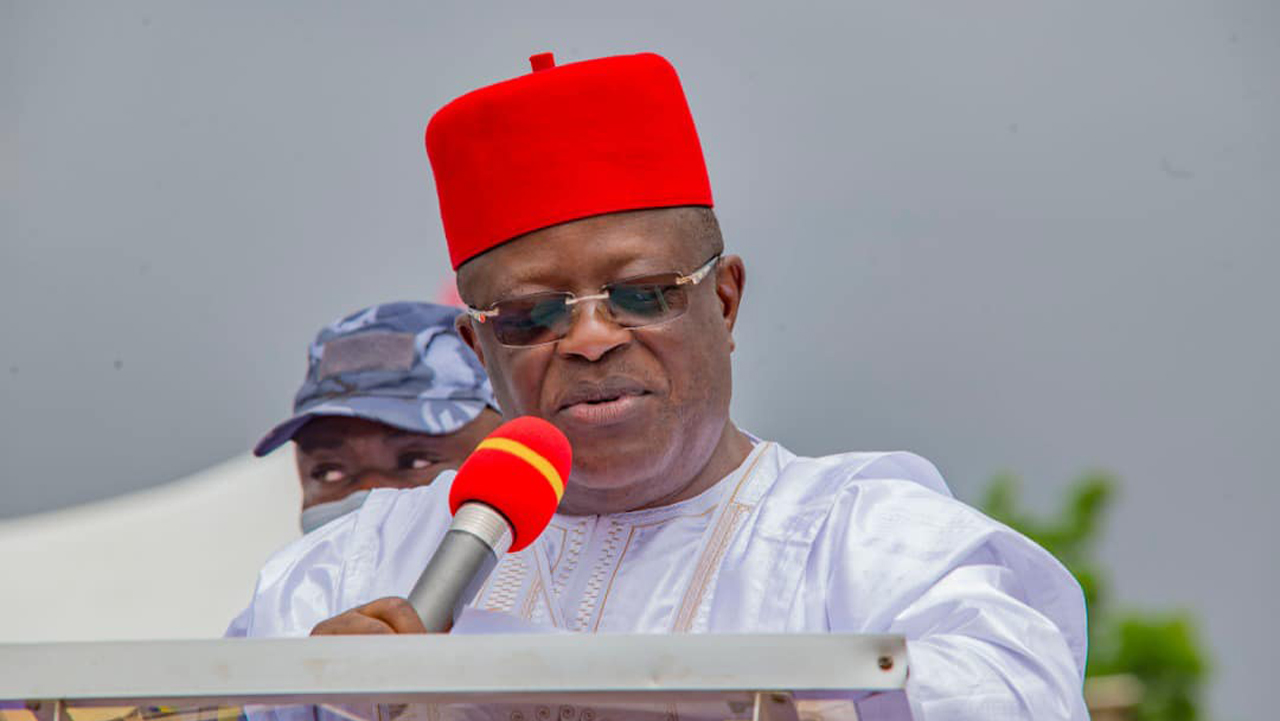
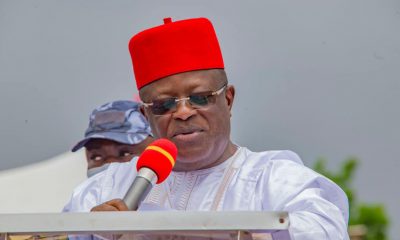
Minister of Works, Chief David Umahi, says the Trans-Sahara Superhighway will significantly improve security, agriculture and commerce across its corridor.
Umahi stated this on Saturday in Abakaliki after inspecting ongoing works on Section Two of the highway in Ado Local Government Area, Benue.
He said Section Two, measuring approximately 173.
4 kilometres, would connect Section One through Benue, Enugu and adjoining states.According to him, Section One runs for about 123 kilometres from Ebonyi to the Ebonyi-Benue boundary.
The minister said the combined length of Sections One and Two would therefore be nearly 300 kilometres.
“When communities are brought closer through road construction and states become more accessible, you can see the economic impact.
“If we complete this project, you will see significant improvements in security, agriculture, and commerce,” he said.
Umahi said the highway would facilitate the movement of agricultural produce from major farming areas in Benue, Ebonyi and Enugu to markets.
He said the Federal Government was also constructing bypasses, including the 8.9-kilometre Afikpo bypass in Ebonyi, which was being dualised.
The minister said the second carriageway of Section One was being designed to align with other legacy projects of President Bola Tinubu’s administration.
On funding, Umahi acknowledged financial challenges but assured Nigerians that projects would continue based on available resources.
“There are challenges; we cannot have all the money to do all the projects at once.
“So, we will continue to do the much we can based on our available resources,” the minister said.
Umahi projected that the projects would be completed by 2031, subject to Tinubu’s re-election and continuity of the administration.
He appealed to host communities to cooperate with contractors by providing access to borrow pits and facilitating valuation of affected crops and properties.
“Nobody will touch your building unnecessarily; I want you to cooperate with us and show us the borrow pits. We will pay compensation where necessary,” Umahi added.
The minister commended the contractor for its commitment, noting that construction work was continuing despite the rainy season.
He urged Nigerians to appreciate the Federal Government’s intervention in communities that had previously lacked federal roads.
Umahi also canvassed support for Tinubu and APC candidates, saying continuity was necessary to ensure completion of the highway. (NAN)




Tinubu Reports Xenophobic Attacks to AU
SharePresident Bola Tinubu has formally reported recurring xenophobic and Afrophobic attacks against Africans and other nationals in South Africa to...


Alia Changing Infrastructure Narrative in Benue South, Says Council Boss
ShareFrom Attah Ede, Makurdi The Chairman of Agatu Local Government Area of Benue State, Melvin Ejeh, has commended Governor Hyacinth...

NDDC Commences Reconstruction of Benin-Sapele Expressway
ShareFrom Francis Sadhere, Delta The Niger Delta Development Commission (NDDC) has commenced the reconstruction of a 15.4-kilometre failed section of...

Trans-Sahara Highway to Boost Security, Commerce — Umahi
ShareMinister of Works, Chief David Umahi, says the Trans-Sahara Superhighway will significantly improve security, agriculture and commerce across its corridor....

Police Dismantle Bandits’ Hideouts in Kaduna
Share The Police Command in Kaduna State has dismantled two bandits’ hideouts during a clearance operation in Makarfi Local Government Area....


NABTEB Sets Deadline for 2026 Nov, Dec Certificate Exams Registration
ShareThe National Business and Technical Examinations Board (NABTEB) has set Sept. 10 as the deadline for its 2026 November/December certificate...
Oil Spill Pollutes Nembe Creek in Bayelsa, Communities Demand Cleanup, Compensation
ShareFrom Mike Tayese, Yenagoa An oil spill from crude loading operations at Nembe Creek oilfield in Bayelsa has affected several...
PAAU Calls for TETFund Support in Critical Infrastructure
ShareFrom Joseph Amedu, Lokoja The Management of Prince Abubakar Audu University (PAAU), Anyigba, has called for urgent intervention by the...

Bandits Kill Thee, Injure Others, Abduct Farmers’ Leader in Kano
ShareFrom Aliyu Askira, Kano Three people were killed and five others injured after suspected bandits attacked Chiromawa community in Garun...


Anambra LG Poll: Mefor Lauds Nkwoka, Apga, Soludo Momentum in Idemili North
ShareFrom Sylvia Udegbunam, Enugu The Anambra State Commissioner for Information and Value Reformation, Dr. Law Mefor, has hailed the mayor...