
NEWS
Tinubu Swears-in Power, Foreign Affairs Ministers

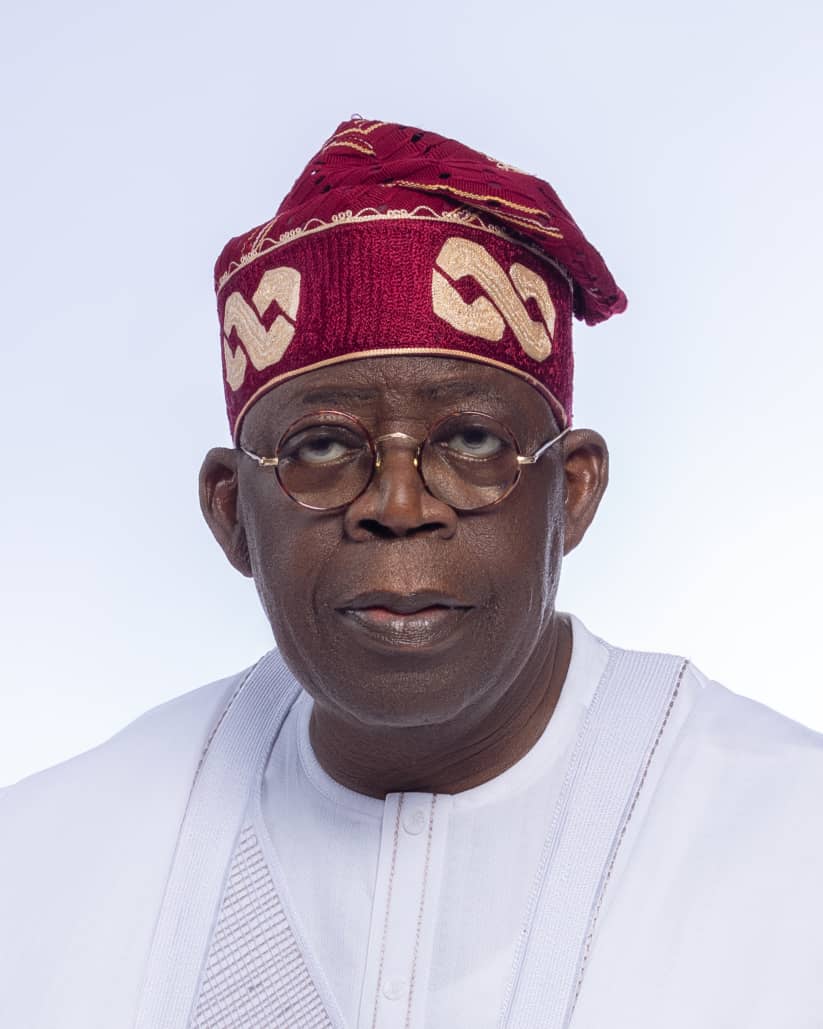
President Bola Tinubu on Monday swore-in two newly appointed ministers, Joseph Tegbe as Minister of Power and Sola Enikanolaiye as Minister of State for Foreign Affairs.
The swearing-in ceremony took place at the President’s Office in the State House, Abuja, shortly after Tinubu received Madagascar’s President, Michael Randrianirina, on a courtesy visit.
The Oath of Office was administered in the presence of Gov. Usman Ododo of Kogi, the Chief of Staff to the President, Femi Gbajabiamila, and other senior government officials.
The inauguration marks the formal commencement of the ministers’ responsibilities as members of the Federal Executive Council (FEC).
The swearing-in follows recent cabinet adjustments approved by the president to strengthen policy implementation and enhance performance in key sectors of government.
Tegbe, an indigene of Oyo State, is a fiscal, economic and institutional reform strategist with more than 35 years of experience spanning the public and private sectors.
He holds a First Class Degree in Civil Engineering from Obafemi Awolowo University, Ile-Ife, as well as Master’s degrees in Business Administration and Public Administration.
Before his appointment, he served as Senior Partner and Head of Advisory Services at KPMG Africa, where he led major transformational and public-sector reform initiatives.
His professional engagements have covered institutions such as the Nigerian Communications Commission (NCC), Nigerian Bulk Electricity Trading (NBET), Nigerian Electricity Regulatory Commission (NERC), Shell, Huawei, General Electric, MTN and Odu’a Group.
Enikanolaiye, from Kogi, holds a First Class Degree in Political Science from Ahmadu Bello University, Zaria, where he emerged the best graduating student in his faculty.
He also obtained a Master’s Degree in International Law and Diplomacy with Distinction from the University of Lagos.
The diplomat joined the Ministry of Foreign Affairs in 1982 and rose through the ranks to become Permanent Secretary, a position he held until his retirement in August 2017 after 35 years of service.
During his diplomatic career, he served in Nigeria’s missions in Ethiopia, Serbia, Canada and the United Kingdom, and was later appointed Nigeria’s High Commissioner to India.
Before his appointment as minister, Enikanolaiye served as Senior Special Assistant to the President on Foreign Affairs and International Relations in the Office of the Chief of Staff to the President.
He is a recipient of several honours, including the Presidential Civil Service Merit Award and the Presidential Distinguished Public Service Career Award.
The Senate in May screened and confirmed Tegbe and Enikanolaiye as ministers following Tinubu’s request.
By Tony Obiechina, Abuja
Nigeria’s total imports value stood at ₦13,619.33billion in the first quarter of 2026, representing a 18.17% decrease from the value recorded in the corresponding quarter of 2025 (₦16,644.
42billion) and a 21.05% decrease compared to the value recorded in Q4 2025 (₦17,250. 93 billion).The National Bureau of Statistics(NBS) has said in its latest report on foreign trade. Analysis of Nigeria’s import trade reveals that China remained the leading source of imports in the first quarter of 2026, followed by the United States of America, India, Germany, and the United Arab Emirates.
The most imported commodities during the quarter were petroleum oils and oils obtained from bituminous minerals (crude), gas oil, durum wheat, machines for the reception, conversion, and transmission of voice, images, or data, and used vehicles with diesel or semi-diesel engines.
According to the report, the value of agricultural goods imported in Q1 2026 stood at ₦827.72billion, representing a 20.09% decrease compared to ₦1,035.81billion recorded in Q1 2025, and a 42.39% decrease relative to ₦1,436.65 billion recorded in Q4 2025.
The report further said in the same period, the import value of raw material goods was₦1,582.36billion, representing a 12.63% decrease from ₦1,811.10billion in Q1 2025, and a 32.72% decrease compared to ₦2,351.88 billion in the preceding quarter (Q4 2025).
In the first quarter of 2026, solid mineral imports were valued at ₦69.75billion, representing a 24.00% decrease from ₦91.78billion in Q1 2025 and 50.53% decrease compared to ₦140.99 billion recorded in Q4 2025.
Still in the same period, the value of imported manufactured goods stood at ₦8,484.37billion, reflecting a 12.94% increase from ₦7,512.22billion in Q1 2025, and a 3.62% decrease from ₦8,803.27 billion recorded in Q4 2025.
The data also highlights the value of other oil products imported in Q1 2026 which stood at ₦748.10billion, reflecting a 85.05% decrease from ₦5,005.22billion in Q1 2025 and a 81.38% decrease from ₦4,018.31 billion recorded in Q4 2025.
By Tony Bazim
Many Nigerians blame President Tinubu for everything happening in the country, but have we taken time to ask the right questions?
Every month, Local Government Chairmen receive allocations.
What projects are they using these funds for? How is your local community benefiting?State Governors also receive federal allocations and generate billions through taxes and other sources of revenue.
How are these funds being spent? Are the roads, schools, hospitals, and other public services reflecting the amount of money received?Good governance starts with accountability at every level, not just at the top.
If we focus all our attention on the President while ignoring those closest to us, we may be overlooking a big part of the problem.As citizens, we should demand transparency from our Councillors, Local Government Chairmen, Governors, House of Assembly members, and every public office holder entrusted with our resources.
Nigeria will make greater progress when we stop asking only, “What is the President doing?” and start asking, “What is every elected official doing with the resources entrusted to them?”
Let’s ask the right questions.
AskTheRightQuestions #Accountability #GoodGovernance #Nigeria
For comments, contributions, or discussions:
beco.tony@gmail.com
From Joseph Amedu, Lokoja
Stakeholders in Kogi State’s built environment sector have called on the state Government to urgently enforce the Kogi State Urban and Regional Planning Law of 2010, warning that continued neglect of the legislation is fueling unregulated development, environmental degradation and urban disorder across the state.
The call was made during the Annual General Meeting (AGM) and Symposium of the Nigerian Institute of Town Planners (NITP), Kogi State Chapter, held in Lokoja over the weekend.
The event, themed “Urban and Regional Planning in Kogi: Trajectory, Legal Issues and Prospects,” brought together town planners, policymakers, academics, and other professionals in the built environment to discuss strategies for sustainable urban development.
Speaking at the event, the outgoing Chairman of the institute, Stephen Nden, lamented that although the Nigerian Urban and Regional Planning Law of 1992, as amended, was domesticated in Kogi State in 2010, it has remained largely inactive. He urged the government to immediately implement the law to enable professional town planners to effectively guide physical development and curb the growing trend of uncoordinated urban expansion.
According to him, “The implementation of the Urban and Regional Planning Law will empower town planners to effectively guide the physical growth of our urban centres and ensure orderly development. It is unfortunate that a law domesticated over a decade ago remains inactive despite the enormous benefits it offers.”
Nden stressed that achieving sustainable development requires collective efforts from all stakeholders in the built environment sector.
He further urged members of the institute to uphold professional ethics and strengthen collaboration with government agencies, local government councils, and academic institutions.
A resource person at the symposium, Ramatu Baba, expressed concern over the state’s failure to fully implement planning laws, noting that several environmental and developmental challenges, including illegal mining activities and indiscriminate construction, are linked to poor planning and weak enforcement mechanisms.
She said, “The absence of effective planning frameworks has contributed significantly to illegal mining activities and environmental degradation. Government must strengthen planning institutions and ensure strict compliance with development control regulations.”
Baba also decried the shortage of qualified town planners and other professionals in the sector, warning against construction on natural waterways and flood-prone areas.
Chairman of the Planning Committee, Dr. Baba Adams Ndalai, emphasized that without the full implementation of planning laws and the establishment of a functional Urban and Regional Planning Board, cities and towns across the state would continue to witness chaotic growth.
He stated that Kogi State possesses immense potential for sustainable urban development if the right policies and political will are deployed.
Dr. Ndalai advocated the adoption of smart city initiatives, climate-resilient infrastructure, and inclusive spatial planning systems, adding that Geographic Information Systems (GIS) could significantly improve land administration and increase internally generated revenue.
“The future of Kogi lies in embracing technology-driven planning solutions. Through GIS-based planning and land management systems, governments can improve development control, monitor land use changes, reduce disputes, and strengthen revenue generation,” he said.
Chairman of the occasion and former National President of the NITP, Chief Isah Ichaba, urged members to remain united and committed to advancing the planning profession.
He noted that stronger collaboration among professionals would enable the institute to play a more effective role in shaping government policies and promoting sustainable development.
At the end of the AGM, members elected a new executive council to pilot the affairs of the Kogi State Chapter. Sani Daniel emerged as Chairman, while Femi Ayanleye was elected Vice Chairman. Other officers include Aishat Mohammed Jamiu (Secretary), Enikanolaye Isaac Adebowale (Assistant Secretary), Zainab Salau (Treasurer), Abdullahi Shaaban Aminu (Financial Secretary), Atodo Kerim Smaila (Auditor), Oshamehin Deborah (Public Relations Secretary), Yakubu Umar Onimisi (PRS II), Samuel Afolagbode (Social Welfare Secretary), Stephen Jonathan Nden (Ex-Officio I) and Michael Alhassan (Ex-Officio II).
In his acceptance speech, the newly elected Chairman, Sani Daniel, pledged to provide inclusive and result-oriented leadership aimed at strengthening the institute and advancing physical planning across the state.
Daniel disclosed that the AGM adopted several recommendations, including the preparation of comprehensive master plans for Lokoja and other major urban centres, implementation of the Urban and Regional Planning Law of 2010, development of a state-wide regional development plan covering all 21 local government areas, recruitment of more planning professionals, establishment of stronger institutional coordination mechanisms, integration of climate adaptation and post-mining reclamation strategies into planning policies, and full deployment of GIS technology in development control activities.
He added that the institute would collaborate with other professional bodies to create a stronger built environment advocacy platform capable of supporting government efforts in achieving sustainable urban development and making Kogi State a more attractive destination for investment and tourism.


Tinubu Swears-in Power, Foreign Affairs Ministers
SharePresident Bola Tinubu on Monday swore-in two newly appointed ministers, Joseph Tegbe as Minister of Power and Sola Enikanolaiye as Minister of State for Foreign Affairs. The swearing-in ceremony took place...
Kebbi Extends Retirement Age for Medical, Vet Doctors to 65
ShareThe Kebbi State Executive Council has approved the extension of the retirement age for medical and veterinary doctors in the state civil service from 60 to 65 years, in a move...

WAEC Warns Schools, Supervisors against Candidate Extortion
ShareThe West African Examinations Council (WAEC) has warned schools and supervisors against extorting candidates through unauthorised charges, describing the practice as unethical and illegal. The...

Nigeria’s Trade Surplus Rises 341 Per Cent to N7.55tn in 2026 Q1 – NBS
ShareBy Tony Obiechina, Abuja Nigeria’s total imports value stood at ₦13,619.33billion in the first quarter of 2026, representing a 18.17%...


Labour Party Drags INEC to Court over Enugu North By-election
ShareFrom Sylvia Udegbunam, Enugu and Yagana Ali, Yola Political activities intensified across the country on Monday as the Labour Party...

Fight against Terror Everyone’s Business, Says Tinubu
ShareBy David Torough, Abuja President Bola Tinubu has called on Nigerians to play a more active role in combating insecurity,...

Military Operations Are Not Media Scoops, Ikechukwu Warns Journalists
ShareBy David Torough, Abuja Professor Ikechukwu has cautioned media practitioners against the indiscriminate reporting of military activities, warning that the...
Nigeria’s Problems Beyond Tinubu, Ask Governors LG Chairmen
ShareBy Tony Bazim Many Nigerians blame President Tinubu for everything happening in the country, but have we taken time to...
Stakeholders Demand Enforcement of Kogi Urban Planning Law
ShareFrom Joseph Amedu, Lokoja Stakeholders in Kogi State’s built environment sector have called on the state Government to urgently enforce the Kogi State Urban and...
Wrestling: Team Nigeria Wins One Silver, Two Bronze in Mongolia
ShareTeam Nigeria wins one silver and two bronze, concluding its competition at the ongoing Ulaanbaatar 2026 United World Wrestling (UWW) 3rd Ranking Series on Saturday...