
Economy
Tinubu’s 2024 Budget Speech: Budget of Renewed Hope

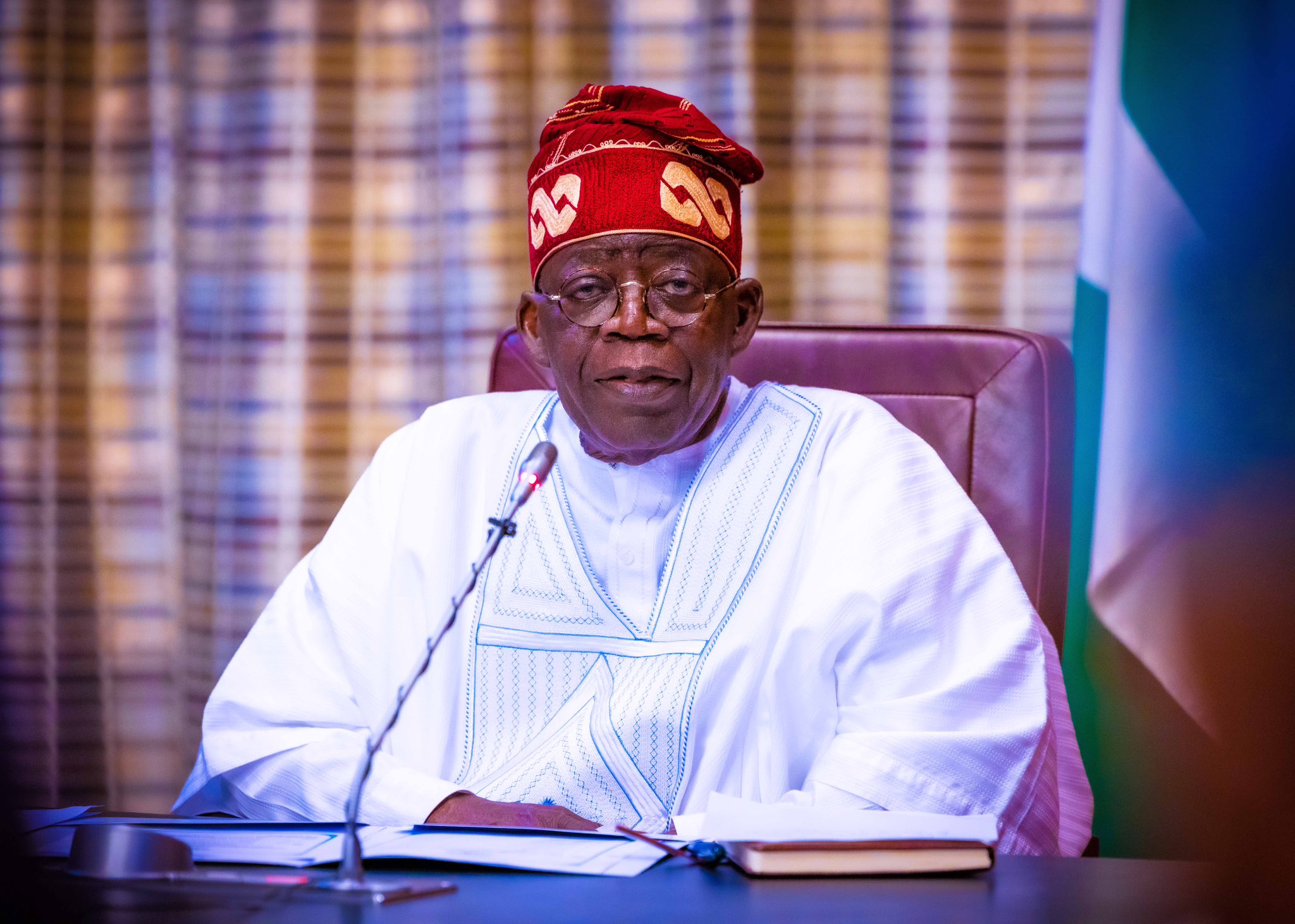
1. In furtherance of my sacred duties and obligations as President of the Federal Republic of Nigeria, it is my honour to be here today to present my administration’s 2024 Budget Proposal to this Joint Session of the 10th National Assembly.
This moment is especially profound and significant to me because it is my first annual budgetary presentation to the National Assembly.2. Distinguished Senators and Honourable Members of the National Assembly, I commend your swift consideration and passage of the 2023 Supplementary Appropriation Bills and the 2024-2026 Medium Term Expenditure Framework and Fiscal Strategy Paper.
Your prompt action underscores your devotion to economic development and to the greater welfare of our people. It also highlights your desire to work in close collaboration with the Executive branch. We do not serve ourselves. We must always strive to work together to serve and benefit the people of our beloved country.3. I am confident that the National Assembly will continue to work closely with us to ensure that deliberations on the 2024 Budget are thorough but also concluded with reasonable dispatch. Our goal is for the Appropriation Act to come into effect on the 1st of January 2024.
4. It is, by now, a matter of recorded history that my very first fiscal intervention as President of this great nation was to end the fuel subsidy regime which had proven to be so harmful to the overall health of our national economy. The second was to negotiate and subsequently present a supplementary budget to enable my government to fund the items needed to restore macro-economic stability and mitigate the harsh impact of subsidy removal.
5. The third was to secure a second supplementary budget, this time to enable us to keep our promises to promote national security, invest in infrastructure and provide much needed support to the most vulnerable households in our society.
6. In swearing-in my cabinet and reflecting on the unique challenges facing us, I invited the Ministers to imagine that we are attempting to draw water from a dry well. Today, I stand before you to present our Budget of Renewed Hope; a budget which will go further than ever before in cementing macro-economic stability, reducing the deficit, increasing capital spending and allocation to reflect the eight priority areas of this Administration. The budget we now present constitutes the foundation upon which we shall erect the future of this great nation.
PREVAILING ECONOMIC ENVIRONMENT
7. Economic conditions remain challenging both abroad and at home. Despite lingering Post-Covid supply and production bottlenecks, armed conflict in various parts of the world and restrictive monetary policies in major economies, we expect global growth to hover around 3.0 percent in 2024. This relative low rate has significant implications for our economy due to our current reliance on importation.
8. Distinguished Senators, Honourable Members: despite the global headwinds, the Nigerian economy has proven resilient, maintaining modest but positive growth over the past twelve months.
9. Inflation has trended upward due to weak global conditions. To contain the rising domestic prices, we will ensure effective coordination of fiscal and monetary policy measures, and collaborate with sub-national governments to address structural factors driving inflation in Nigeria.
10. The Budget proposal meets our goal of completing critical infrastructure projects which will help address structural problems in the economy by lowering the costs of doing business for companies and the cost of living for the average person, The Honourable Minister of Budget and Economic Planning will provide full details of this proposal.
PERFORMANCE OF THE 2023 BUDGET
11. Distinguished Senators and Honourable Members, an aggregate revenue of 11.045 trillion nairawas projected to fund the 2023 Budget of 24.82 trillion naira with a deficit of about 6.1 percentof GDP.
12. As of September 30, the Federal Government’s actual aggregate revenue inflow was 8.65 trillion naira, approximately 96 percent of the targeted 8.28 trillion naira.
13. Despite the challenges, we continue to meet our obligations.
THEME AND PRIORITIES OF THE 2024 BUDGET
14. Distinguished Senators, Honourable Members, permit me to highlight key issues relating to the budget proposals for the next fiscal year. The 2024 Appropriation has been themed the Budget of Renewed Hope. The proposed Budget seeks to achieve job-rich economic growth, macro-economic stability, a better investment environment, enhanced human capital development, as well as poverty reduction and greater access to social security.
15. Defence and internal security are accorded top priority. The internal security architecture will be overhauled to enhance law enforcement capabilities and safeguard lives, property and investments across the country.
16. Human capital is the most critical resource for national development. Accordingly, the budget prioritizes human development with particular attention to children, the foundation of our nation.
17. To improve the effectiveness of our budget performance, government will focus on ensuring value for money, greater transparency and accountability. In this regard, we will work more closely with development partners and the private sector.
18. To address long-standing issues in the education sector, a more sustainable model of funding tertiary education will be implemented, including the Student Loan Scheme scheduled to become operational by January 2024.
19. A stable macro-economic environment is important to catalyse private investment and accelerate economic growth. We have and shall continue to implement business and investment friendly measures for sustainable growth.
20. We expect the economy to grow by a minimum of 3.76 percent, above the forecasted world average. Inflation is expected to moderate to 21.4 percent in 2024.
21. In preparing the 2024 Budget, our primary objective has been to sustain our robust foundation for sustainable economic development. A critical focus of this budget and the medium term expenditure framework is Nigeria’s commitment to a greener future.
22. Emphasizing public-private partnerships, we have strategically made provisions to leverage private capital for big-ticket infrastructure projects in energy, transportation and other sectors. This marks a critical step towards diversifying our energy mix, enhancing efficiency, and fostering the development of renewable energy sources. By allocating resources to support innovative and environmentally conscious initiatives, we aim to position Nigeria as a regional leader in the global movement towards clean and sustainable energy.
23. As we approach COP 28 climate summit, a pivotal moment for global climate action, I have directed relevant government agencies to diligently work towards securing substantial funding commitments that will bolster Nigeria’s energy transition.
24. It is imperative that we seize this opportunity to attract international partnerships and investments that align with our national goals. I call upon our representatives to engage proactively to showcase the strides we have made in the quest to create an enabling environment for sustainable energy projects.
25. Together, we will strive for Nigeria to emerge from COP 28 with tangible commitments, reinforcing our dedication to a future where energy is not only a catalyst for development but also a driver of environmental stewardship.
26. Distinguished members of the National Assembly, the revised 2024-2026 Medium Term Expenditure Framework (MTEF) and Fiscal Strategy Paper (FSP) sets out the parameters for the 2024 Budget.
27. After a careful review of developments in the world oil market and domestic conditions, we have adopted a conservative oil price benchmark of 77.96 US Dollars per barrel and daily oil production estimate of 1.78 million barrels per day. We have also adopted a Naira to US Dollar exchange rate of 750 naira per US Dollar for 2024.
28. Accordingly, an aggregate expenditure of 27.5 trillion naira is proposed for the Federal Government in 2024, of which the non-debt recurrent expenditure is 9.92 trillion naira while debt service is projected to be 8.25 trillion naira and capital expenditure is 8.7 trillion naira.
29. Nigeria remains committed to meeting its debt obligations. Projected debt service is 45% of the expected total revenue.
30. Budget deficit is projected at 9.18 trillion naira in 2024 or 3.88 percent of GDP. This is lower than the 13.78 trillion naira deficit recorded in 2023 which represents 6.11 percent of GDP.
31. The deficit will be financed by new borrowings totalling 7.83 trillion naira, 298.49 billion nairafrom Privatization Proceeds and 1.05 trillion naira drawdown on multilateral and bilateral loans secured for specific development projects.
32. Our government remains committed to broad-based and shared economic prosperity. We are reviewing social investment programmes to enhance their implementation and effectiveness. In particular, the National Social Safety Net project will be expanded to provide targeted cash transfers to poor and vulnerable households. In addition, efforts will made to graduate existing beneficiaries toward productive activities and employment.
33. We are currently reviewing our tax and fiscal policies. Our target is to increase the ratio of revenue to GDP from less than 10 percent currently to 18 percent within the term of this Administration. Government will make efforts to further contain financial leakages through effective implementation of key public financial management reforms.
34. Distinguished Senators and Honourable Members, in view of the limited resources available through the federal budget, we are also exploring Public Private Partnership arrangements to finance critical infrastructure.
35. We, therefore, invite the private sector to partner with us to ensure that our fiscal, trade and monetary policies, as well as our developmental programs and projects succeed in unlocking the latent potential of our people and other natural endowments, in line with our national aspirations.
36. Distinguished Senators and Honourable Members, this Budget presentation would be incomplete without commending the patriotic resolve of the 10th National Assembly to collaborate with the Executive on our mission to renew hope and deliver on our promises to the Nigerian people. I assure you of the strong commitment of the Executive to sustain and deepen the relationship with the National Assembly.
37. As you consider the 2024 Budget estimates, we trust that the legislative review process will be conducted with a view to sustaining our desired return to a predictable January-December fiscal year.
38. I have no doubt that you will be guided by the interest of all Nigerians. We must ensure that only projects and programs with equitable benefits are allowed into the 2024 Budget. Additionally, only projects and programs which are in line with the sectoral mandates of MDAs and which are capable of realizing the vision of our Government should be included in the budget.
39. As a Government, we are committed to improving the lot of our people and delivering on our promises to them. The 2024 Budget has the potential to boost performance, promote the development of Micro, Small and Medium-sized Enterprises, enhance security and public safety, and improve the general living conditions of our people.
40. In closing, I am confident that these budgetary allocations and directives will set Nigeria on a transformative path towards a sustainable and resilient energy future, fostering economic growth, job creation, and environmental preservation.
41. It is with great pleasure, therefore, that I lay before this distinguished Joint Session of the National Assembly, the 2024 Budget Proposals of the Federal Government of Nigeria, titled The Renewed Hope Budget.
42. I thank you most sincerely for your attention. May we collectively chart the course towards a brighter and cleaner future for our great nation.
43. May God bless the Federal Republic of Nigeria.
Delivered By: His Excellency, Asiwaju Bola Ahmed Tinubu, GCFR
President, Federal Republic of Nigeria At the Joint Session of the National Assembly, Abuja
Wednesday, November 29, 2023
The Nigerian Export Promotion Council (NEPC) says exporters in Imo generated a total of 1,244,095 dollars as proceeds from export trade in 2025.
The Imo Coordinator of the council, Mr Anthony Ajuruchi, disclosed this during a follow-up engagement with cocoa farmers in the state on Thursday in Owerri.
50 cocoa farmers and exporters in Imo received 30 cocoa seedlings each in 2025 as part of interventions to boost production for export.
Ajuruchi said the amount was derived from proceeds of both formal and informal export transactions carried out by the farmers within the 2025 fiscal year.
He commended the Executive Director of NEPC, Mrs Nonye Ayeni, and the management team for their support and commitment to the growth of the export market in Imo and across the country.
According to him, the council recorded notable achievements in 2025, including the organisation of capacity-building programmes on non-oil export, product packaging and labelling.
“In addition to our interventions for cashew farmers, we conducted trainings on product development and adaptation, export contracts, market penetration, product certification and export documentation procedures.
“We also trained about 600 exporters and small and medium-scale enterprises,” he said.
Ajuruchi said the engagement with the cocoa farmers was aimed at obtaining feedback and brainstorming on strategies to increase production and export volume in 2026.
One of the beneficiaries, Mrs Sophia Orji, said the cocoa seedlings she received were doing well and had started fruiting after 17 months.
Another farmer, Mrs Mary Okeke, said her cocoa plants were thriving and appealed to NEPC to extend similar support to farmers during the rainy season.
Also speaking, Mr Canice Nze, Director of Produce in the Imo Ministry of Trade, Commerce and Investment, urged the farmers to register with the ministry to enable them benefit from cooperative structures and access possible government grants. (NAN)

By David Torough, Abuja
In line with the consumer-focused objectives of the Nigerian Communications Commission (NCC) and the Central Bank of Nigeria (CBN), the two regulators have drawn up a framework to address consumer complaints arising from unsuccessful airtime and data transactions during network downtimes, system glitches, or human input errors.
The framework is the outcome of several months of engagements involving the NCC, the CBN, Mobile Network Operators (MNOs), Value Added Service (VAS) providers, Deposit Money Banks (DMBs), and other relevant stakeholders.
According to the NCC, these engagements were prompted by a rising incidence of failed airtime and data purchases, where subscribers were debited without receiving value and experienced delays in resolution.
“The Framework represents a unified position by both the telecommunications and financial sectors on addressing such complaints. It identifies and tackles the root causes of failed airtime and data transactions, including instances where bank accounts are debited without successful delivery of services. It also prescribes an enforceable Service Level Agreement (SLA) for MNOs and DMBs, clearly outlining the roles and responsibilities of each stakeholder in the transaction and resolution process,” a statement by Head of Public Affairs of NCC, Nnen Ukoha said.
Under the new framework, where a purchaser is debited but fails to receive value for airtime or data—whether the failure occurs at the bank level or with an NCC licensee—the purchaser is entitled to a refund within 30 seconds, except in circumstances where the transaction remains pending, of which the refund can take up to 24 hours.
The framework further mandates operators to notify consumers via SMS of the success or failure of every transaction. It also addresses erroneous recharges to ported lines, incorrect airtime or data purchases, and instances where transactions are made to the wrong phone number.
Director of Consumer Affairs at the NCC, Mrs. Freda Bruce-Bennett in a comment on the development said the framework also establishes a Central Monitoring Dashboard to be jointly hosted by the NCC and the CBN. According to her, the dashboard will enable both regulators to monitor failures, the responsible party, refunds, and track SLA breaches in real time.
“Failed top-ups rank among the top three consumer complaints, and in line with our commitment to addressing these priority issues, we were determined to resolve it within the shortest possible time,” she said.
“We are grateful to all stakeholders—particularly the Central Bank of Nigeria and its leadership—for their tireless commitment to resolving this issue and arriving at this framework, and for ensuring that consumers of telecommunications services receive full value for their purchases.
“So far, pending the approval of management of both regulators on the framework, MNOs and banks have collectively made refunds of over N10 billion to customers for failed transactions” she explained .
Mrs. Bruce-Bennett further noted that implementation of the framework is expected to commence on March 1, 2026, once the two regulators have made final approvals, and technical integration by all MNOs, VAS providers and DMBs is concluded.

By Tony Obiechina, Abuja
The Budget Office of the Federation has reaffirmed the integrity of Nigeria’s newly enacted Tax Reform Acts, cautioning against what it described as governance by speculation and unverified claims following allegations of post-passage alterations.
In a statement on Wednesday, the Budget Office said it had taken note of concerns raised by the Minority Caucus of the House of Representatives, stressing that the sanctity of the law is central to constitutional democracy and not a mere procedural formality.
According to the Office, any suggestion that a law could be altered after debate, passage, authentication, and presidential assent without due process would strike at the core of the Republic and undermine citizens’ right to be governed by transparent and stable laws.
However, it warned that democratic integrity is also endangered by the careless amplification of unverified claims. “A nation cannot be governed by insinuation or sustained on circulating documents of uncertain origin,” the statement noted, adding that public confidence, once shaken by speculation, is often difficult to restore.
The Budget Office emphasized that both government and citizens share a common interest in truth, clarity, and due process, noting that public finance depends heavily on trust in the legality and clarity of fiscal laws. It welcomed the decision of the National Assembly to investigate the allegations, describing institutional inquiry, not conjecture as the appropriate response to claims of illegality.
On public access to the law, the Office agreed that Nigerians and the business community are entitled to clear and authoritative texts of all laws they are required to obey. It clarified, however, that the authenticity of legislation is determined by certified legislative records and official publication processes, not by informal or viral reproductions.
The statement also underscored the importance of separation of powers, warning that claims suggesting Nigeria is being governed by “fake laws,” if not backed by established facts, risk eroding confidence in democratic institutions.
At the same time, it stressed that legislative scrutiny should not be dismissed by the executive, noting that oversight is a constitutional duty, not an act of hostility.
From a fiscal perspective, the Budget Office said legal certainty is essential for revenue projections, macroeconomic stability, budget credibility, and investor confidence. While it is not the custodian of legislative records, it maintained that uncertainty around operative tax provisions directly affects economic planning.
To restore confidence, the Office proposed a set of measures, including the publication of verified reference texts in a single public repository, orderly access to Certified True Copies for stakeholders, clear public explanations where discrepancies are alleged, and strict alignment of all implementing regulations with authenticated legal texts.
Addressing calls for suspension of the tax reforms, the Budget Office cautioned against allowing prudence to slide into paralysis. It argued that properly implemented tax reform is necessary to reduce dependence on borrowing and inflationary financing, while easing indirect burdens on vulnerable citizens.
“Where clarification is required, it must be provided; where correction is required, it must be effected; where investigation is required, it must proceed,” the statement said, adding that governance and reform should not be stalled by unresolved conjecture.
The Office concluded by describing taxation as a democratic covenant that binds citizens and the state, insisting that compliance depends on transparency and trust. It called on political actors to protect institutions as much as positions, urging citizens and businesses to rely on verified sources and resist the spread of unauthenticated information.
The statement was signed by Tanimu Yakubu, Director-General of the Budget Office of the Federation, who reaffirmed the agency’s commitment to fiscal transparency, institutional integrity, and reforms that advance national prosperity while safeguarding citizens’ rights.


Kogi Pledges Support for Basketball Development
ShareThe Kogi State Government has pledged to prioritise the development of basketball in the state to boost the sport’s profile and promote youth engagement. The Commissioner for Youth...

US Lawmaker Demands FIFA pay World Cup Transport Bill amid Ticket Hikes
ShareA top US lawmaker called on FIFA to pay for World Cup public transportation costs on Tuesday following a report that local authorities in New Jersey are planning...


Kenya Fuel Prices Rise Sharply Despite Reduction in Tax
ShareKenya has sharply raised the cost of petroleum, with diesel prices rising by a record margin despite a fuel tax cut, as the conflict in Iran pushes up global oil prices. In its latest...


Tomato Farmers Predict Steady Price Hike from May
ShareThe Tomatoes Growers and Processors Association of Nigeria (TOPAN) has predicted a steady increase in the price of the produce between May and June 2026. The Kaduna State Chairman TOPAN,...
Benin, Togo, Niger Owe Nigeria $9.55m Electricity Debt
ShareThree West African countries of Benin, Togo and Niger have collectively failed to pay Nigeria $9.55m for electricity supplied to them in the...


FG Predicts Floods in Benue, Plateau, Lagos, Adamawa, 28 Other States
ShareBy David Torough, Abuja As the rainy season sets in, the Federal Government on Wednesday unveiled the 2026 Annual Flood...


Nigeria Loses $226.7bn to Ogoni Oil Shutdown Since 1993 – Report
ShareBy David Torough, Abuja Nigeria has lost an estimated $226.734 billion following the suspension of crude oil production in Ogoni...

Nigeria’s Hidden Killings: One-Man Rule Looms – Adebayo
ShareIn a searing and emotionally charged interview, a presidential aspirant and leader of the Social Democratic Party recounts his harrowing...
Heading Towards Elections with Democracy on Crutches
ShareBy Chidi Amuta Nigerian politicians have once again carried out another successful coup against the people. They have fired up...

2027: Ahmadiyya Leader Sees Hope in Adewole Adebayo if Youths Organise
ShareBy Mike Odiakose, Abuja The Amir and National Head of the Ahmadiyya Muslim Jama’at of Nigeria, Alatoye Abdulazeez, has urged...