
NEWS
Tiv Community Petitions Taraba Gov Over New Chieftaincy Stools

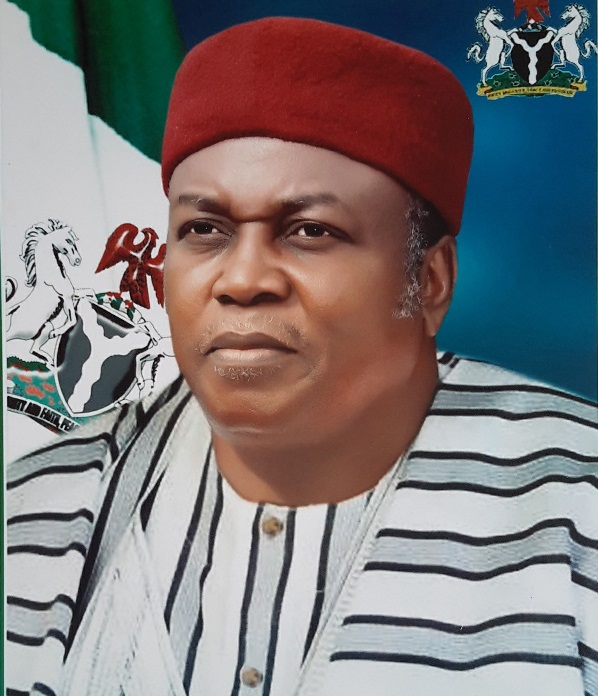
The Tiv Community in Taraba State has petitioned the State Governor, Arc Darius Ishaku over what it described as unfair treatment over the creation of new chieftaincy stools and the appointment of Traditional rulers.
Leaders of the community under the aegis of Ayatutu Cultural and Social Development Initiative(AYACASODI) accused the state government of supression of their rights as they claimed that Traditional Rulers were appointed by Government from other Tribes to preside over predominantly Tiv Communities especially in Takum and Donga LGAs of the state.
The Group spoke at a Press Conference in Jalingo, the State capital at the weekend.
Below is the full text of the press conference:A TEXT OF A PRESS CONFERENCE BY “AYATUTU CULTURAL AND SOCIAL DEVELOPMENT INITIATIVE (AYACASODI) WORLDWIDE” ON THE CREATION AND APPOINTMENT OF DISTRICT HEADS IN CHANCHANJI CHIEFDOM IN TAKUM LGA, AND WETIBI AND SANGAMBE DISTRICTS IN DONGA LGA, TARABA STATE HELD ON SATURDAY, MAY 20, 2023 AT NUJ PRESS CENTRE, JALINGO
Gentlemen of the press, we call you here today to brief you and indeed the entire world on the grave injustice being meted on our people by His Excellency, Arc. Darius Dickson Ishaku through the Gara of Chanchanji, Alhaji Tanimu Kumbera, the Gara of Donga HRH Ambassador Sanvala Shimbura, and the Government of Taraba State over the imposition of District Heads on Tiv-dominated areas in Takum and Donga Local Government Areas.
2. Ayatutu Cultural and Social Development Initiative (AYACASODI) Worldwide as an organization, is duly incorporated with Corporate Affairs Commission (CAC) with the sole aim of promoting the culture, peace, unity, development, and social values of the Tiv people worldwide.
3. We are here today to condemn the injustice done to our people in the creation of Chiefdoms and Districts by the Governor Darius Ishaku-led administration and to call on the respective authorities involved to reconsider their decisions and ensure that the right thing is done in the interest of peace and development.
4. As you may be aware, in 2018, Governor Darius Ishaku created and upgraded 54 chiefdoms in Taraba including the creation of Chanchanji Chiefdom which is predominantly Tiv but named after Jukun-Chamba name. We did not protest in public because we had also submitted a proposal for the creation of a Shitile chiefdom with headquarters at Peva.
4. Chanchanji as a village has its small territory with a culture totally different from the Tiv culture who is in the majority. It is also on record that Chanchanji ward which is 98 per cent Tiv with over 38,000 registered voters has barely 2 per cent Jukun-Chamba population.
5. It may interest you to know that since 2018, Governor Ishaku has further created chiefdoms and districts in almost every village and hamlet in Taraba State, but he did not deem it fit to create even one chiefdom for the Tiv people in the entire Taraba State, despite historical records that clearly favour a creation of Tiv Chiefdoms and districts.
6. Apart from the submission of a proposal for the creation of a Shitile Chiefdom in Takum, our people in Donga LGA also submitted a proposal for the upgrade of the already created and gazetted Ugondo district to a Chiefdom with headquarters at Tor-Damisa. A similar proposal for the restoration of the Shitile district was also submitted.
7. It is worthy of note that the Shitile village area was created on the 1st of May 1961 and approved on 6th January, 1962, alongside four other village areas of Ugondo, Gidin Dutse, Gayama, and Suntai.
The Barde administration in 1981 also made use of these units in creating LGAs and districts in the defunct Gongola State.
8. But while we were waiting for the Governor’s action on our request, Governor Ishaku suddenly approved the creation and installation of Wetibi district in the place of Shitile district and Samgambe district in the place of the already created and gazetted Ugondo district. This is a clear case of neo-colonialism in the 21st century.
9. The Shitile district with its headquarters at Ananum and Ugondo district now renamed Samgambe are predominantly Tiv with a 99 percent Tiv population.
10. In Takum LGA, just two weeks ago, the Gara of Chanchanji appointed, coronated, and imposed Chamba district heads on the people of Mbajir and Mbatyula clans under the Chanchanji district and the Mberev and Kwan-Mbayongo clans under Tse-Amadu Districts.
11. Gentlemen of the press, it may interest you to know that, over 98 percent of the population of both Chanchanji and Tse-Amadu Districts are predominantly Tiv people. The Chanchanji district is made up of majorly the Mbatyula and Mbajir Clans of Shitile, with few Chamba and Hausa; The Tse-Amadu District is made up of majorly the Mberev and Kwan-Mbayongo clans.
12. In all fairness, what is the justification for the appointment of Chamba people as District Heads of Chanchanji and Tse-Amadu? What does the government of Taraba State, Governor Darius Ishaku, and the Gara of Chanchanji want to achieve by this act? What were the criteria that were used in such appointments?
13. It is instructive to note that Tiv’s existence in those communities predates Nigeria’s Independence and there are historical and archival documents to back up this fact.
14. It is extremely strange as the Darius Ishaku’s administration has abysmally distorted both the pre-colonial and colonial historic records which are visible in national archives. Recall that this same Taraba State Government under Arc. Darius Ishaku had in the past, changed the name of Dan-Anacha in Gassol LGA to Kwararafa and created a Chiefdom, and imposed a non-Tiv person as the Head, whereas the chiefdom is predominantly Tiv People.
15. This injustice and maltreatment of the Tiv people of this area is a joke taken too far. This act of slavery in this 21st century should be totally condemned by all peace-loving and well-meaning individuals. It is clear that the objective behind this act by Governor Ishaku by changing the names of Tiv communities in Taraba and appointments of non-Tiv as traditional heads is to permanently erase Tiv identity, occupy Tiv land, and enslave our people in this 21st century. This cannot happen and we reject it in its entirety.
16. We hereby call on Gov. Darius Ishaku, the Taraba State Government, the Gara of Chanchanji, Alhaji Tanimu Kumbera, and the Gara of Donga HRH Ambassador Sanvala Shimbura to immediately reverse the appointments of the District Heads in Chanchanji, Shitile District (now Wetibi), Ugondo district (now Samgambe) and Dan-Anacha chiefdom (now Kwararafa), and appoint Tiv Sons who are the rightful people to be appointed as District Heads for the sake of peace, equity, justice, and fairness.
17. Our culture and that of Chamba are not the same and we can not be subjected to a foreign culture. Our simplicity should not be taken for cowardice. We can not allow this stand, because we can not afford to bequeath a slavery legacy to our children and the future generation.
18. We call on our people to remain calm and law-abiding as we are sure that Governor Ishaku will reverse these creation and appointments immediately. But if he fails to do so within three days from today, we would be compelled to seek legal redress in a court of law.
19. In conclusion, we humbly call on all peace-loving individuals or groups of people from Taraba State and Nigeria at large, to rise and condemn this neo-colonialism in the 21st century by Governor Darius Ishaku, because injustice to one is injustice to all.
Signed by: Chief Timothy Baaki(National President)& Comr. David Nyiagee(National Secretary) AYACASODI Worldwide







By David Torough, Abuja
Ambassador Osita Offor, popularly known as “The Ultimate Commander,” is being celebrated today for his vision, entrepreneurial drive, philanthropy, mentorship and commitment to building people and communities.
In a birthday tribute issued on behalf of the Management Team of Aba Commercial Smart City (ACSC), Engr.
Mazen Kalassina and Mr. David Okoro described Offor as a man whose influence extends beyond his business and public engagements to the people and relationships he has built throughout his journey.The tribute noted that the title “The Ultimate Commander” has become closely associated with Offor, reflecting what it described as his determination, courage, resilience and ability to pursue ambitious visions despite challenges.
According to the tribute, Offor is a visionary who sees possibilities beyond present circumstances and continually seeks opportunities to develop businesses, institutions and projects capable of creating lasting impact.
He was also described as a fighter, not because he seeks conflict, but because he refuses to surrender in the face of obstacles.
“Once Ambassador Osita believes in something, he pursues it with extraordinary determination,” the tribute stated, highlighting his persistence in the face of uncertainty, resistance and setbacks.
The birthday message further celebrated Offor as a builder, emphasizing that his contributions go beyond businesses and physical structures to include people, relationships, opportunities and legacies.
His role as a mentor was equally highlighted, with the tribute noting his ability to encourage others to think bigger, work harder and believe in their own potential. It credited him with sharing experience, opening doors and offering guidance to those around him.
Beyond his professional and public life, Offor was celebrated as a father and family man, with the message stressing the importance of responsibility, sacrifice, protection and commitment in defining his character.
His philanthropic activities also received special recognition. The tribute observed that his giving extends beyond financial support to include introductions, opportunities, advice and encouragement.
“True philanthropy is the willingness to look beyond oneself and ask: ‘What can I do to make another person’s journey better?’” the message stated.
As an entrepreneur and businessman, Offor was praised for understanding business as more than buying and selling. The tribute described his entrepreneurial philosophy as one centered on creating value, solving problems, taking calculated risks, generating employment and building sustainable opportunities.
They described him as a friend and a man of relationships, emphasizing his appreciation for trust, loyalty, partnerships and collaboration.
According to the tribute, his leadership philosophy is rooted not in commanding people, but in inspiring them to voluntarily identify with and pursue a worthwhile vision.
“That is why ‘The Ultimate Commander’ is more than a name,” the tribute stated. “It represents the man who commands his vision, his courage, his determination and his capacity to dream.”
They expressed optimism that Offor’s most significant achievements may still lie ahead, pointing to more businesses to build, people to inspire, communities to impact and lives to touch.
The management team of Aba Commercial Smart City also offered prayers for greater wisdom, strength, favour, accomplishments and impact in the years ahead. They prayed for the preservation of his health, the strengthening of his family and continued blessings upon his work.
The tribute saluted Offor in his various roles as businessman, philanthropist, mentor, father, friend, visionary, fighter and builder, while emphasizing that, above all, the celebration was about the man behind the title.
“Happy Birthday, Sir,” the message concluded, expressing the hope that his vision would continue to inspire, his courage would continue to lead and his legacy would continue to speak long after the birthday celebration.
By Dakuku Peterside
There is something reassuring about the ritual of political rivals gathering beneath the same roof and signing their names to a common promise of peace. In a country where elections have too often been accompanied by intimidation, inflammatory rhetoric and violence, the symbolism matters.
It says that political competition need not become warfare; that opponents are adversaries, not enemies; and that the pursuit of power must remain subordinate to the survival of the republic.That is why the National Peace Accord signed in Abuja on August 18, 2026, deserves to be welcomed.
Facilitated by the National Peace Committee in partnership with The Kukah Centre, it commits political actors to peaceful, credible, free, and fair elections, rejects violence and hate speech, and calls for impartiality from the electoral commission and professionalism from security agencies.But Nigeria must be careful not to mistake a declaration of good intentions for an architecture of credible elections.
A peace accord can moderate political behaviour, establish a moral baseline and give citizens a standard by which to judge candidates. What it cannot do is neutralise structural inequalities embedded in the electoral environment.
The greatest threat to the next general election may be quieter than spectacular fraud or election-day violence: the gradual tilting of the political field before voters reach polling units.
An opposition rally denied access to a stadium. A campaign permit delayed without explanation. Billboard charges raised beyond reasonable reach. State-owned media giving disproportionate attention to incumbents. Government events becoming indistinguishable from campaign appearances. Security regulations applied rigorously to one political group and indulgently to another.
Each incident may appear administrative. Taken together, they can alter the character of an election.
This is the danger of electoral tilting: democracy may preserve the rituals of competition while weakening substantive equality. Candidates remain on the ballot, campaigns continue and votes are counted, yet the conditions under which those votes are sought may already be distorted.
The lesson is uncomfortable but essential: elections are not made fair on Election Day alone.
It begins with who may campaign freely, access public facilities, receive reasonable media exposure and advertise without arbitrary obstruction—and whether the government respects the boundary between public office and partisan advantage.
Once participation becomes dependent on administrative discretion, democracy risks becoming a permissioned economy in which those who control the state also influence the conditions under which they are challenged.
A level ballot cannot fully compensate for an uneven field.
The same concern applies to the institution entrusted with managing elections. INEC cannot be expected to command public confidence merely because the Constitution describes it as independent. Independence must be visible in its finances, operations, technology, staffing, and decision-making.
Financial dependence creates vulnerability. Delayed funding can become delayed logistics. Delayed logistics can become disenfranchisement. Administrative weakness may achieve what crude manipulation once required.
The legal framework matters just as much.
Nigeria entered the post-2023 electoral cycle with unresolved questions about electronic transmission, collation and the evidentiary burden on petitioners challenging disputed outcomes. Where the law permits uncertainty between polling-unit results, electronic records and subsequent collation, mistrust grows.
When petitions are extraordinarily difficult to prove because litigants must assemble vast volumes of polling-unit documents and technological evidence, citizens may wonder whether legal remedies are genuinely accessible or merely theoretical.
This is why electoral reform cannot stop at purchasing machines.
Technology can strengthen elections, but technology does not abolish politics.
BVAS and IReV are important efforts to improve accreditation and results transparency. Yet technology is only as credible as the rules, safeguards and audit trails surrounding it. Systems can fail, networks disappear and records be contested. Disinformation can exploit technical uncertainty faster than official explanations can restore confidence.
Artificial intelligence has lowered the cost of convincing falsehoods. Deepfakes, fabricated audio, manipulated images and coordinated disinformation can sweep through political communities before fact-checkers or regulators respond. Digital campaigns can seek not merely to persuade voters, but to confuse, provoke or convince them that voting is pointless.
In such an environment, transparency is no longer an administrative virtue. It is a democratic necessity.
Election technology must therefore be resilient, independently auditable and supported by clear legal rules. Procedures for electronic transmission should not remain open to endless interpretation. Technology must reduce uncertainty, not become another arena in which uncertainty is weaponised.
Security agencies face an equally important test.
The Peace Accord properly asks candidates to restrain their supporters. But restraint loses moral force if enforcement itself becomes selective.
When one rally receives protection while another faces disruption; when organisers fear harassment; or when journalists, donors and campaign workers believe association with certain candidates carries personal risk, democratic space contracts.
A citizen who fears attending a rally may soon fear displaying a poster. Communities may stop reporting intimidation; volunteers and donors may withdraw; journalists may self-censor. Participation narrows without any formal suspension of democratic rights.
That is how democracies can weaken while their institutions remain outwardly intact.
Security neutrality must therefore be enforceable, not ceremonial. Rules of engagement during campaigns and elections should be publicly known. Complaints must be independently monitored. Violations should attract consequences. No commander should be permitted to convert state coercive power into partisan advantage.
Then there is the more familiar problem of incumbency.
Office naturally confers visibility, access to information, public recognition and a record to showcase. These advantages become dangerous when the line between governing and campaigning disappears.
Public advertising may begin to resemble partisan propaganda. Government programmes may be launched to maximise electoral impact. Official travel can become political mobilisation. Public procurement and social interventions may be influenced by campaign timing. State infrastructure can quietly become campaign infrastructure.
The answer is not to freeze government during election season, but to separate legitimate governance from partisan exploitation.
Nigeria needs an enforceable incumbency code because public office must never confer ownership of public resources.
The same discipline is required in political speech.
Hate speech is often dismissed as the excess of heated campaigning. That is a mistake. In a country where political identities frequently intersect with ethnicity, religion and region, reckless rhetoric can turn ordinary political competition into an existential confrontation.
Once voters are persuaded that an election is not merely about policies or competence but about the survival of their community, electoral defeat becomes harder to accept, and political compromise becomes more difficult.
The Peace Accord condemns hate speech. But presidential signatures cannot control thousands of candidates, party officials, influencers, and supporters across the federation. Its principles must therefore travel downwards—from national party leadership to states, local governments, wards, and communities.
Political parties must discipline their own members. Technology companies must take coordinated manipulation seriously. Civil society, religious institutions, traditional leaders, youth organisations, and the media must strengthen early-warning mechanisms to identify and defuse dangerous rhetoric before it acquires a life of its own.
Failure will resonate far beyond the declaration of a winner.
Repeatedly tilted elections deepen regional suspicion, increase alienation and weaken attachment to constitutional processes. Electoral uncertainty raises political risk, discourages investment and complicates economic planning. A society that repeatedly doubts its elections may eventually doubt democracy itself.
Nigeria’s democratic standing has never depended simply on its capacity to organise elections. As one of Africa’s largest democracies, it carries a heavier responsibility: to demonstrate that political competition can be meaningful, that rules can constrain power, and that electoral legitimacy can survive intense rivalry.
The months ahead should therefore be devoted not merely to election preparation but to building an architecture of electoral fairness.
INEC should make preparedness more visible through transparent reporting on logistics, technology, and election-related compliance. Governments should guarantee equal access to public facilities and state-owned media while separating official functions from partisan campaigning.
Security agencies should publish neutrality protocols and submit election-related conduct to credible oversight. Political parties should appoint compliance officers and accept responsibility for supporters who violate agreed standards. Civil society and the media should systematically monitor venue access, airtime, security conduct, campaign financing, and digital integrity, and publish regular election-readiness scorecards for citizens.
None of this diminishes the Peace Accord.
It gives it meaning.
Democracies need rituals. Handshakes matter. Signatures matter. Public promises matter. They express the standards a society expects its leaders to observe.
But the deeper lesson of Nigerian electoral history is that peace cannot rest on goodwill alone.
A peaceful election is not necessarily a credible election. There may be no gunshots at polling stations and yet citizens may still conclude that the field was unfair. Ballots may be accurately counted, and yet confidence may remain weak because the conditions preceding the vote were unequal.
Electoral legitimacy is cumulative.
It is built from the confidence that candidates were free to compete, citizens were free to choose, institutions acted independently, security agencies remained neutral, technology worked transparently, and the same rules applied regardless of who held power.
That is the real test before Nigeria in 2027.
Dakuku Peterside is the author of Leading in a Storm and Beneath the Surface.

By Tambaya Julius, Abuja
The Senior Special Assistant (SSA) to the Nasarawa State Governor on Greater Karu Development Control Agency (KAPDA), Hon. Bawa Rabo, has urged APC polling unit chairmen, executive committee members (EXCOs), local government appointees and other grassroots leaders in Tattara/Kondoro and Gitata Wards to remain united, committed and loyal to the party ahead of the 2027 general elections.
Rabo made the call during an engagement with APC supporters and grassroots leaders in Tattara and Gitata, Karu Local Government Area of Nasarawa State.
He urged party members to take their responsibilities seriously, stressing that their current positions, no matter how modest they may appear, could provide a pathway to greater opportunities in the future.
According to him, commitment to small assignments can eventually open the door to bigger responsibilities.
“This is a key given to you to open the door for yourself tomorrow. If you do well in the little one, the Bible says, he who is faithful in the little, a bigger responsibility shall be added unto him,” Rabo said.
He recalled that he started at the local government level, where he accepted an appointment despite the relatively low salary attached to the position.
He said he decided to focus on serving his community and carrying out his responsibilities diligently instead of allowing the financial reward attached to the job to determine his commitment.
“I told myself that if this is what I can render to my community and this is what my local government wants me to do, I will do it gladly and joyfully. I did it, and God has helped me,” he said.
Rabo said his dedication to the assignment eventually led to greater responsibilities, culminating in his current position.
“Today, I am an aide to the Governor. If I had rejected that appointment at that time, I wouldn’t have known where God was taking me to,” he stated.
He advised the grassroots leaders not to underestimate their current roles or allow the status of their offices to affect their commitment to the party and their communities.
“Don’t limit your responsibility. Don’t look down on the office you have today. God can use this office and open you another bigger one tomorrow,” he added.
The SSA also called for greater unity among APC members, particularly at the polling unit and ward levels.
He said the party could only achieve its objectives if members worked together, identified challenges in their respective areas and sought collective solutions.
“We cannot achieve what we want except we are united. Please, we must be united,” Rabo stressed.
He urged them not to be distracted by the activities of opposition parties as the 2027 elections draw closer.
“None of you should be detached. None of you should be worried or carried away with the wave of the opposition,” he said.
He expressed confidence in the APC’s prospects in the 2027 elections, urging members to remain focused on the party’s achievements and grassroots mobilisation efforts.
Speaking during the engagement, the Councillor representing Tatta/Kondoro Ward in Karu LGA, Barr. Ninda Yona, urged women to remain united and keep faith in the APC-led government.
Yona said women had received increased attention through political appointments and empowerment programmes, adding that several women in her ward had benefited from government interventions.
She described women as an important force in elections, citing their numerical strength and active participation in the electoral process.
She urged women to remain united and continue supporting the administration as the country approaches the 2027 general elections.
“I know that in every election, once women are behind you, you win your election because they keep true to their promise and come out in masses to vote,” Yona said.




The Man Behind ‘The Ultimate Commander’: A Birthday Tribute to Ambassador Osita Offor
ShareBy David Torough, Abuja Ambassador Osita Offor, popularly known as “The Ultimate Commander,” is being celebrated today for his vision,...
Peace on Paper, Peril in Practice: Why 2027’s Elections Remain at Risk
ShareBy Dakuku Peterside There is something reassuring about the ritual of political rivals gathering beneath the same roof and signing...


2027: Bawa Urges APC Leaders, Supporters on Unity
ShareBy Tambaya Julius, Abuja The Senior Special Assistant (SSA) to the Nasarawa State Governor on Greater Karu Development Control Agency...

NCS Lilypond Export Command Gets New Acting CAC
ShareThe Nigeria Customs Service (NCS), Lilypond Export Command, has appointed Deputy Comptroller Olusola Salako as its Acting Customs Area Controller...

Oyebanji Reappoints Retired Ekiti Accountant-General
ShareEkiti State Governor, Biodun Oyebanji, on Tuesday approved the appointment of Titilayo Olayinka as the new Accountant General of the...

Eid-el-Maulud: Tinubu, Govs, Others Preach Peace, Compassion, Unity
ShareBy Laide Akinboade, Abuja President Bola Tinubu, state governors, traditional rulers and religious leaders have called on Nigerians to draw...

Niger Mosque Massacre: Tinubu Orders Rescue of over 60 Abductees
ShareFrom Dan Amasingha, Minna President Bola Ahmed Tinubu has ordered the Armed Forces, the Nigeria Police Force, the Department of...


JAMB Breaks New Ground, Allows Home Upload of O’Level Results
ShareCandidates seeking admission into Nigerian tertiary institutions can now upload and verify their O’Level results from the comfort of their...

Tinubu Mourns Ogogo, Extols His Creative Legacy
SharePresident Bola Tinubu has condoled with the family, friends and colleagues of veteran Nollywood actor, filmmaker and screenwriter Taiwo Hassan,...


Nigeria Upgrading its Digital, Intelligence-led Border Management System — NIS
ShareNigeria is strengthening its border management architecture through digital technology, biometric identity systems, intelligence sharing and stronger collaboration with border...