
NEWS
Transforming Abuja: Nyesom Wike’s Development Initiatives in the Federal Capital Territory


By Laide Akinboade, Abuja
The Minister of Federal Capital Territory, Nyesom Wike, and Dr. Mariya Mahmud on the 21st August, 2023 assumed office as the 17th Minister and the 12th Minister of state of the Federal Capital Territory respectively shortly after their inauguration by President Bola Tinubu at the Presidential Villa, Abuja.
Wike who is immediate past Governor of River state, when he assumed office as Minister in his office while speaking to journalists pledged to make Abuja safe for all Nigerians saying that he has the full support of Mr President to bring immediate solution to the challenges facing the nation’s capital. The FCT Minister said: “The President has given us the marching order, we must bring FCT back to what it is supposed to be and we are willing and we have the capacity to do that. That is what we have come to tell members of the media. It is not going to be business as usual.”The Minister continued: “So many people have complained that FCT has lost focus; so many people have complained that this is not the FCT they know, this is not the FCT of the founding fathers; it is not the FCT that they thought will compete with other cities of the world. And now is the time we must show that the Federal Capital Territory Abuja should be one of the cities that will compete with other cities of the world”.Wike also assured Abuja residents of massive infrastructural development, increased Internal Generation of Revenue, IGR, proper sanitation of the city, tackle the challenges of land speculation, insecurity, alternative transportation to motorcycles and tricycles in the Federal Capital City (FCC) would be provided to make movement in the FCC and from the suburbs to the FCC easier for commuters, stressing that mass transit buses and the Abuja Light Rail would be made functional again.Looking at all these promises from the Minister who assumed office exactly a year ago, what are those things he has achieved in just one year.To mark the one year in office of President Ahmed Tinubu, the Minister announced 9 days of inauguration of completed projects in FCT, these projects included inauguration of commercial operation of the Abuja Rail Mass Transit, the Outer Southern Expressway (OSEX) from the Villa Roundabout to the Ring Road 1 with four number of interchanges as well as the B6 and B12 Circle Road.The FCT Minister also inaugurated in February 2024, Wike inaugurated the resurfacing of 189 roads and remedial work on bridges in Maitama, Garki, and Utako districts, covering 57 kilometers across the three districts.These projects demonstrate the minister’s commitment to improving infrastructure and providing housing in the Federal Capital Territory.The Minister has started the construction of 30 Kilometres roads across the six area councils of the territory, most of the roads have been confirmed to be completed before the end of 2024.Wike has been instrumental in transforming Abuja, through these various development initiatives. Since assuming office, Wike has implemented numerous projects aimed at improving infrastructure, enhancing security, and promoting economic growth.This essay will explore Wike’s development initiatives in Abuja, highlighting their impact on the city’s residents and the nation at largeAccording to Wike, prioritizing infrastructure development is because he recognizes its critical role in driving economic growth and improving the quality of life for Abuja’s residents.In order to address the scourge of insecurity that reared its head the Minister donated operational vehicles, motorcycles, equipment and accessories to security agencies and vigilantes in FCT.On job creation, the minister’s initiatives have led to job creation in various sectors, including construction, hospitality, and services.Taiwo Aderibigbe, has been living in Abuja for over 20 years and he is the former chairman of Pegi Estate Community Development Association, PECDA, while speaking with Daily Asset, this is first time in 18 years that FCT is seeing remarkable infrastructure development and transformation, although more need to be done especially the decades abandon roads like Pegi-Dafara-Kuje and Apo-Wassa-Kuje roads.He said, “Indeed, it’s been a remarkable year. Chief Wike’s appointment was a masterstroke by President Tinubu, promoting national integration and democracy. For the first time in eighteen years, we’ve seen significant infrastructure development and transformation in the FCT, reminiscent of Mallam Nasir Elrufai’s tenure.”Within his first year, the Minister has increased the FCT’s internally generated revenue, reactivated thriving Area Council projects, and demonstrated political will in strengthening the bureaucracy. He also implemented the long-awaited FCT Civil Service Commission, allowing civil servants to aspire to the peak of their careers. His commitment to grassroots development is evident in his tours of the six Area Councils, interacting with residents, and assuring them of more projects.”The Minister has completed several high-impact projects, including the Wuye/Wuse Interchange Bridge, Constitution road by the USA embassy, Durumi Bridge, and Apo road, among others. These projects have transformed the city center and reduced congestion. No Minister has achieved this much in just one year”He appealed, “While we commend the Minister’s achievements, we urge him to complete decades-long projects like Pegi-Dafara-Kuje and Apo-Wassa-Kuje roads. These projects will reduce traffic gridlock, travel time, and open up more districts for development. We need more people-based infrastructural projects to feel the impact of government at the grassroots”.Even though more needs to be done especially in the area of land grappling, racketeering, and speculation, in the area of development of area councils which has been neglected by the past administration. The people in the area councils need to feel and see the presence of the government. Thank God for the new FCT Minister and Minister of state who are poised to ensure the development of both the satellite towns and the city center.Wike has shown this by the various ongoing projects ongoing in the area councils.In conclusion, the FCT Minister, Nyesom Wike’s development initiatives in Abuja have transformed the city, making it a hub for economic growth, infrastructure development, and security. His efforts have improved the quality of life for residents and made Abuja an attractive destination for investors and visitors. As the minister continues to implement his vision, Abuja is poised for even greater growth and development.
The Founder and Chancellor of the Afe Babalola University Ado-Ekiti (ABUAD), Aare Afe Babalola has announced plans to forward proposals on his idea of quality, functional and impactful education to President Bola Tinubu and other key government officials.
The Founder and Chancellor of the Afe Babalola University Ado-Ekiti (ABUAD), Aare Afe Babalola has announced plans to forward proposals on his idea of quality, functional and impactful education to President Bola Tinubu and other key government officials.
Babalola disclosed this in his letter of appreciation to the Chairman of United Nigeria Airlines, Prof Obiora Okonkwo, who was a Guest Lecturer at the recent convocation ceremony of ABUAD held at university campus in Ado Ekiti.
The legal icon said he had constituted a committee of distinguished academics at ABUAD to examine the contents of the lecture and other related documents, particularly their functionality and relevance to Nigeria’s development.
The committee, according to him, would study Okonkwo’s 14th convocation lecture titled, “Functional Education and the Nigerian Project: Strategic Human Capital Development for National Renewal,” delivered at ABUAD during its 14th convocation ceremony.
The findings, he said, would be transmitted to appropriate authorities, including the President, the Minister of Education, the Minister of Health, the Minister of Agriculture and the Executive Secretary of the National Universities Commission, NUC, for consideration.
Babalola said the initiative was driven by his conviction that Nigeria’s development challenges could not be adequately addressed without quality, functional and impactful education.
He also called on the Federal Government to increase investment in education, while urging wealthy and patriotic Nigerians to emulate the culture of philanthropy prevalent in the United States and Britain, where individuals and institutions support educational establishments.Buy Maps
According to him, sustained private-sector support for education remains critical to building institutions capable of producing globally competitive graduates and addressing national development needs.
He said: “The feelers I have been getting on the well-researched and articulately delivered lecture point to the fact that the lecture was not only well understood, but that its contents will remain indelible in the minds of the audience for a long time to come.”
“It is now obvious that both of us have something in common: How to make this country better. When the result of the findings of my teachers are out, we will send them to the appropriate authorities such as the President and Commander-In-Chief, the Minister of Education, the Minister of Health, the Minister of Agriculture and the Executive Secretary of the National Universities Commission, NUC, among others for them to appreciate the place and import of quality, functional and impactful education.
“Government must be prepared to spend more on Education. Patriotic and well-to-do-Nigerians should emulate then practice in the United States of America and England where well-to-do individuals support private institutions in those countries, that is why our university, Afe Babalola University, Ado-Ekiti, ABUAD, is the clear leader even though it is barely 16 years old”.
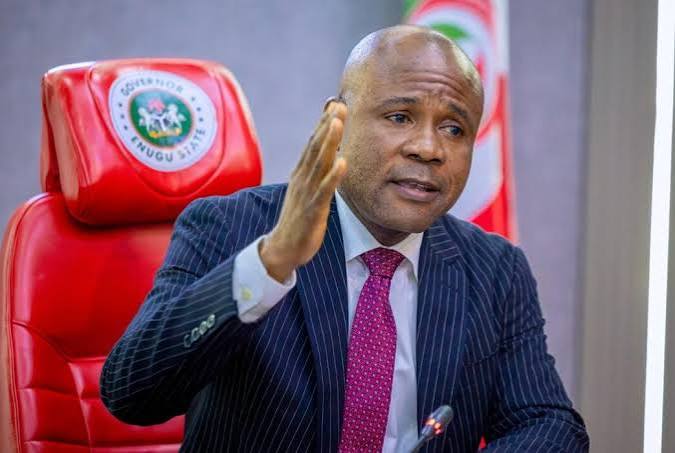
From Sylvia Udegbunam, Enugu
Enugu State Governor, Dr. Peter Mbah, says Nigeria would have suffered total economic collapse but for President Bola Tinubu’s courageous reforms, arguing that the removal of fuel subsidy and floating of the naira only waited until the President’s assumption of office in 2023 because the nation delayed the ‘evil day’ and lived on borrowed time.
He gave the insights at the weekend during the launch of “As Tinubu Mbah Moves” (ATM), a support group convened by the Minister of Innovation, Science and Technology, Dr.
Kingsley Udeh (SAN), and dedicated to the re-election of President Tinubu and Governor Mbah in Enugu.Speaking to the mammoth crowd, he said, “It would have been a lot easier for any leader to just continue with the status quo and carry on on the basis of business as usual. But for Bola Ahmed Tinubu, it was business unusual that led to the bold initiatives.
Mbah took a swipe at the foreign exchange regime before the floating of the naira by Tinubu, describing it as a cesspool of corruption.
He said that the stabilisation of the nation’s macroeconomic indicators by the Tinubu administration had encouraged Foreign Direct Investments (FDIs) necessary for improving Nigeria’s microeconomic indices, such as household incomes and employment.
Citing Enugu State as an example, Mbah also credited the President with freeing funds that could have been sunk into subsidy, thus arming states with resources to embark on massive development projects that impact the lives of the people.
The Governor, therefore, urged Nigerians to vote en masse for the President to complete the job he started, saying it was the only realistic option.
“Nations are not built by abandoning challenges halfway through. If we have gone through this whole process of difficult periods when it appeared as if all was doomed to a point where we are beginning to see the light at the end of the tunnel, we cannot abandon what has been started. No great sailor abandons his ship because of a rough sea, mid-sea. You have to sail to get to your destination,” he said.
He urged ATM members to take the message of the successes of Tinubu’s reforms and the President’s various infrastructural and policy interventions in the South East to the electorate.
Meanwhile, Dr. Udeh (SAN) said the support group would focus its mobilisation efforts on non-members of the All Progressives Congress (APC) across the 4,145 polling units of Enugu State ahead of the 2027 general elections, deploying technology to register members, track their participation and monitor its mobilisation activities through an online registration portal.

From Francis Sadhere, Delta
Delta State Governor, Rt. Hon. Sheriff Oborevwori, on Monday presented a proposed N1.23 trillion 2027 budget to the State House of Assembly, allocating 65 per cent of the total estimates to capital expenditure.
Tagged “Budget of Sustained Prosperity and Enhanced Growth”, the proposal provides N806.
8 billion for capital projects and N430 billion for recurrent expenditure.Presenting the Appropriation Bill before lawmakers in Asaba, Oborevwori said the budget was designed to consolidate ongoing projects, stimulate economic growth, strengthen social interventions and improve the living conditions of residents.
He disclosed that the proposed budget was N493.01 billion, representing a 28.5 per cent reduction from the N1.729 trillion approved for the 2026 fiscal year.
According to him, the reduction was a deliberate measure to ensure realistic spending projections, fiscal discipline and effective management of the state’s resources.
The governor identified the completion of ongoing projects, commencement of new investments, consolidation of existing achievements and expansion of social interventions as key priorities of his administration in 2027.
On infrastructure, Oborevwori disclosed that his administration had embarked on 872 road projects and 20 bridges and flyovers since assuming office, covering 2,348 kilometres of roads and 1,871 kilometres of drainage infrastructure across the state.
He said consultations with communities had shown that roads, bridges and jetties remained among the most pressing needs of residents, particularly those in rural and riverine areas.
To sustain infrastructure development, the governor said N320 billion had been earmarked for the two Ministries of Works to facilitate the completion of ongoing projects and the execution of new ones.
On revenue generation, Oborevwori disclosed that Delta State’s Internally Generated Revenue (IGR) had increased from N83 billion in 2023 to a projected N283 billion by December 2026.
He attributed the growth to technology-driven revenue collection, expansion of the revenue base and efforts to eliminate leakages without imposing additional tax burdens on residents.
The governor also revealed that his administration had repaid N400 billion out of the N463 billion legacy debt inherited, leaving an outstanding balance of N63 billion.
He expressed confidence that the remaining debt would be fully liquidated by the end of the first quarter of 2027.
In the education sector, Oborevwori proposed N74 billion, comprising N10 billion for primary education, N12 billion for technical education, N12 billion for secondary education and N40 billion for higher education.
He said the government would sustain investments in school rehabilitation, teacher development, digital learning facilities, laboratories and accreditation of academic programmes.
He further disclosed that N10.8 billion had been approved for the rehabilitation and renovation of primary and secondary schools across the state.
For healthcare, the governor proposed N50 billion to support hospital upgrades, provision of medical supplies, recruitment and improved welfare of health personnel.
He highlighted the College of Health Technology, Ovrode, which has enrolled over 800 pioneer students, as part of the administration’s efforts to address manpower shortages in the health sector.
Other major allocations in the proposed budget include N50 billion for the 25 local government areas, N20 billion for the Delta State Capital Territory Development Agency and N20 billion for the Warri-Uvwie and Environs Development Agency.
The budget also earmarks N12 billion for energy, N10 billion for urban and physical planning, N5 billion for agriculture and N5 billion for social interventions.
On economic diversification, Oborevwori said his administration was attracting private sector investments into agriculture, industrialisation, entertainment and small and medium-scale enterprises.
He cited the $70 million Olam Agri feed mill project at Ogwashi-Uku as one of the investment outcomes of the 2026 Delta State Economic and Investment Summit.
According to him, the project would create employment opportunities and provide a ready market for locally produced agricultural commodities.
The governor further disclosed that Delta’s Gross Domestic Product (GDP) increased from N14.5 trillion in 2024 to approximately N17.9 trillion in 2025, making the state the fifth-largest economy in Nigeria.
On electricity, he said his administration had executed 2,155 energy projects, including 90 transformers, 2,003 solar street-lighting projects and 23 power-grid extensions.
Oborevwori also announced that he had assented to the 13th-month salary bill for public servants, with implementation commencing in December 2026.
He said the initiative was introduced in recognition of workers’ contributions to the development of the state and to ease their financial responsibilities during the festive season.
On security, the governor said his administration was strengthening collaboration with security agencies to tackle kidnapping, cultism, pipeline vandalism and other criminal activities.
He disclosed that approval had been granted for the construction of 25 police divisional headquarters for the proposed state police structure, while an application had also been made for the recruitment of 1,000 forest guards.
He said the 2027 budget would prioritise infrastructure development, economic diversification, human capital development, peace and security, while ensuring that the benefits of economic growth reached ordinary Deltans.
The Appropriation Bill was subsequently presented to the lawmakers for consideration and approval. The motion for its presentation was moved by the House Leader, Hon. Emeka Nwaobi, and seconded by Hon. Marilyn Okowa-Daramola.
Speaker of the House, Rt. Hon. Emomotimi Guwor, commended the governor for his administration’s achievements in infrastructure, healthcare, education, social welfare and human capital development.
Guwor particularly applauded the approval of the 13th-month salary for public servants, describing the initiative as a demonstration of the governor’s commitment to workers’ welfare.
He reaffirmed the legislature’s commitment to maintaining a cordial working relationship with the executive arm, noting that cooperation between both arms of government had contributed significantly to the state’s development.
The Speaker assured the governor of the Assembly’s support for the budget and disclosed that the House would take the bill for second reading on Tuesday, November 17, 2026.


Afe Babalola Send Education Reform Proposals to Tinubu
ShareThe Founder and Chancellor of the Afe Babalola University Ado-Ekiti (ABUAD), Aare Afe Babalola has announced plans to forward proposals...


Sunbeth Treenuts & Sesame Acquires 73.29 Per Cent of Livestocks Feeds Plc
ShareSunbeth Treenuts and Sesame Limited, a subsidiary of Sunbeth Agro HoldCo, announces the completion of its acquisition of UAC of...

How Tinubu’s Reforms Halted Nigeria’s Economic Collapse – Mbah
ShareFrom Sylvia Udegbunam, Enugu Enugu State Governor, Dr. Peter Mbah, says Nigeria would have suffered total economic collapse but for...


Oborevwori Presents N1.23trn 2027 Budget
ShareFrom Francis Sadhere, Delta Delta State Governor, Rt. Hon. Sheriff Oborevwori, on Monday presented a proposed N1.23 trillion 2027 budget...

Sanwo-Olu Gifts Flamingos N10m Each over World Cup Triumph
ShareLagos State Governor, Babajide Sanwo-Olu, has rewarded each member of Nigeria’s Flamingos with ₦10 million and an iPhone 18 Pro...

UniAbuja Land Tussle: Wike Only Implemented What His Predecessor Approved – FCTA
ShareBy Laide Akinboade, Abuja The Federal Capital Territory Administration (FCTA) has described today’s protest by the Joint Action Committee (JAC)...

Obi to Publish Anambra Achievements in 10-day Series
ShareThe 2027 presidential candidate of the Nigeria Democratic Congress, Peter Obi, has announced plans to publish a 10-day account of...


NiMet Predicts Dust Haze, Thunderstorms Nationwide
ShareThe Nigerian Meteorological Agency (NiMet) has predicted dust haze and thunderstorms across the country from Monday to Wednesday. NiMet’s weather...

INEC Debunks Claims of Remote BVAS Log-Out, Lost Election Results
ShareBy Orjime Moses, Abuja The Independent National Electoral Commission (INEC) has dismissed claims that presiding officers can be remotely logged...
Needless Diplomatic Brawl
ShareNigeria and South Africa do not need another quarrel. They have had too many already — xenophobic attacks, trade disputes,...