
Foreign News
Turkish Embassy Strengthens Ties with Nigeria, Holds Cuisine Night


The Embassy of Turkey in a bid to strengthen ties with Nigeria has organised a week-long event, where both countries can learn more about each other’s culture through food.
Turkish Ambassador to Nigeria, Hidayet Bayraktar, speaking at the inaugural dinner of the event on Saturday in Abuja, said that the event was organised at the instance of the Turkish President.
Bayraktar in an interview, said that the event, which would become an annual one, aimed at showcasing Turkey to the World, especially through its food and culture.
He explained that just like other countries have clichéd restaurants like the “Chinese, French and Italian Restaurants”, Turkey also aimed at pushing to the world its “Turkish restaurant”.
Bayraktar also noted that Nigeria and Turkey would build stronger ties if similar event was held by the Nigerian government in Turkey, to create an opportunity for the Turks to know Nigeria better,
“Today, we started the Turkish cuisine week in Abuja, this is the gala dinner and it is under the auspices of the President of the Republic of Turkey.
“And, the cooperation with the Ministry of Culture and Tourism in Turkey, from now, every year, it will be an annual event, in our whole Embassies.
“We are trying to introduce the Turkish Cuisine to the world. We are culturally very rich, with rich history.
According to him, all the culture and food we have today are a combination of our richness in culture.
“It is also an opportunity for the Nigerians to taste the food and know about the richness of the Turkish foods.
“This is one of the first nights of the week-long activities in Abuja. All through this week Frazer suites will have Turkish cuisines on their menu,” he said.
According to him, as you know, food is always one of the shows of culture. When we eat food, we do not just eat Turkish or Nigerian foods.
“For example, we go to Chine restaurants, we go to French restaurants. It is a platform to share each other’s food.
“Through your ministry of culture and tourism, it will be good to do what we are doing here in Turkey.
“It will be an opportunity for them to also get the Turkish people to know about Nigerian cuisines also as food is always the common language,” Bayraktar said.
Also speaking, Minister of Information and Culture, Lai Mohammed noted that gastronomy was a more effective way of strengthening bilateral relations aside hard core diplomacy.
Mohammed said that Nigeria and Turkey had built and enjoyed strong relations in the past years and such an event would continue to sustain the relations.
“What we have witnessed tonight is the growing power of what I call self-power. Self-power in the area of tourism and how countries today is using tourism to bind countries together.
“How they are using tourism to reach out to people, an how tourism, especially gastronomy, music, film, fashion are not just tools of trade but also tools of diplomacy.
“What we have witnessed tonight is the beginning of a one-week gastronomy. It is quite significant in the sense that many countries are known for the kind of gastronomy they provide.
“And, they have influenced the world, and sometimes conquered the world through food.
“You can imagine Kellogs cornflakes, you can imagine what our kids, and grandchildren today will do if you do not give them Kellogs, look at Mr Biggs, McDonnalds,” Mohammed said. (NAN)
By Isaac Asabor
Every time xenophobic violence erupts in South Africa, the script is almost always the same. Horrific images of foreign-owned shops being looted flood social media. Nigerians living and doing business in the country scramble for safety.
Families in Nigeria panic as they struggle to reach loved ones. The Nigerian government issues a statement condemning the attacks, calls for calm, demands justice and urges the South African authorities to act. Diplomatic consultations follow, promises are made, and after a while, silence returns, until the next cycle of violence begins. This repetitive pattern has become both predictable and unacceptable.It raises an uncomfortable but necessary question: How many more times must Nigerians be subjected to xenophobic attacks before Nigeria changes its diplomatic strategy? It is perhaps time for Abuja to abandon excessive diplomatic niceties and embrace what many Nigerians would describe as “Roforofo diplomacy”, a more robust, assertive and reciprocal engagement that makes it unmistakably clear that attacks on Nigerians abroad will carry diplomatic consequences.
The phrase “roforofo,” borrowed from the popular Nigerian expression for mud wrestling, symbolizes a no-holds-barred confrontation rather than physical aggression. In diplomatic terms, it means abandoning excessive restraint in favour of firm, unapologetic and interest-driven engagement. It means matching rhetoric with action.
For decades, Nigeria has approached South Africa as an elder brother. During the anti-apartheid struggle, Nigeria invested enormous political, financial and diplomatic capital in the liberation of South Africa. Successive Nigerian governments contributed hundreds of millions of dollars to liberation movements. Nigerian workers voluntarily paid into the Southern African Relief Fund. Scholarships were awarded to South African students. Nigerian passports carried restrictions against visiting apartheid South Africa in solidarity with the oppressed majority.
Many Nigerians still remember these sacrifices with pride. Ironically, many younger South Africans appear either unaware of this history or indifferent to it. Instead, Nigerians have increasingly become convenient scapegoats for South Africa’s deep-seated socio-economic challenges.
There is no denying the fact that high unemployment, widening inequality, inadequate public services and rising crime have created fertile ground for populist narratives in South Africa, thereby creating an atmosphere of blaming foreigners for domestic hardships. Given the foregoing atmosphere, Nigerians, because of their visibility in commerce and entrepreneurship, often become easy targets. The reality, however, is that xenophobia has little to do with nationality and everything to do with governance failures. Foreigners did not create South Africa’s unemployment crisis. Foreigners did not institutionalize inequality. Foreigners did not weaken public infrastructure. Foreigners did not design policies that have left millions frustrated. Yet, instead of confronting these structural problems, mobs repeatedly vent their anger on vulnerable immigrants. Sadly, Nigerian-owned businesses have become recurring casualties.
Nigeria’s response has generally reflected the principles of diplomacy: protest notes, ambassadorial consultations, presidential phone calls, bilateral commissions and expressions of concern. These measures have achieved little. The attacks continue. This is precisely why Nigeria should reconsider its diplomatic toolkit.
A country with Nigeria’s demographic weight, economic influence and regional leadership credentials cannot continue responding to repeated assaults on its citizens with little more than carefully worded communiqués. Diplomacy should not be mistaken for weakness. Every sovereign nation has a primary obligation to protect its citizens wherever they may be. If conventional diplomacy consistently fails to achieve that objective, then more assertive measures become necessary.
Roforofo diplomacy does not mean severing diplomatic relations with South Africa. Nor does it imply encouraging retaliation against innocent South Africans living in Nigeria. Nigeria must never descend into the same lawlessness it condemns. Instead, it means adopting reciprocal diplomatic pressure.
For example, Nigeria can temporarily suspend certain bilateral engagements whenever attacks recur until measurable actions are taken by Pretoria. It can review preferential economic arrangements where necessary. It can insist on concrete timelines for prosecution of perpetrators rather than accepting endless promises. It can pursue compensation mechanisms for verified victims.
It can intensify legal action through regional and continental institutions. Nigeria can also leverage multilateral platforms such as the African Union (AU) and the Southern African Development Community (SADC) to push for enforceable continental standards against xenophobic violence. The issue should no longer be treated merely as South Africa’s internal affair.
Persistent attacks on African migrants undermine the very ideals upon which African integration is built. The vision of the African Continental Free Trade Area depends not only on the movement of goods but also on the protection of people. Businesses cannot thrive where entrepreneurs fear for their lives. Investments cannot flourish where nationality becomes a death sentence.
Beyond diplomacy, Nigeria must also strengthen its consular protection framework. Its missions abroad should possess emergency response capacities capable of rapidly evacuating citizens where necessary, providing temporary shelters and offering legal assistance.
Technology can also play a role through digital emergency registration systems that enable embassies to locate Nigerians quickly during crises. Equally important is economic diplomacy. Nigeria remains one of South Africa’s significant African trading partners.
Major South African corporations have earned billions of naira over several decades operating successfully in Nigeria. Companies in telecommunications, banking, retail and entertainment have enjoyed enormous opportunities within Nigeria’s large consumer market. While business should never become a weapon, economic relationships should encourage mutual respect. Reciprocity remains a fundamental principle of international relations.
If Nigerians cannot operate safely in South Africa, legitimate questions will inevitably arise regarding whether South African businesses should continue enjoying a completely frictionless environment in Nigeria without corresponding guarantees for Nigerian interests.
Such questions are neither unreasonable nor unprecedented in global diplomacy. The United States routinely imposes sanctions when its citizens are threatened abroad. European nations frequently issue travel advisories and apply diplomatic pressure over human rights concerns. China aggressively protects its nationals and investments overseas. India has demonstrated increasing willingness to intervene diplomatically whenever Indians become victims of violence abroad.
Nigeria should not consider similar firmness an overreaction. It should consider it responsible statecraft. At the same time, Nigerians must resist the temptation to paint all South Africans with the same brush. Millions of South Africans reject xenophobia.
Civil society organizations, religious leaders, journalists, academics and ordinary citizens have repeatedly condemned these attacks and risked their own safety defending foreign nationals. These allies should be strengthened, not alienated. People-to-people diplomacy remains essential.
Educational exchanges, historical awareness campaigns and cultural cooperation can help younger South Africans understand Nigeria’s historic contributions to their country’s freedom. Ignorance often fuels prejudice. Knowledge can weaken it.
Ultimately, however, no amount of cultural exchange can substitute for effective law enforcement. The greatest deterrent to xenophobic violence is certainty of punishment. Each time perpetrators escape justice, they become emboldened.
Each failed prosecution sends a dangerous signal that foreigners are expendable. That perception must end. Nigeria should therefore insist that every episode of xenophobic violence be followed not merely by arrests but by convictions, restitution and transparent judicial processes. Anything less simply postpones the next outbreak.
In fact, the relationship between Nigeria and South Africa is too important to be marred by South African vigilante groups arrogating immigration duties to themselves. Together, both nations account for a significant share of sub-Saharan Africa’s economy and diplomatic influence. Their cooperation remains indispensable for continental peace, trade, innovation and development.
Yet genuine partnership cannot exist where one partner repeatedly watches its citizens become victims. Friendship without mutual respect is unsustainable. Brotherhood without protection is meaningless. There comes a point when patience begins to resemble acquiescence. Nigeria appears dangerously close to that point. The country does not need reckless confrontation. It does not need inflammatory rhetoric. It certainly does not need retaliation against innocent South Africans.
What it needs is a foreign policy anchored firmly on reciprocity, national dignity and the uncompromising protection of Nigerian lives. That is the essence of roforofo diplomacy, not unnecessary hostility, but unmistakable firmness.
When diplomacy repeatedly produces condolences instead of security, it is time to change the diplomatic language. Nigeria owes its citizens nothing less.

The World Health Organisation (WHO) has called on governments and partners to urgently accelerate efforts to eliminate viral hepatitis as a public health threat and reduce liver cancer deaths.
WHO Director General, Dr.
Tedros Ghebreyesus, made the call in his message to mark the 2026 World Hepatitis Day, globally celebrated on July 28.To mark World Hepatitis Day, WHO is partnering with Rotary International and the World Hepatitis Alliance to strengthen global and local advocacy.
According to Ghebreyesus this year’s campaign”Hepatitis: Let’s Break it Down” demands action to confront the rising toll of liver cancer linked to chronic hepatitis infections.
He also called for decisive steps to dismantle persistent barriers from stigma to funding gaps that continued to slow progress in prevention, testing, and treatment.
“Every 30 seconds, someone dies from a hepatitis-related severe liver disease or liver cancer. Yet we have the tools to stop hepatitis.
”Viral hepatitis types A, B, C, D, and E are major causes of acute liver infection.
”Among these only hepatitis B, C, and D can lead to chronic infections that significantly increase the risk of cirrhosis, liver failure, or liver cancer.
”Yet most people with hepatitis don’t know they’re infected. Types B, C, and D affect over 300 million people globally and cause more than 1.3 million deaths each year, mainly from liver cirrhosis and cancer.
”The International Agency for Research on Cancer (IARC) recently classified hepatitis D as carcinogenic to humans, just like hepatitis B and C.
”Hepatitis D, which only affects individuals infected with hepatitis B, is associated with a two- to six-fold higher risk of liver cancer compared to hepatitis B alone.
”This reclassification marks a critical step in global efforts to raise awareness, improve screening, and expand access to new treatments for hepatitis D,” he added.
Also the incoming Director of Science for Health at WHO, Dr. Meg Doherty, said WHO has published guidelines on testing and diagnosis of Hepatitis B and D in 2024, and is actively following the clinical outcomes from innovative treatments for hepatitis D.
”Treatment with oral medicine can cure hepatitis C within two to three months and effectively suppress hepatitis B with life-long therapy.
”Treatment options for hepatitis D are evolving. However, the full benefit of reducing liver cirrhosis and cancer deaths can only be realised through urgent action to scale up and integrate hepatitis services – including vaccination, testing, harm reduction, and treatment into national health systems.
”Encouragingly, the majority of low- and middle-income countries (LMICs) have strategic plans on hepatitis in place and progress in national hepatitis responses is increasing,” she said.
The UN health agency said that in 2025, the number of countries reporting national hepatitis action plans increased from 59 to 123.
It noted that as of 2025, 129 countries have adopted policies for hepatitis B testing among pregnant women, up from 106 reported in 2024; adding that 147 countries have introduced the hepatitis B birth dose vaccination, an increase from 138 in 2022.
However, critical gaps remain in service coverage and outcomes, as stated in the 2024 Global Hepatitis Report.
The next challenge will be to scale up the implementation of prevention, testing and treatment coverage. Achieving WHO’s 2030 targets can save 2.8 million lives and prevent 9.8 million new infections.
With declining donor support, countries must prioritise domestic investment, integrated services, better data, affordable medicines, and ending stigma.
Researchers with the Pan American Health Organisation (PAHO), a sub-agency of the World Health Organisation (WHO) said nearly 470 million people across North and South America have at least one neurological disorder,
According to a new study published in The Lancet Regional Health Americas, the figure represents two in five people living in the Americas and includes conditions such as migraine, stroke, epilepsy and Alzheimer’s disease
PAHO, in a statement on Wednesday stated that neurological disorders affect the brain, spinal cord and peripheral nerves and can impair movement, memory, learning, communication and behaviour,
The study also found that age-adjusted death rates have declined since 1990, meaning more people now survive these conditions and require access to long-term care and support services.
However, not all people living in the Americas can access this care.
They found nearly a fourfold difference between countries with the highest and lowest burden – based on a measure of years of life lost to disease.
Countries with the highest burden included Haiti, Guyana and Suriname, while countries with the lowest burden included Colombia, Peru and Argentina.
The disparities in care access reflect differences in exposure to risk factors as well as persistent gaps in access to prevention, diagnosis, treatment, rehabilitation and long-term care.
In terms of risk factors, PAHO said a significant share of neurological health loss can be prevented by controlling or avoiding high blood pressure, diabetes, obesity, tobacco use and harmful environmental exposures.
In 2023, these conditions were responsible for an estimated 1.1 million deaths and 37.5 million disability-adjusted life years (DALYs), a measure that combines years of life lost due to premature death and years lived with illness or disability.
Together, they accounted for about 12 per cent of the total burden from no communicable diseases and injuries in the Americas.
The study found that a substantial share of neurological health loss in the Americas could be prevented by reducing exposure to modifiable risk factors.
High blood pressure was the leading risk factor for stroke, while elevated blood glucose levels contributed significantly to the burden of Alzheimer’s disease and other dementias.
Researchers also identified environmental exposures, particularly lead and air pollution, as important contributors to several neurological conditions.
“Many neurological disorders share risk factors with other noncommunicable diseases,” Dr. Anselm Hennis, Director of PAHO’s Department of Noncommunicable Diseases and Mental Health and co-author of the study, said.
“Improving prevention and control of high blood pressure, diabetes, obesity, tobacco use, and harmful environmental exposures could deliver major benefits for brain health across the region.”
“Protecting brain health starts long before the first symptoms appear,” Renato Oliveira, Chief of PAHO’s Mental Health Unit and co-author of the study, added.
“Investing in prevention and risk-factor control can help reduce the burden of neurological disorders while also lowering the risk of other non-communicable diseases that share the same determinants.”
The authors conclude that addressing the growing burden of neurological disorders will require stronger prevention efforts, integrating neurological care into primary health care, and expanding access to rehabilitation, long-term care, and disability support services.
With populations across the Americas aging rapidly, these investments will be critical to reducing disability and improving quality of life in the decades ahead.


FG begins 2026 National Laureate Programme
ShareThe Tertiary Institutions National Laureate Committee has announced the commencement of the 2026 National Laureate Programme. The National Laureate Programme...
Still On Abubakar Malami, His Battles and Landmark Achievements
ShareBy Hajia Hadiza Mohammed As I stated in my previous article, some of my colleagues have queried my interest in...


Why Nigeria’s Births should not Worry Elon Musk
ShareBy Chinedu Moghalu Elon Musk has a gift for reducing significant anxiety to a sentence. “Nigeria alone had 4 million...
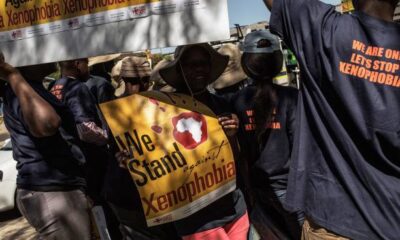

Neutralizing South Africa’s Xenophobic Excesses
ShareBy Chidi Amuta Nelson Mandela must be churning in his resting place. An exemplary life lived and a myth created...
Enugu Joint Security Operatives Rescue Abduction Victim
ShareFrom Sylvia Udegbunam, Enugu A joint security team comprising Police operatives, Forest Guards, and members of the Neighbourhood Watch Group...


Police Uncovers Two Illegal Arms Factories in Benue
ShareFrom Attah Ede, Makurdi Police in Benue State uncovered and destroyed two illegal firearm manufacturing factories, recovered three AK-47 rifles...


Troops Foil Bandits’ Attack, Rescue Nine Kidnap Victims in Zamfara
ShareFrom Ifeanyichukwu Nwannah, Gusau Troops of Sector 2, Operation FANSAN YAMMA, deployed at the Forward Operating Base (FOB) in Kasuwan...
The Fake DG Saga Holds a Mirror to All of Us
ShareBy Akin Fadeyi A man got tired of his wife’s alleged belligerent behaviour. She was never “available” and whenever she...


OPay is Okay: Trust Is Not Claimed – It Is Earned
ShareFor tens of millions of people across Nigeria, digital finance has changed everyday life. Paying bills, sending money, saving, and...


Wike Directs Immediate Demolition of Suspected Criminal Hideout in Abuja
ShareBy Laide Akinboade Abuja Minister of the Federal Capital Territory (FCT), Nyesom Wike has directed the immediate demolition of an...