
Uncategorized
Twitter Suspension Well Founded in Law – Lai Mohammed

Barely 24 hours after the Economic Community of West African State (ECOWAS) court restrained Nigeria from prosecuting providers and users of Twitter, the Federal Government said its decision to suspend the activities was under the ambit of the law and has not breached citizens’ rights.
Minister of Information and Culture, Alhaji Lai Mohammed, said in a presentation to the House of Representatives Joint Committee on the Suspension of Twitter in Nigeria, that the suspension “is well founded in law”.
In the presentation, a copy which was made available, the minister contended that Twitter activity in the country was in violation of public interest and negate some provisions of Terrorism Act as well as Companies and Allied Matters Act (CAMA).
The minister said Twitter suspension was in line with national and international laws, which Nigeria derived the “power to regulate its cyber space and give all necessary orders designating any computer system, network or application as forming part of its national infrastructure”.
Mohammed, a lawyer, contended the freedom of expression guaranteed in Section 39 of the 1999 Constitution is not absolute.
He explained that Section 49 of the same Constitution permits restrictions of civil liberties in the public interest stressing, “public Interest takes precedent over individual interest’’.
“The operations of Twitter in the Nigerian social space are not legally permissible when it is used in airing of information that endangers the life and security of the majority of citizens of Nigeria.
“This is in light of the fact that the platform affords IPOB, an organisation already proscribed by the Federal High Court, to champion its seditious and terrorist based activities
“The principles of law are clear on the exercise of personal human rights in the face of national security threats which affects the larger citizen,’’ he said.
The minister also argued that the federal government is empowered to take all reasonable steps to defend its cyber space where it perceives or finds that a Cyber-crime, is threatened to be committed or has been committed.
He said both national and international statutes empower the federal government to regulate and promote the security of the Nigerian cyber space, including but not limited to organisation and user’s assets.
“Organisation and users’ assets include connected computing devices, personnel, infrastructure, applications, services and telecommunications systems.
“It also included the totality of transmitted and/or stored information within the Nigerian cyber-Space/environment including social media such as Twitter, Facebook…, applications, internet platforms, and cloud computing platforms,’’ he said.
Mohammed stressed that where a seditious act has been committed against the Federal Government through the Cyber Space the perpetrators shall be liable.
The minister noted that the rights to freedom of expression on the Twitter platform are qualified by the provisions of sections 5(1) and (2) of the Terrorism Act of 2011.
He said the sections provide that any person who directly or indirectly solicit or render support for commission of an act of terrorism commits an offence liable on conviction to not less than 20 years.
“This includes incitement to commit a terrorist act through the internet or any electronic means or through the use of printed materials or through the dissemination of terrorist information”.
Mohammed said the operation of Twitter as business entity in Nigeria without fulfilling the conditions precedent by registering with the Corporate Affairs Commission is illegal.
“CAMA, the primary law governing businesses in Nigeria provides that a foreign company must take necessary steps to obtain incorporation as a separate entity before engaging in any business.
“Until so incorporated, the foreign company shall not carry on business in Nigeria or exercise any powers of a registered company as provides in Section 78 (1) of CAMA, 2020.
“Hence, flowing from this background a foreign Company as Twitter cannot be clothed with the legitimate rights to operate as a company registered in Nigeria, as they are not licensed accordingly,’’ he said.
The minister said that the State Security Services (SSS) which provided the lawful basis for the suspension of Twitter, acted in line with its power of prevention and detection of any crime against the internal security of Nigeria.
He reiterated government position to the committee that the ban on the operation of the micro blogging platform, Twitter, was in the interest of the country.
Federal Government on June 4 suspended, indefinitely, the operations of the micro-blogging and social networking service, Twitter in Nigeria.
Mohammed who announced the suspension cited the persistent use of the platform for activities capable of undermining Nigeria’s corporate existence.
He said the Federal Government had also directed the National Broadcasting Commission (NBC) to immediately commence the process of licensing all Over the Top (OTT) and social media operations in the country.
Following the outcry that greeted the suspension by a section of Nigerians the House of Representatives had referred the case to the joint committee which in turn summoned the minister for interrogation.
An economist, Prof. Sherifdeen Tella, has supported the Federal Government’s decision to sell some state assets, stating that the move would enhance the country’s fiscal revenue position.
Tella, of the Department of Economics at Babcock University, Ogun, made the remarks in separate interviews with the News Agency of Nigeria in Lagos on Wednesday.
He stressed that the government should be commended for ensuring that some state assets were sold to become more productive for the overall economy.
“Since the government has invested a lot of public funds in these national assets, they should not be sold outright.
“Rather, regulators should consider partnering with foreign firms that have proven track records and possess adequate financial and technical know-how to manage such enterprises,” Tella said.
He emphasised that allowing more private investment in selected state assets would reposition them to grow and generate more revenue for the country.
“This will boost the government’s revenue position and support the full implementation of the capital component of the budget.
“Issues relating to the country’s reliance on foreign loans may also decline due to the availability of funds,” Tella added.
He noted that the government should be more transparent and thorough in choosing the most suitable partners in order to avoid the mistakes of the past.
Similarly, Okechukwu Unegbu, former President of the Chartered Institute of Bankers of Nigeria, also supported the government’s actions regarding some state assets.
“The government should be commended for taking such a stand, because the authorities cannot continue expending scarce resources on such national edifices, which could be better harnessed and managed by the private sector, given past antecedents,” Unegbu said.
He stressed that the government’s decision to sell the assets was imperative in order to reduce waste, especially in light of current revenue challenges.
“This will ultimately free up funds to be injected into other sectors that will spur economic growth, including the expansion of existing seaports and the completion of railway tracks across the country to facilitate trade,” Unegbu added.
Recall that the federal government has announced plans to begin the sale of some state-owned assets to private investors starting in 2026, as part of efforts to strengthen the economy and attract more investment.
The Minister of Finance and Coordinating Minister of the Economy, Wale Edun, made this known on Monday during an interview with Bloomberg on the sidelines of the AlUla Conference for Emerging Market Economies held in Saudi Arabia.
Edun explained that the government was already working on identifying which public assets would be put up for sale and determining when the transactions would take place.
From Jude Dangwam, Jos
No fewer than 37 miners have died following a suspected gas leak and explosion at an underground mining site in Kampani Zurak community, Wase Local Government Area of Plateau State.
The tragic incident, believed to have been caused by carbon monoxide and other toxic gaseous emissions, occurred in the early hours of Tuesday when dozens of local miners returned to the tunnel after observing morning prayers.
Eyewitnesses said the miners had briefly left the site around 5:30am for prayers and were alive at the time. However, when they returned to resume work at about 6:30am, many reportedly collapsed inside the tunnel after inhaling the poisonous fumes.
Safiyanu Haruna, a miner in the community, said 37 persons were confirmed dead, while more than 20 others sustained injuries and were rushed to a hospital in Wase town for treatment. Funeral prayers for the deceased were ongoing as of press time.
Confirming the development, Plateau State Commissioner for Information and Communication, Joyce Ramnap, described the incident as a tragic explosion triggered by a suspected gas leak. She said at least 33 persons were inside the tunnel at the time, with many feared dead and others currently receiving treatment in nearby hospitals.
Ramnap said the Plateau State Government had received the news “with deep shock and profound sadness,” extending condolences to the bereaved families and assuring that the government was working with security agencies, emergency responders and health authorities to manage the situation.
She added that the Minister of Environment, Balarabe Lawal, had contacted Governor Caleb Mutfwang and directed the immediate suspension of mining activities in the affected area pending investigations.
In a swift federal response, the Minister of Solid Minerals Development, Dele Alake, ordered the sealing of the mining site located in Zuraq, Wase LGA.
In a statement issued in Abuja by his Special Assistant on Media, Segun Tomori, the minister disclosed that the affected site falls under Mining Licence 11810 operated by Solid Unit Nigeria Limited, owned by Abdullahi Dan-China.
Alake said preliminary reports indicated that the company had ceded the abandoned lead mining pit to members of the community following agitations for economic empowerment. The site, described as prone to toxic emissions including sulphuric oxide, was allegedly being mined by villagers unaware of the health risks posed by the stored minerals.
He announced that a high-powered investigative team led by the ministry’s Permanent Secretary, Yusuf Yabo, had been dispatched to determine both the immediate and remote causes of the disaster and recommend appropriate sanctions. The team includes experts in mining regulation, environmental compliance and artisanal mining cooperatives.
Wase LGA Chairman, Hamisu Anani, also confirmed the death toll, stating that 25 persons were hospitalised following exposure to the gaseous emissions.
As investigations commence, both state and federal authorities have pledged to enforce stricter safety standards and ensure accountability to prevent a recurrence of such tragedy in Plateau’s mining communities.
The disaster has once again drawn attention to the hazards surrounding informal and poorly regulated mining activities in the region, where many residents rely on artisanal mining as a primary source of livelihood.
The Nigeria Rugby Football Federation (NRFF) has unveiled its comprehensive 2026 calendar of activities, outlining an expanded domestic structure and a renewed drive to reposition women’s rugby on the continental stage.
The federation’s media coordinator, Tolu Oguntimehin, made this known in a statement issued on Monday in Lagos.
According to the release, the roadmap focuses on grassroots growth, youth development, high-performance pathways, and stronger international competitiveness in both the 7s and 15s formats.
The statement also disclosed that the 2026 season would feature expanded domestic competitions, representing one of the federation’s most comprehensive frameworks in recent years.
“A National 7s Circuit for both men and women across host states such as Kano, Lagos, Delta, and Edo, a six-zone National 15s League (North, South West, South East, South South), culminating in national finals in Abuja.
Also unveiled are, “Youth tournaments including Get into Rugby 2.0 (U13 & U18) and Rugby 7s at the National Youth Games (U15).
“Community and school competitions such as the Golden 7s Schools Tournament and National Open 7s (U18).
“International exposure through the Africa Cup 7s (Men) in Mauritius and other invitational fixtures,”it said.
According to the federation, the structure is designed to increase match exposure, strengthen talent identification, and ensure nationwide participation.
The statement further noted that women’s rugby, which had returned to the continental stage as a major highlight of the 2026 agenda, would serve as a catalyst for the revitalisation of Nigeria’s women’s rugby programme.
It said the NRFF had submitted a bid to host the Africa Cup Women’s 7s Regional Qualifier in Lagos/Ogun State.
It noted that hosting the tournament would restore Nigeria’s women’s team to the continental rankings and provide a pathway to the Africa Women’s Cup 7s.
“The federation is also exploring participation in the Rugby Africa Women’s Cup Division 1 (15s) in Tunisia — a potential route toward qualification for Africa’s elite women’s rugby competition.
“Officials say the dual 7s and 15s strategy is aimed at building a sustainable and competitive women’s programme, capacity building and governance.
“The 2026 calendar also includes World Rugby-accredited courses for coaches, medical personnel, match officials, and strength and conditioning professionals.
“This also includes alongside anti-doping education and structured school engagement initiatives.”
On the international front, the federation stated that Nigeria was set to compete in the Africa Cup 7s (Men’s), pursue international Test opportunities, and strengthen regional collaboration through the West Africa Rugby Series under the structures of Rugby Africa.
Describing the season as pivotal, the Nigeria Rugby Football Federation stated: “Our domestic competitions are stronger, and our women’s programme now has a clear continental pathway.
“Our youth initiatives continue to expand. We are building a sustainable rugby ecosystem for Nigeria’s future.”
According to the federation, the 2026 calendar represents a strategic blueprint for performance growth, women’s empowerment, and Nigeria’s sustained resurgence in African rugby.

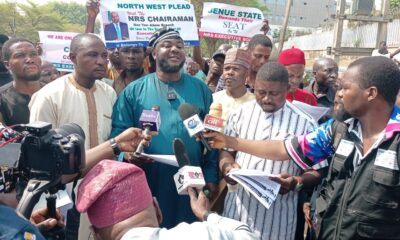

Protesters Demand Review of NRS Executive Director Appointments Over Alleged Breach of Law
ShareBy David Torough, Abuja A coalition of civil society activists on Monday staged the second phase of a peaceful protest...
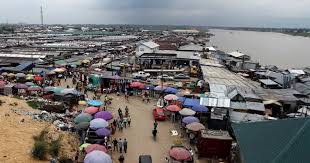

Chinese Construction Truck Kills Six in Benue
ShareFrom Attah Ede, Makurdi No fewer than six passengers have died in a fatal road accident involving an 18-seater Benue Links bus and a...

Table Tennis Championship: 250 Players for Alabi Memorial in Osun
ShareNo fewer than 250 players from across the country are expected to participate in the 6th Michael and Felicia Alabi Memorial Table Tennis Championship scheduled to...


Pope Leo XIV Urges Dialogue as Iran, Israel Tensions Escalate
SharePope Leo XIV on Sunday appealed to nations involved in the escalating Middle East conflict to recognise their moral responsibility to pursue peace,...
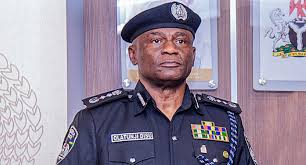

IGP Appoints Placid as New Police Spokesperson
ShareThe Inspector-General of Police, Olatunji Disu, has approved the appointment of Anthony Placid as the new Force Public Relations Officer. The outgoing FPRO, Benjamin Hundeyin, confirmed the appointment in...
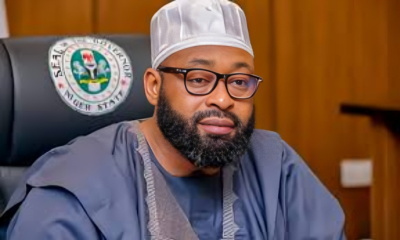

Niger Directs Political Appointees Seeking 2027 Offices to Resign March 23
ShareFrom Dan Amasingha, Minna The Niger State Government has directed all political appointees and public office holders who intend to contest elective positions in the 2027 General Elections...
ShareDisCos Generate N207bn from Power Bills in December – NERC The Nigerian Electricity Regulatory Commission (NERC) says electricity Distribution Companies...
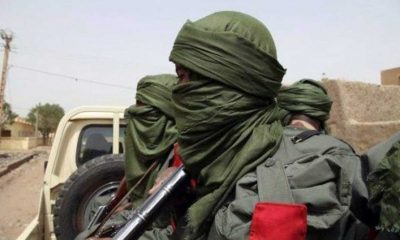

Terrorists Strike in Sokoto as Troops Record Gains in Benue, Taraba
ShareBy David Torough, Abuja Renewed attacks by armed groups and intensified military counter-operations defined the security situation across parts of...

Fuel Prices Climb Toward N1,000 Per Litre as Global Oil Shock Hits Nigeria
ShareBy David Torough, Abuja Fuel prices across Nigeria have surged close to the N1,000 per litre mark, triggering concern among...


NFSS Launches war against Terrorism
ShareDetermined to end terrorism and other related criminal activities in Nigeria, the Nigeria Forest Security Service (NFSS) has created a...