
Foreign News
U.S. Bans Nigerian Anti-Democracy Agents From Obtaining Entry Visas

The U.S. administration has said it would henceforth deny entry visas to persons it described as “individuals responsible for undermining the Nigerian democratic process”.
Some of those to be denied visas are persons involved in election violence, a spokesperson of the U.
S. Department of State, Ms Morgan Ortagus, announced on Tuesday.According to the spokesman, such persons “operated with impunity at the expense of the Nigerian people and undermined democratic principles and human rights”, in reference to the recently conducted 2019 general elections which claimed at least 39 lives across the country in election-related violence.
Ortgaus said the action, was in fulfillment of the U.S. government’s earlier promise to consider sanctions against anti-democratic forces, including organisers of election-related violence in the country.
“In a Jauary 24 statement, the U.S. government said that we would consider consequences – including visa restrictions – for individuals responsible for undermining the Nigerian democratic process or for organising election-related violence.
“To that end, the Secretary of State is imposing visa restrictions on Nigerians believed to be responsible for, or complicit in, undermining democracy in Nigeria.
“These individuals have operated with impunity at the expense of the Nigerian people and undermined democratic principles and human rights,” she said.
The spokesperson emphasised that the restrictions targeted at specific individuals and not directed at the Nigerian people or the newly-elected government.
She explained that the decision reflected the Department’s commitment to working with the Nigerian government in its anti-corruption crusade and efforts to strengthen democracy, accountability and respect for human rights.
“The United States is a steadfast supporter of Nigerian democracy.
“We commend all those Nigerians who participated peacefully in the February and March 2019 elections and have worked to strengthen Nigerian democratic institutions and processes.
“As Nigeria marks the 20th anniversary of a return to democratic rule this year, we remain committed to working together to continue to advance democracy and respect for human rights and achieve greater peace and prosperity for both our nations.
“We condemn those whose acts of violence, intimidation, or corruption harmed Nigerians or undermined the democratic process,” the spokesperson added.(NAN)









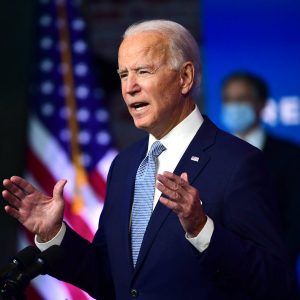
President Joe Biden’s decision on Sunday to end his campaign to seek reelection in November is generating reactions from foreign leaders.
Canadian Prime Minister Justin Trudeau said he had known President Biden for years and that “He’s a great man.
“Everything he does is guided by his love for his country.
As President, he is a partner to Canadians — and a true friend.“To President Biden and the First Lady: thank you.
”German Chancellor Olaf Scholz in his reaction on X, said, “Joe Biden has achieved a great deal – for his country, for Europe, for the world,
“Thanks to him, transatlantic cooperation is close, NATO is strong, and the U.
S. is a good and reliable partner for us.“His decision not to run again deserves recognition.”
Reacting in a statement, new British Prime Minister Keir Starmer said, “I respect President Biden’s decision and I look forward to us working together during the remainder of his presidency.”
He added: “I know that, as he has done throughout his remarkable career, President Biden will have made his decision based on what he believes is in the best interests of the American people.”
Israeli defense minister Yoav Gallant on his part thanked Biden for his unwavering support of Israel over the years.
“Your steadfast backing, especially during the war, has been invaluable.
“We are grateful for your leadership and friendship,” he added.
SPANISH PRIME MINISTER PEDRO SANCHEZ ON X:
Spanish prime minister Pedro Sanchez in his comments on X said he admired “the brave and dignified decision of president @JoeBiden.
“Thanks to his determination and leadership.
“The U.S. overcame the economic crisis after the pandemic and the serious assault on the Capitol and has been exemplary in its support for Ukraine in the face of Putin’s Russian aggression.
“A great gesture from a great president who has always fought for democracy and freedom.”
Irish prime minister Simon Harris said in a statement: “On behalf of the people and government of Ireland. I … would like to thank you Mr President for your global leadership and your friendship as you make your announcement that you will not stand in the 2024 U.S. Presidential election.”
Harris who reacted in a statement added:
“Joe Biden, in all the offices he has held, has always been an unwavering voice and passionate worker for peace on the island of Ireland and our country owes him a great debt for this.”
Some of the other world leaders who reacted to Biden’s withdrawal are: Kremlin spokesperson Dmitri Peskov who in an interview with shot News outlet, said: “The elections are still four months away.
”And that is a long period of time in which a lot can change.
”We need to be patient and carefully monitor what happens.”
”The priority for us is the special military operation,” Peskov added, referring to the war in Ukraine.
Norwegian prime minister Jonas Stoere, his Polish and Czech counterparts Donald Tusk and Petr Fiala respectively reacted to Biden’s withdrawal from the U.S. presidential race. (Reuters/NAN)

At least one person was killed in renewed anti-government protests across Kenya on Tuesday, a Reuters reporter said, as police clashed with demonstrators demanding that President William Ruto step down.
Youth-led nationwide protests that broke out a month ago against proposed tax hikes have continued even after Ruto withdrew the legislation and fired almost all of his cabinet.
Activists say they want Ruto to resign and are calling for systemic changes to clean up corruption and address poor governance.
At least 50 people have been killed in the protests to date, the government-funded Kenya National Commission on Human Rights (KNCHR) said on Tuesday.
In Kitengela, a town on the southern outskirts of the capital Nairobi, police fired repeatedly in the direction of hundreds of protesters, some of whom were throwing rocks, Reuters TV footage showed.
The protesters also burned tyres, waved Kenyan flags and chanted “Ruto must go!”
A Reuters reporter saw the body of one protester lying on the ground with blood oozing from a head wound.
The national police spokesperson declined to comment.
Tuesday’s protests appeared to be some of the biggest since Ruto withdrew the tax increases on June 26.
The Nation newspaper reported demonstrations in at least 23 of Kenya’s 47 counties.
In Nairobi’s city centre, riot police fired tear gas at several dozen protesters. An ambulance service posted footage on X showing its personnel carrying away someone injured there on a stretcher.
Demonstrators in the coastal city of Mombasa waved palm fronds as they marched, while litter burned in the street, images on Kenyan television channels showed.
The protests have created the biggest crisis of Ruto’s two years in power.
With Kenya spending over 30 per cent of its revenues just paying the interest bills on its debt, he has been caught between the demands of lenders to cut deficits and a hard-pressed population reeling from rising living costs.
“Ruto is very incompetent. He has no leadership skills. He just wanted the title of president of this country,” said one protester in Nairobi who did not give his name.
“The guy is a puppet to the IMF. That is it. Whatever he’s doing, he’s doing for the IMF.”
The International Monetary Fund (IMF) has been a major target of the ire of young Kenyan protesters, who have accused it of being the driving force behind the proposed tax hikes.
The IMF has said its main goal through its lending programmes with Kenya has been helping the country overcome economic challenges and improve its people’s well-being.
Ruto’s office had announced “multi-sectoral” talks for this week to address grievances raised by the protesters, but there was no sign they had begun.
Most of the leading activists behind the protests have rejected the invitation, instead calling for immediate action on issues like corruption.
Ruto’s spokesperson did not respond to a request for comment.
The protests began peacefully but later turned violent.
Some demonstrators briefly stormed parliament on June 25, and the police opened fire.
In addition to the 50 deaths, 413 people have been injured, 682 have been arbitrarily detained and 59 have been abducted or are missing in connection with the protests, KNCHR said.
Ruto has promised to investigate accusations of abuse but has broadly defended the conduct of the police and accused criminals of hijacking peaceful protests.
On Monday, he accused the Ford Foundation, an American philanthropic organisation, of sponsoring those who had caused “violence and mayhem” in Kenya, without providing evidence.
The Ford Foundation rejected the allegation, saying it did not fund or sponsor the protests and has a strictly non-partisan policy for its grant-making. (Reuters/NAN)
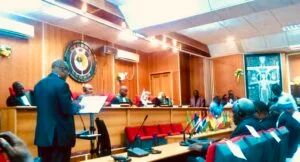
The ECOWAS Court of Justice has nullified the dismissal of Mr Momodu Cham, a former staff of the Commission, saying it breached Article 69 of the ECOWAS staff regulations.
Cham had filed the suit following his dismissal from his position as a Procurement Officer with the Inter-Governmental Action Group against Money Laundering and Terrorism Financing (GIABA), a specialised ECOWAS agency.
The applicant, a community citizen residing in Banjul, Gambia, had joined the Economic Commission for West African States (ECOWAS) and its President, as first and second Respondents, respectively, in the suit challenging his sack.
Delivering judgment, Justice Dupe Atoki, the Judge Rapporteur, held that the cessation of Cham’s salary by the Commission before the exhaustion of the appeal process was arbitrary, unlawful, null, and void.
According to Justice Atoki, the action of the Commission is contrary to Article 73(b) of the ECOWAS Staff Regulations.
The Court, therefore, ordered the Respondents to pay Cham his salary arrears and other entitlements from January 2021 to June 2021, as compensation.
It further ordered the Commission to pay Mr Cham’s salaries and emoluments from July to December 2021 as compensation for the unlawful dismissal.
“Requesting an on-the-spot response to charges without prior notice or an opportunity to prepare a defense violates procedural safeguards outlined in the ECOWAS Staff Regulations.
“The regulations are designed to ensure an Applicant’s rights are fully maintained until the Council’s final decision.
“Consequently, the summary dismissal of the Applicant by the 2nd Respondent breached Article 69 of the regulation.
“Therefore, the cessation of the Applicant’s salary and other emoluments after invoking the right of appeal is a violation of Article 73(b) of the ECOWAS Staff Regulations,” Justice Atoki held.
The Court, however, declined to grant any orders for mandatory injunctions against the Commission and reinstatement of the applicant .
The Applicant had contended at the trial that he was suspended on July 11, 2019, following a forensic audit report by Ernst and Young UK, which implicated him in irregularities related to the purchase of IT equipment for GIABA.
He said that on Jan. 26, 2021, he was summarily dismissed, and his salaries and emoluments were withheld in violation of the ECOWAS Staff Regulations.
Cham had prayed the court to grant him several reliefs, including a declaration that his dismissal was arbitrary, null, and void.
He also sought an order setting aside his dismissal and the immediate payment of his salary arrears and other entitlements from January 2021.
The applicant had also prayed for his reinstatement to his position as a Procurement Officer and compensation for costs incurred in prosecuting the suit.
The Respondents, in their defense, had however, maintained that the applicant was properly suspended and later dismissed following a forensic audit report and a subsequent query.
They had also argued that the dismissal was appropriate due to the allegations of gross misconduct, embezzlement, theft, fraud, and abuse of trust.
The three-member panel also had Justices Gberi-bè Ouattara, presiding, and Sengu Mohamed Koroma, as a member.(NAN)
Tinubu Approves Management Unit for Health Sector Renewal Investment Initiative
SharePresident Bola Tinubu has approved the establishment of the Sector-wide Coordinating Office-Programme Management Unit (SCO-PMU) domiciled in the Office of...

FG Denies Slash in Students’ Allowances
Share The Federal Government says it has no plan to slash scholarship students’ allowances as recently projected in the media.The...


Planned Protests: CAN calls for calm and patience
ShareBy Laide Akinboade, Abuja The Christian Association of Nigeria, CAN, on Friday, has urged Nigerians to calm and patient with...

Senate Consultant Scores Benue LG Bureau High on Projects Execution
ShareThe Consultant for Senate Standing Committee on States and Local Government Administration, Engineer Kayode Adegbayo has described the quality of...


Doctor Mark Ogbodo: A Man Destined for Success
ShareBy Paul Ugah Henry Miller once said, “Every man has his own destiny, the only imperative is to follow it,...


Ignore Anti -government Protests, Wike Begs Abuja Residents
ShareBy Laide Akinboade, Abuja Minister of the Federal Capital Territory, Barr. Ezenwo Nyesom Wike has called on residents of the...
Reps Commit to Ensure Legislations for Better Skills Acquisition, Management
ShareBy Ubong Ukpong, Abuja The House of Representatives on Thursday pledged its continuous commitment to ensure legislations that would align...

Economic Sabotage: Senate Summons Petroleum Minister, NNPCl, CBN, NPA, Others for Interrogation
ShareBy Eze Okechukwu, Abuja The Senate is blowing hot over alleged economic sabotage by stakeholders within the petroleum sector, thus...
Dialogue with Organisers of August 1 Protest, AANI Urges FG
ShareBy Johnson Eyiangho, Abuja The Alumni Association of the National Institute (AANI) has advised the Federal Government to dialogue with...


Stigmatization: CSO Urges Kogi Gov to Assent Bill Protecting HIV Patients
ShareFrom Joseph Amedu, Lokoja Civil Society Organisation, Initiative for Grassroot Advancement in Nigeria (INGRA), has called on the Kogi State...