
Foreign News
Uganda’s President Sworn in for Seventh Term


Uganda’s President Yoweri Museveni, 81, has been sworn in for a record seventh consecutive term following his landslide victory in disputed elections in January, extending his tenure as one of Africa’s longest-serving rulers.
Heavy security, including armoured tanks, were deployed in the capital, Kampala, ahead of the inauguration in what police said were measures intended to maintain public order.
Museveni was declared the winner of the election with more than 70 percent of the vote, with his term expected to end in 2031.
The 44-year-old opposition leader, whose real name is Robert Kyagulanyi Ssentamu, fled the country after the election, saying he feared that “the regime wanted to eliminate me”.
Museveni first came to power as a rebel leader in 1986 but since then has won seven elections.
He is among the few African leaders in power for more than 40 years. Others include Congo-Brazzaville’s Denis Sassou Nguesso, Equatorial Guinea’s Teodoro Obiang and Cameroon’s Paul Biya.
The swearing-in ceremony was held at the Kololo Independence Grounds in Kampala. The government declared the day a public holiday.
African leaders who attended the ceremony included Tanzania’s President Samia Suluhu Hassan, the Democratic Republic of Congo’s Félix Tshisekedi, South Sudan’s Salva Kiir and Somalia’s Hassan Sheikh Mohamud.
Uganda has one of the world’s youngest populations, with the majority of the people having known no other president.
Museveni has not indicated when he intends to retire, but analysts said this is likely to be his last term.
His 51-year-old son, Gen Muhoozi Kainerugaba, the military chief, has been widely tipped as a potential successor.
However, Kainerugaba has increasingly faced criticism for the way he uses social media to threaten the opposition, including Wine.
On X earlier this year, he threatened to have Wine’s testicles removed in posts that have since been removed.
Wine, who leads the National Unity Platform party, said the results of the elections were “fake” and urged Ugandans to fight back for their democracy.
The government insisted that the elections were free and fair, and Museveni accused the opposition of seeking to overturn the results through violence, calling them “terrorists”.
Wine went into hiding after raids on his house, and accused security forces of targeting him and his family.
Police denied the allegations, insisting they were only providing security for him as a presidential candidate.
Museveni’s government has continued to face criticism from rights groups over a security force crackdown following the disputed vote.
Last month, Amnesty International said that at least 16 people had likely been killed between 15 and 18 January by the military and the police. It said the victims were reportedly unarmed and posed no imminent threat.
The rights group has also been critical of the treatment of another key opposition politician, Kizza Besigye, who remains in jail since late 2024 after being dramatically abducted while visiting Kenya and forcibly taken to Uganda.
He was later charged in a military court with possession of pistols and attempting to purchase weapons abroad – accusations which he denies.

President Donald Trump’s swift rejection of Iran’s response to a U.S. peace proposal has pushed oil prices higher on Monday.
This action has fueled concerns that the 10-week-old conflict will drag on and continue to paralyse shipping through the Strait of Hormuz.
Days after Washington floated a offer aimed at reopening negotiations, Iran on Sunday released a response focused on ending the war on all fronts, including Lebanon, where U.
S. ally Israel is fighting Iran-backed Hezbollah militants.Tehran has also demanded compensation for war damage, emphasised its sovereignty over the Strait of Hormuz, and called on the United States to end its naval blockade, guarantee no further attacks, lift sanctions and remove a ban on Iranian oil sales.
However, within hours, Trump dismissed the proposal in a social media post.
“I don’t like it. Totally unacceptable,” Trump wrote on Truth Social, without giving further detail.
The U.S. had proposed an end to fighting before starting talks on more contentious issues, including Iran’s nuclear programme.
Tehran responded yesterday by defending its stance.
Foreign Ministry spokesperson Esmaeil Baghaei said “our demand is legitimate: demanding an end to the war, lifting the (U.S.) blockade and piracy, and releasing Iranian assets that have been unjustly frozen in banks due to U.S. pressure.
“Safe passage through the Strait of Hormuz and establishing security in the region and Lebanon were other demands of Iran, which are considered a generous and responsible offer.’’
Oil prices surged by four dollars a barrel on Monday, before slipping back slightly, as the deadlock left the Strait of Hormuz largely closed.
Before the war began on Feb. 28, the narrow waterway carried one-fifth of the world’s oil and liquefied natural gas, and has since become a central pressure point in the conflict.
Traffic through the strait is at a trickle compared to before the war.
Shipping data on Kpler and LSEG showed that three tankers laden with crude exited the waterway last week, with trackers switched off to avoid Iranian attack.
Sporadic flare-ups around the strait in recent days have tested a ceasefire that has paused all-out warfare since it took effect in early April.
The United States, surveys show the war is unpopular with voters facing sharply higher gasoline prices less than six months before nationwide elections that will determine whether Trump’s Republican Party retains control of Congress.
Washington has also struggled to build international support, with NATO allies refusing to send ships to reopen the waterway without a full peace deal and a internationally mandated mission.
Hakan Fidan, the foreign minister of Turkey, which has been in close contact with the U.S., Iran and mediator Pakistan since the start of the war, will visit Qatar on Tuesday for talks on the conflict and on ensuring navigational safety in the strait, a Turkish diplomatic source said on Monday.
The next diplomatic or military steps remain unclear. Trump is expected to arrive in Beijing on Wednesday, where Iran is set to be among the topics discussed with Chinese President Xi Jinping as pressure mounts to end the conflict and the energy crisis it has triggered.
Trump has been leaning on China to use its influence to push Tehran toward a deal with Washington.
Baghaei suggested China could instead use the visit to push back against U.S. objectives in the Gulf.
“Our Chinese friends know very well how to use these opportunities to warn about the consequences of the U.S.’s illegal and bullying actions on regional peace and security,” he said.
Addressing whether combat operations against Iran were over, Trump said in remarks aired on Sunday: “They are defeated, but that doesn’t mean they’re done.”
Israeli Prime Minister Benjamin Netanyahu said the war was not over because more work need to be done to remove enriched uranium from Iran, dismantle enrichment facilities and address its proxy forces and ballistic missile capabilities.
Netanyahu told CBS News’ “60 Minutes” that the preferred route was diplomacy, but he did not rule out the use of force.
Iranian President Masoud Pezeshkian said in a social media post that Tehran would “never bow down to the enemy” and would defend national interests with strength.
In spite of the ongoing diplomatic efforts, risks to shipping lanes and regional economies remain high.
Earlier on Sunday, the United Arab Emirates said it intercepted two drones launched from Iran, while Qatar condemned a drone strike on a cargo ship in its waters.
Kuwait reported that its air defences had dealt with hostile drones entering its airspace.
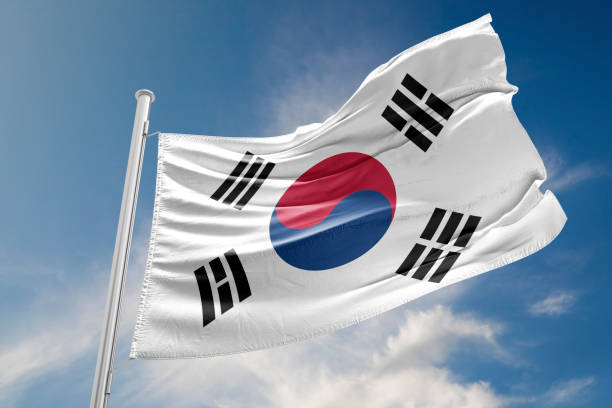
South Korea is set to roll out a second batch of cash assistance for the bottom 70 per cent of income earners, in an effort to ease financial strains caused by rising fuel prices amid the war in the Middle East.
According to officials on Monday, National Assembly has approved a 26.
2 trillion-won (17.8 billion dollars) extra budget bill to address the economic fallout from the Middle East conflict, which includes the introduction of the cash assistance plan.Under the first programme launched in April, the government handed out up to 600,000 won to recipients of basic livelihood security and other vulnerable groups.
The government will begin accepting applications next Monday for the second round of the assistance programme.
Eligible individuals living in the broader Seoul area will receive 100,000 won, while those in areas with declining populations may receive up to 250,000 won each.
Assistance eligibility will be determined by a household’s national health insurance payment in March this year. For single-person households, those who paid 130,000 won or less will be eligible.
In terms of annual income, a single-person household that earns 43.4 million or less a year is expected to be eligible for the assistance.
A welfare ministry official, however, noted that eligibility will be based on the national health insurance payment.
Also, about 930,000 households that held assets exceeding 1.2 billion won as of 2025 or earned more than 20 million won in financial income in 2024 will not be eligible for the programme, according to the official.
The government will accept applications for the cash assistance through July 3.
Recipients can receive the assistance through their credit and debit cards, prepaid cards or local currency vouchers.
The funds, which will expire Aug. 31, can only be used at small local businesses with annual sales of 3 billion won or less.
Interior Minister Yun Ho-jung in a briefing said “the high-oil price support fund is expected to reduce the people’s burdens stemming from the prolonged war in the Middle East and revive dampened consumption.’’
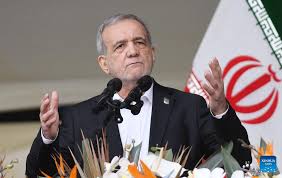
Iranian President Masoud Pezeshkian held a phone call with Iraqi Prime Minister-Designate, Ali al-Zaidi, during which Pezeshkian said Iran is ready for dialogue within the framework of international law.
Pezeshkian said that “our problem is that on the one hand, the United States is pursuing a policy of maximum pressure against our country, and on the other hand, it expects Iran to come to the negotiating table.
It expects ultimately that Iran surrendered to its unilateral demands, such an equation is impossible,” a statement published by Pezeshkian’s office read.
He noted that Iran fundamentally does not consider war and insecurity to be favorable options but would not acquiesce to force.
Pezeshkian stressed that Iran must not deprive itself of nuclear technology, saying the United States speaks in a way as if Iran must not have a nuclear industry, and imposed extra pressure on the country by putting forward excessive demands.
He added that in all previous negotiations, Iran was fully ready to provide within the framework of international regulations and global monitoring whatever deemed necessary under international norms to ensure the peaceful nature of its nuclear activities.
Al-Zaidi, for his part, voiced Iraq’s readiness to mediate between Iran and the United States to contain regional crises, read a statement from Al-Zaidi’s media office.
According to the Iraqi statement, the two sides also agreed to exchange official visits in the coming period to strengthen bilateral ties.
On Feb. 28, Israel and the United States launched joint attacks on Tehran and other Iranian cities, killing Iran’s then Supreme Leader Ali Khamenei, senior commanders and civilians.
Iran responded with waves of missile and drone strikes targeting Israel and U.S. bases and assets in the Middle East.
A ceasefire was reached between the warring sides on April 8, followed by peace talks in Pakistan’s Islamabad on April 11 and 12, which ended without an agreement.


Abducted Nasarawa Varsity Students Regain Freedom
ShareStudents of the Faculty of Engineering, Nasarawa State University, Gudi Campus, who were abducted by gunmen have been released. The Nasarawa State Police Command disclosed this on Tuesday,...
Four NBA Stars Open to D’Tigers Call-up
ShareNigeria’s ambition to assemble a formidable basketball squad ahead of the 2028 Summer Olympics has received a major boost after four National Basketball Association...


Uganda’s President Sworn in for Seventh Term
ShareUganda’s President Yoweri Museveni, 81, has been sworn in for a record seventh consecutive term following his landslide victory in disputed elections...


Nollywood Star Alex Ekubo Dies at 40
SharePopular Nollywood actor, Alex Ekubo, is dead. He was 40. His death was confirmed on Tuesday by his colleagues, Funke Akindele, Bolanle Ninalowo, and Godwin Nnadiekwe, who...


NYSC Closes Camp for 1,953 Corps Members in Bayelsa
ShareFrom Mike Tayese, Yenagoa A total of 1,953 Corps Members have closed camping for the National Youth Service Corps (NYSC) for the 2026 Batch ‘A’...

Shippers’ Council Saves N348.8m in Q1
ShareThe Nigerian Shippers’ Council (NSC) said its first-quarter dispute interventions saved maritime stakeholders more than N348.8 million across Nigeria’s port...

Insecurity: Army, States Join Forces to End Bloodshed
ShareBy David Torough, Abuja Plateau State Governor, Caleb Mutfwang and the Chief of Army Staff, Lt.-Gen. Waidi Shaibu, yesterday renewed...

FG Targets 15,000 Homes for 60,000 Nigerians in Three Months
ShareBy David Torough, Abuja The Federal Government yesterday intensified efforts to tackle Nigeria’s housing deficit, announcing that 15,000 housing units...

Police Arrest Two Suspected Vandals in A’Ibom
ShareThe Police Command in Akwa Ibom said it has arrested two suspected vandals along the Calabar – Itu highway. The...


Adopt Safety Checks, Defensive Driving, FRSC Admonishes Motorists
ShareThe Federal Road Safety Corps (FRSC), has advised motorists to adopt stricter safety checks and defensive driving practices as the...