
Foreign News
UK Set to Undershoot Towering COVID-19 Borrowing Forecast

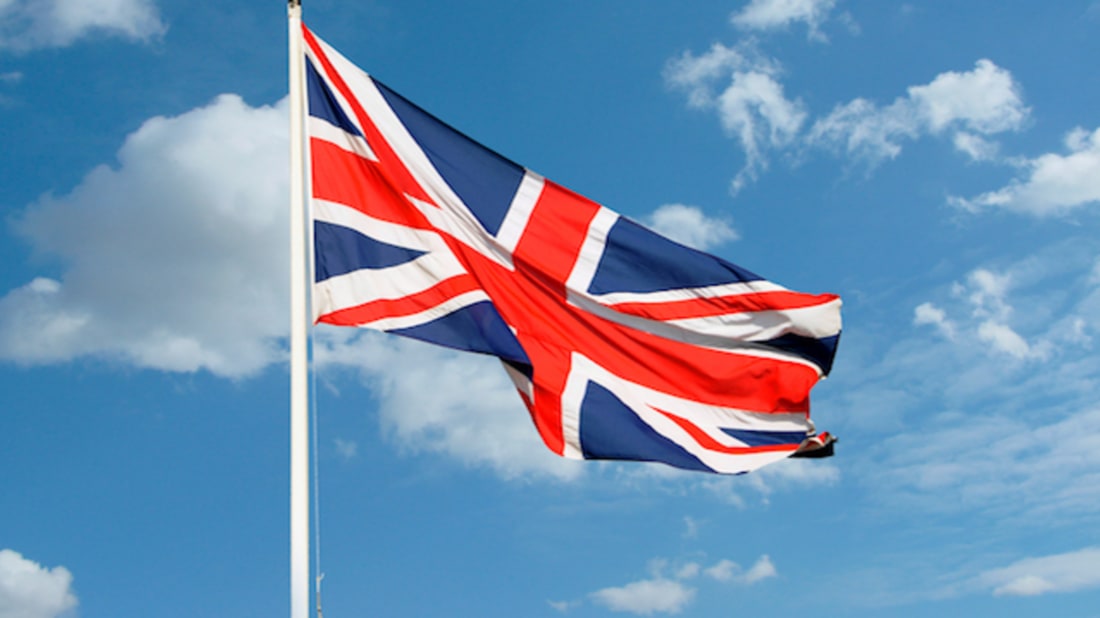
Britain’s record-breaking borrowing to pay for the coronavirus crisis is likely to be a little lower than forecast.
This is after data published on Friday showed the budget deficit grew by less than expected in the first two months of 2021.
The government borrowed £19.
1 billion ($26.6 billion) last month, a record for February but less than the £21. 0 billion forecasts in a Reuters poll.The deficit for January was revised down by £5.6 billion, largely reflecting lower government procurement spending, the Office for National Statistics (ONS) said.
The budget deficit in the first 11 months of the financial year has soared to almost £279 billion, the highest relative to the size of the economy since World War Two.
But unless there is a major borrowing surge in March, the deficit looks likely to come in below an estimate set by the Office for Budget Responsibility (OBR).
The OBR said this month that the deficit was likely to surpass £350 billion in the financial year which ends on March 31.
The year-to-date figures published on Friday by the ONS do not include the £27.2 billion of COVID loan write-offs that the OBR estimates will need to be made.
Finance Minister, Rishi Sunak, on March 3 announced a budget plan which included £65 billion in further stimulus to help the economy through what he hopes will be a gradual lifting of COVID restrictions by the end of June.
Responding to Friday’s data, Sunak said his £352 billion of total extra spending and tax cuts so far had been the responsible thing to do.
“But I have always said that we should look to return the public finances to a more sustainable path once the economy has recovered and at the budget, I set out how we will begin to do just that,’’ Sunak said in a statement.
Sunak’s budget represents what the Bank of England has called a “material fiscal loosening in the near term” but there will be tax rises and a reduction in spending further out.
The Institute for Fiscal Studies, a think tank, said most of the spending cuts implied by the budget were “simply unrealistic, and borrowing or taxes will be higher than planned.”
Borrowing in the 2021/22 financial year, which starts in April, is estimated to fall to £234 billion, according to the OBR, still more than four times the deficit in 2019/20 which included only one month of the coronavirus crisis.
Public debt in February stood at £2.131 trillion or 97.5 per cent of annual economic output, holding at levels not seen since the early 1960s, the ONS said. (Reuters/NAN)
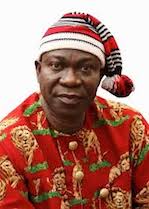





Pope Leo has criticised leaders who spend billions on wars and said the world was “being ravaged by a handful of tyrants” in unusually forceful comments during a visit to Cameroon.
The pontiff blasted those he said had manipulated “the very name of God” for their own gain, while touring a region ravaged by a deadly insurgency.
The remarks come just days after a high-profile spat with US President Donald Trump, who posted a lengthy attack on the Pope, a vocal critic of the US-Israeli military operation in Iran.
The Pope had voiced his concern about Trump’s threat that “a whole civilisation will die” if Iran did not agree to US demands to end the war and open the Strait of Hormuz.
Leo, who last year became the first US-born Pope, has previously also questioned the Trump administration’s approach to immigration.
“Leo should get his act together as Pope,” Trump wrote in a Truth Social post at the time.
The Pope told reporters at the start of his Africa tour that he did not want to get into a debate with Trump but would continue to promote peace.
Speaking in Cameroon, the Pope criticised leaders who “turn a blind eye to the fact that billions of dollars are spent on killing and devastation, yet the resources needed for healing, education and restoration are nowhere to be found”.
“The masters of war pretend not to know that it takes only a moment to destroy, yet often a lifetime is not enough to rebuild,” he said on Thursday.
The Pope also condemned “an endless cycle of destabilisation and death” in a “bloodstained” region of Cameroon that has been gripped by insurgency for nearly a decade.
“Those who rob your land of its resources generally invest much of the profit in weapons, thus perpetuating an endless cycle of destabilisation and death,” he told those gathered at a cathedral in the north-western city of Bamenda – the centre of the violence that has left at least 6,000 people dead and displaced many more.
“Peace is not something we must invent: it is something we must embrace by accepting our neighbour as a brother and as our sister,” the Pope said.
Separatist insurgents in Cameroon’s two Anglophone regions have been fighting the predominantly Francophone government since 2017.
Following Leo’s address, the Archbishop of Canterbury, Sarah Mullally, said that she stood with the Pope in his “courageous call for a kingdom of peace”.
The war in Iran has increasingly placed the Pope and the Trump administration at odds.
Soon after the first US and Israeli attacks on Iran, US Defence Secretary Pete Hegseth recited a highly controversial prayer at a Pentagon worship service that talked of “overwhelming violence” and “justice executed swiftly and without remorse”.
Then, during a Palm Sunday Mass in St Peter’s Square, the Pope said the conflict between Iran, Israel and the US was “atrocious” and that Jesus could not be used to justify war.
“This is our God: Jesus, king of peace, who rejects war, whom no one can use to justify war,” he told tens of thousands of worshippers gathered in Vatican City.
“He does not listen to the prayers of those who wage war, but rejects them.”
The pontiff also quoted the Bible passage Isaiah 1:15: “Even though you make many prayers, I will not listen: your hands are full of blood.”
Earlier this week, Trump launched a scathing attack on the Pope on social media, in which he described the leader of the Catholic Church as “WEAK on Crime and terrible for Foreign Policy” while portraying himself as a Jesus-like figure.
He later doubled-down on his criticism and refused to apologise – but deleted the AI-generated image of himself.
Asked about the US president’s remarks as he arrived in Algiers, the Pope said he had “no fear” of the Trump administration and that he would continue to speak out against war.
The Catholic leader’s wide-ranging Africa tour will include stops in 11 cities across four countries. It is his second major foreign visit since being elected to the papacy last year, and reflects the importance of Catholicism in Africa.
More than a fifth of the world’s Catholics – some 288 million people – live in Africa, according to figures from 2024.
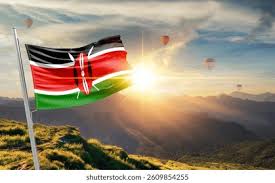
Kenya has sharply raised the cost of petroleum, with diesel prices rising by a record margin despite a fuel tax cut, as the conflict in Iran pushes up global oil prices.
In its latest review, the energy regulator raised the cost of diesel by 40 Kenya shillings to 206 ($1.
6; £1. 2) a litre, while petrol rose by 28 shillings to a similar level. It said this reflected higher global oil and shipping costs, even as the government cut value added tax to 13% from 16%.The new prices will last until 14 May when the next review is due.
Fuel shortages have been reported in parts of the country, although the government insists stocks are sufficient and accuses some fuel companies of hoarding supplies.
The reports of shortages have been overshadowed by controversy over an allegedly substandard consignment imported last month outside government-to-government arrangements and at a significantly higher cost.
Reports that the fuel may have entered the market after being blended with stocks in government storage tanks have sparked public outrage and calls for accountability.
The government has previously said it cancelled the consignment amid concerns over its quality and cost and barred oil marketers from selling it. The matter, which led to the arrest and resignation of senior energy officials, is still under investigation.
On Wednesday, the Energy and Petroleum Regulatory Authority (Epra) said the disputed consignment had not been included in the computation of the new prices.
The price rises come amid the global fuel crisis caused by the US-Israel war with Iran that began on 28 February.
Concerns remain that the energy crisis may deepen despite a conditional two-week ceasefire signed last Wednesday that included opening the Strait of Hormuz, a key shipping route for global oil and gas supplies.
Shipments through the strait have largely been at a standstill since the war began.
Countries have taken various measures to cope with the crisis and cushion consumers from the price shocks, including cutting taxes and minimising wastage.
Kenya’s directive to cut VAT on fuel is scheduled to last until July. South Africa announced a one-month cut in the fuel levy two weeks ago to limit pump prices.
Other African countries to have announced similar measures include Zambia, Namibia and Ghana, while South Sudan announced electricity rationing and Ethiopia prioritised certain sectors to deal with the crisis.
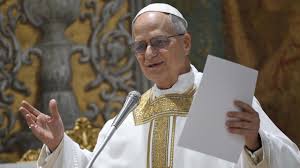
Anglophone separatists in Cameroon have announced a period of “safe travel passage” and halted fighting ahead of Pope Leo XIV’s visit to the conflict‑hit region this week.
Leaders of several armed and secessionist groups said the three‑day measure was in recognition of the “profound spiritual importance” of the papal visit, which starts on Wednesday, and the need to safeguard civilian life.
In a statement from Unity Alliance which brings the groups together – they said they would facilitate the movement of those celebrating the visit. The government is yet to comment.
A near-decade of violence in the English-speaking regions has left at least 6,000 dead and many more forced from their homes.
Pope Leo is currently in Algeria for a second day as part of his 11-day tour of the continent, in which he will also visit Cameroon, Angola and Equatorial Guinea.
Peace is one of the major themes of his visit.
The pontiff arrived in Algeria on Monday, marking the first visit by any pope to the predominantly Sunni Muslim country.
It is also the birthplace of St Augustine, and Leo XIV is the first pontiff from the order to follow his teachings.
He is currently in Annaba where the saint was a bishop – and in the afternoon, is expected to celebrate Mass at the Basilica of Saint Augustine.
The Pope’s second country stop is Cameroon, where he will visit Bamenda, the capital of the country’s North-West region.
The city is regarded as the centre of Cameroon’s conflict between Anglophone separatists and state forces.
A national dialogue organised by the government in 2019 failed to end the violence in the country’s two English‑speaking regions.
Unity Alliance said the decision to pause the fighting “reflects a deliberate commitment to responsibility, restraint, and respect for human dignity, even in the context of ongoing conflict.”
It added that the Pope’s visit should remain “spiritual” and “pastoral” in nature, and warned against any politicisation of the event.
While the Cameroonian, francophone-dominated government has not reacted to the announcement, authorities say appropriate measures had been taken to ensure security in cities scheduled to host the Pope.
Pope Leo’s visit to Bamenda is seen as a symbolic effort by the Catholic Church to promote peace and reconciliation. He is expected to hold a meeting for peace in the city’s Saint-Joseph’s Cathedral.
Officials said all sites to be attended by the Pope will be free of charge for visitors.
Pope Leo’s wide-ranging tour will include stops in 11 cities across the four countries. It is his second major foreign visit since being elected to the papacy last year, and reflects the importance of Catholicism in Africa.
More than a fifth of the world’s Catholics are in Africa, some 288 million people, according to figures from 2024.


Mutfwang Holds Close Door with Former State Governors
ShareFrom Jude Dangwam, Jos Plateau State Governor, Caleb Mutfwang has convened a strategic meeting with former governors of the state towards addressing the security challenges bedevilling the state. The meeting held...

Lobi Stars Trim Squad to Push for Promotion
ShareThe Nigerian National League (NNL) side, Lobi Stars Football Club of Makurdi, has trimmed its squad and retained a few quality players to push for promotion to the...

Pope Criticises ‘Tyrants’ Who Spend Billions on Wars after Trump Spat
SharePope Leo has criticised leaders who spend billions on wars and said the world was “being ravaged by a handful of tyrants” in unusually forceful comments during a...


Nigerian Men Scared of Bold, Confident Women, Phyna Claims
ShareFormer Big Brother Naija winner, Josephine Otabor, popularly known as Phyna, has claimed that she is still single because Nigerian...

Residents Decry Persistent Power Outage in Abuja Community
ShareBy Raphael Atuu, Abuja Residents of Waru District in Apo, within Nigeria’s Federal Capital Territory, are raising the alarm over what they...

2027: Tinubu Meets Coordinators, Renews Plea for Unity, Rule of Law
ShareBy David Torough, Abuja President Bola Tinubu has called for unity, resilience and renewed commitment to nation-building, urging Nigerians to...

Gunmen Abduct 14 UTME Candidates in Benue Enroute Exams Centre
ShareFrom Attah Ede, Makurdi A wave of concern has trailed the ongoing Unified Tertiary Matriculation Examination (UTME) nationwide following the...

Army Honours Fallen Heroes as Brig. Gen. Braimah, Others Laid to Rest in Maiduguri
ShareFrom Muhammad Muhammad Al-amin, Maiduguri The Nigerian Army has conducted a solemn burial ceremony for Brigadier General Oseni Braimah, Captain...

Yusuf Congratulates Abubakar on Election as Int’l Academy of Food Science, Technology Fellow
ShareFrom Rabiu Sanusi, Kano The Governor of Kano State, Abba Yusuf has congratulated Professor Hafiz Abubakar on his election as...
NCA Urges Christians to Exercise Restraint amid ‘Rising Religious Provocations’
ShareFrom Agbo Emmanuel, Kaduna Chairman, Northern Christian Association (NCA) Rev. Joseph John Hayab has called on believers across Nigeria to...