
Foreign News
UN-Backed Report Reveals Rising Climate Change Risk Across Africa


Climate change contributed to mounting food insecurity, poverty and displacement in Africa last year, the World Meteorological Organisation (WMO) and partners said in a report published on Tuesday.
The State of the Climate in Africa 2020 report highlights the continent’s disproportionate vulnerability, but also reveals how investing in climate adaptation, early warning systems, and weather and climate services, can pay off.
The report was issued during the extraordinary session of the WMO Congress currently underway online, and ahead of the COP26 UN climate change conference, which opens in Glasgow, Scotland, in less than two weeks
Petteri Taalas, the WMO Secretary-General, said the climate indicators in Africa during last year were characterised by continued warming temperatures, accelerating sea-level rise, extreme weather, and climate events – such as floods, landslides and droughts.
“The rapid shrinking of the last remaining glaciers in eastern Africa, which are expected to melt entirely in the near future, signals the threat of imminent and irreversible change to the Earth system,” he warned.
Only three mountains in Africa are covered by glaciers: the Mount Kenya massif, the Rwenzori Mountains in Uganda, and Mount Kilimanjaro in Tanzania.
Even though the glaciers are too small to act as significant water reservoirs, WMO underlined their touristic and scientific importance.
Currently, their retreat rates are higher than the global average, and “total deglaciation” could be possible by the 2040s.
Mount Kenya is expected to be deglaciated a decade sooner, the agency added, which will make it one of the first entire mountain ranges to lose glacier cover due to human-induced climate change.
The report is a collaboration between WMO, the African Union Commission, the Economic Commission for Africa (ECA) through the Africa Climate Policy Centre (ACPC), UN agencies, and international and regional scientific organisations.
Increased weather and climate variability is disrupting lives and economies, said Josefa Leonel Correia Sacko, Commissioner for Rural Economy and Agriculture with the African Union Commission.
Estimates reveal that by 2030, up to 118 million extremely poor people on the continent will be exposed to drought, floods and extreme heat, which will hinder progress towards poverty alleviation and growth.
“In sub-Saharan Africa, climate change could further lower gross domestic product (GDP) by up to three per cent, by 2050,” she said.
“This presents a serious challenge for climate adaptation and resilience actions because not only are physical conditions getting worse, but also the number of people being affected is increasing.”
The report estimated that the investment in climate adaptation for sub-Saharan Africa would cost between 30 to 50 billion dollars each year over the next decade, or roughly two to three per cent of GDP.
The authors said rapid implementation of African adaptation strategies will spark economic development, as well as more jobs as part of post-pandemic recovery.
Pursuing the priorities of an African Union green recovery plan would also allow for sustainable recovery as well as effective climate action. (NAN)






By Eze Okechukwu, Abuja
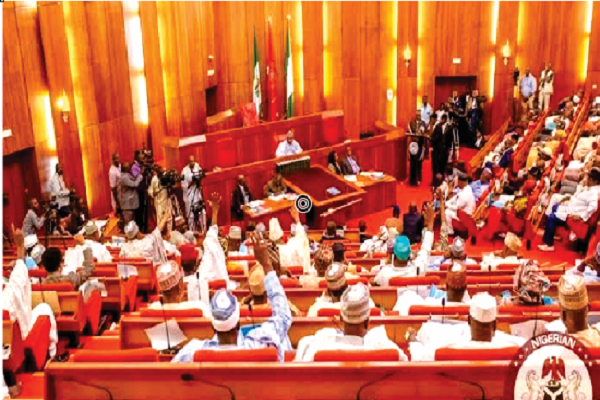
The Senate yesterday ordered mandatory health screening for every international passenger arriving Nigeria airports, seaports, land borders as Ebola resurfaces in the Democratic Republic of Congo with a scare case reported in the FCT.
The resolution followed an urgent motion by Senator Francis Fadahunsi, who warned that with Lassa fever already ravaging states, Nigeria cannot afford another outbreak.
“Protecting our entry points is far cheaper than managing Ebola,” Fadahunsi told the chamber.
Lawmakers insisted screening must be total and indiscriminate — no exemptions based on nationality or departure country because infected travellers can transit through safe-listed nations.
Senator Diket Plang raised the stakes further, demanding immediate funding for NCDC and Port Health Services, including release of withheld funds and emergency budget.
Senate President Godswill Akpabio said the Federal Government has started releasing Ebola response funds but ordered relevant committees to track every kobo.
“Ascertain whether the funds were released and judiciously utilised. Any outstanding debt must be released by the Finance Ministry without delay,” Akpabio directed.
At least 72 civilians who had been prospecting for gold in a border region of Sudan have been killed in air strikes, a regional rights group said.
Emergency Lawyers, based in the Sudanese capital, Khartoum, said jets targeted the so-called artisanal miners at a popular gold mining site on Saturday.
Neither the Egyptian government nor the de facto Sudanese authorities have so far commented.
Cairo has previously faced accusations of deadly strikes on gold prospectors as part of a crackdown on illicit activity along its southern border.
Emergency Lawyers noted the previous alleged attacks and said they represented not only a violation of Sudan’s sovereign territory but demonstrated the government’s lack of control over the region.
“The deliberate targeting of unarmed civilians violates international humanitarian law and the right to life,” it said in a statement on Sunday. “These acts may constitute war crimes.”
It noted that its death toll was provisional and could rise.
The Paris-based Sudan Tribune reported that the death toll could far exceed the number reported by Emergency Lawyers, citing a survivor of Saturday’s attack who said many more people had been injured.
Eyewitnesses said the attack began around 06:00 local time (04:00 GMT), with the aircraft firing more than five missiles directly at the miners’ camps, destroying them and excavation pits with people still inside, the newspaper wrote.
The Sudan Tribune reported claims in June that Egyptian forces had used drones and artillery to target artisanal mining sites in the same region, killing several, after sporadic incidents of Egyptian border guards of burning equipment, torching temporary shelters, and firing live ammunition to disperse mine workers.
Days later, Egypt’s border agency announced that it and the military had begun a sweeping security campaign along the border to foil illegal migration, drug smuggling and illegal mining.
At the same time, Sudan’s de facto leader announced an investigation into the alleged strikes, which were said to have killed dozens.
Gold lies at the core of the border tensions.
Sudan’s ongoing civil war has led to a surge in artisanal mining – and often risky practice conducted by civilians with rudimentary tools and without official permission – particularly in remote areas near its borders.
Gold-rich areas lie along porous borders in terrain historically associated with cross-border smuggling routes, with artisanally mined gold potentially feeding into those channels.
Egypt’s border force said in June that it had seized 86 tonnes of gold ore along with amateur prospecting equipment.
Artisanal mining has also reportedly continued in Sudan’s conflict zones and smuggled gold may be a source of income for armed insurgent groups.
This has raised concerns of illicit Sudanese gold undermining the legitimate Egyptian gold market.
Several German fighter jets will take part in the Northern Atlantic Treaty Organisation (NATO) annual nuclear defence exercise this week as troops from 17 countries take part in the Steadfast Noon drill.
The German Air Force said three Tornado jets will take part in the exercise hosted by Italy, which starts Tuesday and runs for about a week and a half.
The jets are normally stationed in Büchel in the German state of Rhineland-Palatinate.
NATO has not revealed the exercise scenario but said its scale would be comparable to last year’s drill, which involved around 2,000 personnel and more than 70 aircraft.
Last week, NATO’s head of nuclear policy, Nassima Barrows, said the exercise was designed to demonstrate the alliance’s readiness and ability to defend its territory.
No real nuclear weapons will be used, she added.
NATO said the exercise was not linked to current events or directed at any specific country.
Military experts say the drills, held regularly in October, include practising the safe transport of weapons from underground storage facilities to aircraft and mounting them on fighter jets.
Only practice bombs without real nuclear warheads are used during the drills.




Pope Says Inca Heartland ‘Suffering’ as Villages Empty
SharePope Leo XIV warned Saturday that the heartland of the ancient Inca Empire was “suffering,” as the remote, poverty-stricken communities...
Kaduna Civil Service Union, Backs Tinubu, Uba Sani for 2027
ShareFrom Shabanyan Kantiok, Kaduna The Nigeria Civil Service Union (NCSU), Kaduna State Council, has passed a vote of confidence in...

FG Says 16 Nigerian Die in Ethiopia over High Altitude
ShareBy Laide Akinboade Abuja The Federal Government at the weekend cautioned Nigerians, particularly those with pre-existing medical conditions, to exercise...
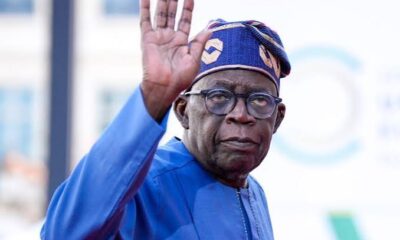

2027: Tinubu Pledges to Rebuild Displace Plateau Communities
ShareFrom Jude Dangwam, Jos President Bola Tinubu has assured Nigerians of peaceful elections in 2027, promising to strengthen security operations,...


Lagos Thugs, London Protesters and the Chaos before the Ballot
ShareBy Adeola Akinremi On Thursday, 12 November, two incidents with red flags for the 2027 elections emerged. In London, the...
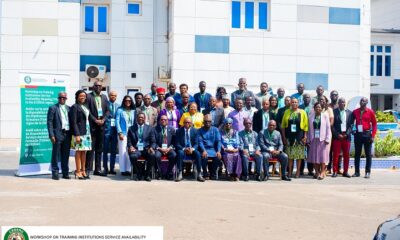

Stakeholders Excited as WAHO Finalises Training Institutions Service Availability Mapping in ECOWAS Region
ShareBy David Torough A three-day regional workshop devoted to finalising the Training Institutions Service Availability Mapping (TISAM) initiative in West...


66 Years of Nigeria’s Journey: The Benue Story—From Creation to the Alia Era and Beyond
ShareBy Solomon Iorpev By the time you stand on the hills that cradle Benue’s valleys, or watch the Benue River...


Let Benue People Judge Alia on Performance, Not Political Rhetoric – Akwaya
ShareIn this edition of Viewpoint, we engage Dr. Cletus Akwaya, former Benue State Commissioner for Information and former Special Adviser...


TAJBank Wins Best Non-Interest Bank Award
ShareBy Tony Obiechina, Abuja TAJBank Limited, Nigeria’s largest non-interest bank, has, for the fifth consecutive time, won the Non-Interest Bank...
Katsina Beats 35 States, Tops Nigeria in Climate Governance
ShareBy David Torough, Abuja Katsina State has emerged Nigeria’s number one state in climate governance and implementation for 2026, marking...