
Foreign News
UN Highlights Human Cost of Transatlantic Slave Trade, denounces Racism


The UN on Tuesday remembered the horrors of the transatlantic slave trade and its continued impact on the modern world, by honouring the tradition of resistance to slavery and unity against racism through personal stories of courage.
In a commemorative event at the UN headquarters that included remarks from Member States from around the world, top UN officials denounced racism and discrimination.
The President of the General Assembly, Abdulla Shahid, called for greater commitments to social justice, and the celebration of all communities, irrespective of caste, creed or skin colour.
He also spoke personally about his visit to the Island of Gorée, off the coast of Senegal, which from the 15th to the 19th century, was the largest slave-trading centre on the Africa.
“Standing in solidarity with victims is the bare minimum we can do,” Shahid said. “We must act to address these inequalities.”
Secretary-General António Guterres also spoke about the ongoing obstacles faced by people of African descent, who “are often among the last in line” for quality healthcare, education, justice and other opportunities.
He noted that ending racism is imperative for justice, adding that “this imperative implicates us all – we are all responsible to stand up and speak out in solidarity against racism wherever, whenever we encounter it.”
The 2022 theme for the commemorative event is Stories of Courage: Resistance to Slavery and Unity against Racism.
Some of them were recounted by Nikole Hannah-Jones, the keynote speaker at the event, who is also the creator of The New York Times’ 1619 Project, which aims to place the consequences of slavery in the United States, and contributions of Black Americans, more at the centre of the national narrative.
A descendant of slaves whose family went on to be sharecroppers in the southern U.S., Ms Hannah Jones told how her grandmother fled to “plant the seed of freedom that she would never see herself”.
Jones noted that “as we remember our brutal enslavement by people who saw themselves as civilised, we must remember the fierce black tradition of resistance.”
She noted Zumbi dos Palmares in Brazil, Queen nanny of the Maroons in Jamaica and the independence of Haiti as some of the examples, stressing that “resistance remains the legacy of slavery”.
Resistance is also the theme of Equiano Stories, a film based on the memoir of Olaudah Equiano, who, after decades of slavery, was able to buy his freedom.
He wrote about his life in The Interesting Narrative of the Life of Olaudah Equiano, Or Gustavus Vassa, The African.
His story is told through first-person video, still images and text, as if Equiano had a cell phone in 1756. The result is an Instagram feed of a little boy growing up in a West African village, who is then kidnapped and sold into slavery.
“Equiano Stories connects us to the past in a way that is often hard to achieve, particularly as we are prone to see the past as something long ago, distant and unrecognisable,” Shahid said.
The film was introduced by producer Mati Kochavi, in a special event organised by the Office of the President of the General Assembly, with participation from the Permanent Missions of Israel, Jamaica, Senegal, the United States and the African Union.
New York City Mayor Eric Adams attended the event, in his first visit to the UN Headquarters since taking office in January 2022.
Addressing participants, Adams drew parallels between the evils shows in the film and global ills today, such as accelerating climate change, hunger and conflicts.
Urging multilateral action, he said “the UN must be more than a symbolic building, it must be a rallying cry”. (NAN)
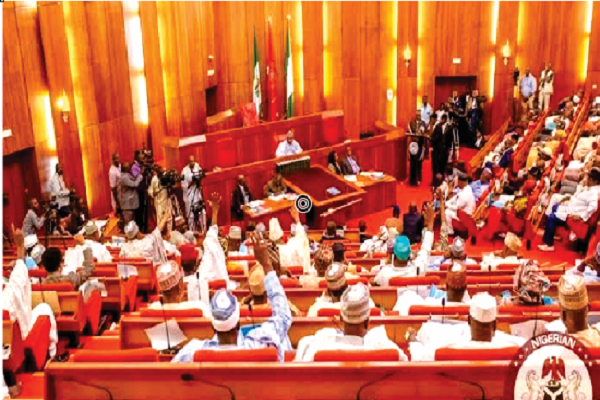
By Eze Okechukwu, Abuja
The Senate yesterday ordered mandatory health screening for every international passenger arriving Nigeria airports, seaports, land borders as Ebola resurfaces in the Democratic Republic of Congo with a scare case reported in the FCT.
The resolution followed an urgent motion by Senator Francis Fadahunsi, who warned that with Lassa fever already ravaging states, Nigeria cannot afford another outbreak.
“Protecting our entry points is far cheaper than managing Ebola,” Fadahunsi told the chamber.
Lawmakers insisted screening must be total and indiscriminate — no exemptions based on nationality or departure country because infected travellers can transit through safe-listed nations.
Senator Diket Plang raised the stakes further, demanding immediate funding for NCDC and Port Health Services, including release of withheld funds and emergency budget.
Senate President Godswill Akpabio said the Federal Government has started releasing Ebola response funds but ordered relevant committees to track every kobo.
“Ascertain whether the funds were released and judiciously utilised. Any outstanding debt must be released by the Finance Ministry without delay,” Akpabio directed.
At least 72 civilians who had been prospecting for gold in a border region of Sudan have been killed in air strikes, a regional rights group said.
Emergency Lawyers, based in the Sudanese capital, Khartoum, said jets targeted the so-called artisanal miners at a popular gold mining site on Saturday.
Neither the Egyptian government nor the de facto Sudanese authorities have so far commented.
Cairo has previously faced accusations of deadly strikes on gold prospectors as part of a crackdown on illicit activity along its southern border.
Emergency Lawyers noted the previous alleged attacks and said they represented not only a violation of Sudan’s sovereign territory but demonstrated the government’s lack of control over the region.
“The deliberate targeting of unarmed civilians violates international humanitarian law and the right to life,” it said in a statement on Sunday. “These acts may constitute war crimes.”
It noted that its death toll was provisional and could rise.
The Paris-based Sudan Tribune reported that the death toll could far exceed the number reported by Emergency Lawyers, citing a survivor of Saturday’s attack who said many more people had been injured.
Eyewitnesses said the attack began around 06:00 local time (04:00 GMT), with the aircraft firing more than five missiles directly at the miners’ camps, destroying them and excavation pits with people still inside, the newspaper wrote.
The Sudan Tribune reported claims in June that Egyptian forces had used drones and artillery to target artisanal mining sites in the same region, killing several, after sporadic incidents of Egyptian border guards of burning equipment, torching temporary shelters, and firing live ammunition to disperse mine workers.
Days later, Egypt’s border agency announced that it and the military had begun a sweeping security campaign along the border to foil illegal migration, drug smuggling and illegal mining.
At the same time, Sudan’s de facto leader announced an investigation into the alleged strikes, which were said to have killed dozens.
Gold lies at the core of the border tensions.
Sudan’s ongoing civil war has led to a surge in artisanal mining – and often risky practice conducted by civilians with rudimentary tools and without official permission – particularly in remote areas near its borders.
Gold-rich areas lie along porous borders in terrain historically associated with cross-border smuggling routes, with artisanally mined gold potentially feeding into those channels.
Egypt’s border force said in June that it had seized 86 tonnes of gold ore along with amateur prospecting equipment.
Artisanal mining has also reportedly continued in Sudan’s conflict zones and smuggled gold may be a source of income for armed insurgent groups.
This has raised concerns of illicit Sudanese gold undermining the legitimate Egyptian gold market.
Several German fighter jets will take part in the Northern Atlantic Treaty Organisation (NATO) annual nuclear defence exercise this week as troops from 17 countries take part in the Steadfast Noon drill.
The German Air Force said three Tornado jets will take part in the exercise hosted by Italy, which starts Tuesday and runs for about a week and a half.
The jets are normally stationed in Büchel in the German state of Rhineland-Palatinate.
NATO has not revealed the exercise scenario but said its scale would be comparable to last year’s drill, which involved around 2,000 personnel and more than 70 aircraft.
Last week, NATO’s head of nuclear policy, Nassima Barrows, said the exercise was designed to demonstrate the alliance’s readiness and ability to defend its territory.
No real nuclear weapons will be used, she added.
NATO said the exercise was not linked to current events or directed at any specific country.
Military experts say the drills, held regularly in October, include practising the safe transport of weapons from underground storage facilities to aircraft and mounting them on fighter jets.
Only practice bombs without real nuclear warheads are used during the drills.




Court Dismisses Emeka Ike’s N10bn Suit against Wike’s Aide
ShareThe Federal High Court in Abuja on Wednesday dismissed a N10bn fundamental rights suit filed by Nollywood actor Emeka Ike...
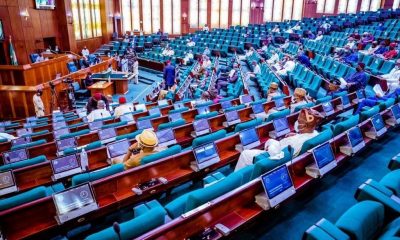

Reps Threaten to Arrest Telecom CEOs Over Poor Network Services
ShareBy Ubong Ukpong, Abuja The House of Representatives on Wednesday threatened to issue warrants of arrest against chief executives of...


A Guide to IFRS S1 and S2 Sustainability Implementation (4)
ShareBy Innocent Okwuosa The implementation of IFRS S1 and S2 must not be approached strictly from a regulatory compliance perspective....


2027: Reward Tinubu with Votes for Federal University – Wike
ShareBy Laide Akinboade Abuja The Minister of the Federal Capital Territory, Nyesom Wike, has said the Ogoni people of Rivers...


FCSC, Soft Alliance Explore IPPIS Integration to Improve Civil Service Management
ShareThe Federal Civil Service Commission (FCSC) and Soft Alliance and Resource Ltd. are exploring ways to integrate the commission’s statutory...


Tinubu Presides over FEC Meeting
SharePresident Bola Tinubu is presiding over a meeting of the Federal Executive Council at the Council Chamber of the State...
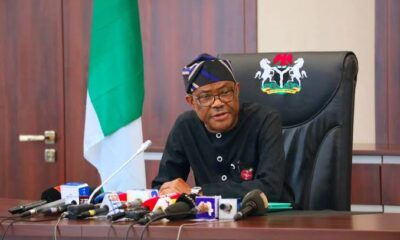

Wike Question Atiku, Obi, Contributions to Rivers State
ShareBy Laide Akinboade Abuja Minister of the Federal Capital Territory, Nyesom Wike, has challenged former Vice-President Atiku Abubakar and former...


Police Arrest NSCDC Officer for Firing Gun at Abuja Market
ShareThe Federal Capital Territory Police Command has arrested a Deputy Superintendent of Corps with the Nigeria Security and Civil Defence...


World Bank Projects 23 Per Cent Surge in Global Commodity Prices
ShareBy Tambaya Julius, Abuja The World Bank Group has projected a 23 per cent increase in global commodity prices in...


NELFUND Mounts Tight Monitoring System over Students Loan Payment
ShareBy Tambaya Julius, Abuja The Nigerian Education Loan Fund (NELFUND) has announced plans to strengthen its payment and monitoring systems...