
Foreign News
UN Human Rights Chief Defends Online Hate Speech Regulation

UN High Commissioner for Human Rights Volker Türk has argued that regulating harmful online content is not censorship.He emphasised that hate speech and divisive social media posts have “real-world consequences.”He also stated that there is a responsibility to regulate such content to protect individuals and society from the harm it can cause.
Türk made this statement on Friday following Meta CEO Mark Zuckerberg’s decision to end the company’s fact-checking programme in the United States. “Allowing hate speech and harmful content online has real-world consequences. Regulating this content is not censorship,” Türk wrote on X (formerly Twitter).In a longer post on LinkedIn, Türk argued that calling efforts to create safe online spaces “censorship” ignores the reality that an unregulated space often silences marginalised voices.He also noted that allowing hatred online restricts free expression and could lead to harm.Zuckerberg announced the cessation of Meta’s fact-checking programme last Tuesday, citing concerns over political bias and claiming that self-regulation led to excessive censorship.He called for freer speech on Meta platforms and criticised the erosion of user trust.The International Fact-Checking Network (IFCN) rejected Zuckerberg’s argument, calling it “false” and warning that it could have harmful consequences.Türk highlighted that social media platforms possessed the potential to positively shape society by fostering connections.“However, they also have the ability to incite conflict, spread hatred, and endanger individuals’ safety.“At its best, social media is a place where people with divergent views can exchange, if not always agree,” he said.The UN Human Rights Chief reiterated his commitment to promoting accountability and governance in the digital space, ensuring public discourse remained healthy, trustworthy, and respectful of human rights.When asked about Meta’s recent decisions and their impact on the UN’s social media policy, a UN spokesperson in Geneva, Michele Zaccheo, emphasised that the global organisation continued to monitor and evaluate the online space.He added that the UN remained dedicated to providing evidence-based information across social media platforms.Similarly, the World Health Organisation (WHO) reaffirmed its commitment to providing quality, science-based health information and maintaining a presence on various online platforms.In response to the growing threat of digital misinformation, the UN Department of Global Communications (DCG) has been actively working to combat false narratives, including through the development of the UN Global Principles for Information Integrity.(NAN)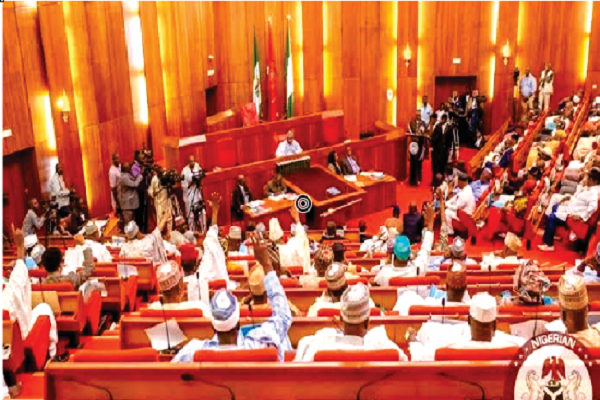
By Eze Okechukwu, Abuja
The Senate yesterday ordered mandatory health screening for every international passenger arriving Nigeria airports, seaports, land borders as Ebola resurfaces in the Democratic Republic of Congo with a scare case reported in the FCT.
The resolution followed an urgent motion by Senator Francis Fadahunsi, who warned that with Lassa fever already ravaging states, Nigeria cannot afford another outbreak.
“Protecting our entry points is far cheaper than managing Ebola,” Fadahunsi told the chamber.
Lawmakers insisted screening must be total and indiscriminate — no exemptions based on nationality or departure country because infected travellers can transit through safe-listed nations.
Senator Diket Plang raised the stakes further, demanding immediate funding for NCDC and Port Health Services, including release of withheld funds and emergency budget.
Senate President Godswill Akpabio said the Federal Government has started releasing Ebola response funds but ordered relevant committees to track every kobo.
“Ascertain whether the funds were released and judiciously utilised. Any outstanding debt must be released by the Finance Ministry without delay,” Akpabio directed.
At least 72 civilians who had been prospecting for gold in a border region of Sudan have been killed in air strikes, a regional rights group said.
Emergency Lawyers, based in the Sudanese capital, Khartoum, said jets targeted the so-called artisanal miners at a popular gold mining site on Saturday.
Neither the Egyptian government nor the de facto Sudanese authorities have so far commented.
Cairo has previously faced accusations of deadly strikes on gold prospectors as part of a crackdown on illicit activity along its southern border.
Emergency Lawyers noted the previous alleged attacks and said they represented not only a violation of Sudan’s sovereign territory but demonstrated the government’s lack of control over the region.
“The deliberate targeting of unarmed civilians violates international humanitarian law and the right to life,” it said in a statement on Sunday. “These acts may constitute war crimes.”
It noted that its death toll was provisional and could rise.
The Paris-based Sudan Tribune reported that the death toll could far exceed the number reported by Emergency Lawyers, citing a survivor of Saturday’s attack who said many more people had been injured.
Eyewitnesses said the attack began around 06:00 local time (04:00 GMT), with the aircraft firing more than five missiles directly at the miners’ camps, destroying them and excavation pits with people still inside, the newspaper wrote.
The Sudan Tribune reported claims in June that Egyptian forces had used drones and artillery to target artisanal mining sites in the same region, killing several, after sporadic incidents of Egyptian border guards of burning equipment, torching temporary shelters, and firing live ammunition to disperse mine workers.
Days later, Egypt’s border agency announced that it and the military had begun a sweeping security campaign along the border to foil illegal migration, drug smuggling and illegal mining.
At the same time, Sudan’s de facto leader announced an investigation into the alleged strikes, which were said to have killed dozens.
Gold lies at the core of the border tensions.
Sudan’s ongoing civil war has led to a surge in artisanal mining – and often risky practice conducted by civilians with rudimentary tools and without official permission – particularly in remote areas near its borders.
Gold-rich areas lie along porous borders in terrain historically associated with cross-border smuggling routes, with artisanally mined gold potentially feeding into those channels.
Egypt’s border force said in June that it had seized 86 tonnes of gold ore along with amateur prospecting equipment.
Artisanal mining has also reportedly continued in Sudan’s conflict zones and smuggled gold may be a source of income for armed insurgent groups.
This has raised concerns of illicit Sudanese gold undermining the legitimate Egyptian gold market.
Several German fighter jets will take part in the Northern Atlantic Treaty Organisation (NATO) annual nuclear defence exercise this week as troops from 17 countries take part in the Steadfast Noon drill.
The German Air Force said three Tornado jets will take part in the exercise hosted by Italy, which starts Tuesday and runs for about a week and a half.
The jets are normally stationed in Büchel in the German state of Rhineland-Palatinate.
NATO has not revealed the exercise scenario but said its scale would be comparable to last year’s drill, which involved around 2,000 personnel and more than 70 aircraft.
Last week, NATO’s head of nuclear policy, Nassima Barrows, said the exercise was designed to demonstrate the alliance’s readiness and ability to defend its territory.
No real nuclear weapons will be used, she added.
NATO said the exercise was not linked to current events or directed at any specific country.
Military experts say the drills, held regularly in October, include practising the safe transport of weapons from underground storage facilities to aircraft and mounting them on fighter jets.
Only practice bombs without real nuclear warheads are used during the drills.




WAHO, ECOWAS Countries Move to Tackle Health Worker Shortages, Brain Drain Through Regional Retention Plan
ShareBy David Torough, Abuja The West African Health Organization (WAHO) has called for stronger regional collaboration and practical policy interventions...


Ekpo Empowers Women, Supports Hospital Patients at 50
ShareBy Tambaya Julius, Abuja The All Progressives Congress (APC) flag bearer for Karu/Gitata Constituency in the Nasarawa State House of...


Ebola: Bayelsa Activates Emergency Response
ShareFrom Mike Tayese, Yenagoa The Bayelsa state government has intensified disease surveillance and emergency preparedness following reports of an Ebola...

FG Disburses N38.93bn to Tertiary Institutions
ShareBy Tony Obiechina, Abuja The Federal Government has disbursed N38.93 billion to 166 public tertiary institutions nationwide under the Needs...


Mbah Unveils Multi-billion Naira Pharmaceutical Company in Enugu
ShareFrom Sylvia Udegbunam, Enugu Governor Peter Mbah of Enugu State has commissioned Anchorage Pharmaceutical Industries Limited, a multi-billion naira pharmaceutical...
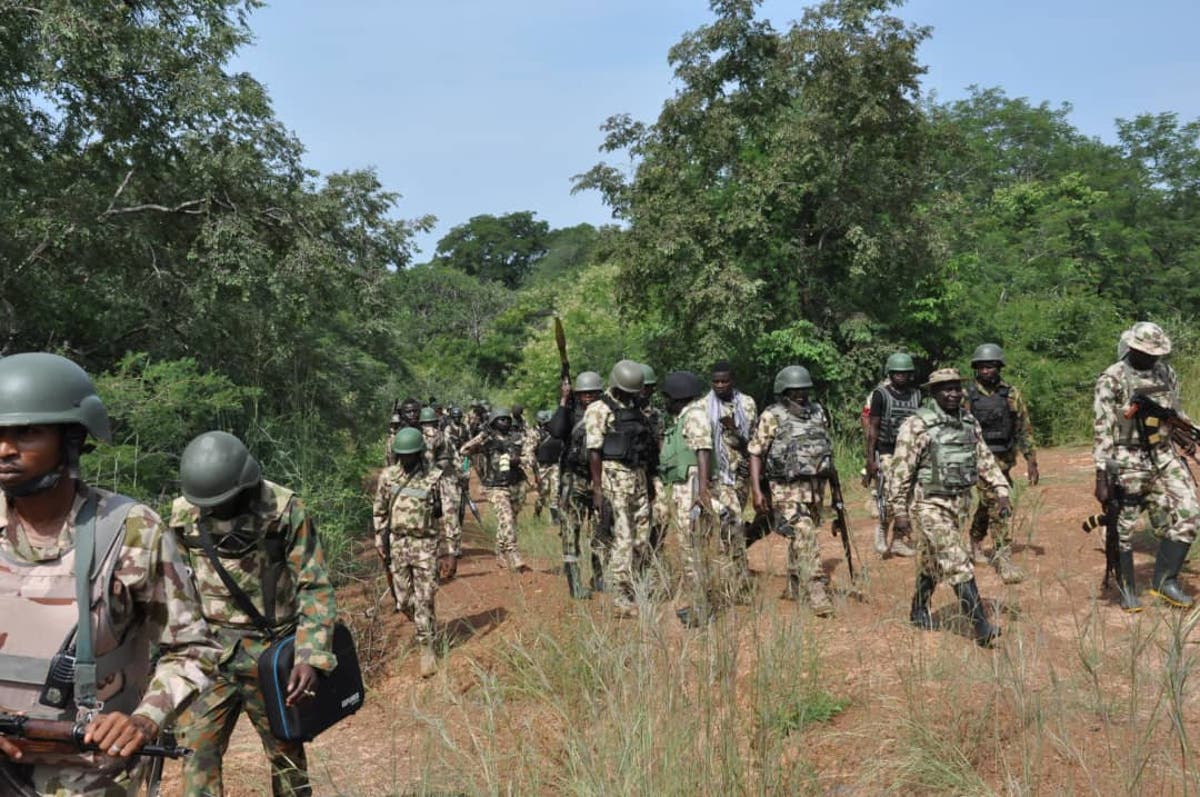
Troops Rescue Three Kidnap Victims in Kebbi
ShareTroops of Sector 2, Operation FANSAN YAMMA, have rescued three kidnapped victims following an operation in Sakaba Local Government Area...


Troops Neutralise Six Terrorists, Arrest 11 Suspected Collaborators in Borno
ShareTroops of the Nigerian Army have neutralised six terrorists, arrested 11 suspected collaborators and received the surrender of a Jama’atu...


JPMorgan’s Entry into Nigeria: Turning Global Finance into a National Development Opportunity
ShareBy Uche Joe Uwaleke The proposed establishment of JPMorgan Merchant Bank Nigeria Limited presents Nigeria with an important opportunity to...


Commissioner Hails Akwa Ibom Governor over Peace Initiatives
ShareVeteran Sports Journalist and Commissioner for Sports Development in Akwa Ibom State, Paul Bassey, has hailed the state Governor, Pastor...

Kogi Probes Mega Electronic Store Inferno
ShareFrom Joseph Amedu, Lokoja The Kogi State Government has commenced investigation into the fire incident that gutted Pee Links, a...