
OPINION
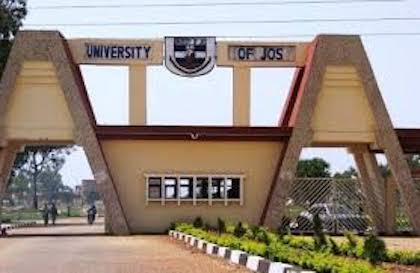
UniJos Evacuation: FG Failures, Governors Uncommon Effort

By Jerome-Mario Utomi
It is globally believed that, to lower the risk of democratic backsliding and improve lives, leaders must among other demands, stress and promote values that are essential to good governance, especially transparency and accountability, and to support civil society, independent media, and the free flow of information. Certainly, but, despite this admirable age long declarations, the global community, particularly the development professionals, do not think that the present Federal Government in Nigeria is living up to the above guiding rules.
This partly explains the inertia and torrent of negative reports against the nation Nigeria as it lends credence to why the country’s economy has in the past six years shown its inability to sustain any kind of meaningful growth that promotes the social welfare of the people. The result can be seen in the grinding poverty in the land.
However, in spite of these gloomy and depressing state of affairs, there exist lately on the part of state governors some deviations, meaningful successes and hopeful signs that some state governors are becoming conscious of and demonstrated willingness to keep faith with the above detects particularly the needs to have greater confidence in, invest on, and protect human capital of their states while providing good governance
The above assertion is predicated on recent media reports that prompted by the current security situation in Plateau State, Governors of Delta, Kaduna ordered immediate evacuation of their students studying at the University of Jos (UNIJOS) and other tertiary institutions within the neighboring state. This development came a few days after the Kogi state Governor, Alhaji Yahay Bello, in a similar style evacuated from the troubled spot students of Kogi state origin.
Delta State Governor Ifeanyi Okowa according to report ordered the immediate evacuation of students of Delta origin from crisis troubled Jos following renewed crisis and security concerns in Plateau State. According to the statement by the Senior Special Assistant to the Governor on Student’s Affairs, Jerry Ehiwario, the government dispatched three buses with police escorts to move Delta students from the troubled zone. Meanwhile, the Executive Secretary of the Kaduna State Scholarship and Loans Board, Rilwan Hassan, in a similar statement, stated that the move was to ensure that all students of Kaduna State are not trapped or cut in crossfire, even as the situation tends to be further degenerating. He explained that 87 students were evacuated by security agencies under the supervision of the board and have since been reunited with their families.
Essentially, separate from the fact that the state governments have by this demonstration of proactive leadership, finally portrayed our nation before the watching world as a people that appreciates, and have plans for the youths, who will provide the future leadership need of the country, the latest prompt response has in more than anything else portrayed these state Governors as leaders that are mindful of the fact that provision of security and pursuit of economic welfare of the citizens are the only two constitutional responsibilities which all leaders in Nigeria must achieve.
These governors have in the opinion of this piece established modern public leadership demand of being proactive as against the primordial culture of reactivity.
However, while this new perception about leadership by these governors is celebrated, it is important to add that, it is a barefaced truth that if we look honestly at the realities of our national life, it is clear that we are not marching forward but groping and stumbling.
The reason is not far-fetched.
In June/July 2018, there was a similar mindless sack/destruction of a sleepy village in Barkin-Ladi local government Area of Plateau State, leaving the villagers decimated with dozens killed by the herdsmen. Irked by the unpleasant realities, the relationship between the community and the Federal government suffered difficulty. It was so bad that while reacting during the President’s visit to Plateau State those years, the people going by media reports lamented that what they needed is protection and not visit from Mr. President.
Despite this reaction from the people, the Federal Government has within the past three years failed to offer a road for restoring the health and vitality of the people’s co-existence nor proposed a strategy for the re-introduction of peace and security to its proper role at the heart of the people in the state. And because of this leadership and inability to resolve other nagging security challenges by the Federal Government, and most especially the FG’s inability to secure the UNIJOS students despite being a Federal University, it is the writer’s views that our nation is in the process of quietly making what future historians will certainly describe as a disastrously mistaken decision on the issue of the National Security.
Looking ahead, it is important to ask at this point; in the face of these sad realities/developments, is it still possible for this administration to secure this nation?
The answer in my view is yes.
All that President Muhammadu Buhari led Federal Government needs to recognize is that globally, “a country’s defence capability has to continually upgrade as new technology, especially information technology, is incorporated into the weapon system. This requires a sound economy that can afford to pay for new weaponry and highly educated and trained people who can integrate the various arms into one system and operate them efficiently and effectively”.
Very gamine, as a nation, we must use this global guide and latest examples by these governors as a dashboard to correcting our leadership challenge which is gravitating towards becoming a culture, it will be important for us as a nation to openly admit and adopt both structural and managerial changes if achieving this agenda is at the centre of our goal. This to my mind will necessitate our leaders welcoming approaches that impose more leadership discipline than conventional, and creating government institutions that are less extractive but more innovative in operation.
This shift in action is important as we cannot solve our socio-economic challenges with the same thinking we used when we created it. And this time is auspicious for Federal Government to borrow a leaf from the exemplary leadership demonstrated by these state governors. We need to bring a change in leadership paradigm by switching over to a leadership style that is capable of making successful decisions built on a higher quality of information while dropping the age-long mentality which presents execution as more important than idea incubation.
Utomi is the Programme Coordinator (Media and Public Policy), Social and Economic Justice Advocacy (SEJA), Lagos.







By Uddin Ifeanyi
Much of the palaver over the recent meeting of the Central Bank of Nigeria’s policy committee was exercised by how well the apex bank is doing its job. Against its primary goal of maintaining price stability, the CBN’s Monetary Policy Committee’s decision to recalibrate its monetary policy rate (MPR) in order to align it with the market invited the most attention.
First, there is the question of what the MPR anchors.
In reality, nothing. Ideally, however, the CBN’s policy rate should transmit price signals through the financial system, influencing saving, borrowing, liquidity, inflation expectations, and in the end, the naira’s exchange rate. It should, in other words, signal the central bank’s intentions. Yet, we have had years in which the MPR stoically remained unchanged even as inflation ran riot, and the naira’s exchange rate came under severe downward pressure.The CBN has regularly papered over this crack with an often-bewildering arsenal of tools — including some eccentric flimflams that it has deployed in recent times. But this only raises further questions as to how useful even these are. Take the cash reserve requirement.
At 45 percent for deposit money banks, it means that nearly half of banks’ qualifying deposits are warehoused with the central bank at any given time. While these sums may not, therefore, be available to build bubbles in the foreign exchange and equity markets, they are not likewise available for lending. Even if we argue that long-term lending ought properly to be funded by equity, banks and not shareholders should bear the burden of financing businesses’ working capital needs. Then, there is the small matter of how the CBN’s cash reserve requirement might be just as orphaned as its policy rate.
Banks raising naira deposits end up paying the CRR tax. In an economy that has witnessed considerable dollarisation — “the process where a country uses a foreign currency (most often the greenback) alongside or completely in place of its own domestic currency” over the years, does it matter that deposits into domiciliary accounts are not CRR compliant? And how?
Might the “dollarisation” phenomenon hold the key to the CBN’s toolkit’s redundancies? Countries formally adopt the dollar in place of their domestic currencies when locals lose faith in the latter. This process restores the stability that struggling economies often find unable to achieve with their currencies and drives investment inflows.
Nigeria’s dollarisation is only partial and barely adjacent. Yet, while the country may not have lost the gains — seigniorage — from printing its own currency that is one consequence of dollarisation, the CBN looks to have partially lost control of the monetary policy space, with the sums that Nigerians increasingly park in their dollar accounts.
There are, thankfully, many ways to regain this control without having to nationalise dollar deposits. Neither the CBN nor the government can talk their way out of this, though. You cannot tell Nigerians to keep their savings in naira while offering them a savings rate below inflation. The smart choice in this circumstance is for domestic economic actors to move their savings into dollars, property, equities, commodities, inventory, or other assets.
Giving Nigerians a reason to save in naira should thus be the central goal of a policy reset. How to do this? We have got to keep inflation low. At 30% year-on-year a while back, the CPI numbers were an outrage. At a little over 15 percent today, it is still doing great injury to the naira. N100 today has roughly the purchasing power of only ₦50 after five years. The solution here goes beyond the CBN setting a credible, explicit medium-term inflation target.
It also transcends the CBN laying out incentive structures that make deviations from this target costly both politically and institutionally. More than this, the national commitment to the CBN not financing fiscal deficits must be religious and total. While this means that monetary policy is no longer subordinate to the federal government’s financing requirements, it must aim at positive real interest rates for savers.
Still a spectre haunts monetary policy in Nigeria. It is unfortunately not in the CBN’s gift to exorcise the nightmare that the federal government’s financing requirements have become.
How do we persuade our public sector boffins that a government that persistently spends more than it can sustainably pay for creates pressure for any of higher taxation, additional borrowing, monetary accommodation, inflation, or the naira’s depreciation? If the naira is only as strong as Nigeria’s balance sheet, then the task of getting both the fiscal and monetary authorities to operate under a common nominal inflation anchor must begin with reducing recurrent expenditure, broadening the tax base instead of increasing the tax rate, returning off-budget borrowing back to the budget, publishing complete fiscal accounts, improving the quality of public investment, establishing a credible medium-term strategy, and ceasing to use the CBN as a piggy bank.
Hopefully, this should help the economy produce more tradable goods and services. Because the naira represents a claim on the economy by anyone holding it, we cannot permanently defend the currency’s exchange rate through interest rates and reserves, if the economy continually uses up more foreign exchange than it earns. In other words, then, the economy must work for the naira to work.
Uddin Ifeanyi, a journalist manqué and retired civil servant, can be reached @IfeanyiUddin.
By Prince Charles Dickson Ph.D
There is an old story about a lawyer who sold his well to a teacher, then returned demanding payment for the water inside it. The teacher smiled. If the water still belonged to the lawyer, he replied, perhaps the lawyer should remove it or pay rent for storing it in somebody else’s well.
Suddenly, the lawyer remembered he had only been joking.It is funny until we recognise ourselves as lawyers.
We tell people with disabilities that public spaces belong to everyone. Then we demand an additional price for entering them.
We give them citizenship, but charge for the ramp. We promise education, but make the classroom unreachable. We proclaim equal opportunity, then construct the doorway too narrow for their wheelchair.That contradiction came home to me when Grace shared her story with me, she titled Public Place Accessible Report for Inclusion. It contained no sentimental appeal. It simply insisted that public places should allow everyone to enter, move, communicate, receive services and participate independently, safely and with dignity.
I listened to it in her voice once as a report. Then, I read it again as an indictment.
Behind every line was somebody’s ordinary day made unnecessarily difficult. A mother arrives at a hospital, already frightened for her child, discovering that the entrance has steps but no ramp. A young man preparing carefully for an interview, only to find his opportunity waiting upstairs without a lift. An older woman confronting a pavement that has forgotten her legs cannot move as quickly as they once did.
These are imagined scenes, but the barriers Grace identified are painfully real. Poorly enforced building standards. Toilets that exclude. Transport that humiliates. Signs people cannot read. Public information people cannot hear. Facilities built without consulting those who will need to use them.
Grace’s intervention mattered because she did not reduce accessibility to a construction problem. Her story and experience understood something profound: every inaccessible entrance is also a message. Sometimes it says, “We did not think of you.” Sometimes, more cruelly, it says, “We thought of you, but you were not worth the expense.”
What does that message do to a child’s heart?
Imagine a girl with cerebral palsy watching other children rush into a school assembly while she waits outside for someone to carry her over the steps. Imagine her learning, year after year, that she must be grateful for help rather than entitled to access. Imagine how quietly a society can teach someone to apologise for existing.
On 3 October 2026, at GlowingStar Empowerment Initiative and Development’s World Cerebral Palsy Day commemoration in Bukuru, I delivered a keynote titled Beyond Therapy: Seeing the Whole Person, Not Just the Condition. Its central argument was simple: a person has cerebral palsy; cerebral palsy does not have the person.
A diagnosis is information, not identity. Therapy is necessary, valuable and sometimes life changing. But therapy is supposed to be a bridge into life, not the whole landscape of living. Beyond treatment are friendships, classrooms, jobs, ambitions, relationships, leadership, laughter, choices and dreams that deserve room to breathe.
We can celebrate a child’s progress in therapy while failing that same child at the school gate. We can praise a parent’s devotion while exhausting that parent with inaccessible transport, expensive care and the endless labour of explaining why their child deserves a chance. We can call ourselves compassionate while our architecture remains indifferent. At the commemoration, parents spoke of stigma, costly therapy and limited support. Their courage was unmistakable, but courage should not be the currency families must spend to secure ordinary human rights.
That was why I argued that admission is not inclusion. Allowing a child through the gate means little if the classroom, teaching methods, toilet, playground or attitudes inside still tell that child to remain on the margins.
And communication must never be confused with intelligence. When someone speaks differently or needs more time, our responsibility is neither impatience nor pity. Ask. Then wait. Listen without finishing their sentences. A human voice does not lose its authority because it travels by an unfamiliar route.
I returned to Grace’s story and noticed how practical her demands were: sensible ramps and handrails, usable toilets, safe pathways, accessible transport, clear signage, Braille, captions, audio information and regular audits. It called for architects, officials and contractors to understand universal design, and for people with disabilities themselves to help plan and evaluate the spaces they use.
Nothing about us without us. That principle is not a decorative language for conferences. It is what stops a well-meaning official from installing a ramp that is too steep, or declaring a school inclusive without asking the students to navigate its corridors.
Nigeria has legal commitments against disability discrimination. Yet a law that cannot travel from the statute book to a bus stop, hospital, workplace or classroom remains a promise stranded on paper. Rights should not require influential relatives, public sympathy or a viral photograph before anyone honours them.
Sometimes, as I said in that keynote, society needs therapy. Our buildings need rehabilitation. Our policies need rehabilitation. Our assumptions, professional habits and careless language need rehabilitation. We must stop asking only how a person can adapt to a hostile environment and begin asking why we made that environment hostile.
I keep thinking about Grace, my newfound friend. As she shared recommendations, their moral weight was larger than the suggestions itself. She reminded me that inclusion often begins when someone refuses to look away from what everyone else has learned to step over. It begins with the uncomfortable decision to measure progress not by the elegance of our speeches, but by who can actually enter the room.
The lawyer in the story wanted to sell the well while keeping its water hostage. Too often, our society offers people with disabilities belonging without access, opportunity without accommodation, dignity without choice. Then it calls every concession generosity.
But the water was never ours to withhold.
Every child deserves more than survival. Every caregiver deserves more than exhaustion. Every adult with a disability deserves the freedom to work, love, contribute and belong without performing gratitude for rights already theirs. The purpose of inclusion is not to make people feel fortunate to be tolerated. It is to build a country where nobody must beg to be considered human.
So, Grace, thank you for disturbing our comfort with something as unromantic, and as revolutionary, as sharing your story with me. May we answer it with budgets, redesigned spaces, enforced standards and genuine listening. May the next child approaching a public doorway find no argument waiting there, only an opening.
By Chiamaka Okafor-Onumah
A child hears that there will be no school tomorrow. The message arrives through a friend, a family WhatsApp group or a video shared online. What should the child do: believe it, forward it or check? That simple moment captures one of the defining challenges of growing up today.
Children are surrounded by information, but they are rarely taught early enough how to question it safely and responsibly.
Media and Information Literacy (MIL) is often discussed as a response to fake news, election rumours or online manipulation.
It is all of these, but it is also something more basic and enduring: the everyday ability to ask where information came from, what evidence supports it, why it was shared and whether it should be passed on.These habits should begin in childhood, when curiosity is strong and the foundations of learning and judgement are being formed.
Children in Nigeria encounter information through family conversations, school announcements, radio, television, books, mobile phones, messaging platforms, social media, online games and, increasingly, artificial intelligence.
This environment brings enormous opportunities. A child can discover a new subject, hear a story from another part of the country or use a digital tool to create something original. The same environment can
carry false health advice, fabricated school notices, altered images, harmful content and messages designed to provoke fear or hostility.
That is the purpose of Young Truth Detectives, an initiative of the Media and Information Literacy and Intercultural Dialogue (MILID) Foundation. Its workbook turns a complex subject into a journey children can understand: six missions that move from recognising information and media to identifying sources, spotting falsehoods, investigating claims and protecting the truth. A child is not asked to master abstract theory. The child is invited to become a detective: ask a question, look for a clue, check the source and seek evidence.
This approach matters because a definition alone does not create a habit. Children need repeated chances to practise. They can learn that a radio or phone is a medium, while the person or organisation behind a message is its source. They can compare a rumour with an official school notice. They can distinguish misinformation, shared by mistake, from disinformation, created or shared deliberately to deceive. They can learn that even a familiar or trusted person may be mistaken, and that checking a claim is an act of care rather than disrespect.
The most useful lesson may be the simplest: stop before sharing. The workbook’s fact-checking questions what happened, when and where, who said it, why it might have been shared, and how we can now give children a practical routine. The final question, “Is it correct?”, leaves room for an honest answer: “I need to check more.” In a culture that rewards speed and instant reaction, teaching a child to wait, ask an adult and verify is a meaningful achievement.
Children should not be expected to investigate dangerous or complicated claims alone. The Facilitator’s Guide places teachers, parents, caregivers and community educators at the centre of the learning process. It offers lesson plans, warm-ups, role-play, reflection, assessment and home activities so that the same ideas can be explored in class and reinforced in family life.
A child who sees adults check a message before forwarding it learns that verification is normal. A child whose questions are welcomed learns that curiosity is a strength.
The guide also recognises that learners do not all begin at the same place. Some children will write answers independently; others will need an adult to read a prompt aloud, invite a spoken response or use a drawing. Age-sensitive activities and familiar Nigerian settings make the lessons more accessible. The aim is not to turn every lesson into a lecture about danger. It is to make critical thought engaging, respectful and useful in ordinary life.
Artificial intelligence makes this work more urgent. AI tools can help children learn and create, but they can also produce convincing text, pictures, audio and video that are inaccurate or invented. The answer cannot be to frighten children away from technology or assume they can identify every manipulation by
sight. Instead, they need a question they can use in different situations: who or what produced this, what evidence supports it, and where else can we check? That habit serves them whether a claim comes from a person, a website or a machine.
For Nigeria, the stakes reach beyond individual screen use. Communities depend on information to make decisions about health, education, safety and public life. False claims can create confusion, damage trust and deepen division. Young people who learn to respect evidence, communicate kindly and correct mistakes without ridicule can contribute to a healthier information environment. MIL does not ask children to distrust everyone. It teaches them to place trust thoughtfully, recognise uncertainty and treat others with dignity.
Media and information literacy belongs alongside reading, writing and other foundational skills. It supports the wider purpose of education: helping children understand the world and participate in it. It also complements the commitment to inclusive, equitable quality education and lifelong learning in Sustainable Development Goal 4.
A child who can read a message but cannot question its source remains vulnerable. A child who can question, verify and communicate responsibly has gained a skill for life.
Schools cannot do this work alone, and parents cannot be expected to know every platform or trend. Young Truth Detectives offers a practical starting point. Schools can make space for short, regular MIL activities. Families can talk about where a message came from before deciding whether to share it. Libraries and community programmes can host detective games and story-based discussions. Facilitators can adapt examples to local languages and experiences while keeping the core questions consistent.
For this to take root, MIL should be treated as a continuing practice rather than a one-off event. Teachers need time and confidence to facilitate discussion; parents need simple prompts they can use without specialist training; and programme designers need to review activities as children’s media habits change.
Partnerships with libraries, schools, community organisations and public educators can help extend the work beyond a single classroom. Consistency matters: children learn best when the same habits are modelled across the places where they live, learn and play.
The measure of success will not be how many lessons children complete. It will be whether, over time, they pause when something sounds startling, ask who made the claim, look for evidence and seek help
when needed. It will be whether they can say, “I was wrong,” or “Let us check together.” These are modest actions, but they help protect children and the people around them.
Every child deserves the tools to navigate the information world with curiosity and care. Inviting children to become Young Truth Detectives does not ask them to carry the burden of fixing the information ecosystem. It gives them age-appropriate ways to take part in it wisely. The questions they learn to ask today can shape the citizens and community members they become tomorrow—and the kind of society they help build.
Chiamaka Okafor-Onumah is Co-founder and Executive Director of MILID Foundation. She can be reached via info@milidfoundation.org




Motorists Storm Minna NNPC Mega Station, Threaten Mass Protest Over CNG Scarcity
Share From Dan Amasingha, Minna. Angry vehicle owners on Sunday staged a peaceful protest at the NNPC Mega Station along...

Lokoja CMD Seeks More Investments in Healthcare Delivery
ShareFrom Joseph Amedu, Lokoja The Chief Medical Director of the Federal Teaching Hospital, Lokoja, Professor Abdulrahman Shehu, has called for...


Enugu CP Orders investigation into Man’s Death During Police Operation
ShareFrom Sylvia Udegbunam Enugu The Commissioner of Police, Enugu State Command, CP Mamman Bitrus Giwa, has ordered a thorough investigation...


Police Officer Shoots Female Colleague to Death, Kills Self in Kogi
ShareFrom Joseph Amedu, Lokoja Kogi State Police Command has confirmed a tragic incident that claimed the lives of two police...

2027: Benue People Are Not ‘Shenanigans’, Alia Owes You No Apology, Ex-Ambassador Tells Ortom
ShareFrom Attah Ede, Makurdi A former Nigerian Ambassador to Namibia, Terhemen Tarzoor, has criticized former Benue State Governor Samuel Ortom...


JPMorgan’s Entry into Nigeria: Turning Global Finance into a National Development Opportunity
ShareBy Uche Joe Uwaleke The proposed establishment of JPMorgan Merchant Bank Nigeria Limited presents Nigeria with an important opportunity to...


WAHO Steps Up Regional Health Surveillance After Ebola Case Confirmed in Abuja
ShareBy David Torough, Abuja The West African Health Organisation (WAHO) has intensified regional health surveillance following the confirmation of an...

2027: Don’t Call Benue People Shenanigans, Alia not answerable to you- Ex- Amb, Tarzoor Tells Ortom, Wike.
ShareFrom Attah Ede, Makurdi Ex -Nigeria’s Ambassador to Namibia, Terhemen Tarzoor, has warned the immediate past Governor of Benue State...

DBN Signs $61m Credit Deal With AfDB, Unveils Support Initiative Report
ShareBy Tony Obiechina, Abuja The Development Bank of Nigeria Plc (DBN) has launched DAWN: DBN Action for Women in Nigeria,...

NLC Threatens Nationwide Action as Talks With FG Collapse
ShareBy Tambaya Julius, Abuja The Nigeria Labour Congress (NLC) has threatened possible nationwide industrial action following the failure of talks...