
NEWS
Uphold Nigeria’s Image in Uganda, FG Urges Volunteers

The Federal Government through the Technical Aid Corps (TAC), on Sunday, urged Its volunteers to uphold Nigeria’s image and integrity in their places of assignment in Uganda.
Its Director-General, Dr Yusuf Yakub, gave the advice in Abuja while speaking with 15 TAC volunteers that would be deployed to Uganda on Monday to bridge both the professional and educational gaps in the host country.
Yakub, who was represented by the Director of Programmes, Amb.
Usman Zakari, recalled that the scheme was established in 1987 during the then military Head of State, Gen. Ibrahim Babagida.He said that Nigeria took the big brother role in bridging both the professional and educational gaps in African, Caribbean and the Pacific (ACP) countries.
He said the then Minister of External Affairs said that the monetary gifts given these countries to be converted to skills in order to empower the ACP countries both professionally and educationally.
“This gave birth to the NTAC by the act of parliament in October 1st ,1987 and until this very day I like to say that we have deployed almost 40,000 volunteers like you.
“So, 15 of you are exceptional among the entries collected,’’ he said.
Some volunteers also pledged to make Nigeria proud by offering quality services to some universities in their host community
Dr Peter Uzomba, a PhD holder in Developmental Economy, Department of Economics, Federal University of Lokoja, said the volunteers would not take Nigeria below her standard.
Uzomba said, “We will not take Nigeria below her standard, and we will ensure that the image of Nigeria is projected at the global arena.
“We will ensure Nigeria will be projected for serving humanity through the deployment of TAC volunteers to countries that are in need of professionals in certain fields.
“When you look at development metric, there are so many indices use to judge a country, and for Nigeria to be the only country in Africa to deploy TAC volunteers to ACP countries it should be applauded.”
He thanked God for being part of 15 of volunteers selected out of 10,000 entries that were sent to the corps,
Uzomba thanked Federal Government for the unique opportunity given to volunteers to contribute their quota as they have three core mandate which are research, teachings and community service.
“So, this is a way of extending the community service responsibility as lecturers beyond the boundaries of Nigeria and we are particularly going to Uganda and it’s a thing of joy.
“We will also contribute our quota to the diplomatic profile of the country, I want to appreciate the Ministry of Foreign Affairs, NTAC and its members of staff that contributed to the entire process and the media.
Also, the Team Lead of the group, Dr Clement Afolabi, a Plant Pathologist and Dr Usman Isyaku, of Abubakar Tarfawa Belewa University Bauchi, lauded the programme and promised to project Nigeria’s image in their host community.(NAN)
By Reuben Abati
When a proper audit of the current electoral process is conducted, it would be interesting to evaluate the manner in which the art of dancing has dominated the campaign season in Nigeria. No political campaign is complete without the main campaigners and their supporters breaking out in dance, and we have seen a broad range of dance styles, which help to turn political campaigns into pure entertainment, while adding colour, hype and drama.
The dancing is, of course, accompanied by music, for it would be odd for a man on stage to dance to an imaginary sound at a political rally, even if there are such art forms as mime and pantomime, but those genres are not exactly for the arena of political campaigns with their high-octane levels of performance, sound, and melodrama.
Dancing is also not unexpected in African settings, given the established tradition of the African being a lover of movement, sound and rhythm, as a culturally and physically expressive race that connects with the surrounding space through shape, sound, and sense.Dance, by the way, is a universal language: a very strong, spatial definition that projects the human body in a series of non-verbal deployments in space and time. Dance is pure art. It is communication, and it can be used as a tool to express joy, hope, energy, physical fitness, and the full range of human moods. It can also be used as a vehicle of protest.
Its elasticity is seen in how since the beginning of time, it has served man as one of the oldest tools of connection; indeed man learnt to move his body before he learnt language and writing. Nigeria is in the season of elections, and whereas the politicians have always danced as human beings, we have seen a greater fascination with dancing as politics this time around, bordering on competition, with some politicians putting their bodies and hearts into it, as if they are planning to win a prize.
Dance is not just an art; it is also a technique. It is language in motion. But we observe a telling absence of technique in the way our politicians have been dancing on stage. Because dance is ultimately a form of expression, it allows the man who is moved by the sound to do a variety of things. You can dance sitting down, and shuffle your body while seated, or move your head or hands, or you can just sway. While standing, you get an opportunity to occupy space. You can jump, hop, run, throw your hands about, rotate in one spot, squat and stand.
You can choose to be fast or slow. You can even roll on the floor. The theory, however, is that dancing must be graceful, disciplined and dignified. Amateurs do not know this, and so we witness today a variety of dancing styles that do not necessarily follow the rhythm. Many of our politicians would probably need the services of choreographers, the professionals who teach dance and for whom dance is work and art.
These campaign rallies that we see engage the services of professional musicians, event decorators, stage designers, food suppliers, MCs, fashion designers, sound experts, entertainment groups, but they leave out the dance teachers. The high point is when the politicians themselves choose to entertain the electorate with dance steps.
They are oftentimes uncoordinated. I do not propose that politicians should become professional dancers, perhaps their clumsiness, the sheer innocence of their exertions, is probably part of the fun. The consistency of a few of them, who are now being imitated by others, is so amusing. It is as if to be a Nigerian politician, you must learn to move your body. Even President Bola Ahmed Tinubu dances.
He has been dancing during campaign rallies in recent times and to get him off his feet, or get him into the mood would seem to require two triggers, two songs: “Omo Ologo” by Rarara or his signature tune, “Bola, On Your Mandate We Stand”.
These two songs make the President’s head to swell like garri in a bowl of iced water. He would smile and show excitement, and break into a dance. Dauda Kahutu Rarara, composer of the “Omo Ologo” lyrics is probably one of the most prominent musicians in Nigeria today. He sang for President Muhammadu Buhari. He has now found bigger favour with President Bola Ahmed Tinubu. He is a Hausa from Kano State. Tinubu is Yoruba.
Rarara has more or less displaced King Wasiu Ayinde Marshall (KWAM 1), currently Nigeria’s foremost Fuji exponent, as Tinubu’s preferred musician, although KWAM 1 continues to hold sway in the South-West, suffering under a weight of over-subscription that he manages competently with his creativity and talent for hardwork.
Rarara’s pitch is “Omo Ologo”, composed in a benevolent moment of the Muse’s visitation. “Omo Ologo” means “a child of glory” in Yoruba in a literal sense, a most fitting description of President Tinubu’s rise from grass to glory.
That kind of reminder strikes a psychological chord, and for Yorubas who are brought up to appreciate the meaning of panegyrics and appellations, Rarara simply got it right. He may in fact be on his way to becoming a palace musician, following a tradition that dates back to antiquity, with the poet-musicians, the Minnesingers of the German courts in the 12th and 13th Centuries; Johann Sebastian Bach in 18th Century Germany; and Antonio Salieri, director of the Habsburg Court, who dominated Vienna until 1792, the bitterest rival of Wolfgang Amadeus Mozart, as fictionalised in Peter Shaffer’s Amadeus (1979), and closer home, the traditional “ajirobas” in Yoruba palaces and the blowers of the Kakaki, the long, royal trumpet, or the Maroki and Marokiya in Northern Nigeria.
Being a favourite of the monarch as an artist has its own special privileges. When it is not Omo Ologo, the other dance that gets the Nigerian President dancing is “Bola, On Your Mandate We Shall Stand”. The author of that song is unknown and undisclosed but it is the stand-out music of the All Progressives Congress (APC) led by President Bola Ahmed Tinubu – it is sycophantic, yet a rallying call for the party foot-soldiers, and Tinubu loves it. Whenever it comes on, he breaks into a smile. He sways sideways. He raises his hands. He submits to his own humanity.
Every politician, black, brown or white, loves to be praised. Praise-singing is the oxygen of politics. It brings movement to the body and we saw Tinubu dancing in Dutse, Jigawa State to “Omo Ologo.” In Uyo, Akwa Ibom State, the President shuffled to Duncan Mighty’s “Port Harcourt Boy.” He could relate. He is also famously known as “City Boy”, the city in his case being Lagos. “On Your Mandate” was also sung in Uyo.
His usual dance style is the movement of his hands, gyrating in one spot. He raises his hands. He lowers them. He moves them sideways. Then he shuffles a little sideways. His fans find it entertaining. We are likely to see him again dancing before the polls.
But now to turn to other dancing politicians on the political scene, the man to start with is Governor Ademola Nurudeen Jackson Adeleke of Osun State. He is the main Nigerian symbol of dance as politics. He practically danced his way to a second term in Osun State.
He is such an unmistakable, dominant personality, a Golden Leaf (John Player, 1980s), Michael Jackson kind of person that whenever he shows up, even at the most serious state functions, the audience will consider the event incomplete if they don’t see him dancing or singing. Even when there is no music, he moves to an inner rhythm of his own, and he pleases the crowd.
He stands out, not just because of his consistency, humility or the gift of emotional intelligence, but more because of a cultivated persona: the impression that this is a man who has no worries in the world, no malice, who just sees the sunny side of things all the time.
He is more interesting because he also plays musical instruments: the talking drum, the Sakara and the Bandiri, and on top of it all, he speaks both Igbo and Yoruba. But Adeleke’s dancing persona is a mask. He is probably one of the smartest politicians from the South-West.
His popularity with the people of Osun State, whom he governs, is not derived from dancing and singing; he has been able to meet the people at their points of need, and despite the massive, intimidating federal presence in his state, literally and politically, and the collapse of the People’s Democratic Party (PDP), the platform that brought him to power, he has managed to dance his way around the challenges and he is back in the Okefia Government House.
Jackson was not part of his original, given names. He got the name as an epaulette for his love of dancing. Michael Jackson, the American pop star was a legend. Like Michael Jackson, Adeleke can move every part of his body. Even his toes. How he does that with all that mass of protoplasm is what intrigues most people, and he always just looks like a guy enjoying himself and having fun. He has now joined Tinubu’s campaign, although he is the founder of a Special Purpose, survival vehicle called Accord Party, which exists only in Osun State.
Rhythm runs in his family and in his veins. He is the father of B-Red, the Afrobeats songwriter and singer, and the uncle of Davido, the Afrobeats superstar. He does his politics with a language that attracts attention and communicates in an unobtrusive manner. The Silverbird Group just crowned him, Nigeria’s Man of The Year – a tribute to his clever balancing acts.
This is perhaps why he has, in a way, become a source of inspiration to others. These days almost every other governor in Nigeria dances. The governor of Ondo State, Lucky Orimisan Aiyedatiwa, who has won the Silverbird Governor of the Year Award, is ordinarily a quiet, self-effacing personality, but a few times, he has been caught displaying some energetic foot-works – notably at Ondo Night of Praise Concert (September 2025), political events, and at Ilaje cultural events.
Governor Babajide Sanwoolu of Lagos also dances, his most recent outing being his celebration with the trophy-winning Flamingo Champions, winners of the FIFA U-17 Women’s World Cup.
Other governors who have been seen dancing enthusiastically include Prince Dapo Abiodun of Ogun State, Professor Chukwuma Charles Soludo of Anambra State, in his own case, either at rallies or with his famous musician-son, Ozonna, and of course, the news-making Governor Monday Okpebholo, the Akpakomiza of Edo State – Okpes Baby also loves to dance. Interestingly, can your governor dance better than my own governor (?) although dancing is not stated anywhere in the Nigerian Constitution as a requirement for becoming a political leader.
The governor of Benue State, Father Hyacinth Alia, is a Catholic priest on sabbatical in politics. He dances too, forcing people to ask whether a Catholic priest should be seen dancing in public. The truth is that the Catholic Church is a very liberal institution contrary to received opinion. Father Hyacinth Alia is a perfect illustration of the saying that “when you are in Rome do like the Romans”.
And he has learnt the game of Nigerian politics so well, he even knows how to move to all the popular tunes, including, “Buga oh.’ He dances with his whole body, and moves in a series of contortions that excites his audience. He has been shown dancing with children in a pair of jeans and a T-shirt and at political rallies. Whenever he seeks to return to his original calling as a Catholic priest, he may need a period of re-orientation, perhaps purgation, not in his home parish in Gboko, Nigeria but at the Vatican City in Rome.
A review of dancing politicians ahead of the 2027 polls must note that some prominent ones have been very restrained, like Peter Obi and Atiku Abubakar. Do they know rhythm? But we have received further entertainment from the likes of Comrade Adams Oshiomhole and Vice President Kashim Shettima, both of the APC.
Senator Oshiomhole is 74 years old but he will defeat an 18-year-old at any dancing competition. He can dance to any music, whether it is KWAM 1 or Kizz Daniel. A master of calisthenics, his energy level is incomparable, a complete side attraction at any APC rally, and he has been just as consistent as Governor Adeleke. KWAM 1 calls him “Baba Kekere” but he is a giant on the dancing floor. And then enters Senator Kashim Shettima, the Vice President. Known for his wit and sharp barbs, the vice president is also fast emerging as a major presence on the dance floor. He brings energy and charisma, with his hands flying in the air in all directions, some form of preparation it seems before he takes the microphone, and he releases stinging, verbal salvos against opponents – a porcupine.
Osita Iheme, our brother in Nollywood, has railed against all dancing politicians. He says they should stop dancing and focus on issues – after all, “they are not going for a Grammy.” I differ. The issues are important, yes, but some entertainment does no one any harm. Let the politicians sing and dance!
Reuben Abati, a former presidential spokesperson, writes from Lagos.

From Francis Sadhere, Delta
Delta State Governor, Rt. Hon. Sheriff Oborevwori, has pledged his administration’s support for the proposed Christian Association of Nigeria (CAN) Prayer Retreat Centre, promising to collaborate with the Christian body to secure suitable land for the project.
Oborevwori gave the assurance during the 2026 CAN Day celebration in Delta State, where he called on Christians to intensify prayers for peace, security and sustainable development in the state and Nigeria.
The celebration, which had the theme, “One God; One People” (Ephesians 4:4-6), brought together Christian leaders, government officials and other stakeholders across the state.
The governor described the proposed retreat centre as a worthy initiative that would provide Christians with an enabling environment for prayer, spiritual reflection and renewal.
He commended the Church for its contributions to peacebuilding and societal development, noting that religious institutions had a critical role to play in promoting love, tolerance, forgiveness and peaceful coexistence.
Citing Ephesians 4:5-6, Oborevwori urged Christians to uphold the biblical principles of unity and mutual respect, stressing that religious, ethnic and political differences should not be allowed to divide the people.
“Our differences should never become reasons for division. Delta State belongs to all of us, irrespective of our religious beliefs, ethnic backgrounds or political affiliations. Our responsibility is to build a state where everyone can live, worship and work in peace,” he said.
He further urged Christian leaders to sustain prayers for government officials, security agencies and the country, emphasising that his administration remained committed to maintaining peace and stability across Delta.
According to him, no one desires violence or bloodshed, adding that the cooperation and spiritual support of religious leaders were essential to sustaining an atmosphere where residents could pursue their legitimate aspirations without fear.
The governor noted that effective governance required wisdom, consultation and divine direction, stressing the importance of seeking God’s guidance in decisions affecting the welfare of the people.
The guest speaker, Archbishop Goddowell Avwomakpa, called on Christians across denominations to embrace unity, love and cooperation, warning that differences in church affiliations, ethnicity and social backgrounds should not undermine their common identity in Christ.
He commended Oborevwori for his support for the Christian community, particularly the declaration of CAN Day, describing it as a demonstration of the government’s recognition of the Church and its contributions to society.
In his address, the Delta State CAN Chairman, Rev. Lucky Osagbakhoe, described the celebration as an important platform for fellowship, spiritual reflection and strengthening relationships among Christians across denominations.
Osagbakhoe expressed appreciation to the governor for his support for the Church and commitment to the development of the state, while acknowledging the presence of religious leaders, government officials and other dignitaries.
A major highlight of the celebration was the presentation of the Christian Icon Award to former Delta State Governor, Senator Ifeanyi Okowa, in recognition of his contributions to Christianity during his administration.
By Laide Akinboade, Abuja
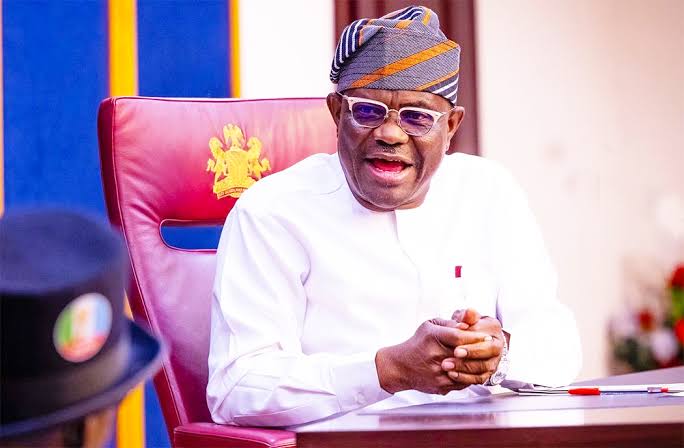
The Federal Capital Territory (FCT) Minister, Nyesom Wike, on Tuesday approved the promotion of 4,220 Teachers and 3,494 other civil servants following the conclusion of the 2025 and 2026 promotion exercise conducted by the FCT Civil Service Commission (CSC).
Chairman of the FCT Civil Service Commission, Emeka Ezeh, who announced the approval, described it as part of efforts of the Wike-led FCT Administration to boost the morale of the workers.
According to the Chairman, the FCT Minister had directed the Commission to ensure that all backlog of promotion arrears inherited by the administration are cleared and civil servants promoted to boost their morale.
“You will also recall that the Minister approved that Education officers who disrupted the 2025 promotion exercise be pardoned and allowed to participate in the 2026 exercise.
“The Commission subsequently invited all 2025 and 2026 eligible education officers to participate in the just concluded exercise,” he said.
He congratulated the successful candidates, urging all the workers to reciprocate this gesture through diligent discharge of their duties.
Also, the Chairman disclosed that the Commission will conduct its second pre-retirement workshop for FCTA workers who are scheduled to retire between Jan 1 and March 31, 2027 on December 16, 2026.
He said that the workshop is meant to prepare the workers for life outside the public service.
A total of 116 FCTA workers are expected to retire within the first quarter of 2027.
It should be recalled that in July, this year, the Minister approved the promotion of 3,592 civil servants.
The approval was consequent upon the successful conclusion of the 2025 promotion exercise conducted by the Civil Service Commission.




NAPE 2026: TotalEnergies Spuds Nigeria’s First Deep Offshore Exploration Well in Decade
ShareTotalEnergies EP Nigeria Limited has commenced drilling of the Akpo Far East B exploration well, days after its Country Chair...
Dance as Politics: Dancing to 2027
ShareBy Reuben Abati When a proper audit of the current electoral process is conducted, it would be interesting to evaluate...


Oborevwori Woos CAN Support, Promises Land for Prayer Retreat Centre
ShareFrom Francis Sadhere, Delta Delta State Governor, Rt. Hon. Sheriff Oborevwori, has pledged his administration’s support for the proposed Christian...

Wike Promotes 4,220 FCT Teachers, 3,494 Other Civil Servants
ShareBy Laide Akinboade, Abuja The Federal Capital Territory (FCT) Minister, Nyesom Wike, on Tuesday approved the promotion of 4,220 Teachers...

Flag-Off Of Tinubu/Alia 2027 Campaign Benue State
ShareBenue State is Ready for a New Chapter of Renewed Hope, Consolidated Progress And Greater Development! The Tinubu/Alia Campaign Council...


AfDB Approves $102m Facility to Finance SMEs in Nigeria
ShareThe African Development Bank (AfDB) has approved a 102 million dollar financing package for Sterling Bank Nigeria Ltd. to expand...
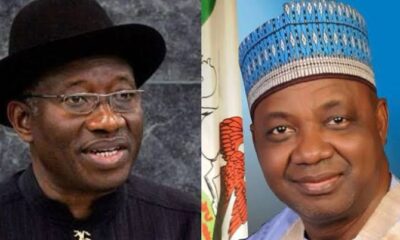

2027: Jonathan, Sambo Warn Against Looming Post-Election Crisis
ShareBy David Torough, Abuja Former President Goodluck Jonathan and former Vice-President Namadi Sambo have raised the alarm over growing political...
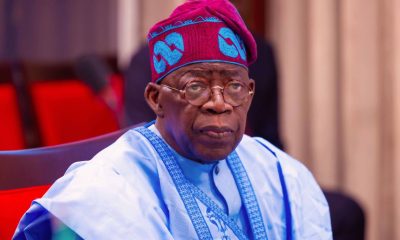

Tinubu Unveils N100m Mortgage Scheme at 9.75 Per Cent Interest
ShareBy David Torough, Abuja President Bola Tinubu has unveiled a Federal Government-backed housing finance initiative offering eligible Nigerians mortgages of...
Afe Babalola Send Education Reform Proposals to Tinubu
ShareThe Founder and Chancellor of the Afe Babalola University Ado-Ekiti (ABUAD), Aare Afe Babalola has announced plans to forward proposals...


Sunbeth Treenuts & Sesame Acquires 73.29 Per Cent of Livestocks Feeds Plc
ShareSunbeth Treenuts and Sesame Limited, a subsidiary of Sunbeth Agro HoldCo, announces the completion of its acquisition of UAC of...