
COVER
Vote Buying, Major Threat to Democracy – Hon Agbo


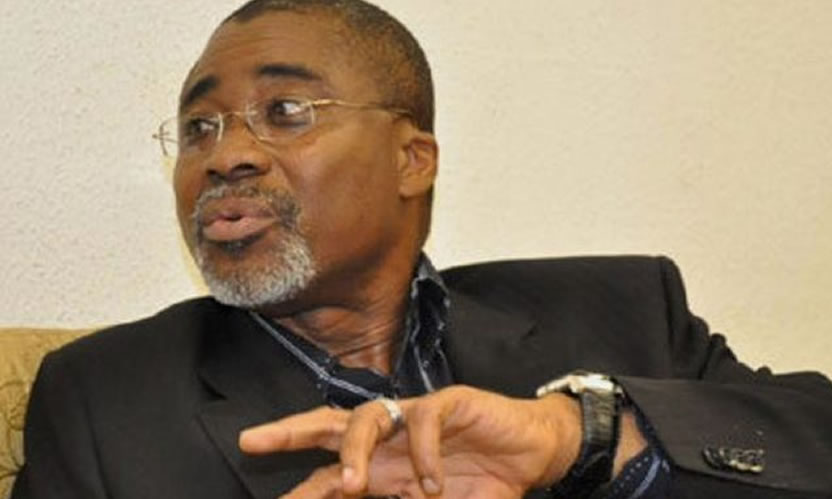
Honorable Francis Ottah Agbo is a member of the House of Representatives, representing Ado/Okpokwu/Ogbadibo Federal Constituency of Benue State. He spoke with DAILY ASSET team on a number of issues bordering on his sojourn into journalism and politics, and his experience as the chairman of the House Committee on narcotics and drugs.
MARTIN PAUL & ORKULA SHAAGEE were there.You were a journalist, now a politician. What are your experiences?
Thank you, it has not been easy because politics in Nigeria is murkier than the journalism world and the reason is simple.
In politics, 2+2 will not give you 4, it may give you 22 or 22+, or it may give you zero. But in journalism, it is not as bad as that. The only problem in journalism is that the more you strive to publish, the more you are confronted with three major problems. One is the ever-declining Nigerian economy. If you look at the media map of Nigeria, you will know very well that newspapers thrive more in places like Lagos, Kaduna and maybe Abuja, and the reasons are that this is where one or two activities still take place.Those who went into Newspaper publishing those days did better because the economy was far better because there were factories but today the factories are all gone, and that is why I salute the courage of the CEO for sustaining the paper.
The second problem is competition. Even in the best systems, the online is a major threat to hard copy. Despite that, it is very difficult to most people, including myself to rely on the online version because I read the hard copy every day and actually do the content analysis; and that’s why it’s going to be very difficult to eclipse the hard copy.
Look at what is happening now, the hard copy is still gaining some level of popularity again; and any medium that is strictly online, it is very difficult for it to get adverts the way a medium that publishes both online and hard copy gets adverts. So, that is why most publishers strive to keep the fire on by way of producing the hard copy.
Apart from the online competition you also have the problems of news print and advertisers not willing to pay for the adverts. So, for those of you who are into it, any iota of support that we are able to give, we will give, and continue to give.
So, talking about experience; as a journalist, I always say I reported politics and that exposed me to a lot of politicians. So, I am simply in a field that I had a premonition that I will venture into it by virtue of the association I enjoyed over the years. I had experience holding meetings with governors, commissioners and former presidents and interviewing them.
So, I have come to a conclusion that journalism is a profession beyond compare, because that’s a profession that if you are in a beat that requires you to interview a president, you will do it. No other profession opens door like journalism.
So, I am in a place I actually prepared myself to be and I am enjoying myself. I have reactivated the contacts that I built over the years; the only difference is that why in journalism if you do good stories or investigations you’re appreciated, in politics every good intention that you have is misinterpreted, and it is a thankless job.
For example, before I was inaugurated as member of the National Assembly I paid millions of Naira to supply high breed cassava stems to my constituents, and some people who were out to attack me started calling me cassava lawmaker, and I told them that unknown to them that was a big publicity to me. It is a good thing that we are talking about local production and you have a lawmaker supplying high breed cassava stems to his constituents and you call the lawmaker cassava stem lawmaker. He is happy that he is doing something different because agriculture is a sector that any lawmaker that invest in it means well for his people.
So, journalism and politics are good because for you to make a mark and empower your people, you must venture into politics.
Governor Seriake Dickson of Bayelsa State appointed you his Spokesman, an indigene of Benue State, a rare thing that happens in this country. How did it happen because it requires a great level of trust?
In Nigeria, it is very difficult for a northerner to be accepted in South-South because we northerners are seen as exploiter, they see us as people who have held the country down, who have been ruling them. So, the number one problem you face while in the Niger Delta is you have come to plunder them. So, when I got that appointment, I made sure I restricted myself to what concerned me.
Today they are very happy because when I moved the motion on the problems confronting the Niger Delta the Speaker called me and asked whether I did a research, and one of the things I said was that Nigeria is the only country that relies on oil as its main stay but allows it’s oil terminals to be inaccessible to motorists. That is the irony of this country. Where you get your wealth, you allow the oil Wells to be inaccessible. For people to access them they go by sea or ocean.
If you go to Oloigbiri, you can use it as a metaphor of all the challenges in the Niger Delta. So, I started rolling out the names of the oil terminals in Nigeria that are inaccessible like Brass, Folcados, Bonny, Akoroga and Kaiama. So, all my stay in Bayelsa is a blessing.
I went there in the trying moment of Governor Seriake Dickson. They wanted to jail him and they said he stole N150 million library project funds when I was Editor in Lagos, and the people who wanted to jail him came Lagos and shared more than N300 million, so I refused to take the N3 million that was given.
I asked them you said you want to investigate N150 million and what I seen you spent here is more than N300 million, so are you actually investigating N150 million? I told them there is more to it than what the eyes can see. I rejected the money.
The next day, while other newspapers reported that Bayelsa Library Contract: N150 million missing, I did my investigation and reported that, Bayelsa Library Contract: N150 million not missing – state Attorney General. My story was different because I investigated and got a verified true copy of the handover report and saw that the contract was awarded but money was not released.
So, when I did the story, Dickson didn’t know me but he started looking for my number until he got my number and said I am going to be his friend. But he didn’t make me his Chief Press Secretary because the people said it must be an indigene, until in his second term, he now made me his Chief Press Secretary.
So, I think we should encourage ourselves to be doing that. If you’re from Benue State, you can appoint a Zamfara man to be your Chief Press Secretary or any other position. The take away here is that we should deliberately grow the peace of this country. In South Africa they call it Obontu, and that philosophy must be enthroned here. The former Attorney General of Kaduna State, who is now late was from Nembe in Bayelsa State and that is how it should be.
In the cause of your practice as a journalist, what challenges did you face that you would like to share with us?
One of my challenges is that most politicians don’t keep to their words, and that is my major problem. I ran an election in 2015 and was almost going in, and someone asked me to step down that he would support me in 2019, but when 2019 came, he asked me if I want to contest. So, it is a major issue.
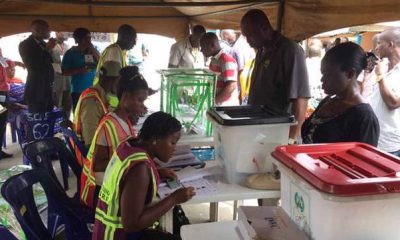
Number two is that it has been difficult for me to be accepted into the main stream. If you say it as it is, most politicians will not be comfortable with you. So, my experience is that most politicians don’t keep to their words; and my experience is that because of the many years of broken promises, the electorates have now turned elections into a bazar and they ask for money openly. If you don’t have money, they don’t vote for you, so you see yourself going into vote-buying. That is the irony of this country, that is a major threat to democracy in this country because if a politician spends all his money buying votes, when he goes in, he would like to recoup the money to pay the debts.
So, my charge to the electorates is that they should search their conscience and vote for people who can turn things around for them.
What was the motive behind the distribution of cassava stems to your constituents?
I actually wanted to enhance food sufficiency and also wanted to link my people to the global world so that the world will know that they have sophisticated cassava stems. so, I saw the need for my people to enjoy improved varieties, as well as improve the economy of the grassroots people, many of whom are widows and orphans. don’t forget that by December this year, the first disbursement of the four years salary I donated to them will take place.
How do you think the electoral process in the country can be improved upon? Of course, you mentioned vote buying, but there are others like the role of the security agents and the electoral umpire – INEC?
First and foremost is the Electoral Act amendment. Like the Speaker said the Electoral Act has to be amended and sent to Mr. President for assent. Let’s go back to electronic voting, if we do that, we will solve a lot of problems, but the issue of vote buying I don’t know how we will do it because of the declining Nigerian economy.
If we must tackle the issue of vote buying, we must tackle it using the tool of education because if you tackle electoral fraud by way of rigging, before electorates go to vote they will ask for money. But I want to say that amendment of Electoral Act and massive education will take care of it, and the economy has to be good.
A governor once told me that I should not blame governors who don’t embark on projects execution because he once gave scholarship to so e students to study abroad, but on the day of election the parents insisted that he must give them money.
What have you found in the narcotics and drugs since you assumed as the chairman of the committee?
In fact, let me tell you that 24 hours will not be enough to discuss drug addiction in Nigeria. The situation in Nigeria today is that if we fail to destroy narcotic drugs addiction, narcotic drug addiction will kill Nigeria. Over 90 % of crime and criminalities in Nigeria are as a result of narcotic drugs addiction. Unfortunately, while the consumption of narcotic drugs progresses at geometric progression, the means and strategies for combating narcotic drug addiction are slowly; and the reason is simple, the organ and structure put in place to combat narcotic drugs is the NDLEA, but the NDLEA having been created in 1989 still lives on charity. They don’t have vehicles, sniffer dogs and scanning machine, the two that they have were donated by foreign nationals and it was only recently that they started receiving vehicles from state governors.
The NDLEA as I speak now still uses arms and ammunitions used during the Nigerian civil war. The most recent weapons used by the NDLEA are the ones manufactured in Kaduna. Vehicles distribution in Nigeria is one to six local government areas, so, it is an alarming situation. We have only 8 sniffer dogs in this country and they were donated by the Germans.
Since creation, the NDLEA has never conducted nationwide recruitment, so personnel availability is two personnel per local government. The only recruitment they are to do now, which has just been approved. They are now in the ministry of justice and the envelope system is that the money goes to the ministry and they now give them their envelope. Now they have N8 million that they use to as salary for officers, so when the ministry gives them the envelope, they pay staff salary and every other thing suffers. So, how do you fight drug traffickers in that kind of situation? You don’t have arms, vehicles, you are not motivated and even understaffed and under-funded.
So, drug addiction is a major threat to our nationhood and if we don’t work hard to tackle it, we are going to be in trouble.
What do you think the Nigerian economy stands to benefit from the January to December budget cycle being pursued by the National Assembly?
In the last tenure Mr. President kept saying that he had a confrontational National Assembly, and my thinking is that didn’t do much in the last four years and everybody knows it, such that even the Nigerian military resorted to spiritual warfare in their attack on Boko Haram. So, there is the need to give absolute cooperation to the President because if the economy is good, it is good for all of us irrespective of part A or party B.
So, the whole idea of January to December is that the Executive feels that it will be better for Nigeria, and that was the budget cycle in those days. So, everything they want should be given to them.
Now, to answer your question, it will give confidence to investors, stabilize the economic sector and enable the Federal Government to release everything because they have been complaining about the failure to release the budget 100 percent to the ministries, agencies and others.
If the budget cycle is from January to December, the expectation is that the economy will pick up and investors will not be left in quandary as to what will happen to the economy.
So, we expect that the Federal Government will sit up properly and do the needful and take Nigeria away from the back Waters.








By Laide Akinboade, Abuja
As part of efforts to reposition the newspaper for optimum corporate performance, the management of Asset Newspapers Limited, Publishers of DAILY ASSET, has announced the appointment of David Torough as the Editor of the Abuja-based national daily.
A statement by the management said the appointments were part of the company’s new strategy to further penetrate the various states in the country and raise its readership and patronage.
“DAILY ASSET is widely acceptable across the country and to maintain our leadership position, we need to increase management presence, hence the need to create new Bureau offices in some locations outside Abuja and Lagos,” the statement quoted the Publisher/ Editor-in-Chief, Dr Cletus Akwaya to have said.
In a statement yesterday, Publisher and Editor-in-Chief of the fast-growing daily, Dr. Cletus Akwaya said the appointment was part of the new strategy to properly situate the paper for better productivity.
“DAILY ASSET has a commitment with the Nigerian people. We are determined to weather the storm and give Nigerian readers a Newspaper that satisfies their yearnings and reading pleasure and we can only do that with the right set of professionals,” the statement said.
Akwaya, a former Commissioner of Information from Benue State said the difficult times being faced by Nigerians posed a great challenge to the media as the people deserved credible information with which to make choices.
“We have a bond with the people, to offer credible information at all times in the best tradition of the Nigerian Press and on this scale of objectivity, truth and fairness, we pledge to remain steadfast no matter the challenges,” Akwaya was quoted to have said.
He said the newspaper will maiantin its daily print run and circulation to all states of the federation and urged advertisers to take advantage of the deep penetration of the Daily Asset brand to send their messages.
Torough, the new Editor has had a steady rise in the Newspaper in the last five years.
A graduate of Mass communication of the Benue State University, Makurdi, Torough joined the company in 2022 as Benue State Correspondent. He was spotted for his brilliance and redeployed to Abuja the following year and promoted to Deputy News Editor. He was subswuently named Deputy Editor of the paper, a position he held until the recent appointment.
Torough has attended several journalistic workshops and trainings to properly equip himself for the task ahead.
The statement also said the Management named Eze Okechukwu as Deputy Editor.
Before his elevation as Deputy Editor, Eze has been Deputy Politics Editor and DAILY ASSET Newspaper correspondent covering the Senate, having joined the organization in 2021.
Born on March 10, 1975, Eze holds a Masters Degree in Mass Communication from the Enugu State University of Science and Technology.
Eze began his journalism career with Daily Star, Enugu and later worked with Daily Trust Newspaper, Abuja as sports reporter.
Aside from his journalistic excellence, he has a great deal of passion for sports.

From Ngutor Dekera, Kaduna and Aliyu Askira, Kano
Northern governors and traditional rulers yesterday called for the suspension of mining activities across the region for six months, blaming illegal mining for worsening insecurity in many states.
The resolution was contained in a communiqué issued after a joint meeting of the Northern States Governors’ Forum and the Northern Traditional Rulers’ Council held at the Sir Kashim Ibrahim House, Kaduna. The meeting, chaired by the Gombe State Governor and NSGF Chairman, Muhammadu Yahaya, had in attendance the 19 northern governors and chairmen of the 19 states’ traditional councils.The Forum expressed concern over the escalating violence in parts of the North, including the killings and abductions recently recorded in Kebbi, Kwara, Kogi, Niger, Sokoto, Jigawa and Kano states, as well as renewed Boko Haram attacks in Borno and Yobe.“The Forum extends its deepest condolences and solidarity to the governments and good people of the affected states,” the communiqué said, noting that the attacks on schoolchildren and other citizens had become “unacceptable tragedies” that required urgent collective action.It commended President Bola Tinubu for what it described as the Federal Government’s “firm response” to recent abductions and insurgency threats, especially the rescue of some abducted pupils.The governors also saluted security agencies for their sacrifices on the frontlines.“We resolved to renew our support for every step taken by the President and Commander-in-Chief to take the fight to insurgents’ enclaves in order to end the criminality,” the Forum stated.A major highlight of the meeting was the North’s renewed push for the establishment of state police, with governors and traditional rulers insisting that decentralised policing had become inevitable.“The Forum reaffirms its wholehearted support and commitment to the establishment of state police,” the communiqué added, urging federal and state lawmakers from the region to “expedite action for its actualisation.”On illegal mining, the governors said criminal mining networks were fuelling violence and providing resources for armed groups.As a corrective measure, they asked Tinubu to direct the Minister of Solid Minerals to impose a six-month suspension of mining activities in order to allow for a full audit and revalidation of licences.“The Forum observed that illegal mining has become a major contributory factor to the security crises in Northern Nigeria. “We strongly recommend a suspension of mining exploration for six months to allow proper audit and to arrest the menace of artisanal illegal mining,” it said.To strengthen the fight against insecurity, the governors also announced the creation of a regional Security Trust Fund.Under the proposed arrangement, each state and its local governments will contribute ₦1bn monthly, to be deducted at source under an agreed framework.They said the fund would help provide sustainable financing for joint operations, intelligence-driven interventions and coordinated security responses across the region.At the end of the meeting, the Forum reaffirmed its commitment to unity and collective responsibility.“Only through unity, peer review and cooperation can we overcome the pressing challenges before us,” it declared.The Forum agreed to reconvene on a date to be announced.Meanwhile, Nigeria’s worsening security crisis took a grim turn on Monday as bandits launched fresh attacks in Kano State, abducting 25 villagers, even as the Federal Government raced to secure the release of more than 300 Catholic school children kidnapped in Niger State.In the early hours of Monday, armed bandits invaded Unguwar Tsamiya—popularly called Dabawa—in Shanono Local Government Area of Kano State, whisking away nine men and two women after shooting into the air and assaulting residents. The attackers also rustled two cows.A resident lamented the community’s helplessness: “We cannot do otherwise; most of us cannot leave because we have nowhere to go. This is our place, our land and everything is here.”The assault came less than 24 hours after a similar attack on Yan Kamaye in Tsanyawa LGA, a community along the volatile Katsina border.In Niger State, National Security Adviser Nuhu Ribadu has assured distraught families of St. Mary’s Co-Education School, Kontagora that the more than 300 students and staff abducted on November 21 will return home “soon.” Ribadu, who led a high-level federal delegation to the school on Monday, said the abductees are safe, though he offered no specifics on their location or the status of rescue operations.According to Daniel Atori, spokesman for the Catholic bishop overseeing the school, the NSA reassured officials: “The children are where they are and will come back safely.”The St. Mary’s attack is part of a worrying resurgence of mass kidnappings reminiscent of the 2014 Chibok schoolgirls’ abduction. Security analysts warn that banditry has evolved into a “structured, profit-seeking industry,” with hundreds of Nigerians abducted in November alone.The Kontagora school abduction occurred the same week 25 girls were kidnapped in Kebbi State—victims who authorities say have since been rescued through “non-kinetic” means. About 50 of the St. Mary’s hostages have also managed to escape.Ribadu’s delegation, which included the Minister of Humanitarian Affairs and the Director-General of the Department of State Services (DSS), reaffirmed the government’s commitment to securing the freedom of all abducted citizens.As communities from Kano to Niger continue to bear the brunt of these violent incursions, the escalating spate of kidnappings underscores the urgent national demand for a more decisive and coordinated security response.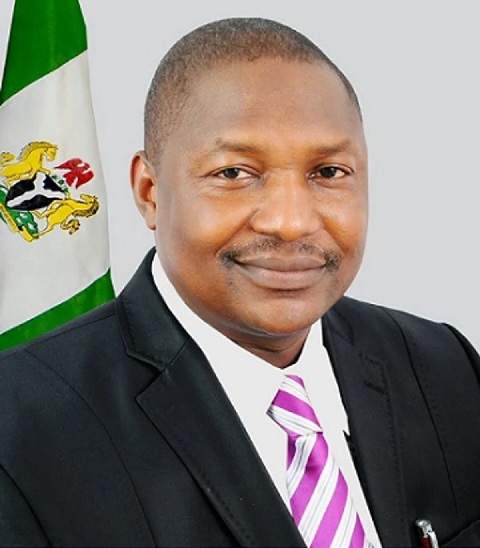
By David Torough, Abuja
The Economic and Financial Crimes Commission (EFCC) said former Attorney‑General of the Federation and Minister of Justice, Abubakar Malami, will face a team of interrogators at its office daily throughout December.
A credible source in the EFCC said on Monday that the daily appearance was part of an ongoing investigation into the whereabouts of an alleged 490 million dollars Abacha loot secured through a Mutual Legal Assistance (MLAT) request. The source said that Malami, who was summoned for interrogation by the EFCC on Saturday, was barred from leaving Nigeria for the next one month.According to the source, one of the conditions for his release on Saturday was that he should report daily to the EFCC Headquarters in Abuja for further interrogation.The source said Malami would have to appear daily at the anti-graft office due to the volume of the investigation and the seriousness of the charges against him.”We seized his passport, it is the normal routine during investigation, but he has to report at the EFCC headquarters in Abuja every day for the next month.”He will be reporting for further investigation throughout December.”He will be reporting every day, starting from Dec. 1st to Dec. 31st.He will appear before the team of investigators for the entire month of December.”He will be reporting to EFCC for investigation for the period because of the volume of the investigation and the seriousness of the charges against him,” the source added.According to the source, a fact sheet on the former minister revealed that Malami had several issues to clarify with the EFCC within the coming weeks.“We have asked him to explain the whereabouts of the $490 million Abacha loot secured through MLAT.“We didn’t say he stole money, but he should account for the loot. This is one of the issues he will clarify to our investigators.”The commission cited the large volume of documents he must review and the need for extensive interviews as reasons for seizing his passport.The source said EFCC would not engage in a war of words but would release its findings after a thorough investigation.Malami, in a statement by his media aide, Mohammed Doka, on Monday in Abuja, however, described the EFCC investigation as a political witch‑hunt.He confirmed he honored an EFCC invitation on Nov. 28, describing the engagement as fruitful and expressing confidence that the probe would vindicate him.Malami described the EFCC’s allegations as baseless, illogical and devoid of substance, insisting they collapse under factual scrutiny.


APC Chairman Urges Karu Women to Support Leaders With Proven Track Records
ShareBy Tambaya Julius, Abuja The Nasarawa State Chairman of the All Progressives Congress (APC), Dr. Aliyu Bello, has urged women...


South Korea, US Begin Exercises Next Week to Bolster Readiness against North’s Threats
ShareSouth Korean and US troops will begin their annual exercises next week to beef up readiness against North Korean threats,...


NSCDC Deploys 10,210 Personnel for 2026 Osun Election
ShareThe Nigeria Security and Civil Defence Corps (NSCDC) has deployed 10,210 personnel to reinforce security during Saturday’s Osun governorship election....
Over 270 Army Officers Sit for Senior Staff Course Qualifying Examination in Kaduna
ShareThe Nigerian Army has commenced the 2026 Senior Staff Course Qualifying Examination (SSCQE) for 274 officers at Jaji Military Cantonment,...


NAF Air Strike Kills 9 ISWAP Fighters, Top Commander in Borno
ShareThe Nigerian Air Force (NAF), has killed nine Islamic State West Africa Province (ISWAP) fighters in a precision air strike...


Troops Contain ISWAP Attack, Neutralize Terrorists, Recover Weapons in Borno
ShareBy David Torough, Abuja Troops of the Joint Task Force (North East) Operation HADIN KAI (OPHK) have successfully contained an...

Muslim World League Holds International Security Conference in Abuja as Tinubu Calls for Peace, Unity
ShareBy David Torough, Abuja The Muslim World League, in collaboration with the Jama’atu Izalatil Bidiah Wa Iqamatus Sunnah (JIBWIS), will...


Why OPay is Turning Savings into a National Movement
ShareBefore sunrise, tens of millions of Nigerians are already making financial decisions that will shape the rest of their day....


Dangote Takes 52.6m Barrels as Domestic Crude Supply Surges
ShareBy Tony Obiechina, Abuja The Dangote Petroleum Refinery emerged as the dominant beneficiary of Nigeria’s improved domestic crude supply in...

Osun Guber: ADC, Labour Raise the Alarm, Demand Free, Fair Election
ShareFrom Ayinde Akintade, Osogbo The race for the Osun State governorship has intensified ahead of Saturday’s election, as the African...