
NEWS
WAHO Holds Workshop on Effective Regional Health Advocacy Ahead Lassa Fever Int’l Conference in Abidjan


By David Torough, Abuja
Ahead of the second Lassa Fever International Conference scheduled to hold in Abidjan, Côte d’Ivoire, from September 22 to 26, 2025, the West African Health Organization (WAHO), has taken steps aimed at bringing noticeable communication gaps that tend to hinder effective regional health advocacy.
One of the steps is the two-day strategic communication workshop, held in Nigeria’s capital, Abuja during the week. Held from June 30 – July 1 at the Stratton 38 Hotel in the Asokoro district of Abuja, the workshop, themed “Bridging Communication Gaps for Effective Regional Health Advocacy,” was organised under the leadership of the Director-General of WAHO, Melchior Athanase Joël C. AISSI and brought together communication focal persons from all stakeholders to review the current communication landscape, identify barriers to effective collaboration, and develop an integrated communications plan for the conference and beyond.According to the concept paper, the decision to organise the workshop was informed by the realization that the success of regional health programmes and coalitions depends significantly on effective, timely, and coordinated communication, especially in the context of multi-stakeholder collaborations such as the upcoming Second ECOWAS Lassa fever International Conference (LIC).It noted that WAHO, the Coalition Secretariat Partners (CSP), the ECOWAS Commission, and Member States were collaborating to convene this high-level conference aimed at galvanizing political will, advancing prevention and enhancing preparedness, and strengthening regional response to Lassa Fever in West Africa.Lassa fever, according to the World Health Organisation (WHO), is an acute viral haemorrhagic illness of 2-21 days duration that occurs in West Africa. It is said to be caused by Lassa virus, an arenavirus known to be responsible for a severe haemorrhagic fever characterised by fever, muscle aches, sore throat, nausea, vomiting and, chest and abdominal pain.The virus exhibits persistent, asymptomatic infection with profuse urinary virus excretion in the ubiquitous rodent vector, Mastomys natalensis.Some studies indicate that 300,000 to 500,000 cases of Lassa fever and 5,000 deaths occur yearly across West Africa. Regrettably, he said, the workshop organisers say, communication gaps among these stakeholders had led to inefficiencies, misunderstandings and delays in implementing activities, particularly around the 2 nd LIC.“As the region prepares for this major health conference and other critical initiatives, it is imperative to address these gaps and design a coherent, unified communication approach that amplifies the coalition’s impact, ensures alignment among key partners, and supports visibility and engagement across all levels,” WAHO said.It was against this background that WAHO organised the strategy workshop with the objective of identifying and analysing communication gaps between CSP, WAHO, ECOWAS, Member States and key partners.The other objective of the workshop was to foster mutual understanding of each entity’s communication roles, responsibilities, needs, and expectations.It also aimed at developing a unified communication strategy for the second ECOWAS LIC; Defining clear roles, responsibilities and communication protocols to enhance coordination and; Defining a joint roadmap for sustained communications, collaboration, and advocacy across the region, leading up to the conference.The strategic communication workshop was participatory, inclusive, and solution-focused, with simultaneous interpretation in English and French. It also combined various approaches, including plenary presentations to share institutional perspectives, challenges, and proposed solutions.Another approach was interactive group work – collaboratively mapping communication gaps, channels, and stakeholder roles.On the first day of the workshop, there were group breakout sessions – to develop key messages, media strategies, and to develop a practical and time-bound media engagement plan (focusing on communication across ECOWAS member states, especially the host country).Among the expected outcomes was the conduct of a joint analysis of communication gaps and bottlenecks and a clear definition of a communication structure, including focal persons and reporting lines.The organisers also expected the development of harmonised communication strategy; creation and sharing of a communication activity calendar and roadmap for the LIC and; of collaboration and trust among communications leads.Among the participants were the CSP communication team made up of Nigeria Health Watch, Corona Media Service and Bloomberg Public Health, as well as the WAHO communication team, WAHO technical staff and, ECOWAS Commission Communication Directorate.Communication representatives of country taskforces to combat Lassa Fever: Nigeria, Guinea, Sierra Leone, Liberia, Benin, Togo, the host country of the Lassa fever conference (Côte d’Ivoire), WAHO support staff and various Partners also participated in the workshop.A participant, Harold Thomas described the two-day workshop as very timely, given the negative impact of Lassa fever in West Africa, including Sierra Leone where it is endemic in one particular district.Another participant, Donni Dickson, said the workshop was very significant because of the need for a unified communication strategy that cuts across ECOWAS member states.While wishing that the workshop had come earlier than now in view of the role communication would have played mitigating the effect of Lassa Fever in West Africa, she however added, “I wouldn’t say it is late.”
From Mike Tayese, Yenagoa
Bayelsa Starlets Academy will like to strengthen their campaign in the ongoing N-Youth League when they take on FC Prague Nigeria of Abia State today Tuesday, October 13, 2026, at the Samson Siasia Stadium, Yenagoa, with kick-off scheduled for 10:00 a.
m.The encounter promises to be an exciting contest as both sides seek to make a strong statement in the competition.
The Yenagoa-based academy, which is affiliated to Spanish football giants, FC Barcelona, will be eager to showcase their growing quality, tactical discipline and attacking strength against a determined FC Prague Nigeria side.
Bayelsa Starlets Academy have continued to nurture young football talents through structured training and competitive football, providing promising players with a platform to showcase their abilities and pursue greater opportunities in the game.
The fixture is expected to test the Starlets’ organisation, creativity in midfield and efficiency in front of goal as they seek to impose their style of play on their opponents.
Having emerged as champions of the Nationwide League One (NLO) U-19 Youth League, Bayelsa Starlets will be keen to build on that achievement and maintain their impressive development trajectory.
For the academy, the encounter represents yet another opportunity to strengthen team cohesion, gain valuable competitive experience and demonstrate the progress made under its development programme.
The outcome could prove significant to both teams’ ambitions as the N-Youth League continues to provide a platform for the development and exposure of emerging football talents.
Speaking ahead of the fixture, Bayelsa Starlets Academy Head Coach, Gomo Onduku, expressed confidence in his team’s readiness for the challenge, noting that the players have continued to improve as preparations progressed.
Onduku added that the team has worked hard in preparation for the encounter and was determined to secure victory against FC Prague Nigeria.
Similarly, Bayelsa Starlets midfielder, Tengi Ibuama, said the team would approach the fixture with the seriousness of a cup final, stressing that their priority was to win every match in the zone.
The Starlets will now look to translate their preparations into a strong performance on home soil as they seek to maintain their positive momentum in the N-Youth League.
By Raphael Atuu, Abuja
The Federal Ministry of Housing and Urban Development has advocated for stronger land, mortgage and institutional systems to accelerate inclusive housing delivery across Nigeria.
This is the key message at the ongoing 15th meeting of the National Council on Land, Housing and Urban Development (NCLHUD), holding in Sokoto, October 12th – 16th, 2026
Under the theme: “Strengthening Mortgage, Land and Institutional Systems for Accelerated and Inclusive Housing Delivery.
”, the meeting is a gathering of stakeholders in the built environment from both Federal and States, including professional and regulatory bodies in the housing sector.In his remarks, Director of Planning, Research and Statistics of the Ministry,. Mukhtar Iliyasu Umar, noted that the Council provides an important platform for stakeholders to examine challenges in the housing sector and develop practical solutions to improve housing delivery nationwide.
He stated that the meeting is convening a three-stage deliberation process for the consideration, harmonisation and adoption of policy recommendations aimed at addressing critical challenges in Nigeria’s housing and urban development sector.
He emphasised the importance of each stage of the deliberations, noting that the quality of the final decisions would depend largely on the depth of technical analysis, the quality of recommendations and the effectiveness of the harmonisation process.
Sokoto State Commissioner for Lands, Housing, Survey and Country Planning, Barrister Nasiru Aliyu Dantsoho, said the theme was strategically chosen to ensure that housing policies are designed to promote access to decent and affordable housing for every citizen.
He expressed concern over Nigeria’s housing deficit, estimated at over 14.5 million units, noting that approximately 50.6 million people live in unsafe housing conditions. Describing the situation as worrisome, Dantsoho called for urgent and sustained interventions to address the country’s housing challenges.
Accordingly, the Commissioner advocated a reduction in mortgage interest rates from the current double-digit levels to single-digit rates, as well as an extension of mortgage repayment periods from 25 to 35 years, saying that the measures would make mortgage repayments more affordable and improve access to homeownership for Nigerians.
He also called for the expansion of mortgage financing beyond the formal public and private sectors to accommodate Nigerians in the informal sector, particularly traders, farmers, and other self-employed individuals who constitute a significant proportion of the population but are often excluded from existing housing finance policies.
Bar Dantsoho further urged financial institutions, including the Federal Mortgage Bank of Nigeria (FMBN), to provide adequate funding and introduce flexible repayment arrangements tailored to the income patterns of different categories of borrowers.
He emphasised the importance of digitising land administration systems across the states to enhance efficiency, promote transparency, and facilitate access to land for housing development.
On his part, the permanent Secretary, Sokoto state ministry of lands and housing, Engr. Ahmad Moyi Tambuwal highlighted the state’s ongoing efforts to improve land administration, including the digitisation of land records, reduction in the time required to process Certificates of Occupancy and the provision of land for mass housing projects under the Federal Government’s Renewed Hope Housing Programme.
He noted that “the delivery of adequate and affordable housing requires more than the construction of houses. It also depends on efficient land administration, accessible mortgage finance, effective policies and stronger collaboration among government institutions and private-sector stakeholders”
NCLHUD is a forum for participants to share experiences, harmonise policies, identify institutional gaps and develop practical recommendations that would improve land administration, expand access to housing finance and accelerate housing delivery across the country.
Participants at the meeting were encouraged to develop recommendations that address pressing challenges in land administration, housing finance, institutional coordination and sustainable urban development across the country.
The reports and recommendations from the technical sessions will be harmonised for consideration at subsequent stages of the Council meeting.
The Ministry reaffirmed its commitment to strengthening the housing sector and promoting accessible, affordable and inclusive housing for Nigerians. It expressed confidence that the collective contributions of participants would provide a sound foundation for meaningful deliberations and effective decisions by the Council.
From Ayinde Akintade, Osogbo
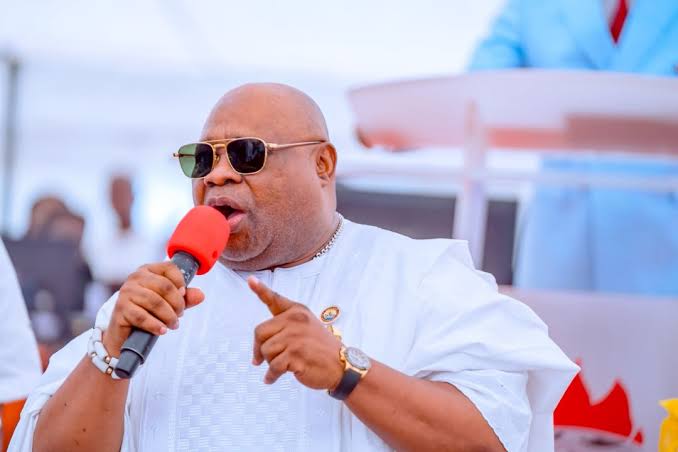
The Osun State Government under the leadership of Governor Ademola Adeleke has signed two separate Memoranda of Understanding with Balou International Nigeria Limited and Alive-and-Kicking Nigeria Limited to boost industrialization at the Living Spring Free Trade Zone, Ede.
The MoUs were signed on behalf of the Osun State Government by the Commissioner for Commerce and Industry, Revd Dr.
Bunmi Jenyo in his office.In the first agreement, the Osun State Government signed with Balou International Nigeria Limited, the refurbishment and use of the Transit Camp Building at the Living Spring Free Trade Zone for multipurpose use.
The agreement was signed by the Chief Executive Officer of Balou International Nigeria Limited, Chief Ronnie Liu.
Under the agreement, the company will revive, rehabilitate and operationalise the Transit Camp as a fully functional industrial hub. The facility will provide accommodation for investors, a Chinese restaurant, showroom and office space.
As part of its industrialisation plan, the company intends to establish an Air Compressor Plant, an Electric Motorcycle Assembly Plant and an Industrial Tools Factory within the zone.
The partnership will also mobilise local and foreign investments into the Living Spring Free Trade Zone through the facilitation of Balou International Nigeria Limited, and create anchor industrial clusters in manufacturing, logistics, renewable energy, agro processing and ICT.
The development is expected to generate employment, promote exports, attract Foreign Direct Investment (FDI) and increase the Internally Generated Revenue of Osun State.
In the second agreement, the government signed with Alive-and-Kicking Nigeria Limited, the establishment of a multi-sports balls production factory within the same zone. The MoU was signed by the Chief Executive Officer of the company, Dr. Bob Olukoya.
Under this agreement, both parties will collaborate to establish a 7-line balls manufacturing factory that will produce world-class standard footballs, basketballs, rugby balls, volleyballs, handballs, American footballs and tennis balls.
The project is designed to further promote and operationalise the Made-in-Nigeria policy within the sports sector, enhance local manufacturing capability, create massive direct and indirect employment and reduce dependence on imported sports balls.
The two projects are expected to position Osun State as a viable hub for sports equipment manufacturing, leather and rubber processing, and general industrial manufacturing in Nigeria and West Africa.
The initiatives align with the development goals of the administration of Senator Ademola Jackson Nurudeen Adeleke to fully industrialise the state before the end of its tenure in 2030.


Bayelsa Starlets Academy Set for FC Prague Test
ShareFrom Mike Tayese, Yenagoa Bayelsa Starlets Academy will like to strengthen their campaign in the ongoing N-Youth League when they...

FG Strengthens Mortgage, Land Systems for Affordable Housing
ShareBy Raphael Atuu, Abuja The Federal Ministry of Housing and Urban Development has advocated for stronger land, mortgage and institutional...

Osun Signs MoU with Companies to Boost Industrialization
ShareFrom Ayinde Akintade, Osogbo The Osun State Government under the leadership of Governor Ademola Adeleke has signed two separate Memoranda...


Abuja Motorists Decry Continuous Increase in Petrol Price
ShareSome motorists in the Federal Capital Territory (FCT) have raised concerns over the continuous increase in the price of Premium...


CBN Maintains Deadline for Local Data Storage
ShareThe Central Bank of Nigeria has ruled out an extension of the 1 January 2027, deadline for financial institutions to...
FG, Norway Partner on Satellite Surveillance to Combat Illegal Fishing
ShareThe Federal Government has assured Norway of Nigeria’s participation in the Blue Justice Initiative to strengthen satellite surveillance of its...


Niger Delta Deserves More than 13 Per Cent Derivation, Says Obasanjo
ShareFrom Mike Tayese, Yenagoa Former President of Nigeria, Chief Olusegun Obasanjo, on Monday, advocated an increase in the 13 per...

PDP Lawyers Give INEC Three-day Ultimatum to Publish Pantami’s Name
ShareLawyers to the Peoples Democratic Party and its Gombe State governorship candidate, Professor Isa Ali Ibrahim, have given the Independent...
FG Urges Defence Correspondents to Project Nigeria Positively
SharePermanent Secretary, General Services, Office of the Secretary to the Government of the Federation (OSGF), Dr. Ibrahim Kana, has urged...
High Cost of Dental Care Limits Access to Treatment in Nigeria — Dentist
ShareDeputy Medical Director, General Hospital, Apapa, Dr. Ridwan Kekere-Ekun, said high costs of dental materials, equipment and hospital operations limit...