
NEWS
Wema Bank Boosts SME Growth, Lands €50m EIB Funding


By Tony Obiechina, Abuja
Wema Bank has secured a €50 million financing facility from EIB Global, the development arm of the European Investment Bank, to expand lending opportunities for small and medium-sized enterprises (SMEs) across Nigeria, with a special focus on businesses owned by women and young entrepreneurs.
The agreement, signed in Lagos, represents the first partnership between EIB Global and Wema Bank.
Under the arrangement, at least half of the funding will be allocated to youth-owned enterprises, while the remaining portion will support businesses owned, managed, or primarily serving women.Speaking during the signing ceremony, EIB Vice President Ambroise Fayolle described the deal as a significant step toward promoting youth employment, gender equality, and women’s economic empowerment in Nigeria.
Fayolle noted that the initiative will also encourage entrepreneurs to adopt sustainable financing practices, reflecting EIB Global’s commitment to climate-focused investments as the European Union’s climate bank and a key partner in the Global Gateway programme.
According to EIB Global, the facility is supported by the European Union’s Global Gateway initiative and aligns with Nigeria’s Financial Inclusion Strategy. In addition to the funding, Wema Bank will receive technical assistance through the Greening the Financial Sector Programme to strengthen climate-related lending and support sustainable business investments.
Wema Bank’s Managing Director and Chief Executive Officer, Moruf Oseni, said the partnership would deepen the bank’s longstanding commitment to empowering businesses and underserved groups.
He explained that the facility is designed not only to improve access to finance for SMEs but also to help close gender gaps and create economic opportunities for young Nigerians through entrepreneurship and self-employment.
Oseni added that eligible businesses, including participants in entrepreneurship development programmes, would have access to the financing support.
From Mike Tayese, Yenagoa
The Minister of State for Petroleum Resources (Gas), Obongemem Ekperikpe Ekpo, on Saturday commended the Nigerian Content Development and Monitoring Board (NCDMB) for demonstrating that Local Content Policy could be a force for transforming lives and creating socio-economic value through community-focused interventions.
Speaking at the commissioning of a state-of-the-art Information and Communication Technology (ICT) Centre at Ika Comprehensive High School, Ikot Akpan Anwa, Akwa Ibom State, the Minister said such a strategic investment in the area, with vast possibilities for research and online learning through diverse educational platforms, would bolster human capital development, digital literacy and sustainable community development.
The ICT Centre, built and equipped by the NCDMB, comprises a modern computer laboratory with 50 networked desktop workstations, an interactive smart board, projector, server room and Starlink high-speed Internet connectivity to support digital learning, research and computer-based examinations.
Designed to accommodate up to 70 users, the facility also features air-conditioned learning spaces, a staff room, store and separate convenience facilities. Power reliability is supported by a 15kVA generator and a 15kVA solar power system with battery backup, complemented by a dedicated network infrastructure for seamless connectivity.
“This ICT Centre,” according to the Minister, “is far more than a building equipped with computers; it is an investment in the future of our children and a gateway to knowledge, innovation, creativity and opportunity.” Continuing, he noted that, “Nations that invest in the digital education of their young people today are the ones that will lead the world tomorrow.”
He said the initiative of the Board aligns with the Renewed Hope Agenda of President Bola Ahmed Tinubu by advancing access to quality education, youth empowerment, digital transformation and inclusive economic growth, as young
Nigerians in rural communities acquire relevant digital skills and competencies to participate effectively in a technology-driven economy.
Representing the Executive Secretary of the NCDMB, Felix Omatsola Ogbe, the Director, Corporate Services, Dr. Abdulmalik Halilu, stated that digital literacy and ICT capacity development remain a key component of the Board’s human capital development mandate aimed at building a skilled workforce for the Nigerian oil and gas industry and the broader economy. He noted that the facility would provide students with access to digital learning, research tools, artificial intelligence and global knowledge resources.
“This ICT Centre is more than a building; it is an investment in the future of our young people,” he stated, adding, “It represents our commitment to extending Nigerian Content objectives beyond industry into classrooms, where innovation, technology and skills development can empower the next generation.”
Halilu stressed that the project’s long-term success depends on collaboration among the Board, the school and the host community. He urged the community to take ownership of the facility and ensure its proper maintenance and sustainability for future generations.
“Our expectation is not simply to hand over a facility but to see measurable outcomes in the lives of the students who will use it. We therefore call on the school and the host community to safeguard this centre and ensure it continues to deliver value for many years to come.” He added.
Speaking on behalf of the project delivery team, the Managing Director of Standard Institute of Technology Limited, Alexander Nsidibe, expressed appreciation to NCDMB for the confidence placed in the company to deliver the project. He described the ICT Centre as a demonstration of the Board’s commitment to quality infrastructure development and human capital advancement.
He pledged the company’s continued support for the facility’s maintenance for one year after handover, noting that the Centre would enhance students’ digital competencies and prepare them for productive life in industry.
In her welcome address, the Principal General of Ika Comprehensive High School,. Nkom John Umoette, described the ICT Centre as a transformative intervention that would bridge existing digital access gaps. She noted that the school lacked an ICT facility, which constrained students’ exposure to digital learning and computer-based education.
She expressed appreciation to Ekpo and the NCDMB for making the project a reality, stating that the facility would equip students with essential digital skills, improve their preparedness for computer-based examinations, and create greater opportunities for academic excellence and future careers.
A representative of the community commended the Minister and the NCDMB for the delivery of the ICT Centre, noting that the facility would significantly improve access to digital learning and computer-based examinations.
He recalled that students previously travelled to Uyo and neighbouring communities to register for and take examinations such as JAMB, incurring additional costs and facing logistical challenges.
By Tambaya Julius, Abuja
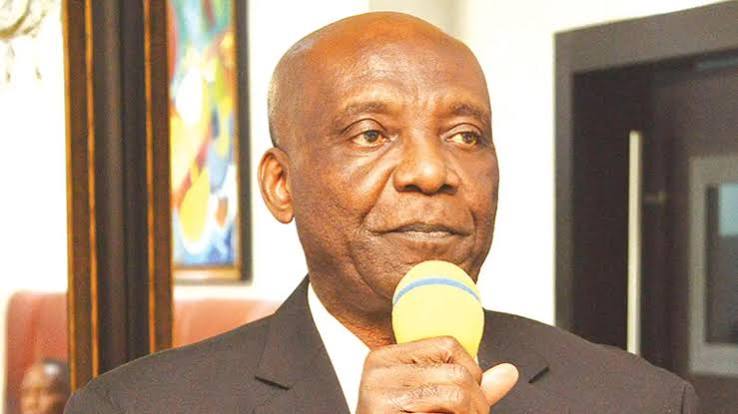
Former Assistant Director of the Department of State Services (DSS), Dennis Amachree, has challenged Major Hamza Al-Mustapha (retd.), former Chief Security Officer to late Head of State, Gen.
Sani Abacha, to provide concrete evidence to counter the account of Abacha’s final hours contained in his memoir.
Amachree made the call while reacting to Al-Mustapha’s criticism of his book, DSS@40, insisting that disputes over historical events should be resolved through verifiable documents or electronic evidence rather than personal attacks.
The former DSS officer maintained that his memoir was not simply a personal recollection but a publication that underwent the agency’s internal review and approval process before it was released.
According to him, the book received official endorsement as part of activities marking the 40th anniversary of the DSS. He added that the agency’s support was demonstrated through his invitation from the United States to attend the public presentation of the memoir.
He said the event was attended by senior security officials, state directors of the DSS and members of the diplomatic community, describing the occasion as evidence of institutional backing for the publication.
Amachree dismissed Al-Mustapha’s criticism of the memoir as unfounded, arguing that anyone challenging its contents should provide documentary or electronic proof to support their claims.
“If Al-Mustapha says my account is false and claims to know exactly what happened during Abacha’s final hours, then he should produce the CCTV footage or any other credible evidence to prove his version,” Amachree said.
He also rejected Al-Mustapha’s description of him as “a boy,” saying his professional achievements and years of service in the intelligence community demonstrate his experience and competence.
“I was seven years old when Nigeria gained independence. I retired from the DSS as an Assistant Director, a rank equivalent to a Brigadier in the military, while Al-Mustapha retired as a Major,” he stated.
Amachree further argued that his memoir was based on his professional experience and should be judged on the strength of evidence and facts rather than personal disagreements.
By Tambaya Julius, Abuja
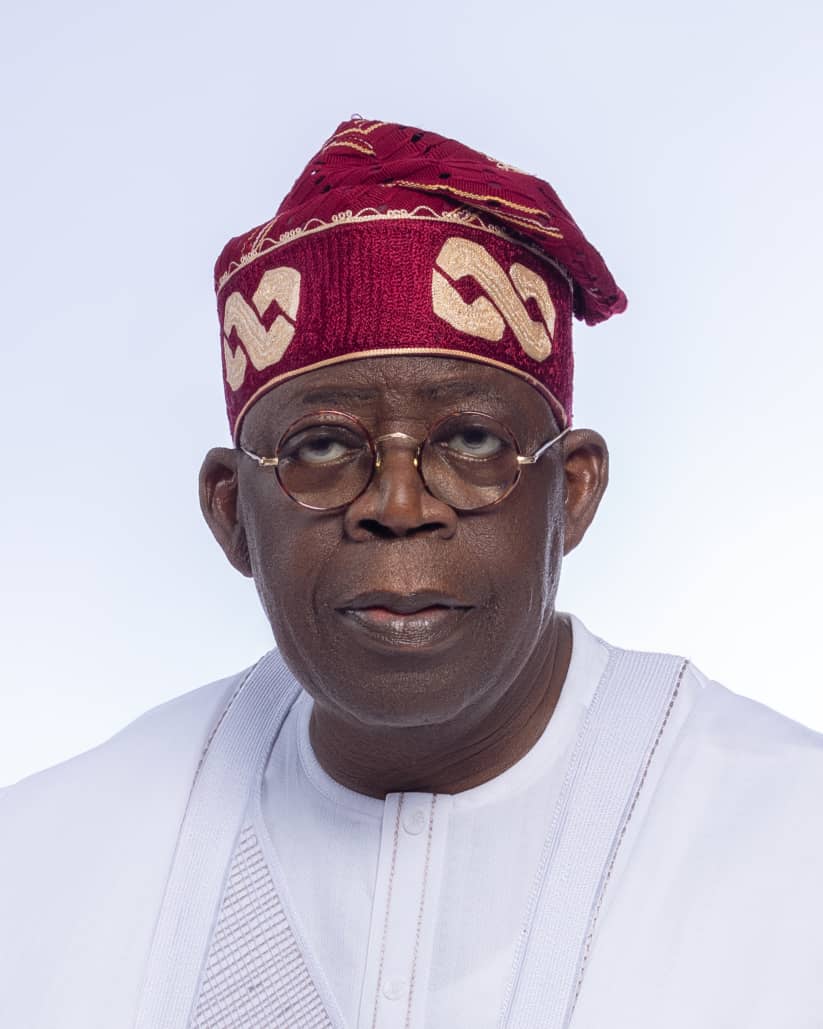
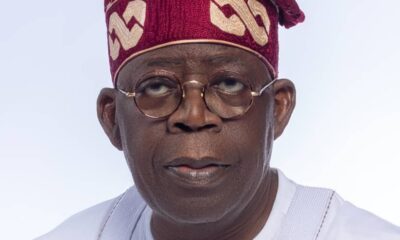
President Bola Ahmed Tinubu has declined to receive a special envoy sent by South African President, Cyril Ramaphosa, following renewed concerns over persistent xenophobic attacks targeting Nigerians and other African nationals in South Africa.
The South African delegation, led by the Minister of International Relations and Cooperation, Ronald Lamola, arrived in Abuja, with what was described as a “very important message” for President Tinubu, according to a source familiar with the development.
The visit came less than 24 hours after the reported killing of a Nigerian national, Chika Ibe, who was allegedly picked up from his residence at Parksig Villas Complex in Bellville, Cape Town, and tortured to death by personnel of the South African Police Service (SAPS).
Nigeria has consistently condemned xenophobic and Afrophobic attacks against its citizens in South Africa, with the Federal Government demanding stronger measures to protect Nigerians and other Africans living in the country.
At the 69th Ordinary Session of the Authority of Heads of State and Government of the Economic Community of West African States (ECOWAS), held in Lungi, Sierra Leone, Vice President Kashim Shettima, who represented President Tinubu, condemned the attacks and pledged that Nigeria would push for stronger action against xenophobia at the African Union.
Shettima, while addressing recurring Afrophobic attacks against African nationals in South Africa, called for a united continental response to protect the rights, dignity and safety of Africans across the continent.
He disclosed that the Federal Government had evacuated 1,490 Nigerians affected by previous xenophobic violence and reaffirmed Nigeria’s commitment to working with regional and continental institutions to tackle the crisis.
diplomatic sources said the Minister of Foreign Affairs, Bianca Odumegwu-Ojukwu, advised against President Tinubu receiving the South African envoy at this time, citing continued attacks on Nigerians, their businesses and properties in South Africa.
According to the sources, the minister maintained that the delegation could not secure a meeting with the President without a prior appointment and clear commitments from the South African government.
She was also said to have requested that Pretoria provide a signed copy of the Memorandum of Understanding on the Early Warning Mechanism (EWM), which was signed by both countries in Abuja on October 22, 2025.
The Early Warning Mechanism was established to strengthen cooperation between Nigeria and South Africa by improving information sharing, monitoring potential threats, protecting citizens and addressing consular concerns.
The agreement also provides communication channels to prevent the escalation of tensions, criminal activities, reprisals and xenophobic attacks against citizens of both countries.
Officials at the Ministry of Foreign Affairs said the mechanism could have helped address compensation claims for Nigerians whose businesses and properties were destroyed during previous xenophobic attacks in South Africa.
Nigerian officials said South African authorities have yet to compensate victims of such attacks.
As of the time of filing this report, Presidency sources said President Tinubu had not agreed to meet with the South African delegation.
The outcome of a telephone conversation reportedly initiated by President Ramaphosa with Tinubu over the weekend also remained unclear.
Observers believe South Africa’s diplomatic outreach may have been influenced by concerns over the possible impact of strained relations on South African investments and businesses operating in Nigeria, as well as Nigeria’s growing campaign for stronger continental measures against xenophobia and Afrophobic attacks.
Reports suggested that President Tinubu had changed his position and agreed to meet with the delegation.
However, a source quoted the President as saying: “The President woke up and said why does he need to meet with them when their people are killing Nigerians. The President stood his ground and did not grant them audience.”




Gov Otu Reshuffles Cabinet, Charges Exco on Performance
ShareFrom Ene Asuquo, Calabar Cross River State Governor, Sen. Prince Bassey Edet Otu, has reshuffled his cabinet in a strategic...


WHO Donates Vehicles, Medical Equipment to Kaduna Nursing Colleges
ShareThe World Health Organisation (WHO) on Monday donated two vehicles and other medical equipment to Kaduna State College of Nursing...


Supreme Court Upholds Death Sentence of Man Convicted for killing Another
ShareThe Supreme Court affirmed the conviction and death sentence of Abu Umar, for stabbing a man to death during a...

Petroleum Minister Commends NCDMB for Community-focused Interventions
ShareFrom Mike Tayese, Yenagoa The Minister of State for Petroleum Resources (Gas), Obongemem Ekperikpe Ekpo, on Saturday commended the Nigerian...


Super Falcons Suffer Racist Abuse Ahead of WAFCON Title Defence in Morocco
ShareNigeria’s Super Falcons have been subjected to racist abuse on social media ahead of the 2026 Women’s Africa Cup of...


Businesses Split over High Borrowing Costs, Credit Access
ShareBy Tambaya Julius, Abuja Nigerian businesses are divided over whether high borrowing costs or limited access to credit remains the...

Amachree Challenges Al-Mustapha for Real Evidence Over Abacha Memoir Claims
ShareBy Tambaya Julius, Abuja Former Assistant Director of the Department of State Services (DSS), Dennis Amachree, has challenged Major Hamza...

Xenophobia: Tinubu Rejects Ramaphosa’s Special Envoy, Demands Action
ShareBy Tambaya Julius, Abuja President Bola Ahmed Tinubu has declined to receive a special envoy sent by South African President,...


Lekki LCDA Brokers Peace Over Onise Of Ise Succession, Urges Stakeholders To Respect Court Process
ShareBy David Torough, Abuja The Lekki Local Council Development Area (LCDA) has intervened in the lingering dispute over the vacant...
FG, Access Bank Push AI to Grow MSMEs
ShareThe Federal Government and Access Bank Plc have emphasised the strategic role of Artificial Intelligence and digital financial infrastructure in...