
Metro
WHEN HELL TAKES OVER PARADISE:


A REVIEW OF IYORWUESE HARRY HAGHER’S A PORTRAIT OF PARADISE
James Tar Tsaaior
A Portrait of Paradise is a pulsating, telling tale in the tradition of political allegory.
It narrates a modern nation-state inextricably entangled in a sticky web of manifold contradictions which gnaws viscerally at its very soul and existence. The novel is largely set in the fictional West African nation of Sofalia, a metaphor for, and epitome, of unrelieved suffering. In it Iyorwuese Harry Hagher skillfully demonstrates how Sofalia’s political elite manipulate the levers of naked power, and anything and everything in-between, to privilege and sustain their affluent, hedonistic, permissive and self-aggrandising lifestyles to the detriment and mutual exclusivity of the Atsan. This is the mass of the oppressed, impoverished and dispossessed population who exist in the peripheries and lowest rungs of the social pyramid and are at the mercy of life’s vicissitudes.Sofalia is a confirmed, pitiable case of a modern nation-state on the precincts of a yawning precipice. Led by a brood of viperous, treacherous, egocentric, and selfish politicians who have parceled the national patrimony among themselves as fiefdoms or personal estates it is a name which is synonymous with mass poverty, suffering and death. It has, therefore, been plunged into the ever-deepening, abysmal political quagmire as a failed state. Its infrastructure is decrepit, its economy in the doldrums, its social life severely stratified without a middle class and life is ruinously divided like an ever-widening chasm along the extremities of the opulent and the dispossessed.
At the head of its delinquent political elite is President Kila who is on the threshold of ending his second and final term. There is also Senator Kini Mulaake (literally swollen testes) who, through deft political gerrymandering, is expected to succeed Kila. These predatory politicians prey on their citizens particularly young, ambitious women, and truncate their dreams of becoming productive and prosperous citizens. Senator Kini is most notorious in this regard as he wrecks the lives of such women. One victim is the brilliant first class graduate, Aishatu, also known as Queen Aisha, who ends up as a psychiatric case due to crack cocaine abuse. Then there is Queen Akember, the intemperate wife of the brutal terror gang leader Gungun. Gungun himself, a victim of serial political betrayals by Kini, ends up paralysed neck down in a German health facility after surviving a deadly bombing by Sofalia security forces in his isolated Binda Hills cave where he mines precious minerals for Senator Kini and his political cohorts and co-travellers.
In a narrative which eminently qualifies as a political parable, Hagher portrays Senator Kini as a villainous hero whose vaunted ambition to become president of Sofalia miscarries as the combined conspiracy of the West and the two queens, Aisha and Akember, proves fatal and consequential. The senator loses balance in the political quicksand he has plunged himself into and ends up as a guest of the Criminal Court at The Hague for war crimes. The epiphanic moment for him arrives when he confesses in a dramatic monologue his apotheosis as a political pervert who acknowledges the transience of power and the futility of its appurtenances and announces his conversion and redemption.
In this novel, Hagher, a former Nigerian senator, minister, envoy, academic, scholar, and storyteller, masterfully etches on the narrative canvas the motifs of political brigandage, economic sabotage, social savagery, and moral debauchery which animate and mediate politics in an African modern nation-state which bears striking resemblances with his native Nigeria. Hagher, therefore, enjoys the charmed kinship of other African novelists like Chinua Achebe, Ngugi wa Thiong’o, Naguib Mahfouz, Nadine Gordimer, Tayib Saleh, etc. who have ploughed the undulating furrows of social ennui and political corruption ravaging Africa in their creative oeuvre.
The novel’s preoccupation gravitates to the appropriation of the national commonwealth by a parasitic and unproductive political oligarchy, the Ogas (potentates in Nigerian Pidgin English) which institutes social hierarchies that keep the masses perpetually submerged on the margins. The political class illegally mines the rich mineral resources of Sofalia, enriches and ensconces itself in the cocoons of power, funnels the wealth into offshore bank vaults in Western capitals and clandestinely promotes terrorism and banditry to perpetuate the crime and their reign. What should be a true paradise with prodigious endowments is paradoxically and regrettably the very abyss of hell for the citizens. When Sofalia is expecting the high profile state visit of President Barack Obama of the United States of America, the government orders the cleansing or purging of the capital city, Calanana of the pathology of the Atsan class considered the contagion of society. This empty, cosmetic ritual exemplifies the murderous rage against the Atsan, the hoi polloi who are ironically the real creators of wealth but who have been alienated and reduced to crass, crushing poverty. In the end, the state visit is aborted by the contingencies of endemic corruption and egregious human rights abuses by the political elite of Sofalia.
Also on the novel’s narrative agenda is the defining gender calculus which limits and undermines female agency and subjectivity. Patriarchy enacts its visceral energies to dominate, oppress and repress women who also contest phallic power through matriarchal resistance armatures. This gender contestation piths the male political juggernauts led by Senator Kini who represents the patriarchal power integer and the subversive female vanguard under Queens Aisha and Akember. These women are modeled after the archetypal Dahomean Amazons (female warriors who protected the integrity of the empire) and other powerful African/Black women in history. In their attempt to undermine male power and its totalizing assumptions, these two queens combine efforts to counteract patriarchal domination and sexploitation of women in Sofalia through the creative mobilization, conscientization and application of resources of their respective groups, the Atsan and the Gungun Terror Organisation to battle Senator Kini to a virtual standstill. From all indications, it is obvious that the new Sofalia will reckon with the power of women as veritable complementary vectors of positive transformation and indispensable partners in the political and social engineering processes. By privileging female power and ideology, Hagher cultivates the gender inclusivist literary company of female writers like Ama Ata Aidoo, Nawal El Saadawi, Assia Djebar, Chimamanda Adichie, NoViolet Bulawayo, etc.
Like his late compatriot, writer and environmentalist, Ken Saro-Wiwa, Hagher sets his sights on the important issue of nature and the environment and creatively weaves that concern into the novel’s narrative motions. The power of nature over humanity and the imperative for healing and restoration of the delicate balance humanity and threatened ecosystem is foregrounded through the ocean surge which drowns Kepe village on the coast of the Atlantic Ocean. The devastating storm exerts a profound impact on the environment in a time climate change has become a significant issue on the global agenda. It is the storm that throws up Aishatu who is adopted by the mega-billionaire pastor of Paradise Church, Godswill and his delectable wife, Beatrice. The power of religious bigotry and hypocrisy preoccupied with obscene riches and drunk with iniquitous power is underscored through Godswill and Little Jehovah, two of the most consequential religious personages in the novel. Tragedy paradoxically functions as a destructive but also benevolent, redemptive force in the life of Aishatu as she emerges from the storm as a prodigy destined for greatness. This is how Senator Kini meets with Aishatu and this encounter sets up a concatenation of events in the novel’s narrative kinesis which builds up in the climax of frustrating Kini’s presidential bid.
Hagher’s style is a delightful blend of prose and poetry, what can be adjudged as proetry. The language supremely incantatory and evocative, the imagery vivid, the atmosphere tense and the narrative flows gracefully but also powerfully like a river in flood, or an avalanche carrying everything that stands in its path. His lyrical, lightsome style helps to animate or vivify the plot proceedings and deepen the immanent tensions, conflicts, and latent resolutions the novel orchestrates. Even when the language sometimes borders on the academic, it fascinates and propels the narrative motions in a direction that complicates the plot and heightens emotions and expectations leading to the denouement. Hagher’s characters in the novel are authentic, compelling, down-to-earth and true to life. In the context of prebendal politics in a failed postcolonial nation-state like Sofalia, President Kila, Senator Kini, Gungun, Queens Aisha and Akember, among others represent the power bases or centers in conflicted interactions to unearth the corpus of contradictions that bedevil and plague Sofalia and which must be addressed for a more egalitarian and equitable society to emerge where there will be freedom and social justice for all citizens.
In the end, Hagher’s authorial intentionality transcends the empire writes back tradition and insightfully and frontally engages the disquieting pathologies of the modern nation-state in Africa. He accomplishes this narrative project with a transgresssive, progressive vision and subversive temperament casting critical barbs at the corps of egocentric and self-serving political perverts with a grand sense of messianism and triumphalism that has only caused perpetual inertia and arrested development and squelched national dreams. This is a superlatively readable and riveting narrative that playfully teases human emotions but also boldly offers a powerful commentary on the vexed paradoxes of the human existential condition in a modern nation-state.

By Tambaya Julius, Abuja
Akwanga, Nasarawa State, is set to host prominent personalities from within and outside the state as The Spotlight Magazine prepares to launch its maiden edition on Sunday, November 1, 2026.
The event is scheduled to take place at Gaji Luxury Hotel, Akwanga, by 2:00 p.
m.According to the organisers, the occasion will bring together eminent personalities, traditional rulers, political leaders, captains of industry, media practitioners, youth groups and other stakeholders to celebrate the introduction of the magazine.
The Publisher of the Spotlight Magazine, M. J. Yusuf, said the publication was established to spotlight excellence, promote development journalism, celebrate unsung heroes and showcase the rich cultural and economic potential of Akwanga, Nasarawa State and Nigeria at large.
Yusuf explained that the maiden edition features exclusive interviews, investigative reports and inspiring success stories reflecting the experiences, achievements and aspirations of the people.
He added that the magazine aims to provide a platform for promoting development, recognising outstanding contributions to society and highlighting issues of public interest.
The guest speaker and a veteran media professional, Muktar Wakeel, is to deliver the guest lecture at the event.
Dignitaries expected at the launch include the Executive Governor of Nasarawa State, members of the National and State Assemblies, the Chairman of Akwanga Local Government Area, and traditional rulers led by the Chun Mada, alongside other royal fathers, business leaders and media practitioners.
The organising committee said adequate arrangements had been made to ensure a colourful, secure and memorable event.
It also invited members of the public and other interested stakeholders to attend the launch and support the magazine’s vision of promoting truth, development and positive change.
The launch is expected to mark the beginning of The Spotlight Magazine’s contribution to development journalism, public discourse and the promotion of the cultural and economic potential of Nasarawa State and the World at large.

The Police Command in Oyo State has arrested 11 suspects over alleged cultism, armed robbery and unlawful possession of firearms in various locations within the state.
The Police Public Relations Officer, Olayinka Ayanlade disclosed this to newsmen while parading the suspects at the Command’s headquarters, Eleyele, Ibadan on Monday.
Ayanlade said the exhibits recovered from the suspects were five guns—including a revolver pistol, a Beretta pistol, a pump-action gun, and a locally made cut-to-size pistol—along with four cutlasses.
He said that the arrest formed part of the ongoing investigations and operation of the Command in ridding Oyo State of crime and criminal activities, especially violent crime.
He disclosed that one of the arrested suspects was a very bright physics student of an institution in the state, who had won several awards, but turned out to be the leader of a cult group, Eiye confraternity.
The PPRO said that the student was arrested together with his colleagues in possession of a firearm, a cutlass, and ammunition.
He added that other arrested suspects were a syndicate who specialised in robbing unsuspecting Nigerians of their possessions, especially phones, in different locations within Ibadan and its environs.
He said the leader of the suspected armed robbers had earlier been arrested, prosecuted and currently in a correctional facility.
Ayanlade said that the suspected armed robbers were arrested as a result of painstaking intelligence gathering with the support and collaboration of members of the public.
He said that the suspects were arrested in their various hideouts by operatives of the command monitoring unit.
One of the armed robbery suspects, a 35-year-old, told journalists that his gang operated with cutlasses to instill fear in their victims before snatching their mobile phones.
The suspect said that the gang had snatched a total of 10 expensive phones, which were eventually sold for between N40,000 and N50,000.
Also speaking in an interview, the suspected cultist student said he was initiated as the leader of the group a year ago after graduating from an institution in Apata area of Ibadan.
The suspect said that he could not really say what pushed him into joining the cult group. (NAN)
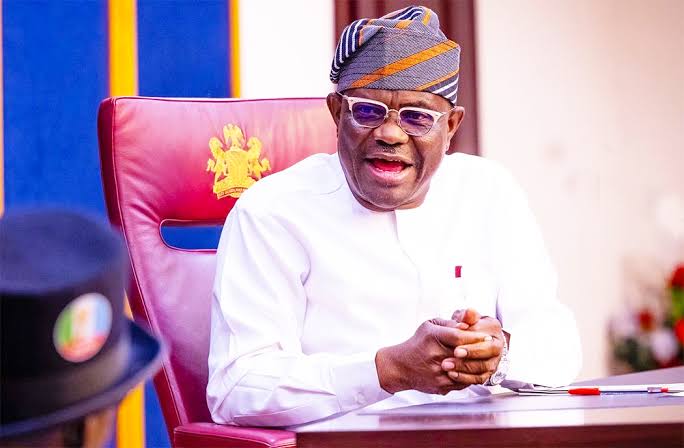
Counsel to Safwan Garba GY and GY Global Oil and Gas Nigeria Limited, Ibrahim Waru, has asked the Chief Judge of the Federal Capital Territory High Court, Justice Husseini Baba-Yusuf, to transfer an alleged $2.1m land deal suit involving Jordan Wike, son of the FCT Minister, Nyesom Wike, over concerns about the trial judge’s alleged family and community ties with the defendant.
Waru, in a letter dated October 7, sought the transfer of the suit, marked CV/008/2026, from Court 2 of the FCT High Court, presided over by Justice Sylvanus Oriji, to another court, citing what he described as a reasonable apprehension of bias.
An acknowledged copy of the letter, received by the Chief Judge’s chambers on October 8, was made available to journalists on Monday in Abuja.
Titled “Request for Transfer of Suit CV/008/26 between Safwan Garba GY & Another Vs Jordan Ezenwo Nyesom Wike from Court 2 on Ground of Reasonable Apprehension of Bias,” the letter said the application was intended to prevent circumstances that could raise concerns about the appearance of impartiality.
Waru wrote, “We respectfully write on behalf of our clients, the claimants, to request the transfer of the above-mentioned suit from Court 2 to another court within the FCT High Court.”
Explaining the basis for the request, he said the claimants’ concerns arose from social media publications which, in their view, suggested a close geographical, community and family affinity between the judge and Jordan.
“In particular, the Honourable Judge presiding over the matter is from the same area/community as the defendant, and there exists a close geographical/community and family affinity between His Lordship and the defendant,” the lawyer stated.
Waru, however, stressed that the request was not intended to impugn the judge’s integrity, impartiality or professional competence.
“Our clients do not equally allege actual bias against His Lordship, the presiding Judge.
“Rather, the request is founded on the need to avoid circumstances capable of creating a reasonable perception or apprehension that the matter may not be determined with the required appearance of complete impartiality,” he added.
Citing the principle that justice must not only be done but must also be seen to be done, the lawyer said the transfer would help preserve public confidence in the judicial process.
He urged the Chief Judge to exercise his administrative powers to reassign the case, arguing that such a decision would not constitute an adverse finding against Justice Oriji.
The letter read, “Our clients are particularly concerned that, irrespective of the actual state of mind of the Honourable presiding Judge, the existing circumstance may create an impression in the mind of a reasonable observer that His Lordship’s relationship and/or common community background with the defendant could potentially influence or be perceived as capable of influencing the adjudication of the matter.”
Waru added that transferring the case would enable the parties to approach the proceedings with confidence in the impartiality of the adjudication process.
The request comes amid an ongoing civil suit in which the claimants are seeking to recover $2.1m they allegedly paid Jordan in connection with a proposed real estate venture involving land in Katampe and Guzape, Abuja.
Jordan had denied receiving the money during cross-examination at the FCT High Court on September 30, insisting that his signature on a document linking him to the transaction was forged.
He also denied knowing one of the men the claimants alleged accompanied him during the purported cash payment.
When asked whether he had reported the alleged forgery to the police, Jordan answered in the negative.
The claimants are seeking an order directing Jordan to refund the sum of $2.1m, with 10 per cent interest from the date of judgment until payment, as well as N100m in damages and the cost of prosecuting the suit.
Jordan has denied the allegations, which remain before the court for determination.
Justice Oriji adjourned the case until December 1, 2 and 14, 2026, for continuation of the trial.




UBA Wins N156bn Debt Recovery Case Against Stallion Group
ShareThe Court on Friday ruled in the Bank’s favour on all issues and granted all its prayers. United Bank for...


Senator Abba Moro: It is Time to Go Home
ShareBy Cleopas Agada For seven years in the National Assembly, what has Benue South actually felt? For a man who...


NCDs Fastest-growing Disease Burden in Nigeria — Pate
ShareThe Coordinating Minister of Health and Social Welfare, Prof. Muhammad Pate, said Non-Communicable Diseases (NCDs) have become one of the...


2027: Adeleke Inaugurates Aare Asejere’s Campaign Council
ShareFrom Ayinde Akintade, Osogbo The Governor of Osun State, Senator Ademola Adeleke, yesterday charged newly inaugurated members of the Osun...

INEC Seeks Stakeholders’ Collaboration for Credible, Peaceful Elections
ShareThe Independent National Electoral Commission (INEC) has reaffirmed its commitment to strengthen collaboration with the National Orientation Agency (NOA), security...

Reps Reject Child Marriage, Demand Protection of Girl Child
ShareBy Ubong Ukpong, Abuja The House of Representatives on Thursday unanimously called for urgent and coordinated actions to protect Nigerian...


Court Awards N125, 000 Cost against Odumodublvck
ShareAn Abuja High Court on Wednesday awarded N125, 000 against a rapper, Tochukwu Ojogwu, popularly known as “Odumodublvck”, for asking...


Hunger Changed My Mind, Timini Egbuson on Embracing YouTube movies
ShareNollywood actor Timini Egbuson has reflected on his changing perception of YouTube movies, joking that he might have struggled financially...


Peller Announces Livestream with Peter Obi
SharePopular Nigerian TikTok streamer, Hamzat Adelaja, popularly known as Peller, has announced an upcoming livestream with the presidential candidate of...


Nigeria’s inflation drops from 15.39 Per Cent to 14.63 Per Cent in September
ShareBy Tony Obiechina, Abuja The National Bureau of Statistics (NBS) on Thursday disclosed that Nigeria’s inflation has eased from 15.39...