
Foreign News
WHO Blasts Planned US-funded Baby Vaccine Trial in Guinea-Bissau

A now-halted plan to run a hepatitis B vaccine trial involving thousands of newborns in Guinea-Bissau has been criticised by the World Health Organization as “unethical”.
The US-funded study had sought to give one set of babies the vaccine at birth, while another would have had the shot delayed until six weeks of age.
The WHO said it had “significant concerns” about the plan, and described the birth-dose vaccine as “an effective and essential public health intervention, with a proven record”.
The US health department, headed by Robert F Kennedy Jr, who has questioned the effects of vaccines, had sought to use the trial to answer questions about the jab’s broader health effects.
The WHO said on Friday that its concerns regarded the study’s scientific justification, ethical safeguards and consistency with established standards for research involving humans.
It stressed that the jab had been used for more than three decades in more than 115 countries.
The WHO said giving a proven life-saving intervention to some newborns but not others exposed them to “potentially irreversible harm”.
A sizable portion of Guinea-Bissau’s population is estimated to have hepatitis B, and the WHO says vaccination at birth prevents the virus being transmitted from mother to baby in 70-95% of cases.
It argued that trials giving one group a placebo or not treating them were only acceptable when no proven treatment existed, something that was not the case with the hepatitis B birth dose vaccine.
The WHO recommends that all newborns receive the hepatitis B vaccine within 24 hours of birth. It says infection at birth is the most common way of having a lifelong infection, with 90% of infected newborns becoming chronic carriers.
In Guinea-Bissau, the dose is currently given at six weeks, though authorities plan to introduce the birth dose nationwide by 2028 to align with global standards, something the WHO said it would help accelerate.
A total of 14,000 babies in the West African country were due to be involved in the study funded by the US and led by Danish researchers.
But public outrage at the project prompted the Guinea-Bissau government to suspend it last month.
Critics have questioned why babies in the African country were being proposed for the trial.
Two months ago, a panel of top advisers voted to stop recommending that all newborns in the US receive a hepatitis B vaccine.
The panel was appointed by the US Health Secretary Kennedy, who had fired all members of the Advisory Committee on Immunization Practices (Acip) months earlier and replaced them with others critical of vaccines.
Kennedy has on several occasions denied being against vaccinations and has said he and his children had been vaccinated, but has also repeatedly stated widely debunked claims about vaccine harms.
Vocal opponents of the project in Guinea-Bissau include the country’s former health minister, Magda Robalo.
“It’s not acceptable and it should not go on,” she told the science journal Nature last month. “Guinea-Bissauans are not guinea pigs.”
More than 12% of the country’s adult population has chronic Hepatitis B, according to the WHO. Smaller studies by other researchers have estimated the proportion could be as high as one in five.
Most people with the virus do not have any symptoms, or have very mild symptoms.
But some people can experience jaundice, dark urine, feeling very tired, nausea, vomiting and pain in the abdomen.
The WHO said chronic patients have a high risk of cirrhosis and liver cancer.
The US House of Representatives has voted to rescind US President Donald Trump’s tariffs on Canadian goods. In a 219 to 211 vote, six Republican lawmakers joined Democrats to back a resolution that seeks to end the tariffs Trump imposed on Canada last year.
The vote is largely symbolic as it will still need to be approved by the US Senate and then approved by Trump, who is very unlikely to sign it into law.
Since his re-election, Donald Trump has imposed a series of tariffs on Canada, recently threatening a 100 per cent import tax in response to Canada’s proposed trade deal with China.
As the vote was taking place on the House floor, Trump posted on Truth Social: “Any Republican, in the House or the Senate, that votes against TARIFFS will seriously suffer the consequences come Election time.
”“TARIFFS have given us Economic and National Security, and no Republican should be responsible for destroying this privilege,” he added.
The vote came after US House Speaker Mike Johnson, a Trump ally in Congress, unsuccessfully tried to block discussion on the chamber’s floor by lawmakers on Trump’s tariffs.
With Republicans holding a thin majority in the US House, the six Republican defections along with a near-united front from Democrats was enough to secure the votes.
The measure had been introduced by Democrat Gregory Meeks who said that Trump had “weaponized tariffs” against allies and destabilized the global economy.
“Not only have these tariffs done immense harm to our relationship with Canada, pushing them closer to China, they have driven up prices here at home,” he said before the vote.
Representative Don Bacon from Nebraska was one of the six Republicans who crossed the aisle to join Democrats in approving the measure. Before the vote, he said “tariffs have been a ‘net negative’ for the economy and are a significant tax that American consumers, manufacturers, and farmers are paying.”
The bill now heads to the US Senate where Republicans also hold the majority. Even if it cleared that hurdle, it is unlikely to be signed into law.
Separately, Trump’s tariffs are also facing legal scrutiny as the US Supreme Court is set to rule soon on a case questioning the president’s legal authority to impose the levies.
Meeks, the top Democrat on the US House Foreign Affairs committee, said the measure on Canada is the first of several bills he plans to introduce that aim to roll back Trump’s signature trade action.
“Our fight doesn’t stop here,” he said in a video posted online before the vote. “I have resolutions also to end Trump’s tariffs on Mexico, on Brazil, and on his Liberation Day global tariffs.”

Ghanaians across the country have turned out en masse to wear the country’s colourful traditional outfit, the fugu, after the government designated Wednesdays “Fugu Day”.
The move comes after President John Dramani Mahama’s state visit to Zambia last week when he wore the garment.
Some mockingly called it a “blouse”, prompting a fierce response from Ghanaians online.Ghana’s Tourism Minister Abla Dzifa Gomashie said that wearing the outfit every week would help project the country’s identity “with pride on the global stage”.
She encouraged wearing the outfit “in all its diverse forms, designs, and expressions, complemented by its distinctive and beautiful accessories”.
The fugu, also known as batakari, is a traditional northern Ghanaian top made from hand‑woven, narrow strips of thick cotton fabric stitched together to form a structured, poncho‑style garment.
It is worn by traditional leaders in northern Ghana, as well as ordinary citizens, and is a symbol of royalty and authority.
The traditional fugu top is more often associated with men, who sometimes wear trousers and a hat in matching material, but women also wear a version of it, which can be styled longer or as a dress.
When Ghana became the first sub-Saharan nation to break free from colonial rule in 1957, its founding father – the pan-Africanist Kwame Nkrumah – and five others wore fugus at the celebrations that marked the country’s independence from the UK.
Beyond its cultural importance, Gomashie said the outfit’s weekly display would “generate far-reaching social and economic benefits” especially for local weavers, designers, artisans and traders.
“The government hopes that this collective embrace of fugu will strengthen national unity, stimulate the creative economy, and serve as a powerful symbol of Ghana’s cultural confidence and self-expression,” the minister added.
Following the announcement, many Ghanaians on Wednesday heeded the minister’s call, wearing the outfit in a variety of colours across the country.
Bismark Owusu Sarpong said that the capital, Accra was proud to wear his blue, white and black striped fugu, which he had received as a gift, to put “Ghana on the map” plus he said the outfit came with the added bonus of being comfortable.
Raymond Avenor, also in Accra, agreed wholeheartedly with this: ”Fugu is an easy wear.
“You pick it and off you go. You don’t have to iron it, we don’t wash it often as it should be,” the civil servant said, sporting a blue fugu with white stitching.
“Significantly it’s the northern people of Ghana that use this and it depicts, according to my understanding, royalty. I feel good when I wear it.”
For Andrews Tetteh Zutah, who owns more than seven of the tops, “Fugu Day” should not only be restricted to Wednesdays.
“I wish to have more,” said the Accra office worker in his striped red, khaki and black fugu.
“I wish I will be allowed to wear it anytime to the office but because of office constraints I’m unable to wear it every day. Personally, it’s one of the outfits I love most.” The attention has been great for fugu makers and sellers too.
Elijah Sulemana Musah, owner of a fugu factory, says business is booming – adding that he has received lots of orders from Ghanaian celebrities such as popular musicians Okyeame Kwame and Kwabena Kwabena.
”I’ve had calls coming in from several places both within and outside Ghana. I just met someone who said Zambians have called her and they are interested in the fugu and so she would want me to supply her,” he said. The iconic outfit has been trending on social media for days following the banter between Ghanaians and Zambians.
This revived a cultural movement on social media, with Ghanaians informally declaring “Fugu Friday” to showcase the outfits. Fridays had been designated by the previous government as a day where people were encouraged to wear traditional clothes.
The debate prompted Ghanaians, including MPs, to flood social media proudly showcasing their fugus, while Zambians featured wearing their traditional outfits known as siziba.
The online exchange attracted the attention of Zambian President Hakainde Hichilema, who announced that his country would order fugus from Ghana.
President Mahama also suggested exporting the smock in bulk to Zambia.
While emphasising the fugu’s cultural and political significance, Mahama gave a nod to Nkrumah and how he had worn it in 1957 and said that he himself had recently worn it proudly to the UN.
Other presidents, including Nana Akufo-Addo, John Kufuor and Jerry John Rawlings, have also embraced and publicly promoted the outfit.
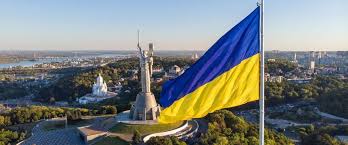
Ukrainian forces have carried out overnight attacks on military and energy-related facilities in several Russian regions, local authorities said yesterday, as cross-border strikes intensified.
Gov. Andrey Bocharov, from the regional administration’s Telegram channel, said air defence systems repelled a missile attack during the night in the southern Volgograd region.
Debris from intercepted projectiles sparked a fire on the grounds of a Russian Defence Ministry building near the village of Kotluban.
Bocharov said evacuations were ordered in the area due to ongoing detonations.
“There were no immediate reports of injuries or damage to civilian infrastructure.
“Images and videos shared on social media appeared to show multiple explosions in the region,” he said.
Ukrainian media outlets reported that rocket artillery depots in the Volgograd area were struck, though those claims could not be independently verified.
In the Tambov region, further north, two people were injured in a separate drone attack, according to Gov. Evgeny Pervyshov. He said drone debris hit a technical college and a shop in the town of Michurinsk.
Ukrainian media also reported a drone strike on a refinery in the northern Russian republic of Komi.
Local emergency services confirmed at least one drone attack in the area but did not provide details about potential damage.
Social media images suggested the refinery might have been affected, although this could not be independently confirmed.
Authorities temporarily closed the airport in the city of Ukhta, citing security concerns.

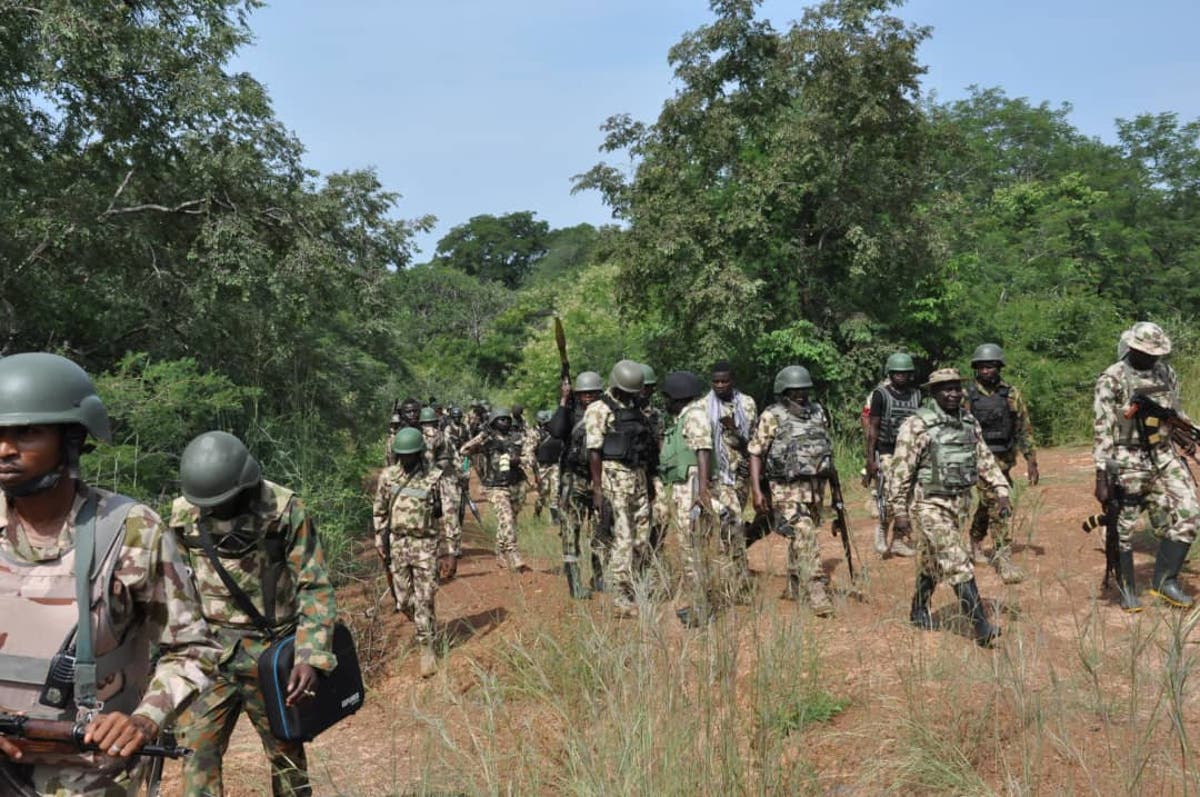
Troops Foil Suspected IPOB/ESN Kidnap Attempt, Rescue Five in Swift Night Operation
ShareBy David Torough, Abuja Troops of the Joint Task Force Southeast (JTF SE) Operation UDO KA have foiled a suspected...

New NSCDC Commandant Vows to Fight Crime in Kwara
ShareThe new Commandant, Nigeria Security and Civil Defence Corps (NSCDC) in Kwara, Bala Bodinga has pledged to fight crime in...


Olukoyede Emphasises Collaboration as Catalyst in Fight against Corruption
Share The Chairman, Economic and Financial Crimes Commission (EFCC), Ola Olukoyede, has called for closer collaboration among anti-corruption agencies in...
FOC Says Nigerian Navy Ranks 22nd Worldwide
ShareThe Flag Officer Commanding (FOC) Western Naval Command, Rear Adm. Abubakar Mustapha, has said that the Nigerian Navy has been...

Police Recover Three AK-47 Rifles, Others at Accident Scene in Niger
ShareFrom Dan Amasingha, Minna The Niger State Police Command has recovered three AK-47 rifles, six magazines and 104 rounds of ammunition following a motorcycle...


Kogi Rolls Out New Tax Rates to Boost Fiscal Reform
ShareFrom Joseph Amedu, Lokoja The Kogi State Government, in the wake of the new tax laws, has rolled out new tax rates for the State Ministries,...


Rapists Should be Castrated, Burnt Alive – Simi
ShareAfrobeats singer, Simisola Kosoko, popularly known as Simi, has sparked controversy after calling for capital punishment for rapists. Nigeria is currently in a...

Livestock Ministry Partners Military for National Food Security
ShareBy Raphael Atuu, Abuja The Federal Ministry of Livestock Development has pledged collaboration with the Nigerian Armed Forces to drive large-scale livestock production, strengthen food security,...

CBN Targets $1bn Diaspora Remittance Inflows – Cardoso
ShareBy Tony Obiechina, Abuja The governor of the Central Bank of Nigeria (CBN), Olayemi Cardoso said, with the diaspora remittance...

Terrorists Kill 34, Burn Villages in Kebbi Mid- day Attack
ShareBy David Torough, Abuja A wave of coordinated terror swept through parts of northwest Nigeria this week as suspected jihadist...