
NEWS
WHO, FCDO Laud Mbah’s Remarkable, Strategic Investments in Health System Devt

From Sylvia Udegbunam, Enugu
The World Health Organization (WHO) and the United Kingdom Foreign, Commonwealth and Development Office (FCDO) have donated vehicles, equipment, and various training items to the Enugu State Colleges of Nursing at Park Lane, Enugu, and Awgu, lauding Governor Peter Mbah’s bold and strategic investments in health system development in the state.
The items donated include two 15-seater Toyota Hiace commuter buses, two Mikano diesel generators, 145 desktop computers, five suction machines, eight sets of 3D electronic boards, 13 Sharp three-in-one photocopiers, and numerous laboratory, training, nursing, and hostel equipment and accessories, among others. At the handover ceremony at Government House, Enugu, on Monday, the WHO Country Director and Head of Mission, Nigeria, Dr. Pavel Ursu, said the donations followed a comprehensive infrastructure readiness assessment conducted on the Enugu State College of Nursing, Park Lane Campus, and the Enugu State College of Nursing, Awgu Campus by WHO, in collaboration with the Enugu State Government, as part of the Equipment Support for Health Training Institutions (ESHTI) initiative.He said Mbah had set a commendable example in health system investment, listing several remarkable interventions of the administration in health sector development.“WHO commends your administration for the bold and strategic investment in health system strengthening. Under your leadership, Enugu State has made remarkable investments in health infrastructure expansion and primary healthcare revitalization,” he said, listing the construction of 260 Type 2 Primary Health Centres (PHCs) across all political wards, solarisation of health facilities, and the ongoing construction of the quaternary Enugu International Hospital, which has the potential to position Enugu State as a medical tourism destination.He cited the digital transformation of health facilities by the Mbah Government, naming the digitisation of PHC and secondary health facilities, equipping of over 360 health facilities with tablets, internet, and Electronic Health Record (EHR) systems, and the institutionalization of real-time data dashboards for clinical and operational monitoring.“These efforts are expected to reduce patient wait times, improve quality of care, and enable evidence-based decision-making,” Dr. Ursu stated.He equally commended Mbah for his investment in human resources for health through the approval of the recruitment of 2,200 health workers across all cadres, with 450 already onboarded, as well as for the administration’s support to health training institutions through accreditations, approval of National and Higher National Diplomas, and integration of the schools into the Joint Admissions and Matriculation Board (JAMB) portal, among others.In his remark, FCDO Nigeria Health Advisor and representative at the ceremony, Dr. Ebere Anyachukwu, praised the governor’s efforts in transforming the state’s health system.“We have been a key supporter, and we have also been observing the efforts that Enugu State has been making to transform health under your leadership. That is why we are proud to have partnered with Enugu State and the World Health Organization to provide this support, and we hope that this will strengthen your efforts to improve the quantity, quality, and effectiveness of the health workforce in Enugu State,” he stated.Mbah, while conveying the profound gratitude of the state to WHO and FCDO, said the donations would help in realising his administration’s vision to eradicate poverty and grow the state’s economy sevenfold.“We know that all that will be contingent on the well-being of our people, and as they say, a healthy nation is a wealthy nation. So, this donation is fit for purpose.“You have done all the gap analysis and identified where it hurts us most. And it is quite auspicious because it is also happening at a time when we have been targeting to train at least 3,000 healthcare professionals annually here in Enugu State. So, these tools will strengthen these training institutions and also improve our standards,” he said.He, however, assured that his government was not ready to rest on its oars, as it was set to construct more hostels and classrooms in the various campuses of the Enugu State College of Nursing, including the one in Oji River.He added that the government was completing two new six-floor blocks at the Enugu State University Teaching Hospital to provide world-class healthcare to the people of the state.In his remark, the Special Adviser to the Governor on Health Matters, Dr. Yomi Jaye, described the WHO and FCDO’s donations as an endorsement of the transformation of the state’s nursing training institutions, which the Nursing and Midwifery Council of Nigeria had almost written off before the coming of the Mbah Administration.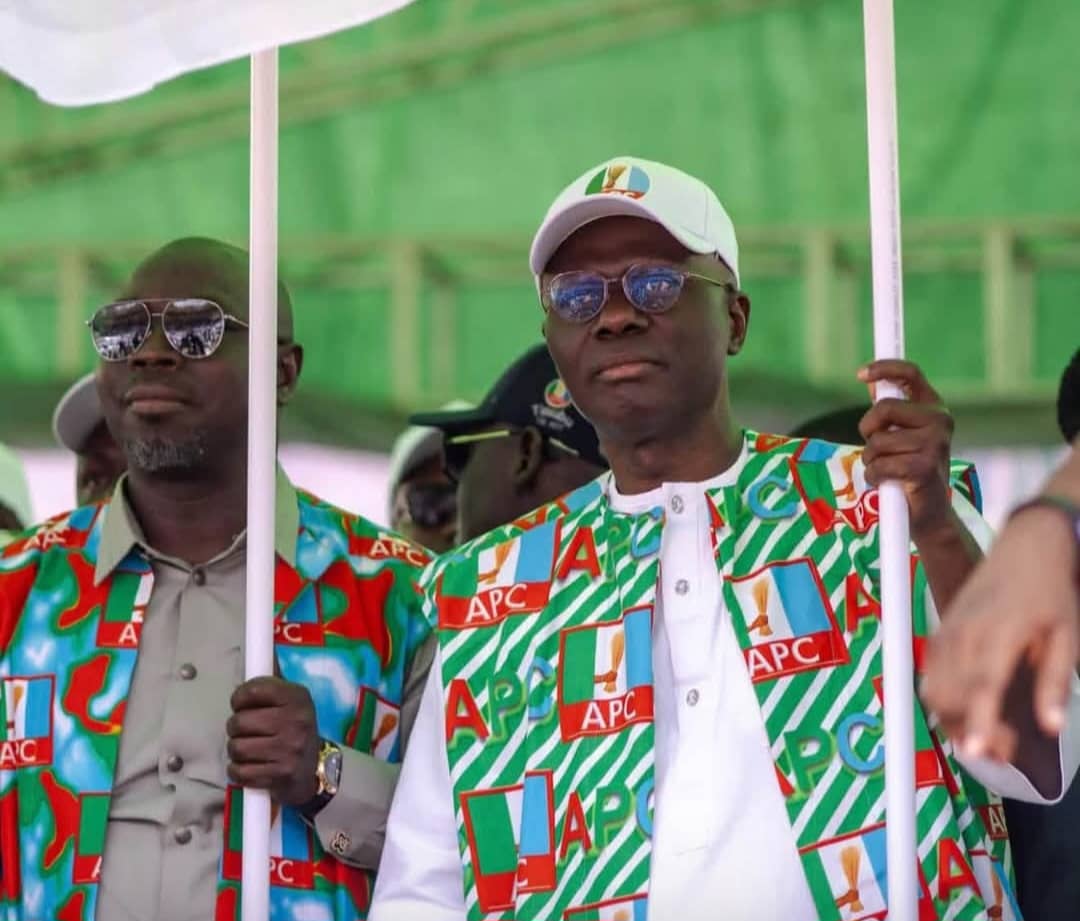
Leader of the PBAT Door-to-Door Movement, Government Ekpemupolo, has advised the people of Lagos State not to allow a repeat of what played out in the 2023 election in the state in the 2027 presidential election.
He called on the people to take advantage of the ongoing continuous voter registration exercise by the Independent National Electoral Commission (INEC) and get their Permanent Voters Cards (PVCs) to enable them vote massively for one of their own, President Bola Ahmed Tinubu.
Ekpemupolo, widely known as Tompolo, who was represented by Kestin Pondi, gave the charge in Lagos, on Tuesday, during a campaign rally for Tinubu’s reelection, during which he also presented 57 campaign vehicles to state coordinators.
“What happened in 2023 must not repeat. He must win convincingly in 2027,” he said.
He described Tinubu as a selfless and courageous leader who did not care about his reelection but went on carrying out bold reforms that are already yielding results and which many Nigerians are benefitting from.
Ekpemupolo pointed out that, the fact that Lagos is today referred to as a city for all Nigerians is all thanks to the foundation laid by President Tinubu, which successive governors have built on, and now that he has a higher responsibility, there was the need for his own people to stand solidly behind him.
“Lagos is the city for all Nigerians because someone stood firm to restructure and reform it. “From the time he came into office in 1999 up to 2007 that he left, Lagos was the envy of other states.
“Today, he has a higher responsibility, an opportunity to replicate the Lagos success story in Nigeria through reforms. There is massive development across the states today because reforms are working,” he stated.
Ekpemupolo said to ensure that the reforms continue, the people of Lagos and all Nigerians must take the message to every door and everyone that Tinubu is the man for Nigeria.
Also speaking, Governor Babajide Sanwo-Olu, pointed out that Nigeria was attaining economic stability under the Tinubu-led administration.
He advised the people to ignore the antics of opposition politicians who have no plan for Nigeria, but only desperate to win elections and have been moving from one party to another, demonstrating a lack of consistency, which he emphasised was bad quality for any leader.
Sanwo-Olu said Tinubu has constructed more roads than previous administrations in three years, given succour to students, increased minimum wage and made money available for payment of pensions.
“Why won’t we vote for him? The entire Lagos is for Tinubu. All our votes are for Tinubu. You’ve done it before, you’ll do it again. “We will touch every corner of Lagos with our message to reelect Tinubu. Go out and convince everyone that Tinubu is the candidate to vote,” the governor stated.
Earlier, National Coordinator of the movement, Sunday Asuku, urged the people of Lagos to go out and get their PVCs to enable them vote massively for Tinubu.
“We must stand our ground and deliver Tinubu with PVCs, not with guns or intimidation. Lagos must not put their son, Tinubu, to shame,” he stated.
He said in the 2027 presidential election, Nigerians must make a bold statement to retire “serial contesters” who he described as “enemies of Nigeria.”
From Mike Tayese, Yenagoa
Bayelsa Starlets Academy will like to strengthen their campaign in the ongoing N-Youth League when they take on FC Prague Nigeria of Abia State today Tuesday, October 13, 2026, at the Samson Siasia Stadium, Yenagoa, with kick-off scheduled for 10:00 a.
m.The encounter promises to be an exciting contest as both sides seek to make a strong statement in the competition.
The Yenagoa-based academy, which is affiliated to Spanish football giants, FC Barcelona, will be eager to showcase their growing quality, tactical discipline and attacking strength against a determined FC Prague Nigeria side.
Bayelsa Starlets Academy have continued to nurture young football talents through structured training and competitive football, providing promising players with a platform to showcase their abilities and pursue greater opportunities in the game.
The fixture is expected to test the Starlets’ organisation, creativity in midfield and efficiency in front of goal as they seek to impose their style of play on their opponents.
Having emerged as champions of the Nationwide League One (NLO) U-19 Youth League, Bayelsa Starlets will be keen to build on that achievement and maintain their impressive development trajectory.
For the academy, the encounter represents yet another opportunity to strengthen team cohesion, gain valuable competitive experience and demonstrate the progress made under its development programme.
The outcome could prove significant to both teams’ ambitions as the N-Youth League continues to provide a platform for the development and exposure of emerging football talents.
Speaking ahead of the fixture, Bayelsa Starlets Academy Head Coach, Gomo Onduku, expressed confidence in his team’s readiness for the challenge, noting that the players have continued to improve as preparations progressed.
Onduku added that the team has worked hard in preparation for the encounter and was determined to secure victory against FC Prague Nigeria.
Similarly, Bayelsa Starlets midfielder, Tengi Ibuama, said the team would approach the fixture with the seriousness of a cup final, stressing that their priority was to win every match in the zone.
The Starlets will now look to translate their preparations into a strong performance on home soil as they seek to maintain their positive momentum in the N-Youth League.
By Raphael Atuu, Abuja
The Federal Ministry of Housing and Urban Development has advocated for stronger land, mortgage and institutional systems to accelerate inclusive housing delivery across Nigeria.
This is the key message at the ongoing 15th meeting of the National Council on Land, Housing and Urban Development (NCLHUD), holding in Sokoto, October 12th – 16th, 2026
Under the theme: “Strengthening Mortgage, Land and Institutional Systems for Accelerated and Inclusive Housing Delivery.
”, the meeting is a gathering of stakeholders in the built environment from both Federal and States, including professional and regulatory bodies in the housing sector.In his remarks, Director of Planning, Research and Statistics of the Ministry,. Mukhtar Iliyasu Umar, noted that the Council provides an important platform for stakeholders to examine challenges in the housing sector and develop practical solutions to improve housing delivery nationwide.
He stated that the meeting is convening a three-stage deliberation process for the consideration, harmonisation and adoption of policy recommendations aimed at addressing critical challenges in Nigeria’s housing and urban development sector.
He emphasised the importance of each stage of the deliberations, noting that the quality of the final decisions would depend largely on the depth of technical analysis, the quality of recommendations and the effectiveness of the harmonisation process.
Sokoto State Commissioner for Lands, Housing, Survey and Country Planning, Barrister Nasiru Aliyu Dantsoho, said the theme was strategically chosen to ensure that housing policies are designed to promote access to decent and affordable housing for every citizen.
He expressed concern over Nigeria’s housing deficit, estimated at over 14.5 million units, noting that approximately 50.6 million people live in unsafe housing conditions. Describing the situation as worrisome, Dantsoho called for urgent and sustained interventions to address the country’s housing challenges.
Accordingly, the Commissioner advocated a reduction in mortgage interest rates from the current double-digit levels to single-digit rates, as well as an extension of mortgage repayment periods from 25 to 35 years, saying that the measures would make mortgage repayments more affordable and improve access to homeownership for Nigerians.
He also called for the expansion of mortgage financing beyond the formal public and private sectors to accommodate Nigerians in the informal sector, particularly traders, farmers, and other self-employed individuals who constitute a significant proportion of the population but are often excluded from existing housing finance policies.
Bar Dantsoho further urged financial institutions, including the Federal Mortgage Bank of Nigeria (FMBN), to provide adequate funding and introduce flexible repayment arrangements tailored to the income patterns of different categories of borrowers.
He emphasised the importance of digitising land administration systems across the states to enhance efficiency, promote transparency, and facilitate access to land for housing development.
On his part, the permanent Secretary, Sokoto state ministry of lands and housing, Engr. Ahmad Moyi Tambuwal highlighted the state’s ongoing efforts to improve land administration, including the digitisation of land records, reduction in the time required to process Certificates of Occupancy and the provision of land for mass housing projects under the Federal Government’s Renewed Hope Housing Programme.
He noted that “the delivery of adequate and affordable housing requires more than the construction of houses. It also depends on efficient land administration, accessible mortgage finance, effective policies and stronger collaboration among government institutions and private-sector stakeholders”
NCLHUD is a forum for participants to share experiences, harmonise policies, identify institutional gaps and develop practical recommendations that would improve land administration, expand access to housing finance and accelerate housing delivery across the country.
Participants at the meeting were encouraged to develop recommendations that address pressing challenges in land administration, housing finance, institutional coordination and sustainable urban development across the country.
The reports and recommendations from the technical sessions will be harmonised for consideration at subsequent stages of the Council meeting.
The Ministry reaffirmed its commitment to strengthening the housing sector and promoting accessible, affordable and inclusive housing for Nigerians. It expressed confidence that the collective contributions of participants would provide a sound foundation for meaningful deliberations and effective decisions by the Council.



Tinubu’s Re-election: Don’t Allow Repeat of 2023, Tompolo Tells Lagos
ShareLeader of the PBAT Door-to-Door Movement, Government Ekpemupolo, has advised the people of Lagos State not to allow a repeat...
Bayelsa Starlets Academy Set for FC Prague Test
ShareFrom Mike Tayese, Yenagoa Bayelsa Starlets Academy will like to strengthen their campaign in the ongoing N-Youth League when they...

FG Strengthens Mortgage, Land Systems for Affordable Housing
ShareBy Raphael Atuu, Abuja The Federal Ministry of Housing and Urban Development has advocated for stronger land, mortgage and institutional...

Osun Signs MoU with Companies to Boost Industrialization
ShareFrom Ayinde Akintade, Osogbo The Osun State Government under the leadership of Governor Ademola Adeleke has signed two separate Memoranda...


Abuja Motorists Decry Continuous Increase in Petrol Price
ShareSome motorists in the Federal Capital Territory (FCT) have raised concerns over the continuous increase in the price of Premium...


CBN Maintains Deadline for Local Data Storage
ShareThe Central Bank of Nigeria has ruled out an extension of the 1 January 2027, deadline for financial institutions to...
FG, Norway Partner on Satellite Surveillance to Combat Illegal Fishing
ShareThe Federal Government has assured Norway of Nigeria’s participation in the Blue Justice Initiative to strengthen satellite surveillance of its...


Niger Delta Deserves More than 13 Per Cent Derivation, Says Obasanjo
ShareFrom Mike Tayese, Yenagoa Former President of Nigeria, Chief Olusegun Obasanjo, on Monday, advocated an increase in the 13 per...

PDP Lawyers Give INEC Three-day Ultimatum to Publish Pantami’s Name
ShareLawyers to the Peoples Democratic Party and its Gombe State governorship candidate, Professor Isa Ali Ibrahim, have given the Independent...
FG Urges Defence Correspondents to Project Nigeria Positively
SharePermanent Secretary, General Services, Office of the Secretary to the Government of the Federation (OSGF), Dr. Ibrahim Kana, has urged...