
NEWS
Worker’s day: FCTA Flags Off Medical Outreach

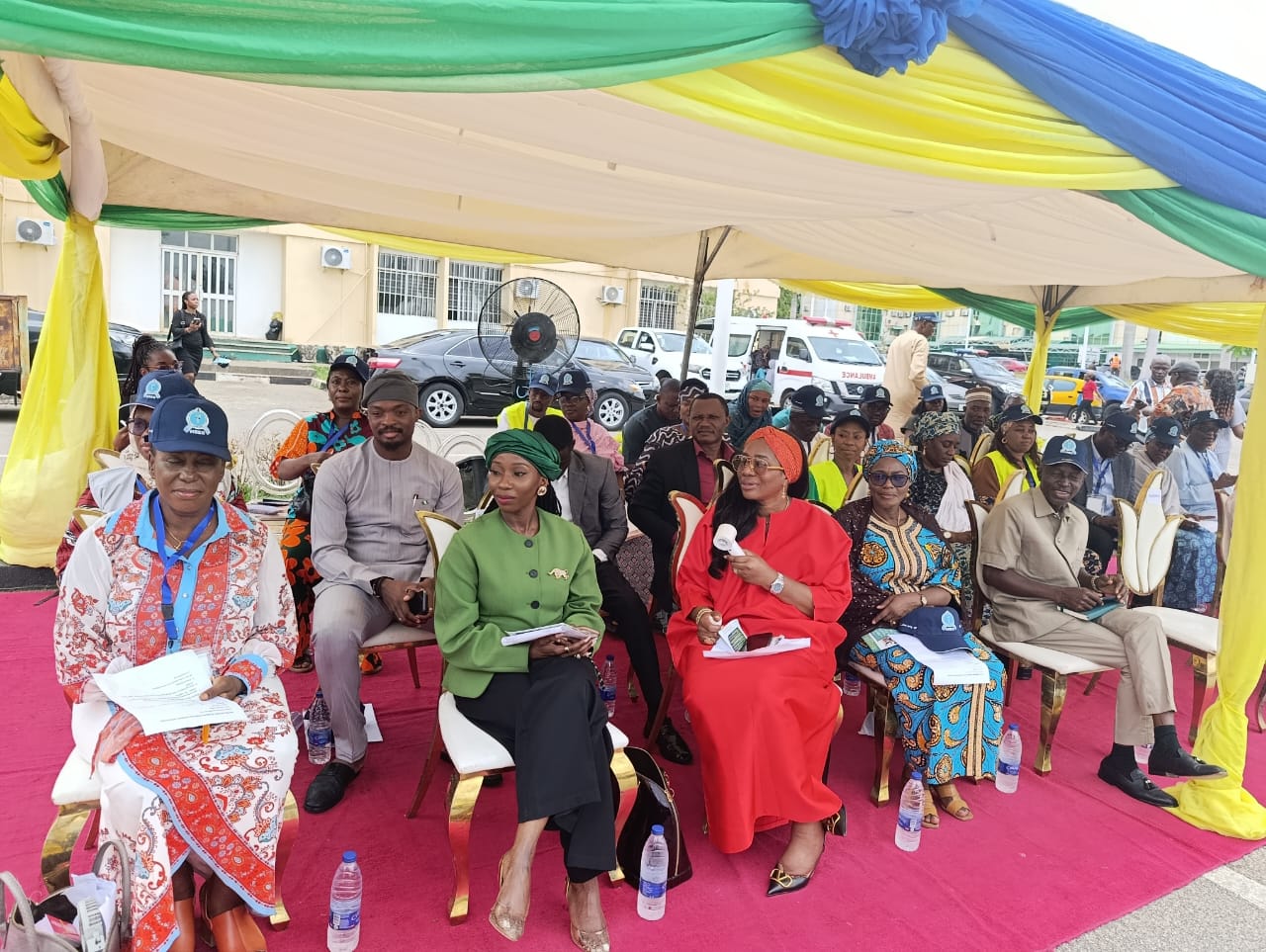
……..urges Civil Servants to always do medical checkups
By Laide Akinboade, Abuja
In order to create awareness and access to proper healthcare, the Federal Capital Territory Administration (FCTA) on Thursday flagged off its 2026 Workers’ Day medical outreach in Abuja.
The Acting Head of Service, Mrs.
Nancy Sabanti Nathan, warned civil servants against the dangers of untreated hypertension and diabetes.Nathan, who spoke at the event, described the initiative as a wake-up call for workers to prioritise regular medical checks and fully utilise the health insurance services available to them.
“Health is wealth.
We have heard about hypertension and diabetes.“These diseases, especially hypertension, are silent killers. Often, you hear statements like, ‘There was nothing wrong with him. He just went to work, came back, slept, and didn’t wake up.’ In most cases, it is hypertension or diabetes.”
She therefore urged civil servants diagnosed with such conditions to adhere strictly to prescribed medication and make use of the FCTA staff clinic and health insurance scheme.
According to her, the outreach was aimed at creating awareness about the health insurance programme and the newly revitalised staff clinic.
“The main essence of this programme is to create awareness about our health insurance scheme and the renewed staff clinic. Everything you have enjoyed here today will still be available at the staff clinic after this programme,” she said.
Nathan disclosed that many civil servants were unaware that deductions were already being made from their salaries for health insurance coverage.
“How many of you know that a portion of your salary is deducted every month for health insurance? As long as you are a civil servant, you are entitled to quality healthcare, including access to surgical services where necessary,” she stated.
She added that over 400 workers benefited from the outreach on the first day, with about 270 receiving eyeglasses, while several others were treated for hypertension and diabetes-related conditions.
“Yesterday, we had over 400 people here. Out of that number, 270 collected glasses. We also treated many cases of hypertension and diabetes,” she revealed.
The Acting Head of Service said the initiative was in line with the directive of the FCT Minister, Barr. Nyesom Wike, to ensure civil servants are treated with dignity under the Renewed Hope Agenda of President Bola Tinubu.
“This is a Renewed Hope administration, and we have a clear mandate from the Honourable Minister, Barrister Nyesom Wike, to ensure that civil servants are treated in a civil and dignified manner,” she added.
Nathan assured workers that the outreach would not be a one-off intervention, promising sustained collaboration with the Health Services and Environment Secretariat to ensure regular health programmes for workers.
Earlier, Mandate Secretary of the FCTA Health Services and Environment Secretariat, Dr. Adedolapo Fasawe, lamented the low level of awareness among workers regarding the health insurance scheme despite monthly deductions from their salaries.
“I am surprised to know that some of us don’t know that we are already enrolled in the health insurance scheme, and that gives us the right to go to our service providers to access the services that we have already paid for,” she said.
Fasawe said the outreach formed part of activities marking the 2026 Workers’ Day celebration and was designed to encourage workers to pay closer attention to their health after years of service.
“After working very, very hard, it is only important that you check your health. We celebrate the dignity of labour and the well-being of those who have served this great Federal Capital Territory,” she noted.
She commended the FCT Minister, Barr. Nyesom Wike, Minister of State, Dr. Mariya Mahmoud, and the management of the FCTA for supporting the initiative.
Fasawe also pledged continued collaboration with the Office of the Head of Service to sustain regular health sensitisation and screening programmes for workers across the FCT
NEWS
Party deregistration: Stop misleading court, Nigerians, ZLP National chairman, tells AGF…….as party remains registered
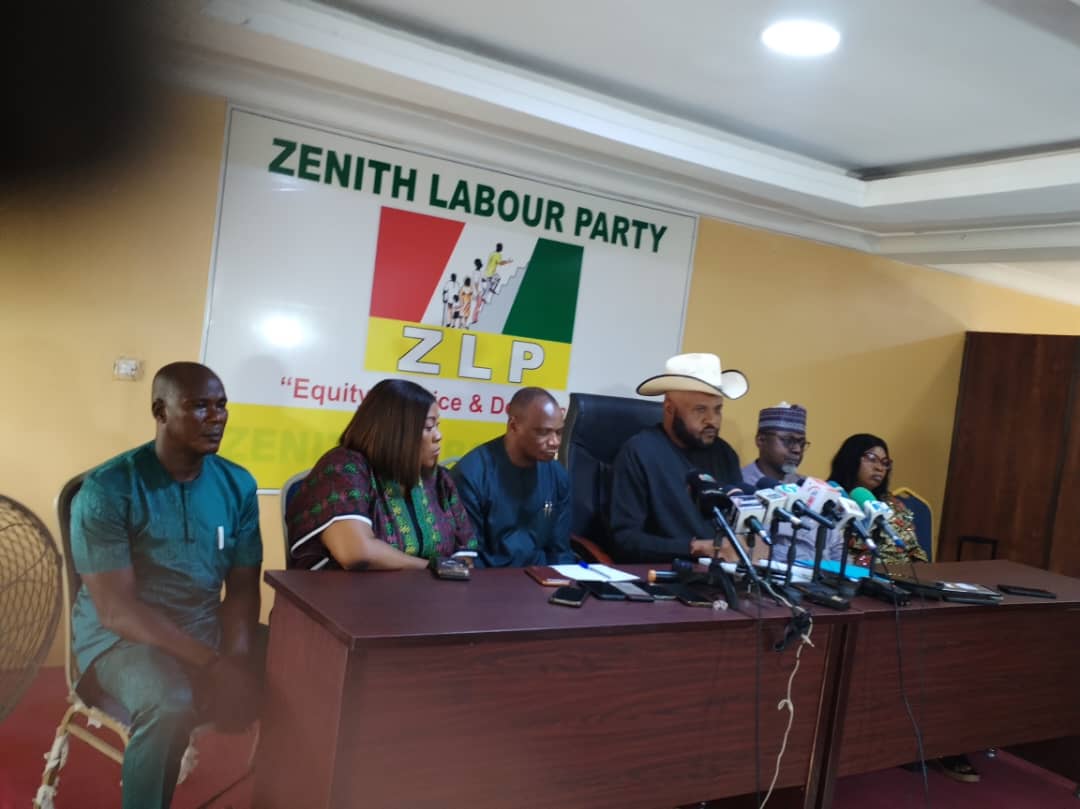
By Laide Akinboade, Abuja
National Chairman of the Zenith Labour Party (ZLP), Dan Nwanyanwu, on Thursday, called for the resignation and removal of the Attorney General of the Federation (AGF) and Minister of Justice of Nigeria is Prince Lateef Olasunkanmi Fagbemi, over his call for deregistration of the party, for not winning any election.
Nwanyanwu along with of the party’s National Working Committe stated this, when he briefed journalists in the party Secretariat in Abuja.
The National Chairman said the AGF lied because the party won councillorship seats and local government positions.
He accused the AGF of misleading the court that because Zenith labour party didn’t win any election so they should be deregistered.
And he circulated this in the media thereby scaring prospective candidates from getting nomination forms from the party.
Nwuanyanwu insisted that the ZLP remains a legally recognised political party, insisting that it has fulfilled all constitutional requirements for continued registration by the Independent National Electoral Commission (INEC).
He explained that the suit challenging the party’s status was instituted by what he described as “an association of former legislators,” who allegedly argued that the ZLP failed to secure electoral victories and should therefore be deregistered.
According to him, the party initially refrained from commenting publicly on the matter because the case is still pending before the court. However, he said the decision to address the media became necessary after the office of the Attorney General allegedly filed and circulated court processes claiming that the party did not win any election.
Nwuanyanwu described the allegation as “false and misleading,” arguing that it was capable of discouraging intending aspirants from joining the party ahead of future elections.
He stated that under the provisions of the Nigerian Constitution, a political party only needs to win at least one councillorship seat to retain its legal status as a registered political party.
“To say that Zenith Labour Party did not win any election is not true. We won councillorship seats and local government positions, and we have already tendered certificates of return before the court,” he said.
The ZLP chairman further claimed that INEC, in its response before the court, contradicted the allegations against the party by confirming that the party won elective positions in previous elections.
He accused the office of the Attorney General of failing to conduct proper due diligence before making submissions in court and warned against what he described as attempts to intimidate or weaken opposition political parties through legal processes.
Nwuanyanwu urged Nigerians interested in contesting future elections to freely join the ZLP and obtain nomination forms, insisting that the party remains stable, peaceful and fully recognised under the law.
Speaking further on the broader political climate, the elder statesman dismissed claims questioning the status and eligibility of political parties ahead of forthcoming elections, insisting that the electoral process remains inconclusive until the substitution window closes and final ballot arrangements are confirmed.
“It is premature for anyone to make categorical claims about which parties will eventually appear on the ballot because the process is still ongoing,” he said.
He also criticised what he described as efforts by certain public officials to undermine opposition parties through legal and political manoeuvres, insisting that allegations suggesting that opposition parties failed to meet constitutional thresholds were unfounded.
Nwuanyanwu stressed that public institutions must operate strictly on the basis of facts, evidence and the rule of law rather than political considerations.
He further alleged that there were deliberate attempts to weaken alternative political platforms, including parties associated with opposition coalitions, warning that such actions could threaten democratic principles and political pluralism in the country.
The ZLP chairman concluded by expressing concern over what he termed misinformation and politically motivated narratives surrounding opposition parties and the ongoing electoral process.

By Reuben Abati
It is ironic that it had to take a member of the military establishment now turned democrat that is General, now President Muhammadu Buhari for June 12 to be accorded its pride of place in the socio-political calendar of the Federal Government of Nigeria.
Before now, the recognition/celebration of June 12 as a watershed in Nigerian history had been observed majorly by the states of the South West of Nigeria, thus making its symbolism and significance a restricted and ethnic referent. But that has changed, thanks to President Buhari.His decision to declare June 12 a national holiday, his award of a post-humous honour of Grand Commander of the Federal Republic (GCFR) to Chief Moshood Kashimawo Olawale (MKO) Abiola and the subsequent amendment of the Public Holidays Act to accommodate June 12 as a Federal holiday is a welcome development.
President Olusegun Obasanjo (1999-2007) had pointedly ignored all entreaties for his administration to take the same step.President Umaru Musa Yar’Adua (2007 – 2010) did not address the June 12 issue. President Goodluck Jonathan (2010 -2015) had taken steps to immortalize MKO Abiola when he decided to name the University of Lagos after the late icon of democracy, but the staff, students and the alumni of the University rejected this, as they insisted that the name University of Lagos must not be changed.
The Jonathan administration would later recognize Chief MKO Abiola as one of the major Nigerians of the 20th century. That administration also considered giving Chief MKO Abiola a post-humous national award, but the then President was advised against doing so on the grounds that national honours in Nigeria are never given post-humously. Obviously, the controversy over the re-naming of the University of Lagos was so overwhelming, President Jonathan chose to listen to the Justice Alfa Belgore-led committee on national honours.
Whereas all other Presidents before him failed to make a statement with June 12, President Muhammadu Buhari has now chosen to do so. Tomorrow, all Nigerians will observe June 12 as a national holiday.
It will be the first time that this will happen. This should lay to rest all the conspiracies and the revisionism involved in the attempt to reduce June 12 to a narrow, ethnic event, which it is not. The recognition of June 12 as a special national event would be one of those developments for which President Buhari will be positively remembered.
It is again ironic that 26 years after, it took another member of the military elite to correct the problem caused by the military. It has taken President Buhari to correct the error committed by General Ibrahim Babangida and his group on June 23, 1993 when they chose to annul the Presidential election held in Nigeria on June 12, 1993. That unwise decision became General Babangida’s Achillee’s heel, and the ugly thing around his neck.
General Babangida or IBB as he is fondly known, could have ended up as one of Nigeria’s greats, given the performance of his government, but what is now remembered as his legacy, despite the best efforts of his biographers and PR managers, is that singular negative act, his violation of the people’s sovereignty. President Buhari is now being lauded for the courageous manner in which he has taken Nigeria beyond the denial and conspiracy foisted on the people by both the military and a segment of the professional political class.
We look forward to what President Muhammadu Buhari would say to Nigerians and the international community, tomorrow, June 12. His speech writers have a good opportunity to put words in his mouth that can reverberate like the claps of thunder. They must not waste that opportunity with their sleepy prose. President Buhari should have a word for those who have kept this country down by perpetually denying the truth and turning back the hands of the country’s clock. He should take credit appropriately for the wise decision that he has taken on the matter of June 12.
I remember June 12, 1993, as clearly as if it happened only yesterday. On that day, Nigerians trooped out en masse to make a choice between the Presidential candidates of two political parties, Bashorun
MKO Abiola of the Social Democratic Party (SDP) and Alhaji Bashir Tofa of the National Republican Convention (NRC). General Ibrahim Babangida was military President, ruling the country with his Armed Forces Revolutionary Council and finally getting to the final stage of a slow-moving democratic transition programme. By 1993, Nigerians were already tired of military rule and particularly of the Babangida government which seemed to have mastered the art of deception.
The people wanted the military out of the way, to allow a return to civilian rule, which had been truncated by the military at regular intervals since independence in 1960. On that day, Nigerians voted massively for the Social Democratic Party and its candidate, Bashorun MKO Abiola (8, 341, 309 million votes – 58.36%).
The NRC candidate, Bashir Tofa came second (5, 952, 087 million votes – 41.64%). This was an election in which neither religion nor ethnicity – two major dividing factors in Nigeria was an issue. MKO Abiola, a Southerner got as much support in the North as he did in the South, even beating his rival, Bashir Tofa in his home state of Kano.
The National Electoral Commission (NEC) was headed by political science Professor, Humphrey Nwosu. As the results were collated, it was clear that MKO Abiola (SDP) was leading in 19 states, with Bashir Tofa (NRC) winning in 11 states. On June 16 however, NEC announced that it would no longer announce the results “until further notice”.
Civil society and pro-democracy protesters objected to this. It had been a free and fair election, the most peaceful that Nigeria had ever known. On June 23, 1993, the Babangida government annulled the election and suspended the Electoral Commission. The NEC Chairman, Humphrey Nwosu went underground and became incommunicado. Bashorun MKO Abiola claimed victory. The people demanded that their will as expressed on June 12, 1993 should be respected and that the results of the election should be declared.
The refusal of the military establishment brought it into direct collision with the people and the international community. June 12 became a catalyst for much that would happen to Nigeria. The crisis escalated so quickly, General Ibrahim Babangida known then as the “evil genius” had to “step aside” as President of Nigeria.
He put in place as he left, an Interim National Government (ING) led by UAC chief, Ernest Shonekan with General Sani Abacha as Defence Chief. That ING survived for only 83 days. General Sani Abacha, a veteran of military coups in Nigeria, pushed aside the ING and its Head and proclaimed himself Head of State. To put it as it was, hell broke loose. Civil society became tempestuous.
Concerned Professionals, Concerned Democrats, Progressives, voices of reason in Nigeria across all divides, the church, market women, every one with a voice, took to the streets to say: “Never Again to military rule.” The general consensus was that the annulment of the June 12, 1993 election was after all a subterfuge by the military to remain in power and that IBB had played a “Maradona” game against Nigerians. “On June 12 we stand”, the people proclaimed and they took to the barricades. The diplomatic community even joined the protests, with the likes of US Ambassador Walter Carrington, leading the charge on the diplomatic front.
The Abacha government was bound to fail. It died a-borning. It descended on Nigeria’s civil society and the progressive camp, and as Nigeria began to witness the worst form of dictatorship since 1960, the people fought back.
And Abacha fought back. Not even newly born babies were spared. Journalists were special targets: those who were not hauled into prison, were made to flee abroad, or go underground. Those were the days of guerilla journalism in Nigeria. The people at home fought, those abroad set up a short wave radio, Radio Kudirat which reported Abacha to the world. In due course, Nigeria became a pariah nation.
Three major events made this happen: the first is the declaration by Chief MKO Abiola of his due right to the mandate that Nigerians gave him on June 12, 1993. On June 11, 1994, Chief MKO Abiola in the Epetedo area of Lagos declared himself the democratically elected President of Nigeria.
That speech is now known as the Epetedo Declaration. It should be widely circulated tomorrow, June 12 and on every June 12 henceforth, for it has become one of the landmark speeches in the mapping of Nigerian history, and the trajectory of our country’s democratic evolution.
I am tempted to quote from that eminently quotable speech but I recall that it was in that speech that the phrase “Enough is Enough” was first pronounced as a revolutionary call to action. Abiola said: “Today, I join you all in saying Enough is Enough! We have endured 24 years of military rule in our 34 years of independence.…Enough of military rule…” And he went on and on.…
The Epetedo Declaration became another catalyst for the Nigerian Spring! It was a call to action. The people responded. Abiola was arrested by the Abacha junta but the genie had left the bottle. The people of Nigeria heard Abiola: “Enough is Enough” and they too responded: “Never Again to military rule”.
Second event: On November 10, 1995, Ken Saro-Wiwa, a writer and internationally renowned environmental rights activist was hanged by the Abacha administration. Third event: On June 9, 1996, Abiola’s wife, Kudirat was assassinated by Abacha’s killer squad.
There were attempts on the lives of key pro-democracy activists as well including Chief Alfred Rewane who was murdered, and Chief Abraham Adesanya who survived. Journalists were murdered. It was as if at the Epetedo Declaration, Abiola had placed a curse on General Abacha. Nigeria suffered but the people wanted an end to it all.
On June 8, 1998, General Sani Abacha died. There was dancing in the streets. But as it happened, Chief Abiola also died, in very suspicious circumstances, while still in detention, on July 7, 1998. By then, General Abdusalami Abubakar had succeeded General Abacha as military Head of State. Nigerians still didn’t give up. They wanted democracy.
They wanted to be liberated from the shackles of military autocracy. On May 29, 1999, their will prevailed. General Olusegun Obasanjo who had also been framed and jailed by the Abacha government became Nigeria’s civilian president after all the turmoil.
It is sad that those who have benefitted most from the June 12 debacle have been the most desperate in denying the value and symbolism of that date and what happened therein. June 12 was a turning point for Nigeria as the foregoing narrative indicates, and it became, in its trajectory, the catalyst for Nigeria’s second liberation, that is liberation from internal colonialists, but as things stand 26 years later, we may still need to construct a strategy for a third liberation: liberation from the rent collectors who seem to have resolved that Nigeria’s progress is a threat to their own interests. By declaring June 12 a national public holiday, President Buhari has given us all an opportunity to reflect, to think and to remember.
In a country where memory is short, people don’t like to think, and state institutions are constructed to erase memory, the teaching of history was even at a point “outlawed”, now it is taught as an optional subject, it is a good thing that President Buhari in making June 12 a national holiday has given us all an opportunity to do what we do not like to do in this country: to think, reflect and remember.
June 12 is an idea that cannot be ignored. It is about national unity. On that day in 1993, we saw that it is possible for Nigerians, “though tongue and tribe may differ” to unite around an idea. June 12 is a philosophy, a way of thinking by a people who resolved at a critical moment in their lives to move forward. The evil agents in the military tried to block that and suppress the people’s sovereignty, but tomorrow, the point shall be made that the truth is indestructible! We hope that there will be celebration in every state of the Federation.
The story of June 12 has inspired a bibliography that should be promoted. Indeed, apart from the civil war, it is probably the most dramatic and telling incident in post-colonial Nigeria. I have been privileged to read many of the books, which I recommend to the reading public. They include, not necessarily in any order of importance, Abraham Oshoko,June12: The Struggle for Power in Nigeria, Abraham Oshoko, June 12: The Annulment; Frank Kokori,The Struggle for June 12,Omo Omoruyi, The Tale of June 12: The Betrayal of the Democratic Rights of Nigerians;Humphrey Nwosu, Laying the Foundations for Nigeria’s Democracy: My Account of June 12, 1993 Presidential election and its annulment; Wale Oshun,Clapping With One Hand; Wale Oshun,Open Grave; and Wale Oshun, Kiss of Death; Kayode Fayemi, Out of the Shadows: Exile and the Struggle for Freedom and Democracy in Nigeria; Joe Igbokwe, Heroes of Democracy; and Wole Soyinka,The Open Sore of a Continent. These works represent, to varying degrees, the literature of resistance against military rule in Nigeria.
The revisionists led by General Ibrahim Babangida have tried to rewrite and revise the same story (there would have been a coup if the result was allowed (!), a cabal within the military didn’t want Abiola, it was an unfortunate incident… story…); see: their narrative is not selling. On June 12 we stand! I have also heard some people express the view that the Buhari government should go a step further and formally announce the results of the June 12, 1993 election and thereafter declare Chief Abiola the rightful winner of that election.
I disagree. The June 12, 1993 process having been inchoate and the beneficiary dead, such a declaration will have no probative value. For me, what has been done serves the purpose. It would all have been better though, if June 12 had been declared MKO Abiola’s Day. He was the symbol, the rallying point, the icon of Nigeria’s second liberation in whom fully embodied the essence of the struggle from June 12,1993 to May 29, 1999. But have we learnt any lessons from June 12? Sadly, I don’t think so.
From Joseph Amedu, Lokoja
The troops of the 12 Brigade of the Nigerian Army have successfully rescued the remaining nine inmates and workers of a Lokoja-based orphanage that were kidnapped by gunmen on April 27, 2026.
They were rescued in collaboration with other security agencies.
Kingsley Fanwo, the Kogi State Commissioner for Information and Communications confirmed the rescue of the pupils in a statement in Lokoja late Wednesday.
He said the rescue of the pupils of Daarul-Kitab Islamic Orphanage in Lokoja, has brought relief and joy to families, residents, and well-wishers across the state.
Fanwo said: ”The rescued victims were immediately evacuated to a military medical facility where they are currently receiving medical attention and proper care,” he said.
The statement said Governor Ahmed Usman Ododo expressed deep appreciation to the officers and men of the Nigerian Army and other security agencies for what he described as their bravery, professionalism, and unwavering commitment to protecting lives and property in the state.
The governor also commended the resilience and courage shown by the victims and their families throughout the traumatic period.
Ododo assured residents that the protection of lives and security of communities remain the top priority of his administration.
“This successful operation underscores our determination to ensure that criminal elements have no foothold in Kogi State.
“We will continue to strengthen our security architecture, deepen intelligence gathering, and provide the necessary support for our security agencies to act swiftly and decisively,” the governor stated.
Ododo further expressed gratitude to President Bola Tinubu for his continued support towards sustaining peace and security in Kogi State, while also appreciating heads of security agencies, nationwide, for their collaboration and dedication to duty.
The Kogi State Government reiterated its zero-tolerance stance against kidnapping and other violent crimes, urging citizens to remain vigilant and support security agencies with timely and credible information.
The government assured residents that efforts were ongoing to track down and prosecute those behind the abduction, stressing that perpetrators of criminal acts would not escape justice.


Benue Killings: Agatu Youths Petition Military Authorities, Seek Immediate Withdrawal Of Troops.
ShareFrom Attah Ede Agatu youths under the auspices of Agatu Indigenous Youth Association (AIYA)l, have petitioned the Nigerian Military authorities,...

Party deregistration: Stop misleading court, Nigerians, ZLP National chairman, tells AGF…….as party remains registered
ShareBy Laide Akinboade, Abuja National Chairman of the Zenith Labour Party (ZLP), Dan Nwanyanwu, on Thursday, called for the resignation...

Worker’s day: FCTA Flags Off Medical Outreach
Share……..urges Civil Servants to always do medical checkups By Laide Akinboade, Abuja In order to create awareness and access to...


DP Crisis: Party Needs Total Overhaul not Presidential Ambition – Wike
ShareBy Laide Akinboade, Abuja The Federal Capital Territory (FCT)Minister, Nyesom Wike on Thursday said what People’s Democratic Party (PDP)needs now...
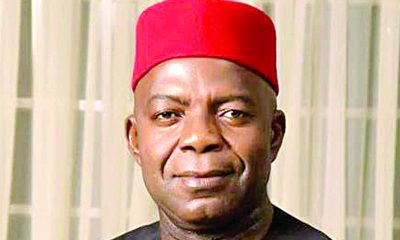

Otti Inaugurates Boards, Reiterates Commitment to Efficient Service Delivery
ShareAbia State Gov, Alex Otti has said that his administration remains fully committed to efficient service delivery and institutional reforms...

West Africa’s Malaria Menace: A Call to Action
ShareBy Abujah Racheal Malaria elimination in West Africa is no longer hindered by a lack of solutions, but by execution....

June 12, On It We Stand
ShareBy Reuben Abati It is ironic that it had to take a member of the military establishment now turned democrat...
Nine Remaining Kidnapped Victims of Kogi Orphanage Regain Freedom
ShareFrom Joseph Amedu, Lokoja The troops of the 12 Brigade of the Nigerian Army have successfully rescued the remaining nine inmates and workers...
Coach Decries Poor Infrastructure in Grassroots Volleyball
ShareA volleyball coach, Stephen Peter, has urged government and stakeholders to support grassroots volleyball development in the Federal Capital Territory (FCT). Peter, a retired...
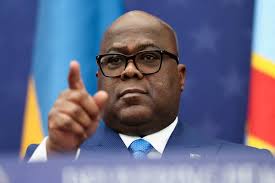

DR Congo President Hints at Extending His Term, Delaying Polls
ShareDemocratic Republic of Congo’s President Félix Tshisekedi has said he may consider seeking a third term in office when his mandate expires...