
NEWS
Workers’ Day: Kaduna Governor-elect Pledges Workers Friendly Administration

Nicholas Dekera, Kaduna
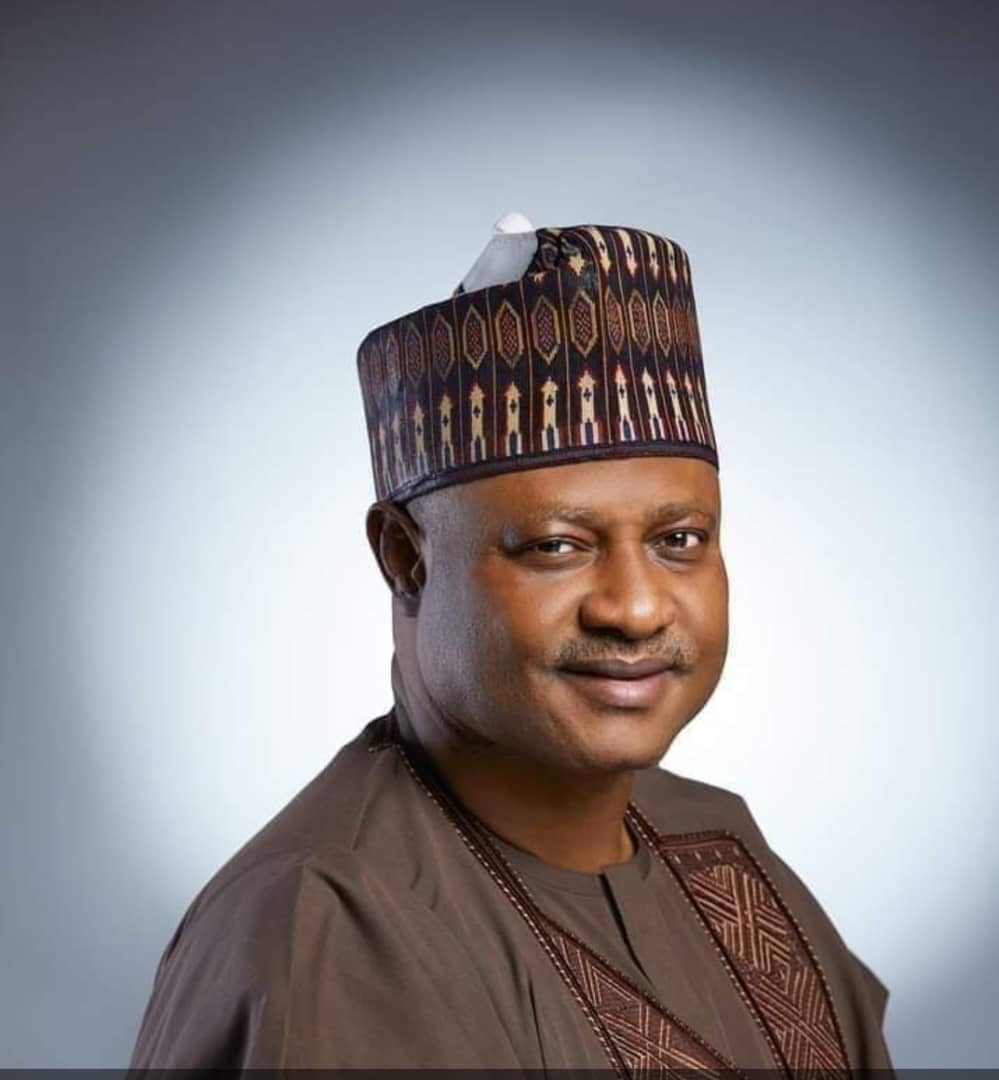
Governor-elect of Kaduna State, Senator Uba Sani in a solidarity message with workers on the occasion of this year’s Workers Day, pledged to run a workers friendly administration in the state.
While felicitating with Nigerian workers and the Labour Movement yesterday, the Governor-elect applauded the workers for what he described as immeasurable contributions to the building and sustenance of the Nigerian State.
“Your sacrifices are well documented and deeply cherished by Nigerians,” he said.
He said Nigeria as a nation has been going through challenges but noted it is heart-warming to that workers have not wavered in their belief in the country and commitment to national progress and development.
“You have stoutly defended our democracy and the fundamental rights and freedoms of the Nigerian people. You stand for national unity at all times. Nigerian workers and indeed the Labour Movement are the key pillars of Nigeria’s progress and unity,” said the
Governor-elect.
He paid a special tribute to the resilient, resourceful and hardworking workers of Kaduna State saying, “you have been diligent and committed to the progress and development of our dear state.”
Pledging to run a workers friendly administration, Uba Sani said he will prioritize workers welfare and provide them with the tools and incentives that will help fire up their zeal to perform optimally.
“Hardwork will be rewarded. All I seek is your cooperation and total commitment,” he said.








By David Torough, Abuja
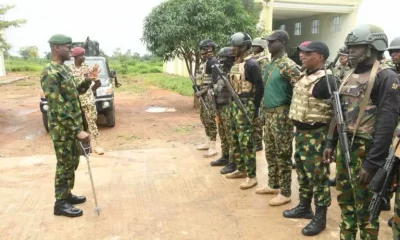
The Defence Headquarters (DHQ) has dismissed reports and suggestions of a ceasefire with Boko Haram terrorists, insisting that the Armed Forces of Nigeria will sustain military pressure against insurgents, bandits, kidnappers and other criminal groups threatening national security.
The declaration came as the military disclosed that its troops neutralised 435 terrorists and bandits, arrested 809 suspects, secured the surrender of 198 insurgents and rescued 717 kidnapped victims during 588 coordinated security operations conducted across the country in September and October.
The Director of Defence Information, Maj.-Gen. Samaila Uba, made the disclosures on Thursday in Abuja during a joint security press briefing organised by the Office of the National Security Adviser (ONSA).
Responding to questions on whether the Federal Government or the military had entered into any ceasefire arrangement with Boko Haram, Uba categorically rejected the suggestion, maintaining that ongoing operations against terrorist groups, including Boko Haram and the Islamic State West Africa Province (ISWAP), remained active.
“On the issue of whether there is a ceasefire with Boko Haram, I want to make it clear that there is nothing like a ceasefire,” he said.
According to him, the number of terrorists neutralised, suspects apprehended and abducted persons rescued demonstrates the military’s determination to sustain its offensive against criminal elements.
He warned that anyone involved in activities threatening the lives and security of Nigerians would either be eliminated through lawful military operations or brought to justice.
Uba explained that the military campaign was not restricted to the North-East but extended to other parts of the country where kidnappers, bandits and other criminal networks continued to threaten innocent citizens.
Providing details of the operations, the defence spokesman said the military recorded significant successes under the strategic leadership of President Bola Tinubu and the Chief of Defence Staff, Gen. Olufemi Oluyede.
Among the rescued victims were 20 prospective National Youth Service Corps (NYSC) members abducted in Owerri, Imo State, and 11 persons rescued in Danko-Wasagu, Kebbi State.
He also identified several high-profile terrorist commanders neutralised during the operations, including Ali Mandara, Abba Gajiri, Habu Ikkima, Nakif Yana Faruk, Commander Gogore and Abdussamad Ohida.
The military further recovered 5,666 arms, ammunition, explosives and Improvised Explosive Devices (IEDs), alongside other logistical assets, in efforts to dismantle the operational capabilities of terrorist and criminal networks.
Uba said major tactical breakthroughs were recorded in Buniyadi, Baga, Kukawa, Bittai and the Owo forest, disrupting enemy networks and weakening their operational structures.
On the movement of insurgents from their traditional strongholds into other parts of the country, the DHQ spokesman said the development reflected the pressure military operations had mounted on their former locations.
He, however, cautioned that the Armed Forces would not allow the terrorists to establish new bases or safe havens elsewhere.
He disclosed that security agencies were mapping areas where fleeing insurgents might have relocated and implementing proactive measures to prevent them from establishing fresh operational footholds.
Uba cited the recent neutralisation of a high-level terrorist in a forest area as further evidence that no part of the country would be allowed to serve as a safe haven for criminal groups.
He also linked the military’s ongoing restructuring, including the establishment of new formations, battalions and units, to efforts to close security gaps and strengthen operational coverage nationwide.
According to him, the adjustments to the Armed Forces’ order of battle are designed to respond to emerging threats, improve troop deployment and ensure a stronger military presence in vulnerable areas.
The DHQ acknowledged that security challenges persist in Borno, Yobe, Taraba, Katsina, Kwara, Zamfara, Sokoto, Plateau, Benue, Niger, Oyo and Kaduna states, but assured that troops were adapting through coordinated clearance operations, patrols and deeper inter-agency collaboration.
Beyond counterterrorism operations, Uba disclosed that military activities in the Niger Delta had resulted in the destruction of 57 illegal refining sites and the recovery of more than 1.061 million litres of stolen petroleum products, in a move aimed at protecting national economic assets and boosting crude oil production.
He also highlighted efforts to strengthen regional security cooperation, particularly through the repositioning of the Multinational Joint Task Force (MNJTF) operating in the Lake Chad Basin.
Uba said a recent high-level forum involving serving and former force commanders, academics and other stakeholders examined the implications of the withdrawal of some countries from the Economic Community of West African States (ECOWAS), assessed operational gaps and explored diplomatic options for improving regional military cooperation.
He said implementation of some of the forum’s recommendations had commenced, with the expected benefits to become evident in the coming months.
The DHQ also highlighted its commitment to indigenous defence manufacturing and technology transfer, citing its participation in the Africa International Defence Exhibition 2026.
On personnel welfare, the military disclosed that it had undertaken veteran engagement tours and launched a Defence Discount Shop in partnership with Konga and Zinox.
The defence spokesman reiterated that the Armed Forces remained committed to sustaining pressure on terrorist groups, preventing their expansion into new territories and restoring security across the country.
He maintained that the military’s ongoing operations, restructuring initiatives and regional partnerships were aimed at ensuring that insurgents, bandits and other criminal elements had no opportunity to regroup or undermine the safety of Nigerians.
By David Torough, Abuja
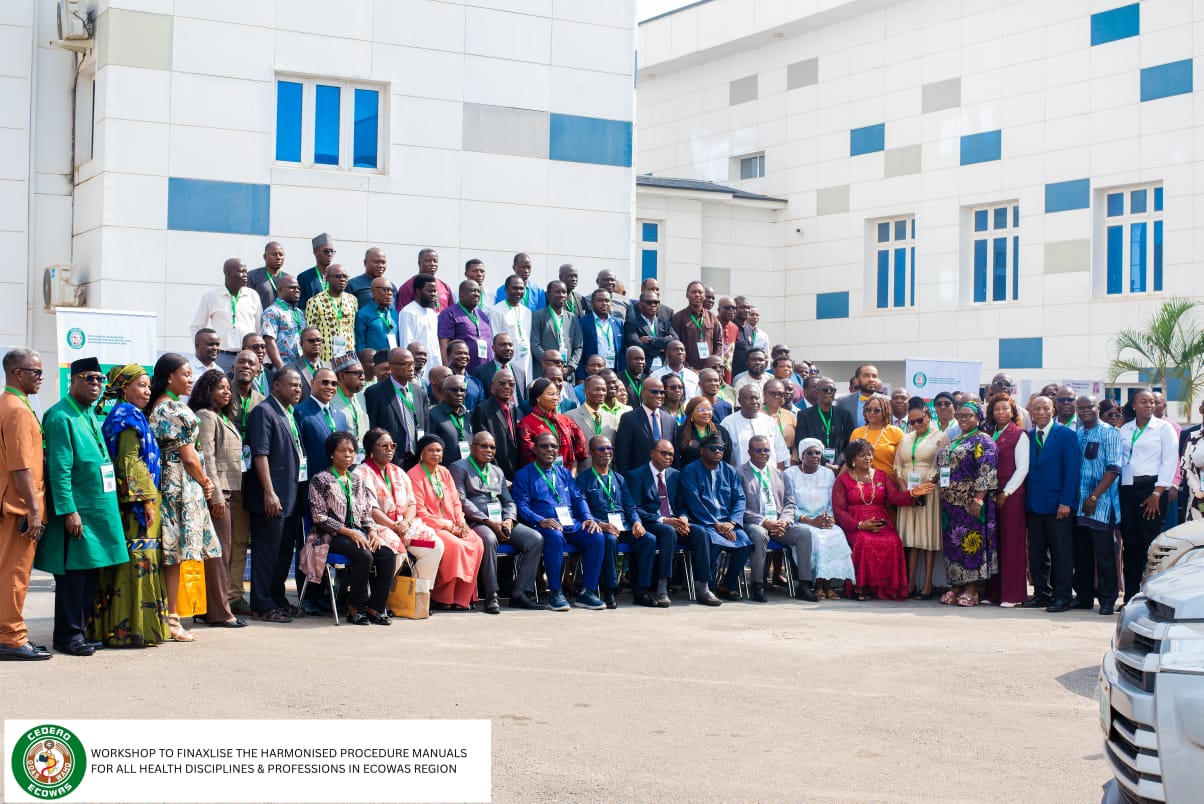
The West African Health Organization (WAHO) has commenced a regional workshop in Abuja to finalize procedural manuals for health professionals across the Economic Community of West African States (ECOWAS), in a move aimed at standardising professional practice, strengthening healthcare delivery and improving patient safety across the sub-region.
The workshop, which opened on Thursday, brought together health experts and stakeholders from across the ECOWAS region to review and finalize the manuals designed to provide common standards for the training, professional conduct and clinical practice of different categories of health professionals.
Speaking at the opening ceremony, the Coordinating Minister of Health and Social Welfare, Professor Muhammad Ali Pate, represented by Dr. Dakum Londji, described the initiative as a timely and strategic intervention towards strengthening health systems and harmonising the education and practice of health professionals in West Africa.
He commended WAHO for its leadership in advancing regional health cooperation, stressing that the effectiveness of any health system depends largely on the competence and professionalism of its workforce.
According to him, the procedural manuals will standardise knowledge, strengthen training, promote best practices and improve the quality of healthcare delivery across the region.
He explained that the manuals would provide clear, step-by-step guidance on what health professionals should be taught, how they should be trained and assessed, as well as standards for safe, ethical and evidence-based clinical practice.
The Minister further noted that the documents would address professional ethics, discipline, patient safety and continuous professional development.
He emphasised that regional harmonisation should not undermine the peculiarities of individual countries but rather establish a common foundation of excellence while respecting national contexts.
Pate urged participants to ensure that the manuals are evidence-based, practical and responsive to emerging healthcare needs, including digital health, emergency preparedness, patient safety and professional ethics.
He also reaffirmed Nigeria’s commitment to developing a competent, compassionate, ethical and innovative health workforce, describing human resources for health as a key pillar of the Federal Government’s Renewed Hope Agenda.
He challenged participants to ensure that the value of the manuals would be measured not by their production but by their adoption, implementation and eventual impact on healthcare practices and health outcomes.
The Minister formally declared the workshop open, assuring WAHO, ECOWAS member states, regulatory bodies, training institutions and development partners of Nigeria’s continued collaboration in advancing the regional initiative.
In his address, the Director-General of WAHO, represented by the organisation’s Head of Training and Human Resources for Health, Professor Joseph Olorunda, described procedural manuals as essential instruments for improving consistency, accuracy and compliance with professional standards in healthcare facilities and communities.
Delivering the Director-General’s message, Olorunda said the manuals would provide a central reference point for healthcare workers, improve communication among staff and minimise errors, misunderstandings and inconsistencies in service delivery.
He added that clearly defined procedures would also make it easier for newly recruited health professionals to understand their responsibilities and adapt quickly to workplace expectations.
The WAHO Director-General stressed that the development of competency-based procedural manuals for every category of health professional was critical to addressing the region’s healthcare priorities.
He noted that the documents would streamline processes, reduce unnecessary duplication, enhance productivity and improve patient outcomes while ensuring that healthcare practices remain aligned with evolving medical technologies and global best practices.
Olorunda urged participants to demonstrate commitment and teamwork in completing the exercise, noting that the harmonised manuals would strengthen service delivery, expand access to Universal Health Coverage (UHC) and facilitate the free movement of health professionals across ECOWAS member states.
He further explained that the initiative would promote stronger networking among health facilities, including hospitals, teaching hospitals, laboratories, training institutions and research centres.
He expressed appreciation to the Federal Government of Nigeria and the Minister of Health for their continued support to WAHO and regional health development.
Also speaking, the President of the Regional Council of Health Professionals, Professor Koffi Balogou, welcomed participants and expressed confidence in their ability to deliver quality work within the three-day workshop.
Balogou pledged that the experts would work collectively to produce well-developed procedural manuals, assuring the Minister, through his representative, of their commitment to completing the assignment successfully.
He called for cooperation, mutual respect, peace and reconciliation among participants, emphasising the importance of teamwork in achieving the objectives of the workshop.
The Abuja meeting represents an important step in WAHO’s efforts to strengthen regional health integration through common professional standards, improved workforce competencies and more effective healthcare systems.
Upon completion and adoption, the procedural manuals are expected to serve as a shared framework for improving the quality, safety and consistency of healthcare services across the ECOWAS region.
By Laide Akinboade, Abuja
The Christian Association of Nigeria (CAN) on Wednesday, disassociate itself from Archbishop Chivir Chianson and the group he represents, following attempts to present himself as the General Secretary of the Association and associate CAN with a purported church mobilisation in support of a political candidate ahead of the 2027 general elections.
This was contained in a statement issued by the CAN President, Archbishop Daniel Okoh in Abuja.
Okoh insisted that Archbishop Chivir Chianson is not the General Secretary of CAN and has no authority or mandate to speak or act on its behalf.
According to the CAN boss, “Furthermore, the group he represents has no official affiliation, working relationship or institutional connection with CAN.
“CAN has not authorised, endorsed or mandated the individual or his group to organise, promote or undertake any political mobilisation in its name. Any political position, endorsement or activity attributed to them must not be mistaken for the position or activities of the Association.
“As the umbrella body representing Christians across Nigeria, CAN has a responsibility to defend the interests of the Christian community and contribute to national development. It will not allow individuals or groups with no official relationship with the Association to appropriate its identity or exploit its name to advance political or personal interests”.
Okoh therefore reiterated the commitment of CAN, “The Association wishes to reaffirm its commitment to political neutrality as the country approaches the 2027 general elections. CAN will continue to engage national issues objectively and hold political leaders accountable, irrespective of party affiliation, without endorsing or mobilising support for any political party or candidate”.
He also urged the members of the public, particularly Christians, as well as media organisations, to disregard any claim of official representation of CAN by the individual or his group.
“We also call on TVC News and other media organisations to exercise due diligence in verifying the credentials and institutional affiliations of individuals presented as representatives of the Association.
“CAN will take all appropriate steps to protect its name, identity and institutional integrity against unauthorised representation and misrepresentation”.



FG Generates N33tn Revenue in 10 Months – Oyedele
ShareBy Tony Obiechina, Abuja The Federal Government generated N33tn in revenue between January and October 2026, while about 90 per...

Terrorists Flee Strongholds, Military Block New Bases – DHQ
ShareBy David Torough, Abuja The Defence Headquarters (DHQ) has dismissed reports and suggestions of a ceasefire with Boko Haram terrorists,...


Court Nullifies Mark-led ADC Leadership, Atiku’s 2027 Candidacy
ShareBy David Torough, Abuja The Federal High Court in Abuja has nullified the leadership of the African Democratic Congress (ADC)...
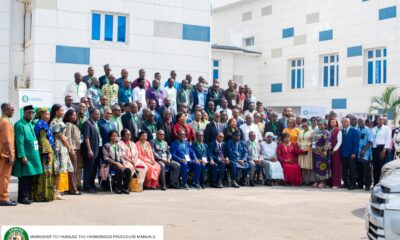

WAHO Advances Regional Health Integration Through Standardised Procedure Manuals
ShareBy David Torough, Abuja The West African Health Organization (WAHO) has commenced a regional workshop in Abuja to finalize procedural...


2027 Elections: CAN Disowns Man Claiming its General Secretary
ShareBy Laide Akinboade, Abuja The Christian Association of Nigeria (CAN) on Wednesday, disassociate itself from Archbishop Chivir Chianson and the...

INEC Seeks UN Partnership in Tackling Disinformation on 2027 General Elections
ShareThe Independent National Electoral Commission (INEC) has called for the partnership of the United Nations in combating disinformation in the...

2025: NDLEA Arrests 1,200, Seizes 30 Tonnes of Drugs in Edo – Marwa
ShareThe National Drug Law Enforcement Agency (NDLEA), arrested 1,200 suspects and seized more than 30 tonnes of illicit substances in...

JAIZ Bank Denies Involvement in N104m Investment Fraud in Jos Branch
ShareBy Tony Obiechina, Abuja Jaiz bank has denied involvement of alleged N104m fraud in its Jos branch. In a statement...

Trump-backed Republican Senate candidates pay the price
SharePresident Donald Trump asked voters to pretend he was on the ballot in the midterm elections and handpicked Republican candidates...


Court to Deliver Judgment in El-Rufai’s N10bn Rights Suit
ShareThe Federal High Court in Abuja has fixed Dec. 8 for judgment in a N10 billion rights suit filed by...