
NEWS
Zacch Adedeji, New Tax Laws and the Transformation of FIRS

By Sikiru Akinola
This week, precisely 18th September, it will be 24 months since Zacch Adedeji (PhD) assumed office as the executive chairman of the Federal Inland Revenue Service (FIRS). His appointment came at a critical time when Nigeria desperately needed revenue to fund projects that would bring smiles to the faces of Nigerians who invested so much hope in the President Bola Tinubu-led administration by voting him in as the head of state.
In January 2024, at the first management retreat he presided over, four months after taking office, Adedeji revealed his plan to reform the operations of the revenue agency with a view to removing hurdles in the way of taxpayers and consequently improving tax revenue collection in the country.The plan he revealed was simple: transform the agency’s values to make it taxpayer-centric. This followed a 107 per cent performance over the set goal in 2023, where FIRS collected ₦12.37 trillion, exceeding its target of ₦11.56 trillion. The following year, FIRS exceeded its target of ₦19.4 trillion, realising a total of ₦21.7 trillion. This year, it has a target of ₦25.2 trillion and with the figures showing on the dashboard so far, the agency is on track to surpass it and further break its own record.The factors responsible for these successes can be traced to the many initiatives that Adedeji has introduced since he took over the affairs of the country’s revenue collection agency. Without being prompted and apparently to boost the morale of staff members of FIRS, Adedeji, in April 2024, after deliberating with his other team members at the management level, announced a 60 per cent increment in the salary of the agency’s workers.This elicited wild jubilation from the entire workforce, including their union leaders, who were surprised due to the unprecedented attitude that Adedeji has shown for workers’ welfare since coming on board. All the other welfare packages are being attended to as and when due – a development that has led to enhanced productivity among the staff members.To display its customer-centricity and enhance the ease of doing business, the Service launched a USSD code, *829#, aimed at improving taxpayers’ satisfaction. What this does basically is that it allows taxpayers to access various tax services directly from their mobile phones, without needing internet access.This was in addition to the various improvements done to the agency’s tax administration platform called the TaxProMax. The FIRS also recently introduced the Merchant-Buyer solution, popularly known as e-invoicing. Within the first two weeks of its adoption last month, over 1,000 of the over 5,000 eligible large taxpayers – firms with annual turnover of ₦5 billion and above – have keyed in.To block leakages occasioned by illicit financial flows (IFFs) and bring more revenue into the coffers from multinational corporations, FIRS under Adedeji recently organised a two-day conference on the issue. This became imperative as Nigeria, according to available data, loses $18 billion annually to IFFs due to profit shifting and aggressive tax avoidance practices by some multinational corporations transacting businesses in Nigeria.How to strengthen compliance mechanisms, enhance beneficial ownership transparency, and leveraging technology to detect and deter tax evasion, trade mispricing, and other illicit outflows, were discussed at the event put together by the Proceeds of Crime Management and Illicit Financial Flows Coordinating Directorate (POCM-IFF) in FIRS.Close to tackling the above is the National Single Window (NSW) project of the Federal Government. This initiative is domiciled in FIRS. It was observed that bureaucratic processes involved in import and export processes have led to long waiting times at the ports, which is a disincentive to Foreign Direct Investment.NSW was introduced to tackle this challenge. When it enters full operation by the second quarter of 2026, the ultimate goal of the initiative, which is trade facilitation, is expected to be met, while also optimising revenue generation, in addition to enhancing the ease of doing business in the countryBeyond his schedule at FIRS, some assignments naturally fell on his lap and one of such was his leadership of the sub-committee of the Federal Executive Council initiative on Domestic Sale of Crude Oil and Refined Products in Naira.To ensure supply stability and optimise the utilisation of local refining capacity, his committee was tasked with ensuring the sale of crude oil in naira, for domestic refining remains in force. To the glory of God, Nigerians are now seeing the gain. There are no more queues at fuel stations, and prices have almost stabilised, for the first time in many years. Petrol price is also gradually coming down.The most challenging of all the tasks Adedeji has carried out at FIRS is the tax reform. The four tax bills he introduced were subjected to all forms of drilling. He had to go out to defend the misconception associated with the bills.These new tax laws are a game-changer designed to usher in a new era of fairer taxation and economic revival for our country. For the first time in living memory, low‑income households, small businesses, and renters receive deliberate relief, made real through statutory thresholds and progressive rates, making the tax reforms one of the most pro-Nigerian initiatives ever.When the new laws go full throttle from next year, there will be immediate relief for the majority of Nigerians who earn significantly low income. They do this through three means. The first means is that the new laws exempt individuals earning ₦800,000 or less per annum from personal income tax, effectively removing payroll tax from the vast majority of wage earners.By virtue of the new laws, Nigerians who earn below the minimum wage are almost certainly exempted from paying tax, thereby increasing the disposable income available to them to meet their daily needs.Adedeji, who is primarily concerned about businesses thriving, has always echoed the mantra of President Bola Ahmed Tinubu, which is that FIRS will only tax the fruits and not the seeds. In fact, when he first assumed office, he had to allay fears expressed by corporate organisations that the resolve of FIRS to increase the country’s tax-to-GDP ratio to 18 percent from 10.86 per cent will lead to increase in taxes.According to him, such resolve would not necessarily lead to increase in taxes or introduction of new taxes, as the President Tinubu-led administration is determined to create a wholesome environment for businesses to flourish. Another area where FIRS, under him, expressed love to Nigerians, was the setting aside of a percentage of its target to support the Nigerian Education Loan Fund (NELFUND).If Adedeji’s leadership of FIRS in just two years can bring all these goodies, the next two years can only bring greater efficiency to the country’s tax administration and consequently immense benefits to businesses and the Federation. The morning, they say, shows the day.There is no way Adedeji would have been able to achieve these lofty things without the support from the President. In fact, President Tinubu made the journey to record increase in tax revenue collection easier by setting right the economic fundamentals, namely removing subsidy from petrol and collapsing the hitherto dual exchange rates.These policies have made more money available for the federal, state and local governments. They smile to the bank monthly due largely to increase in tax revenue collection which is responsible for about 70 per cent of what is shared monthly.Sikiru Akinola, the Technical Assistant to the Executive Chairman of the Federal Inland Revenue Service (FIRS), writes from Abuja.

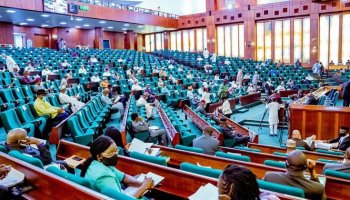




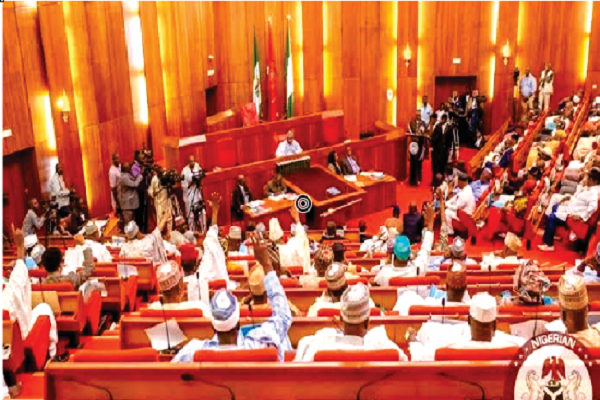
The Senate on Tuesday passed a bill extending the implementation of the capital component of the 2025 Appropriation Act from September 30 to December 31.
The bill, according to the upper chamber, seeks to provide additional time for ministries, departments and agencies (MDAs) to complete all ongoing capital projects.
The bill, sponsored by the Senate Leader, Opeyemi Bamidele (Ekiti Central), was read for the first time and subsequently considered for second reading after the suspension of the relevant Senate Rule.
Leading debate on the bill, Bamidele said the extension would provide the legal and administrative window required to fully implement projects for which funds had been appropriated and released.
He said that capital budget implementation involved procurement, contract execution, mobilisation, certification of works and payment processes, among other procedures.
The senate leader said several infrastructure and development projects across the country were at various stages of completion and required additional time for implementation.
According to him, allowing the existing implementation deadline to lapse can create difficulties for MDAs in completing projects for which resources had already been appropriated and released.
Bamidele added that the extension would help prevent projects from becoming abandoned and ensure that appropriated resources were deployed for their approved purposes.
The senate leader stressed that the extension would not amount to a relaxation of accountability, fiscal responsibility or legislative oversight.
He said that MDAs would remain required to comply with the appropriation act, financial regulations, procurement laws and other applicable statutes.
Contributing, the Deputy Senate President, Sen. Barau Jibrin, said the extension was important to prevent the proliferation of abandoned projects across the country.
Jibrin urged the senators to support the bill, saying it would provide an opportunity for ongoing projects funded under the 2025 appropriation to be completed.
The Minority Leader, Abba Moro (Benue South) also supported the extension but urged senators to avoid unnecessary comparisons with previous administrations during debates on budget implementation.
Moro said the focus should remain on creating the necessary conditions for the government to implement its programmes and projects.
The bill was subsequently committed to the Committee of Supply, which considered and approved amendments to the relevant provisions.
The senate, thereafter, passed the bill at third reading, extending the implementation of the capital component of the 2025 appropriation act to December 31.
The Senate President, Godswill Akpabio, thanked senators for their contributions, saying the extension would facilitate payment for contracts and completion of projects covered by the 2025 capital appropriation.
He urged relevant authorities to utilise the extended period to complete necessary contractual obligations and infrastructure projects for the benefit of Nigerians.(NAN)
The Federal Government said Nigeria’s hosting of the 2026 Creative Africa Nexus (CANEX) Weekend will attract investment, deepen market access and accelerate growth in the country’s creative economy.
Minister of Industry, Trade and Investment, Dr Jumoke Oduwole, stated this in Abuja on Tuesday at a news conference on preparations for the event scheduled for Lagos from Nov.
5 to Nov. 8.Oduwole said more than 10,000 participants were expected at the event, expressing confidence that Nigeria would surpass previous attendance records.
She said CANEX 2026 would provide a major platform for Nigerian and African creative entrepreneurs to interact with investors, financiers, distributors and international markets.
“For the Government of the Federal Republic of Nigeria and all states of the Federation, CANEX is much more than a celebration of African creativity. It is a platform for trade, investment, enterprise and market access,” she said.
The minister said Nigeria’s strength in music, film, fashion, literature, visual arts, gastronomy, sports and technology made the country well positioned to host the continental creative economy gathering.
According to her, the Federal Government is positioning the creative industries as an important component of its broader trade and export agenda towards achieving a one-trillion-dollar economy.
Oduwole noted that global trade was increasingly generating value through services, technology, content, intellectual property and culture, rather than relying solely on physical goods.
“Nigeria is already a major source of African music, film, fashion and creative content. The opportunity before us is to capture more of the economic value generated by that creativity,” she said.
She explained that CANEX would connect creators and creative businesses with finance, investors, distribution networks, technology and international markets.
“Today, our message is simple: we want to see partnerships formed, financing mobilised, intellectual property commercialised, businesses entering new markets and Nigerian creative enterprises scaling beyond our borders,” Oduwole said.
The minister said Lagos would become a meeting point for Africa and the global creative economy during the event, with all 36 states and the Federal Capital Territory expected to have dedicated pavilions.
She said the pavilions would provide opportunities for the states and the FCT to showcase their creative assets, enterprises and investment opportunities to local and international participants.
Oduwole added that designated deal rooms would facilitate business engagements, investment discussions and commercial partnerships between investors and operators in the creative sector.
She said the Federal Government was working with state governments, the private sector and the African Export-Import Bank (Afreximbank) to ensure that CANEX 2026 produced tangible economic opportunities.
According to her, the preparations reflect a whole-of-government approach involving institutions responsible for foreign affairs, finance, customs, immigration, health, transportation and security.
Oduwole said Nigeria’s hosting of CANEX would also mark the event’s first outing in West Africa, further strengthening the country’s profile as a hub for African trade, investment and enterprise.
She disclosed that Lagos would also host the Intra-African Trade Fair (IATF) in 2027, describing it as Africa’s largest trade fair.
The minister said the two platforms would provide opportunities to showcase Nigerian products, connect businesses with African markets and demonstrate investment opportunities across various sectors of the economy.
Also speaking, the Inspector-General of Police, Olatunji Disu, said the Nigeria Police Force had been integrated into the planning process from the outset to guarantee adequate security during the event.
Disu said effective security arrangements would be central to the successful hosting of CANEX 2026, particularly because of the anticipated influx of international delegates into Lagos.
He assured that security considerations were being incorporated into the preparations to ensure that participants, businesses and other stakeholders could engage in the programme in a secure environment.
Similarly, the Minister of State for Foreign Affairs, Amb. Sola Enikanolaiye, said his ministry was collaborating with the Ministry of Industry, Trade and Investment and other relevant agencies to drive international participation.
Enikanolaiye said information on CANEX 2026 would be circulated through diplomatic missions in Nigeria and Nigerian missions abroad to broaden awareness and attract participants from different countries.
He added that the ministry was working with immigration authorities to facilitate efficient visa processing for international delegates expected to attend the event.
The minister described CANEX as a strategic platform for Nigeria to project its creative industries as instruments of soft power and cultural diplomacy.
The Federal Government said the event would feature music, film, fashion, gastronomy, literature, visual arts, sports and technology.
CANEX 2026 will also feature investment, financing and market-access engagements aimed at deepening commercial opportunities, strengthening creative enterprises and expanding Nigeria’s participation in the global creative economy.(NAN)
SO
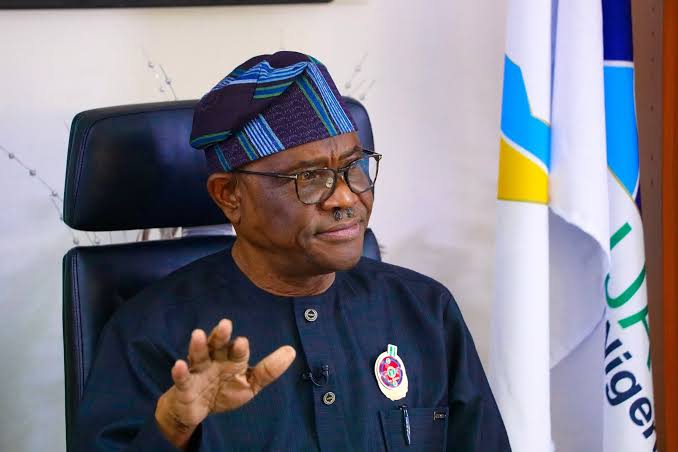
The Minister of the Federal Capital Territory (FCT), Nyesom Wike, has approved the award of contracts for the digitisation of the FCT High Courts, with the project expected to commence within two weeks.
General Counsel and Mandate Secretary, FCT Legal Services Secretariat, Salman Dako, disclosed this on Tuesday in Abuja after the FCT Administration Executive Council meeting chaired by Wike.
Dako said the approval was aimed at transforming the administration of justice in the territory by replacing the existing manual record-keeping system with a modern and automated judicial management platform.
He explained that the digital transformation project would cover 67 courtrooms across the FCT, providing the courts with electronic recording and case management facilities.
“The scope of this project is the digitalisation of the High Courts in the FCT, including digital transformation and implementation of an electronic court recording and case management system.”
Dako said the initiative would ensure that the High Courts transitioned from handwritten court records to digital documentation and electronic management of cases.
“Meaning that we are transitioning the High Court from manual recording to digital recording, and electronic case management,” he said.
He noted that the FCT judiciary had, over the years, faced challenges associated with handwritten court notes, manual filing procedures and the physical tracking of cases, which could contribute to delays in the administration of justice.
Dako explained that the newly approved contract was designed to address those challenges by introducing technology-driven processes capable of improving the speed, accessibility and organisation of judicial records.
“Transitioning to digital court management will resolve the persistent challenges linked to manual documentation and handwritten records,” he said.
He added that the system would also enable legal practitioners and litigants to embrace electronic case filing, thereby reducing dependence on physical documents and manual procedures.
“I believe that this will be a very great improvement for us. Some judicial divisions have already started this outside the FCT, so I think this is the future and it is time we go along this route,” Dako said.
He further disclosed that the contract period was two weeks, after which progress on the implementation of the digitalisation programme was expected to become visible,
He added that the initiative was expected to set a new benchmark for judicial efficiency and court administration in the nation’s capital. (NAN)




Tinubu Submits NDDC 2026 Appropriation Bill
SharePresident Bola Tinubu has submitted the 2026 Statutory Budget Proposal of the Niger Delta Development Commission (NDDC) to the House...


Senate Passes Bill Extending 2025 Capital Budget Implementation to Dec 31
ShareThe Senate on Tuesday passed a bill extending the implementation of the capital component of the 2025 Appropriation Act from...
CANEX 2026 to Unlock Investment, Jobs in Nigeria’s Creative Economy — FG
ShareThe Federal Government said Nigeria’s hosting of the 2026 Creative Africa Nexus (CANEX) Weekend will attract investment, deepen market access...


NNPC Posts N7.2trn Profit amid Revenue Decline
ShareThe Nigerian National Petroleum Company Ltd. (NNPC Ltd.) recorded N7.2 trillion Profit After Tax (PAT) in 2025, a 33 per...

Wike Approves Contracts for Digitization of FCT High Courts
ShareThe Minister of the Federal Capital Territory (FCT), Nyesom Wike, has approved the award of contracts for the digitisation of...


OPay Names Top 10 Teams in N18m National Innovation Challenge
ShareIn a bid to empower young Nigerians with the skills, opportunities and support needed to build solutions for real-world challenges,...


CBN Sets Agenda for Post-Recapitalisation Banking
ShareBy Tony Obiechina, Abuja The Central Bank of Nigeria (CBN) said recent reforms in the foreign exchange market, monetary policy...

Gunmen Abduct 18 Women in Benue, 47 Niger Farmers
ShareFrom Attah Ede, Makurdi, and Dan Amasingha, Minna Fresh fears over the worsening insecurity across the country emerged on Tuesday...


NASS Extends 2025 Capital Budget Again, Adjourns to Oct 13
ShareBy David Torough, Abuja The National Assembly on Tuesday extended the implementation of the capital component of the 2025 Appropriation...


Police Detain Woman for Alleged Killing of Co-wife in Bauchi
ShareThe police command in Bauchi State, said it has apprehended a housewife over alleged killing of her co-wife following a...