
NEWS
Zenith Bank Expands Footprint with Côte D’ivoire Subsidiary Launch


Zenith Bank Plc has announced the opening of its Côte d’Ivoire subsidiary, marking a pivotal achievement in the Group’s Pan-African expansion strategy.
The official opening ceremony, scheduled to hold on Wednesday, April 29, 2026, is expected to attract senior government officials and regulators from Nigeria and Côte d’Ivoire, continental business leaders, and members of the diplomatic community, highlighting the strategic economic ties and investment opportunities between the two markets.
The new subsidiary, licensed in December 2025 by the Ministry of Finance and Budget, Republic of Côte d’Ivoire, and regulated by the UMOA Banking Commission, will commence operations from its headquarters at SCI Wall Street, Avenue Noguès, Plateau, Abidjan.
The launch represents a strategic move to deepen the Bank’s presence in Francophone West Africa and strengthen financial intermediation within the West African Economic and Monetary Union (WAEMU). Positioned as a gateway for cross-border trade and investment, Zenith Bank Côte d’Ivoire will focus on corporate banking, trade finance, local and offshore banking services, and structured financial solutions tailored to businesses operating across Africa and internationally.
Commenting on the launch, the Group Managing Director/CEO, Dame Dr. Adaora Umeoji, OON, said: “From the very beginning, our Founder and Chairman, Jim Ovia set out to build a truly global brand with a strong presence across Africa and key international markets. The launch of
Zenith Bank Côte d’Ivoire is a bold step in realising that vision; opening a strategic corridor into
Francophone West Africa and reinforcing our commitment to facilitating trade, investment, and enterprise growth across the continent. As we continue to expand thoughtfully and strategically, we remain focused on delivering world-class banking solutions that connect African businesses to global opportunities.”
The new subsidiary will be headed by MD/CEO, Cédric Tano, a seasoned banking executive with over two decades of experience. Speaking ahead of the official opening, he said; “We are proud to establish Zenith Bank’s presence in Côte d’Ivoire at a time of strong economic growth in the country and increasing regional integration. Our focus is to showcase the Zenith brand as a customer-centric institution that combines global best practices with deep local insight.
“We are well positioned to support businesses with innovative financing solutions, facilitate cross-border trade, and contribute meaningfully to the growth of the Ivorian economy and the wider WAEMU region.”
The Côte d’Ivoire launch forms part of Zenith Bank’s broader continental growth strategy. In addition to the Anglophone countries where it currently operates, and in line with the expansion into the Francophone market, the Bank has commenced its entry process into the CEMAC (Central African Economic and Monetary Community) region, with Cameroon as the focal point.
With a footprint already spanning Nigeria, Ghana, Sierra Leone, The Gambia, the United Kingdom, France, the UAE, and China, Zenith Bank continues to bridge African markets with global opportunities, enabling seamless trade and financial connectivity across the continent and beyond.
Founded in 1990, Zenith Bank has grown into one of Africa’s most respected banking institutions, boasting a robust capital base and a consistent track record of strong financial performance.
For 16 consecutive years, the Bank has held the record of highest Tier-1 capital in the Nigerian banking industry. Built on the foundation of People, Technology, and Service, Zenith Bank continues to deliver innovative financial solutions while maintaining a disciplined approach to growth and risk management. Its performance has earned it numerous local and international recognitions and endorsements.
From Joseph Amedu, Lokoja
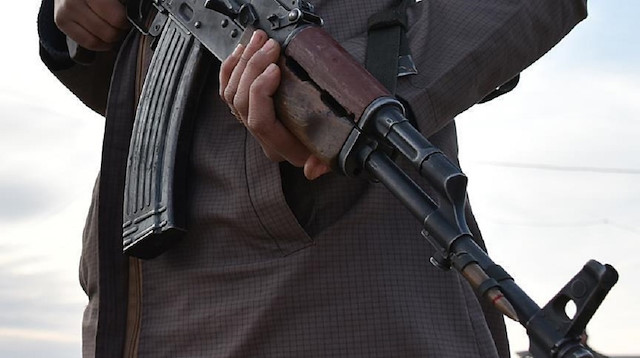
Odo-Ere, the headquarters of Yagba West Local Government Area of Kogi State, came under attack from armed bandits, resulting in the death of a Civil Defence officer and the abduction of his daughter.
According to sources, the victim, identified as Ayo, a member of the Nigeria Security and Civil Defence Corps (NSCDC), was shot in the head during the attack.
A source confirmed that Mr. Ayo was rushed to a medical facility but was declared dead on arrival.
His remains have since been deposited in a mortuary as a “Brought-In-Dead” case.The attackers reportedly abducted his first daughter before fleeing the area, further deepening fears among residents following the latest security breach in the community.
As of the time of filing this report, security agencies have yet to issue an official statement on the incident.
The attack has heightened concerns over the growing insecurity in Yagba West and surrounding communities, with residents calling for urgent intervention by security authorities.
Two crew members of a US army helicopter that crashed near the Strait of Hormuz on Monday were rescued by an American sea drone, US officials have said.
It was the first such operation carried out by US forces, the officials added.
US Central Command (Centcom) earlier said the two “soldiers were safely rescued within approximately two hours and are in stable condition” after their AH-64 Apache helicopter went down “near the coast of Oman while patrolling regional waters”.
It was not immediately clear whether the aircraft had developed a mechanical or any other technical problem, or had been downed by Iranian fire. The incident is being investigated.
In its statement on Tuesday, Centcom said the two crew members had been rescued at 19:33 EDT (23:33 GMT) on Monday.
“Rescue efforts were led by US Naval Forces Central Command and the 82nd Airborne Division, with support from US Air Force and Navy units including US 5th Fleet’s Task Force 59,” the statement added.
The military officials said the pair had been rescued by an uncrewed surface drone that was operated by Task Force 59.
In 2024, Task Force 59 launched a new unit focusing on “the operational deployment of unmanned systems teamed with manned operators to bolster maritime security across the Middle East region”.
It was not immediately clear what type of drone was used in the rescue operation, but a US official said that it had a speed boat-like design.
US President Donald Trump earlier told reporters the two crew members were “fine”, and that a report into the incident would be issued later.
From Attah Ede, Makurdi
The Benue State House of Assembly has extended the suspension of former Speaker, Aondona Dajoh, and former Majority Leader, Saater Tiseer, by an additional three months pending the determination of separate court cases instituted by the duo against the legislature or the withdrawal of the suits.
The resolution was reached during plenary on Tuesday, presided over by the speaker, Berger Alfred Emberga, following a motion of urgent public importance moved by the Majority Leader of the House and member representing Kwande West State Constituency, Thomas Dugeri, and seconded by the Deputy Chief Whip, Simon Gabo, representing Mata State Constituency.
The House subsequently adopted the motion and resolved that the suspension of the two lawmakers should remain in force for another three months pending the outcome of the judicial process or the withdrawal of their respective cases against the Assembly in line with the law governing the institution.
Also during Tuesday’s plenary, the Benue State Sports Marketing, Gaming and Lotteries Bill, 2026 scaled through second reading on the floor of the House.
Following its consideration, the Speaker, Alfred Emberga referred the bill to the Joint House Committees on Finance, Youth and Sports for further legislative scrutiny.
In his opening remarks marking the commencement of the First Sitting of the Fourth Legislative Session, the Speaker of the Benue State House of Assembly, Emberga welcomed members back from recess and urged them to remain committed to their legislative responsibilities.
He noted that the recess afforded lawmakers the opportunity to engage with their constituents and participate in political activities, including party primaries ahead of the 2027 general elections.
The Speaker described the Fourth Legislative Session as a defining phase in the Assembly’s tenure and charged members to focus on issues that directly impact the welfare of the people. He identified security and peace-building, economic resilience, infrastructure development, enhanced revenue generation, effective oversight of Ministries, Departments and Agencies (MDAs), and greater citizen participation in the legislative process as key priorities for the session.
He further urged members to sustain harmonious collaboration with other arms of government while remaining steadfast in making laws that reflect the aspirations and yearnings of the Benue State people.




APC Is Losing Stakeholders Because Internal Democracy Has Been Compromised — Otaru Douglas
ShareFormer Nasarawa All Progressives Congress (APC) Publicity Secretary and Chairman, Conference of APC State Publicity Secretaries (CAPs), Chief Otaru Douglas,...
Gunmen Kill Civil Defence Officer, Abduct Daughter in Fresh Attack in Kogi
ShareFrom Joseph Amedu, Lokoja Odo-Ere, the headquarters of Yagba West Local Government Area of Kogi State, came under attack from armed bandits, resulting in...
Sea Drone Rescues US Army Helicopter Crew near Strait of Hormuz
ShareTwo crew members of a US army helicopter that crashed near the Strait of Hormuz on Monday were rescued by an American sea drone, US officials have said. It was the first such operation carried out...
Benue Assembly Extends Suspension of Former Speaker, Majority Leader by Three Months
ShareFrom Attah Ede, Makurdi The Benue State House of Assembly has extended the suspension of former Speaker, Aondona Dajoh, and former Majority Leader, Saater Tiseer, by...
C’River Recovers N1bn from Cocoa Estate Clean-up
ShareFrom Ene Asuquo, Calabar The Cross River State Government said it has recovered about N1 billion in revenue from the Etung Cocoa Estates and...


IMF Warns Nigeria against N7trn Loan Deal with First Abu Dhabi Bank
ShareBy Tony Obiechina, Abuja The International Monetary Fund (IMF) has warned Nigeria that its planned $5bn (approximately N7tn) financing deal...

Insecurity: Reps Give Marching Orders to Service Chiefs
ShareBy Ubong Ukpong, Abuja The House of Representatives yesterday raised fresh concerns over Nigeria’s worsening security situation, warning that the...


Democracy Day: Tinubu Seeks Patience as Reforms, Security Pains Persist
ShareBy David Torough, Abuja President Bola Tinubu has assured Nigerians that his administration is steadily addressing the country’s economic and...

Julius Berger Records Strong Growth Ahead 56th AGM
ShareBy Mike Odiakose, Abuja Construction giant, Julius Berger Nigeria PLC, has reported strong financial performance for the 2025 financial year,...


COAS Urges Media to Lead Fight Against Fake News, Dominate Information Space
ShareBy David Torough, Abuja The Chief of Army Staff (COAS), Lieutenant General Waidi Shaibu, has called on media professionals to...