
INTERVIEWS
2023 election will be credible only if President Buhari signs new electoral law- Ex-national INEC commissioner, Nwuruku


Ambassador Lawrence Nwuruku is the former Minister of state for industry, a former INEC national commissioner, an Ambassador to Mexico, former Ikwo local government chairman and former commissioner of works and water resources/ rural electrification has in this exclusive interview with Godwin Okeh, declared intention to contest for senate, says the 2023 general election will be credible only if President Muhammadu Buhari signs the new electoral law among other issues excerpt:
What are your contributions to the development of Ebonyi state, especially in Ikwo LGA where you have governed as the council chairman?
I served as chairman of Ikwo LGA, that time, the former head of state, Babangida gave each Local Government areas one million naira, it was that one million naira that helped me to develop Ikwo LGA.
I know that in those days, we had no road from Udumowo to Ogagbo, from there to Umuigbudu communities and I graded that roads and the people of that area were full of praises for me. I did other roads from Udumowo to Ufuruakpe. I also graded other roads from Eche-alike Ikwo to many other places. I used that one million naira and did those roads and Ikwo people especially the traditional rulers and councillors came and requested that we should do bridges and culverts.We decided to grade other roads like the agubia road with bridge linking that area with Abina, from there to Oru’na and to item-amagu and many other places. One of the bridges that was our problem that time was Oyoro bridge, but we constructed it with #74000 and the people were very happy with us that I did those roads and bridges including culverts. After constructing those roads, the entire Ikwo leaders of thought and traditional rulers, said that they have never seen a bulldozer, how much more a grader that will smoothen the roads, they came and blessed me and said that because I did these roads, I will never be put into stress in looking for jobs and that jobs will be looking for me, because they have never seen bulldozer nor grader.
They blessed me and after sometime, there was a radio announcement that a military administrator was appointment in Ebonyi state, and he was announcing his commissioners and he announced me as the commissioner of works, water resources and rural development in the then Anambra state. I was in charge of rural electrification and water. I will proudly tell you that the 1st borehole done in Ikwo and other places was done by me.
The first one was done at Ameka community and other places in Ikwo. The boreholes you are seeing today with iron handles is a Japanese incorporated boreholes. In my humble submission, I had contributed meaningfully to the development of Ikwo LGA.
What is your modest contribution to the Struggle for the Creation of Ebonyi state by the then head of state, late Sani Abacha?
In Enugu where I lived, we formed Abakaliki Zonal welfare association, AZWA. The association are made up of Ezza, Izzi, Ikwo and Ishielu people. The former governor Chief Martin Elechi was our chairman and Boniface Chima was the secretary, and was assisted by Goddy Ogbaga. I was the publicity secretary of that association, AZWA, that fought for the creation of Ebonyi state.
Felix Mgbada and others were all members. From there, we started Ebonyi state creation movement. We continued the fight till 1996 when it was finally created. We did a memo on Ebonyi state movement and I carried it to the former head of state, late Sani Abacha. The publisher of Voice newspaper, who was then a reporter at the Aso-Rock Villa Abuja, late Imo Eze helped us so much. He was a hard working press man. He carried our memo to the Aso-Rock Villa where he submitted it to the late Sani Abacha’s desk.
The leaders of thought moved from Abakaliki to meet with Akanu-Ibiam, so that we can see Abacha, but unfortunately, we couldn’t see Abacha. Akanu-Ibiam died and it affected our movement to submit our memo again. But we heard that Abacha was in Afikpo to pay condolence visit to Akanu-Ibiam’s family, and from that day, we know that the creation of Ebonyi state was possible. And on the 1st October 1996, the creation of Ebonyi state was announced by late Sani Abacha. We nearly had a plane crash in one of the days we were coming back from Aso-Rock Villa, when we visited Sani Abacha to submit our memo.
We noticed that that plane we entered was having a big problem that day. It was impossible for that plane to land at Ikeja but finally it landed but the noise and dust it created was too much. It even banged on the ground. The noise was too much and it made the airport authorities to mobilize fire service men to be waiting for us to land. We later landed safely, but it was unfortunate that, the next day, we heard a news that that same plane we entered, carried the ECOMOG soldiers who came from sierra Leone to their base but it crashed at Ojigbo and killed about 44 soldiers. It was God that saved our lives otherwise it would have happened that day. We returned and explained to the people how we moved, and that’s our journey to the creation of Ebonyi state. We were very happy that the state was created.
We have been struggling to get the governors, well, God helped us, from the first civilian governor, Sam Egwu, the second civilian governor Martin Elechi and currently the third civilian governor David Umahi. All these while, I have been contesting election to become the governor because I believed that I know much about Ebonyi state and I have suffered allot in the creation of Ebonyi state. So, I contested for governorship in 2003, 2007 and 2011 but I didn’t get it.
They will always tell me to wait for this person because I’m still a young man and I have always obeyed them. I lived with Elechi when I was in secondary school in Enugu, I said let him go and that there is no problem. I gave them chance to go because they are my elders. I waits patiently for my time to come.
In 1997 and 1998, I contested for Ebonyi Central senatorial zone to become a senator. And by God’s Grace, I won that election as a senator to represent Ebonyi Central senatorial zone in the national assembly but unfortunately, Abacha died and we were not sworn in.
What will you remember and be proud of, especially at the time you were the INEC national commissioner?
I was made chairman on wards creation, this modern political wards/ polling units you are hearing today, was created by me when I was the INEC national commissioner. All these wards, I created them. There were 11 wards in every Local Government areas but I made it 15. I made some 17 and others 20 wards in each Local Government areas in the country.
Do you have any achievement, especially at the time you were the Minister of state for industry?
As a Minister, there is no local government area in Ebonyi state that didn’t get two or three persons appointed into federal boards. I went to Atiku that time, and begged him to see that Ebonyi is just starting and we need to be assisted and he gave us that chance. They were 74 people that was appointed into federal boards and some are directors. i have the list. We have never had any executives in any parastatals from Ebonyi, I made the first one, and the first one was on national automotive council in the person of Engr. Anthony Igwe and many others were also appointed into one board or the other including NNC. I did these things to make sure Ebonyi grows.
It seems you are prepared to contest for senate in the forthcoming 2023 general election, how true is this?
Now, I’m in the peoples Democratic party, PDP, and I have gone to my people and declared my intention to them that I want to run again for senate to represent Ebonyi Central senatorial zone in the national assembly. There was a massive turnout of my people to my declaration. My people pledged to support my ambition because they know that by God being on my side, I will do allot of things for them.
So, as it stands now, I will contest for the Ebonyi Central senatorial seat. And that’s where we are heading to now. I believe that He who created me knows what I’m capable of doing and He gives me the power and energy, motivation to go on fighting for my people, and fighting for Ebonyians as a whole.
What are your achievements as an Ambassador of the federal republic of Nigeria to Mexico?
When I was an ambassador. I did my best to assist Nigerians in Mexico to promote their businesses. I brought modern banana plantation technology to Enugu and River states. I would have brought it to Ebonyi but the governor then, Martin Elechi said there was no enough land to embark in modern banana plantation. We did so many things as Ambassador. I took so many youths to Mexico.
As a chieftain of PDP in Ebonyi, do you believe in the rotation of governorship position, if yes, whose turn to produce the next governor of the state in 2023?
All I know about the arrangement of zoning in Ebonyi, is that all the three (3) senatorial zones; Ebonyi North, Central and currently south, have had their fair share of governance. Ebonyi north had Sam Egwu, Ebonyi Central had Martin Elechi and the south has David Umahi who is still serving now. So. It has gone round and it is now left for Ebonyi people to decide where the next governor will come from. It can start from anywhere.
It can start from Ebonyi North, even though people are agitating that the next governor should come from where it first started but it is left for the people to decide. In my candid opinion, it is left for the people to decide. I thank God that the rotation of governorship went smoothly from Ebonyi North to Central and to South senatorial zones without crisis.
Do you think that your party, PDP, has all it takes to take away power from the ruling APC, In Ebonyi?
To be candid, everybody knows that Ebonyi is a PDP state. The entire south east geopolitical zone is PDP. In 1998, when PDP started, it started with our people and Alex Ekwueme was the chairman of PDP and they moved on. In Ebonyi state, all the governors who ruled the state, did that on the platform of PDP. They made serious impact on the people.
It’s now left for Ebonyians to select which party to follow, though it depends on the candidate that flies the flag of the parties. Our services to the people, always count so much. So, whether APC, PDP or even APGA, the people coming out in any of this parties, the people know us very well and the people will always choose who they wants to rule them, especially in 2023. Any of the parties can takeover the state in 2023 depending on who the people wants.
The major determining factor in choosing who rules the state in 2023, is measure with the type and level of development, contribution you have been able to bring to the people in the past. I like that because no one learns how to do left hand at old age. Many of the aspirants are coming to eat from where they never planted anything and they never learn anything.
They don’t help our people when you give them position, as you are seeing me, I have given scholarship to about 60 persons in Ikwo LGA and we have twenty wards. I have trained professionals in so many fields.
There are other powerful senatorial aspirants in Ikwo LGA, what magic will you do to outwit them in 2023 general election?
I’m a democrat and I don’t belittle anybody. Other aspirants are qualified and I won’t stand on anybody’s way from becoming what God wants any of them to be. Ikwo people know who is who, they know our credentials. If you always demonstrate violence to get what you wants, they know you. It means, we should allow God to take us to where He wants us to be. In this case, we will allow Ikwo people to choose who they wants, especially someone who have cared for them. At my age, experience and education, I feel that I’m eminently qualified to contest for senate. It is the doings of the Lord.
As a party man, Will you abide by the decision of your party, Incase by any means, you are not favoured?
I have been a party man and I have never gone to court. Not that they don’t do one or two unholy things. I will abide by my party decision, if the party decides in its own wisdom that it is not me, well, if they are wise enough, they will see that It will not be good to fly somebody who can’t win election. My people knows my capacity and what they have as a son.
My people believe in me and that if I go to the Senate, I will bring more development to them. My major target is to reduce unemployment. I will really lobby to ensure that my people are massively employed.
What do you think would be done to avert crisis and killings in the forthcoming 2023 general election?
My advice on the youths is that their time has come. I’m for the youths. I’m a youth in the mind. I’m going to work for them and those that I’m going to get job for, are youths. I will make sure that youths are appointed into an important positions, such as directors and many others.
I assure my constituents, especially the youths that no other person will work the way I will work for them. You know, the key to success is humility. I respect people and I will humbly approach prominent leaders in government and get jobs for the youths. I assure the youths that they will benefit so much if they support me to become their senator come 2023.
Igbos have been clamouring for President, while northerners argues that they still have more 4 yrs to rule the country, what’s your take on this?
2023 is the turn of the Igbos to produce the next president of Nigeria. They should give us the chance to manage this country for once. It is our turn to rule this country. It is the turn of igbos but we cannot fight it. God will do it for us and the way God will do it, let’s accept it the way it will happen. I totally support for an Igbo man to become the next President of Nigeria.
There are many Igbo Sons that are declaring interest to contest for the President, are you comfortable with such number?
I don’t like the idea of other regions telling Igbos to go and unite. The northerners as well as the westerners contested and we Igbos never told them to go and unite. Look, we are in Democracy and as such, anybody who knows he is qualified should come out and contest. We have the right to make a choice on who we wants.
If we say that we are uniting to bring one person as a consensus candidate, it will be very bad because consensus brings inefficiency. It gives room for people who are not qualified to emerge. We will vote for them when time comes. We have about five (5) contestants who have declared interest and many more will still declare. We can’t stop any of them and God factor will still play out. We are not in the position to stop anyone, any of them who knows he is qualified and has good credentials should come out and contest.
The new electoral law as amended by the national assembly is yet to be assented to by President Muhammadu Buhari, do you think the 2023 election will be hitch free from malpractices?
There have been metamorphosis of electoral process, but I advice the independent National electoral commission, INEC, to do their best to improve their biometric attendance machines to avert anything that will disrupt the 2023 general election.
The biometric attendance machine is good and It brings out the details of every voter and it saves time. But the commission should do well to study the machine very well.
Relatively, President Muhammadu Buhari should as a matter of urgency sign the new electoral bill into law. The problem of whether to adopt direct, indirect premaries or consensus is another issue. We have not specifically pointed out the method of conducting premaries. Is it direct, indirect or consensus? But consensus is subjective.
The most objective one is, let every card carrying member participate. It may be cumbersome for INEC to monitor. It is so serious that INEC will still depend on indirect premaries system, which is very very corruptive system. This is because anyone can pay all the deligates.
We will see what will happen, even though that people are advocating that Indirect and consensus should be joined. INEC has a qualified personnel’s to conduct this.
However, everything lies on we, the politicians, if you don’t get it right, you will fail in the polls, and as such, the party you represent will fail. But if we get it right, then you will see your party rejoicing.

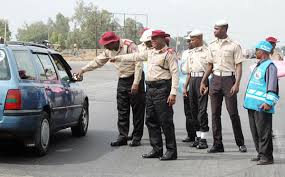
Motorists in Kaduna, Kano and Katsina States have lamented that most roads in the states are now killing zones due to their bad state.
A cross section of the motorists and other critical stakeholders made the lamentation in separate interviews in a survey on the state of roads across Nigeria.
Findings revealed some of the road in the state, though motorable, are potholes-ridden, hence record recurring road traffic crashes.
It was also found out that such obnoxious road accidents often resulted in colossal loss of lives and property.
In Kaduna State, Suleiman Bature, Secretary, Kaduna State chapter of the National Union of Road Transport Workers (NURTW), urged the authorities concerned with road maintenance in the state to wake up from their ‘deep slumber.
’He said,”This is considering the deteriorating condition of some roads across the state and the attendant fatal consequences.”
Bature made the call on Friday in an interview in Kaduna.
He said although there were ongoing efforts by the State and Federal government to rehabilitate roads in the State, the slow pace of work made it difficult for motorists to operate.
Bature said: “One would not say the government is completely negligent but they have to wake up from their slumber.
“Before now, there used to be routine maintenance especially after the rainy season due to potholes that emerge on the roads but now we don’t even know what is happening with FERMA.
“You should know that we have articulated vehicles that carry heavy loads and ply these roads as such, it is expected that at least, FERMA should carry out maintenance every six months but that is not the case”.
Francis Bisallah, an Urban and Regional Planning expert based in Kaduna noted that corruption on the part of some contractors was the bane of bad roads in parts of the country.
Bisallah said; “Sometimes, the government is not to blame but some of these contractors who get mobilised yet would refuse to carry out good jobs.
“Some of the contractors who carry out the projects unfortunately use substandard material and that is why after a few months, some of the roads start giving way.
“Government should have a strong monitoring mechanism to ensure standardization when it comes to road construction to avoid fast deterioration of new or rehabilitated roads”.
Sa’idu Gambo, a commercial driver at Kawo park on his part told newsmen that the poor state of the roads had a negative impact on their vehicles as they always have to visit the mechanic after every major trip.
“One can hardly travel on our roads without having to go for one or two repairs at the mechanics due to the deteriorating nature of the roads.
“We urge the authorities to, as a matter of urgency, rehabilitate the roads to curb the high rate of road crashes and loss of lives,” he said.
A staff of FERMA, who sought anonymity, said that the Agency was limited to commenting on projects in the State until she had permission from headquarters, adding, “we only work based on instructions from above.”
In Kafanchan, motorists and passengers alike have called for regular maintenance of roads by relevant agencies to address the deteriorating state of roads in the state.
They made this known in separate interviews in Kafanchan, headquarters of Jema’a Local Government Area.
Adamu Sambo, a commercial driver, said roads that were not adequately and regularly maintained often develop potholes and cracks which can cause accidents.
“To me, the number one cause of bad roads in our state is lack of maintenance, because if they were being properly maintained they wouldn’t be in bad shape.
“No matter how well you construct a road, if you don’t look after it, you are going to have issues,” he stated.
Another commercial driver, Monday Bitrus, made a case for the rehabilitation of the Kafanchan-Kwoi road, which, he said, has become a nightmare for motorists.
“That road has been in a bad shape for some years now. So, I am appealing to the government of the day to fix the road as it is a major road,” he said.
On his part, Solomon Hosea, a passenger, who said that as the yuletide approaches, there was the need to repair bad roads to ensure safety of passengers.
In Katsina State, some motorists and passengers have decried the bad condition of the Kafur-Zaria road, urging the Federal Government to hasten its rehabilitation to reduce crashes recorded on a daily basis.
They made the appeal in an interview in Katsina.
A motorist, Malam Muhammad Abubakar, whose vehicle got punched on the road, said in spite of the ongoing road’s rehabilitation, which he described as too slow, stressed the need for its dualisation.
Another driver, Abubakar Aliyu, said the Federal Government should do the needful, explaining that though the road is busy during the day, it is a dangerous area at night because of its condition.
“The road is a busy road and requires dualisation, because at least over 1,000 vehicles, both commercial and private, ply it daily.
“Whenever I pass through this road, especially from Kafinsoli-Matazu-Musawa, and from Kafur-Dabai, my vehicle must be taken to a mechanic for a check up.
“Do we continue like this? Always going to the mechanic after passing through the road?.
” The road actually needs to be fixed to save people’s lives as a result of incessant crashes due to its bad condition,” he said.
A commercial vehicle driver, Aliyu Abdulsalam, said that whenever he was going to Kaduna with passengers, he always found it difficult because of the condition of the roads.
He, therefore, called for the speedy completion of the rehabilitation in order to reduce the frequent crashes on it.
He also urged the Federal Government to complete the Katsina-Kano road that linked the state and the country with Niger Republic and other parts of the West African countries.
A passenger, Malam Dahiru Abubakar, said that the dualisation of the Katsina part of the road needs to be completed.
He explained that in some cases, criminals take advantage of the bad road conditions to block it and robb passengers, especially at night.
Abubakar said that if the road was repaired, the rate at which armed robbers attack passengers would be reduced.
He said that would also assist to ease transportation of farm produce by farmers and other traders to other states of the federation.
In a related development, the Katsina State Safety and Road Traffic Authority (KASSAROTA), has warned the public against dumping of sand or waste on roads.
Its Director-General, retired Maj. Yahaya Garba-Rimi, made the appeal, through his Public Relations Officer, Marwan Abubakar.
He said that the call was aimed at maintaining the cleanliness and safety of the state’s roads.
He emphasised the importance of safe practices and compliance with traffic laws to foster a secure road environment.
Garba-Rimi, particularly called on individuals who wash motorcycles, tricycles, or cars on the roads, to cease from such practices, as that violates existing regulations.
The director-general also warned traders who place goods on roads and pedestrian walkways to immediately relocate their businesses, because those pathways were meant exclusively for public passage and vehicular movements.
He called on all motorists and residents to support the authority’s initiatives by observing its guidelines.
In Kano State, motorists have also urged the authorities concerned to take urgent steps to fix the deplorable roads in and around the state.
The motorists, who spoke to newsmen in Kano called for the repair and completion of Gwarzo-Dayi , Kano-Maiduguri, Kano-Zaria roads and some bad township roads in the metropolis.
A driver, Isa Musa, who called for the repair and completion of some of the important roads, lamented that motorists spend several hours on bad spots.
According to him, the situation called for urgent attention to relieve motorists of untold hardship they go through.
Another motorist, Abba Malam, said that the terrible state of some of the roads had continued to be a source of great concern to road users, especially motorists.
He added that the dilapidated roads had affected human and vehicular movements within and outside the city, thereby causing serious traffic congestion along the roads.
According to him,the failure of the Kano State Road Maintenance Agency (KARMA) and Federal Road Maintenance Agency (FERMA) to repair the affected roads had been responsible for the increasing number of accidents being recorded in the city on a daily basis.
“You hardly drive your car within the city without going through bad portion of roads,” he said
A resident, Lawan Shehu, said that there was an urgent need for the state government to do something about the roads, most of which, he said, were in a bad state of roads and had become worrisome to Kano residents.
“There are some areas where a distance, which should not last for more than five minutes, now takes between 10 minutes and 15 minutes,” Shehu said.
Aminu Abdul, a trader, also appealed to the state government to renovate the roads in Dakata, Kurna, ring road, Pansheka, Kumbotso and Kawo.
“Most of the roads in the city need to be rehabilitated. Indeed, most of the patched potholes have gone bad, thus making it difficult for motorists to move easily,” he said.
Isaac Aliyu, a legal practitioner, attributed the problem to the lack of maintenance, funding ,corruption and mismanagement.
He also said that over-reliance on federal government funding, climate change and weather-related damage could also be attributed to the state of the roads in the country.
Aliyu, who called for more investment in infrastructure, also advised the Federal Government to enter into Public Private Partnership (PPP) for infrastructure development in the country.
Bala Nura , a member of Kano Civil Society Forum, called for increased funding and budget allocation for road maintenance in the country.
Nura further called for decentralisation of road management to state and local governments and regular maintenance, repair schedules and improved traffic management and enforcement.
A staff of the Kano State Road Maintenance Agency (KARMA) said that the state government had spent enormous resources on repair of township roads and interventions on federal roads.
He said that the agency rehabilitated over 30 roads and evacuated drains in the metropolis.
According to him, the roads rehabilitated include Aminu Kano Way,Lodge road,Tarauni road,Airport road and Kano Government House, among others.
The Federal Government had recently inaugurated “Operation Free Our Roads”.
The project is a joint initiative between the Federal Ministry of Works and FERMA as part of the government’s efforts to put citizens first by fixing the roads.
The projects executed under the different interventions include, Patching of potholes, pavement strengthening, rRepairs of failed sections, limited rehabilitation, bridge/culverts construction and general maintenance, among others..(NAN)
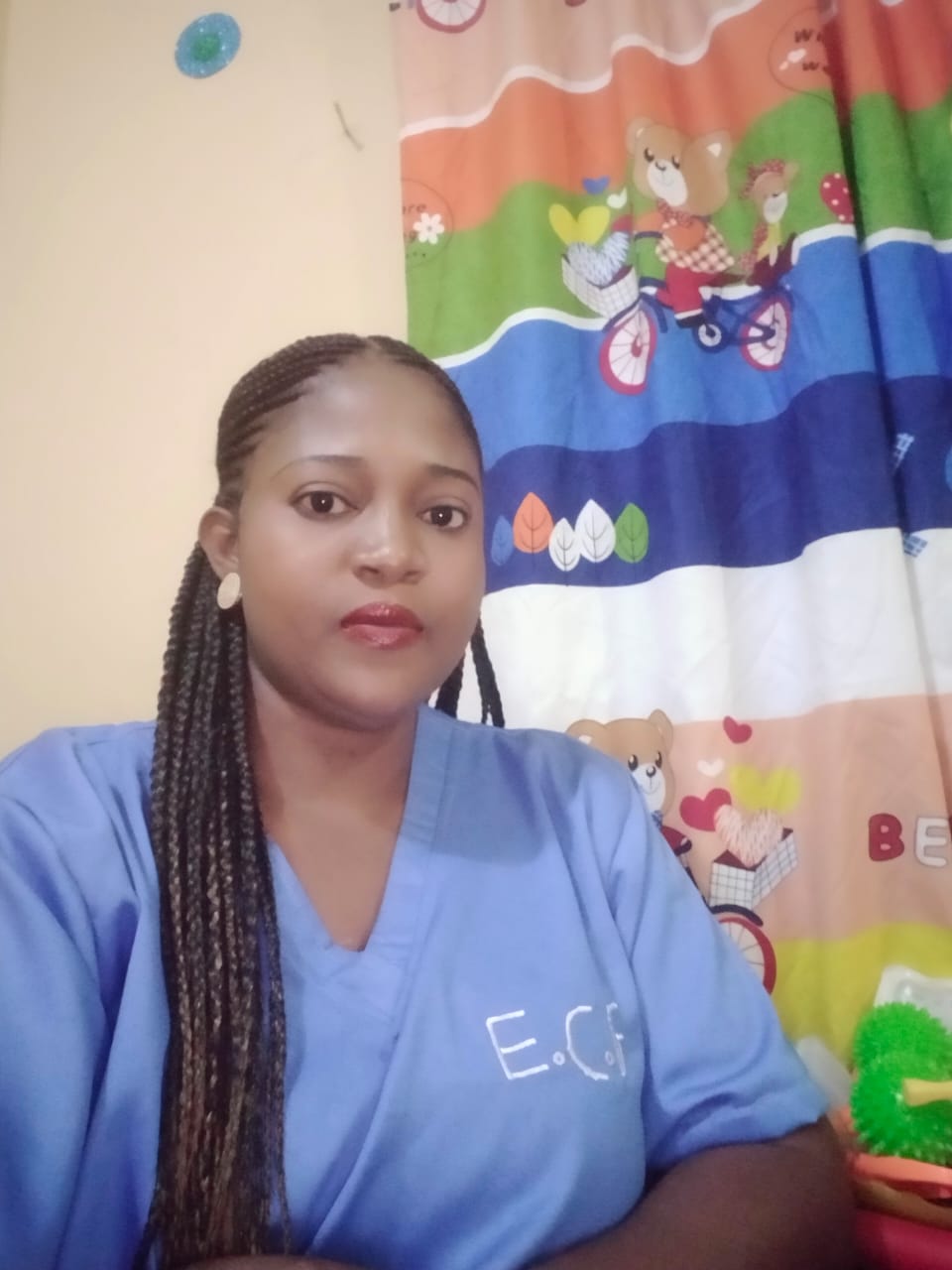
Raising a child with special needs in Nigeria can be extremely tiring for most parents. They also have to deal with strange ideas and theories about what caused their child’s condition, which leads to being excluded from society.
In a recent interview with DAILY ASSET News Editor, Prosper Okoye, the Executive Director of Elsali Care Foundation, Goodnews Emeka-Agadah, discussed the severe consequences faced by these children and shared her secret for managing the stress of caring for them, among other topics.
What is your foundation about?
Elsali Care Foundation was born out of a passionate drive that began during my national youth service days.
At that time, I encountered parents with children who had special needs, and many of them were unaware of their child’s condition or the care they required. Consequently, they would confine their children at home, awaiting their eventual death.I was able to offer assistance in some cases due to my familiarity with the conditions affecting such children, as I had a cousin who had a child with cerebral palsy, a kind of special need. Regrettably, society has yet to comprehend the distinctiveness of these children. My cousin lost her marriage due to her child’s condition, as people attributed the child’s condition to her own wrongdoing, claiming it was retribution catching up with her.
After completing my service, I joined a non-governmental organization that catered to orphans and vulnerable children, but they provided no support for children with special needs.
Upon observation, I discovered that there are numerous such children in society, and their parents are struggling. Many of these parents are unaware of their child’s condition or where to seek help. It was at this point that I told myself, “I possess significant knowledge about this condition, so let me step in and assist them.” That is how the foundation was established.
We advocate for these children since they are vulnerable and unable to advocate for themselves. We are consistently present for them, providing them with protection. Our primary focus is helping these children realize their potential.
Because we’ve known that when they receive proper care from an early age, there can be a significant improvement that enables them to maximize their potential and lead fulfilling lives.
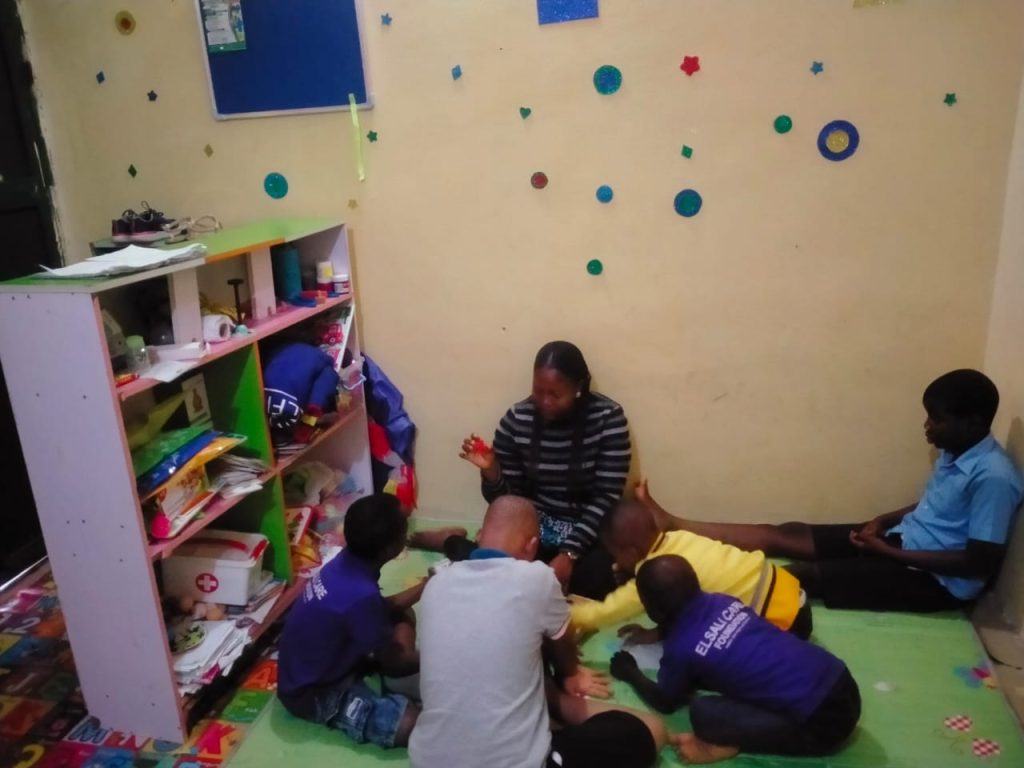
We offer them clinical therapy, educational support, occupational therapy, physical therapy, and behavioral therapy.
We also aim to incorporate vocational support, as it is through this avenue that they can acquire skills to become more valuable members of society. However, currently, we do not possess the capacity to do so.
How can we identify a child with special needs?
Special needs is a term that encompasses both physical and neurodevelopmental disabilities. In our foundation, we primarily focus on children with neurodevelopmental disabilities, such as autism, Attention-deficit/hyperactivity disorder (ADHD), learning disorders and others.
In more concrete terms, although very unfortunate, society often perceives children with special needs as unintelligent because some may have difficulty speaking, while others may exhibit hyperactive and destructive behaviors.
Regarding physical disabilities, we refer to children who are physically impaired, deaf, or nonverbal.
How do you support orphans since you don’t have a home in your facility?
Apart from the special school center, the foundation takes part in community programs. During these programs, we come across some children who, just by looking at them physically, we know need help. And when we dig deeper, we find out that their parents have passed away, and they live with their relatives.
These are another group of children we work with. We assist them through the relatives they live with. For those who are not attending school, we help them get back into school.
Honestly, when it comes to providing for their nutritional needs, I must say we do very little due to lack of funds.
They appear undernourished, but in our small way, we provide them with some provisions through their caregivers because you can’t talk about children without considering their caregivers.
What has the journey been like so far?
We’ve been working behind the scenes since 2013, and we have many memorable success stories. Actually, every child we help is memorable because when we first meet them, their situation is very sad.
Sometimes it’s so bad that we can’t help but cry, especially when we see their parents’ tears and frustration.
Most parents tell us that their child was born healthy, just like any other child. But around the age of one or two, the child starts losing all their thinking and learning abilities.
The parents feel very frustrated and wonder if it’s some kind of magic or curse from their village. But after talking to them, they start to understand over time.
Despite the financial burden and surprisingly, the negative attitude from the public, we keep going because of the many successes we’ve achieved over the years.
For instance, when we go to some places to raise awareness about this condition, we often face rejection because people think these special children don’t belong there.
But they don’t understand that other children, in fact everyone else should learn how to relate to and treat children with special needs.
These children face discrimination from their own relatives and other children who should be their friends.
Some schools don’t want to accept them, and even when they do, they keep them separate from the other children.
We object to this unfair treatment and try to make people understand that they need to think like the special child does to understand why they act the way they do.
We have an amazing story of a 15-year-old child with Down syndrome. When he first came to us, he couldn’t do anything. We started helping him by teaching him to use the toilet because it was so bad that he would eat his own waste if left alone.
We also did many other therapies with him, and within just a few months, he started improving some of his behaviors. We even managed to help him stop using diapers.
There are other numerous success stories like this one. Indeed, just knowing that we could help a child and ease the burden for their parents brings us a lot of happiness and fulfillment.
What exactly could cause a child who is born without any issues to experience regression?
It is a neuro-developmental issue. It’s similar to when we have malaria and experience certain symptoms. For some children with autism, we notice these symptoms, which we refer to as red flags, as they grow up.
It is a condition that exists within them and influences their behavior, not something caused by external factors like their village people.
Some regressions can be attributed to a lack of essential vitamins or the presence of excessive mercury in their bodies. Others may be linked to low levels of certain microorganisms.
While ongoing research is being conducted, some regressions can be traced back to genetic conditions.
Additionally, problems during delivery, such as improper handling or prolonged labor, can also contribute to regression. The age of the parents can also play a role. Older parents have a higher likelihood of having a child with Down syndrome.
How do you cope with exhaustion while taking care of these children?
The issue of children born with special needs is of utmost importance to address as a matter of public concern. Approximately 10 out of every 50 children born each year are likely to have some form of special needs.
Furthermore, it is expensive and challenging to solely provide care for these children, even for parents with substantial resources.
We face numerous challenges as an organization, but the primary one is the lack of public awareness, which leads to stigmatization.
We require assistance in raising awareness to inform the public that these children with special needs are just as human as anyone else. They have emotions and experience pain.
Additionally, there is a need for improved implementation of policies by the government. While laws and policies exist to prevent discrimination, there is a lack of mechanisms for effective implementation.
Furthermore, we lack sufficient personnel in this field. Several individuals have come to work and volunteer to help the children, but they often cannot stay due to the demanding and strenuous nature of the work. In some cases, it is because the remuneration is not adequate for them, but we can’t help it because of the unavailability of funds.
For me, what prevents exhaustion is the love I have for what I do. If I were not motivated by financial gain, working with children with special needs would still be a job I would choose and strive to excel at. I see them as my own children.
However, I cannot do this job alone; we need stakeholders to assist us in extending these services to rural areas and other hard-to-reach places.
We require funds to train and motivate individuals to join us in the mission of reaching out to these special children, as it is not their fault that they were born this way.
It is also crucial to train parents on how to raise these children.
We must raise awareness in society to create more inclusive opportunities in schools, workplaces, and all other spheres of society.
We need more partnerships.
Children with special needs can grow up to become professionals, although they may lean more towards artistic pursuits and display greater inventiveness. Many celebrated musicians and footballers, such as Ronaldo, were actually children with special needs. Therefore, early interventions are crucial as the brains are still developing.
In light of the soaring cost of living as a result of petroleum products’ hike in price and other economic woes, many Nigerians have embarked on a quest to leave the country in search of greener pastures abroad. In this interview with Prosper Okoye, the news editor of DAILY ASSET, migration expert Dr.
Emeka Obiezu discusses the intricacies that drive the Japa syndrome. Dr. Emeka, who is also the Chairman of the Civil Society Migration Network (CSOnetMADE), sheds light on the realities surrounding Nigeria’s migration landscape.DAILY ASSET: Japa has become a daydream for most people. How has this impacted migration in Nigeria?
Dr. Emeka Obiezu: It is evident.
The entire migration trend revolves around sustaining one’s livelihood and fulfilling their dreams. We refer to this as the driving force behind migration. The primary reason people leave or desire to leave is because they are living in an unfavorable environment and they believe that another place offers better prospects and the fulfillment of what they lack in their current situation. Nigeria has consistently witnessed a migration trend driven by economic motives, such as the lack of opportunities, unemployment, job insecurity, and even threats to personal safety and property. This is not unique to Nigeria; it is a common feature in migration trends worldwide. Out of the 281 million international migrants, 169 million are labor migrants who move primarily due to economic reasons. This means that there are either no immediate job prospects or their current employment is unsatisfactory or lacks job security. It could also involve changing jobs that motivate their move. The trend suggests that if the economic conditions in their home country improve, the migration curve will decline. However, if the opportunities remain stagnant, the graph will also remain stable, and if the lack of opportunities increases, the migration outflow will rise accordingly. Therefore, the concept of “japa” is merely a way of encapsulating the prevailing economic conditions in Nigeria and the lack of opportunities that drive the migration curve upward. Although there are other factors involved, they are intertwined. For instance, the anticipation of the outcome of the 2023 election has already instilled fear and anxiety, leading to uncertainties about the future for many Nigerians. This intensifies the desire to find a better place before the situation worsens or they become trapped here. Unfortunately, the outcome of the election did not improve matters. The implications of the political landscape reverberate through the economy. As you can see, even someone who had no prior plans to travel suddenly wants to leave this week, as the resources they have, including transport fare, are no longer sufficient. This has a ripple effect on every other aspect of life.DAILY ASSET: What could be the implication of this trend?
Dr. Emeka: There are so many things that could come out of it. One is to look at it in terms of nation-building. If we have a high percentage of workforce outflow, then it would adversely impact the nation-building of the country in terms of jobs and quality of job. What is really disheartening is that the rise in the flow rate is higher for skilled workers and professionals. Like I heard one of the doctors’ associations demanding the new president to declare a state of emergency in the health sector, and that is just them. The labour union is on the street, and so many other sectors are also crying of losing their best. One of the presidential candidates use the term from consumption to production, so I don’t know if the skilled work population leaves whether we would achieve production against consumption. Well, the one sitting now did not campaign on that, so that may not be his concern. There is always a flip-up from the other end, Nigeria benefits so much from the diaspora engagement. We hope, this is a question of hope because diaspora remittances translate to the desire of the diaspora to contribute to nation-building and the availability to do that. We have had a good report in terms of how our diaspora is interested in giving back to the community, and so if we still maintain over $23 billion as our inflow from our diaspora, maybe this number of people that are going out may increase that poll in terms of higher remittances coming back home. If the diaspora also ventures from their different field it can also reflect in nation-building in such a way that it does amount to a complete loss.
DAILY ASSET: How would you evaluate the Nigeria Migration System?
Dr. Emeka: Our lives as migrants and actors of migrants are characterized by dynamics. We live in the moment; in other words, today speaks for itself. Not that we have cut off completely from our past, but we use today to judge how the past was utilized well, and whether the present is active enough or the future is venturing at all.
Having been in the migration sphere in the last few years, I could, in fairness, identify progress in the management of migration in Nigeria. In other words, there are more conscious efforts by actors to come together. The coming together of different stakeholders to think through what could be the best options for situations around is helping us to gain more insight and experiences from people who have worked in different spaces of migration outside our own space. It also helps us to squarely address the issues at hand. Nigeria has also come up with instruments to help in the management of migration. The policies that were made before 2018 are being reviewed, and some action plans have been developed for their implementation. Some have even gone a step further by establishing memoranda of understanding and operating procedures that would guide implementers. Migration governance instruments are a key element in managing migration. When we have all those instruments that we can fall back on, it helps both the implementers and the advocates to have something to refer to, either to push for more things or to measure what has been done. So, in that direction, I would say yes we have made progress. But, have we done enough to say that we have our migration issues under control? Not yet. I think what needs to be desired in that direction is what I call committed ownership of the migration issues in terms of framing the question, designing the plan, and following through with the implementation. Somehow, it would be fair to say that our migration governance is reactive. The reason I say that is because what we do now is spurred by what others do, particularly international partners, either governments or international organizations, who raise issues and we follow suit. For instance, the major trend in migration governance up until now has been the issue of return, readmission, and reintegration. This is because the Western world is trying to clean their environment of what they call unwanted persons, that is, migrants who are in irregular status. Because they want to push them away, they get in touch with us saying they want to return our people and ask what they should do to accomplish that. Then we tell them to design a package that when they come back, it will help them reintegrate into economic activities and others. They buy into it for their own interest and begin to design various projects and programs around it. That is what we have been pursuing for a number of years now, which is why I can say that it is reactive. Another reactive aspect of it is when our people are stuck in Libya or some other place, and then we rush in to see what we can do about it. However, we could have taken proactive migration governance that looks at the development issues that are the root causes of this movement. We have not done enough because it requires political will, which has to translate into the financial budget. We have experts who design policies, but they end up in the political space because there is no political will to implement them. Somebody says political will is simply defined as putting your mouth where your money is or putting your money where your mouth is. In other words, if I say this, there is something to back it. I would want to see an intentional act done by Nigeria’s migration governance, to say in the next quarter, we are going to do intentional advocacy or policy that will align with the government’s national development policy plan to say, “Do this or do that,” and we can observe the number of people it would help prevent from migrating. For instance, we can consciously create specific job opportunities targeting demographics that we know are prone to migrate and provide them with those opportunities. By doing so, we can assess how many would benefit from it and how many would choose not to leave. If we begin to implement such measures, we can say that we are holding our migration governance to a radical, proactive approach that allows us to design it instead of merely following the fallout from other places.
DAILY ASSET: There appears to be a deliberate effort by certain countries to keep Nigerians away from their country. What are your thoughts on this? And how can one leave wisely, as you always advise?
Dr. Emeka: I can explain that with a simple example. If you want to visit a friend, what would be the wise thing for you to do if I ask you that question?
DAILY ASSET: I don’t answer questions (chuckles).
Dr. Emeka: Alright. The wise thing to do is to call up your friend and confirm if they are available. Then the person will inform you how to get to their house and any specific instructions, such as having dogs in the house and how to ensure they don’t come after you. You would also discuss the duration of your visit and the purpose of your visit. All these details should be discussed and agreed upon before you embark on your journey. That is the right way to visit someone, even if it is a family member.
Migration is a human right for every person. You can move whenever and for any reason you want to move. However, entering the place you are going to is also the human right of another person. They need to know who is coming, what they are coming to do, and how long they intend to stay. Therefore, for this action to be completed, there must be a relationship between the person who is moving and the person receiving them. That is why we advise that the wise way to move is to obtain all the necessary documents that will enable the migrant to do so legally and safely.
So, how do you begin? Firstly, you need to identify yourself by obtaining a passport. With your passport, let’s say you, as a Nigerian, want to go to Country B. In order to enter Country B, you need to inquire about the requirements set by Country B for entry and the purpose of your visit. Based on that, they may inform you that you need a work visa, for example. To obtain a work visa, you will be given the requirements, and once you fulfill them, you can obtain the visa at the embassy of Country B.
However, having a visa to enter the country does not automatically guarantee your entry. The immigration officer at the border needs to confirm your identity and the purpose of your visit. They may also specify the conditions and duration of your stay. For instance, if you are given a 30-minute stay, it is your responsibility for the sake of your dignity and credibility to leave once the time is over. If, for any reason, you decide to overstay, thinking that the place is comfortable and you prefer to stay a bit longer, you would be violating the agreement and entering an irregular status.
The issue of a deliberate effort to prevent people from entering certain countries is one of the reasons why irregular migration thrives. If I want to enter your country and you don’t want me to, I may be unable to obtain a visa or face harsh conditions if I do. In such situations, someone may approach me and suggest an alternative way to enter the country without going through those procedures. This creates opportunities for individuals engaged in smuggling operations. However, it doesn’t benefit anyone. It doesn’t benefit the country, nor does it benefit the migrant involved. It exposes the migrant to various dangers and makes it difficult for the country to manage its resources.
As migration actors, we urge countries and everyone involved in the migration issue to make the pathways for regular migration as accessible as possible. Furthermore, we appeal that for those who are already in a country and are in an irregular status, instead of detaining or deporting them, opportunities should be created for them to regularize their status. This approach preserves their dignity and enables them to contribute positively to their home country and help those they left behind.
DAILY ASSET: Are there strategies in place by the government or civil society associations to assist those affected by conflict and victims?
Dr. Emeka: One of the primary elements of migration governance is to protect migrants throughout the entire migration process, from their decision to leave to their eventual return. The human rights of migrants are of utmost importance, and we work towards ensuring their protection. This is because they are human beings and every individual’s rights should be safeguarded regardless of their status. There are several measures in place. For refugees, there is the 1951 Convention on the Status of Refugees that provides protection. For migrants, there is a convention on migrants’ rights and the rights of their families. The International Labour Organization has established labour policies to prevent discrimination and promote fair recruitment, among others. Nigeria has also signed international conventions and developed national policies and programs to protect migrant workers. One example is the establishment of NAPTIP (National Agency for the Prohibition of Trafficking in Persons). Their responsibilities include combating human trafficking, rescuing and protecting victims, and prosecuting offenders. Some instrumental policies include the National Migration Policy and the National Policy on Labour Migration. These initiatives provide opportunities for protecting migrant workers and preventing exploitation in various ways.
DAILY ASSET: How effective are these policies?
Dr. Emeka: The effectiveness of these policies depends on the individuals and entities responsible for their implementation. The challenge we face with policies is their execution, and this is not unique to Nigeria. It is a global governance issue. Some actors may argue that policies are put in place by the government but do not lead to any tangible outcomes. However, as advocates, we see these policies as a means to hold the government accountable. We persistently push for their implementation until at least one migrant receives the intended protection. To some extent, the Nigerian government is improving its efforts to protect migrants, particularly those who are returning. We are establishing bilateral relationships with other countries to ensure that there are no detentions, reduce deportations, and provide opportunities for voluntary return with dignity. Therefore, the implementation of these policies is gradually taking shape.
DAILY ASSET: The increasing number of returnees is a cause for concern. Does your organization engage in any initiatives to support their reintegration into society?
Dr. Emeka: The reason why numbers are highlighted in the media is because there is now a structured process in place for documenting and managing these returns. These efforts are aimed at organizing the return processes. Reintegration is a crucial component of the return process, enabling individuals who have completed a migration cycle to reintegrate into their local communities in a sustainable manner. The goal is to ensure that they do not face the same fears or economic and political pressures that compelled them to migrate in the first place.
This is known as sustainable reintegration, and it begins even before the person returns. They are made aware of the conditions in their country of return and are provided with orientation and available opportunities. These opportunities may include education, vocational training, and business training. We focus on both individual and community reintegration. Individual reintegration addresses the specific needs of each person and follows their journey until they are able to rebuild their lives in a sustainable manner.
Community reintegration involves bringing together a group and engaging the receiving community. The community plays an active role, designing and managing projects that address the needs of potential migrants and aim to reduce irregular migration.
As a civil society organization, our network comprises over 240 organizations, many of which are grassroots actors. These organizations implement various projects, such as providing shelters. In fact, the first male shelter designed to receive returnees was built by a member of our network, the Patriotic Citizen Initiative. Our members collaborate with the government based on their areas of focus. Some provide psychosocial support, guidance, shelter, family tracing, and monitoring of the reintegration process. Together, they form the return and reintegration working community within Nigeria’s migration governance framework. This collaboration occurs at different levels, including the federal level, monitoring and evaluation groups, and other governance structures that bring actors together to coordinate our activities.
DAILY ASSET: There have been allegations that shelter homes for returnees in Nigeria are poorly managed, and that individuals who leave these shelters are worse off than when they entered. What is your honest assessment of the shelter homes in Nigeria?
DR. Emeka: If these are mere allegations, they should be treated as such unless there is substantial evidence to support them. Therefore, I won’t comment directly on those specific allegations. However, it is important to recognize that institutions are operated by human beings, and there may be instances where human weaknesses such as neglect or abuse occur. It is crucial to ensure that both civil society organizations and government actors maintain oversight of these centers to prevent any form of abuse or compromise of the beneficiaries. From my personal experience, the shelter homes I have worked with have been exceptional in their operations.
DAILY ASSET: Alright, is the Nigerian Migration policy keeping pace with the current migration reality?
Dr. Emeka: The Nigerian migration policy was formulated in 2015, and it did not anticipate the specific circumstances of 2023 since it could not predict the future. Therefore, it served the purpose at the time of its creation. However, the policy was not designed to be permanent and unchangeable. It included provisions for review, allowing for adjustments based on evolving policies. The review process is currently underway, taking into account the present experiences and dynamics of migration trends. This review has involved a wide range of actors contributing to the development of different processes. The ultimate aim is to address both evident and underlying issues related to migration. It is important to acknowledge that as human beings, our actions are limited by our knowledge and vision. Nonetheless, we strive to do our best and ensure that our policies align with the realities we are encountering.
DAILY ASSET: Finally, what would you recommend that the new administration prioritize?
Dr. Emeka: My advice is for all Nigerians, whether it’s the government or individuals, to work towards building a better Nigeria. The current state of migration reflects the fact that Nigeria is not favorable for many people, and we cannot deny this reality. It is not unpatriotic to acknowledge that Nigeria is not favorable to many individuals. Having experienced Nigeria outside of the country, I have witnessed the longing and regret in the eyes of those who left and wish they had stayed. They left because Nigeria is not favorable to them. It is the responsibility of everyone, whether in private or public spaces, to contribute to creating a favorable environment. Key aspects to address include security, job opportunities, social life, social services, social insurance, and everything that ensures basic comfort for individuals. This is my suggestion and recommendation to all Nigerians. We cannot achieve this overnight, but if people observe a clear direction of progress, it will be encouraging and may dissuade some individuals from undertaking forced migration. Our ultimate goal is to make migration a choice, not a necessity. Currently, it is viewed as a necessity because people feel trapped and believe that if they don’t leave, they don’t know what will happen. We are desperately seeking any opportunity to escape the limited space we feel confined in.


NCDMB set to Attain 100% Local Content in Africa
ShareBy Eddy Ochigbo The Nigerian Content Development Management Board (NCDMB) has reaffirmed its determination to increase the current from 56%...

The Man Rotimi Makinde: A True Progressive by All Standards
ShareBy Kolapo Ogundare It is impressive to note that many well-meaning Nigerians are now coming out, recounting several good deeds...
FG, NBS Launch Nationwide MICS7 Survey
ShareFrom Francis Sadhere, Delta The Federal Government of Nigeria, through the National Bureau of Statistics (NBS), has officially launched the...
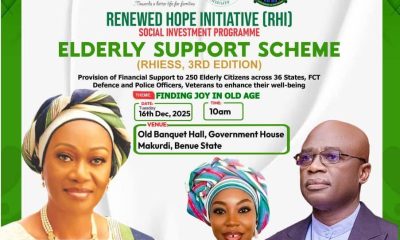

Finding Joy in Old Age: The Renewed Hope Intervention
ShareBy Bridget Tikyaa Getting to the life journey of a senior citizen should ordinarily be a source of pride, a...


CBN Revokes Licenses of Aso Savings, Union Homes Savings, Loans
ShareBy Tony Obiechina, Abuja The Central Bank of Nigeria (CBN) has revoked the operational licences of Aso Savings and Loans...

Dangote Petitions ICPC, Accuses NMDPRA Boss of Corruption, Abuses
ShareBy David Torough, Abuja President of the Dangote Group, Alhaji Aliko Dangote, has petitioned the Independent Corrupt Practices and Other Related Offences Commission...

NDIC Liquidates Aso Savings, Union Homes, Pays N2m Deposits
ShareBy Tony Obiechina, Abuja The Nigerian Deposit Insurance Corporation (NDIC) exercised its appointment as the liquidator of Aso Savings and...


Reps Launch Nationwide Probe into Drug Abuse, Trafficking Crisis
ShareBy Ubong Ukpong, Abuja The House of Representatives has commenced a nationwide investigation into Nigeria’s worsening drug abuse and trafficking...

Clement Koko Assumes Office as CIPPON President
ShareBy David Torough, Abuja Clement Koko has been inaugurated as the President and Chairman-in-Council of the Chartered Institute of Professional...

Thousands of Drivers Wrongly Fined for Speeding Since 2021
ShareThousands of drivers could have speeding fines cancelled after a fault saw some cameras falsely triggered on English A roads...