
NEWS
2025 Budget: CSOs Accuse FG of Sacrificing N’Delta for More Revenue


By Ubong Ukpong, Abuja
In view of the N34.82 trillion revenue targets in the 2025 budget estimates, a coalition of Civil Society Organisations (CSOs) in the country, have accused the federal government (FG), of sacrificing the environmental and living conditions of the Niger Delta people for more revenues for the country.
Briefing the House of Representatives Correspondents on Thursday in Abuja after submitting their petition to both Chambers of the National Assembly, the CSOs said that President Bola Ahmed Tinubu must prioritize the issues of environmental cleanup in the Niger Delta.
Executive Director, Health of Mother Earth Foundation (HOMEF), Reverend Nnimmo Bassey, who led the representatives of Nigerian Civil Society Organizations, Community Groups, and Concerned Citizens, said it was a known fact that a huge chunk of that targeted revenue was coming from oil in the Niger Delta.
The coalition lamented that the people were dying from the impact of oil spillage and gas flaring, but nothing being done about it, rather the government was most interested in revenues from there.
Reminding that what was going on the Niger Delta was an environmental genocide, Bassey said all elsewhere in the world, such issues were priority, but in Nigeria, they are treated with absolute neglect.
In the petition, the coalition called on President Tinubu and the National Assembly to immediately halt all divestment of oil assets initiated by oil companies operating in the Niger Delta region.
The petition is titled, “Urgent call to halt all Divestment in the Niger Delta, including Shell’s refused sale of SPDC shares”, separately sent to President Bola Ahmed Tinubu dated16th December, 2024 and Speaker of the House of Representatives, Hon. Tajudeen Abbas, dated 18th December, 2024, respectively.
The coalition expressed grave concerns over the fate of millions of Nigerians’ impacted negatively by the exploration of crude oil across the oil producing communities as well as the environment.
“We are here as representatives of Nigerian society organizations, community leaders, and concerned citizens to address a grave and urgent issue that threatens not only the people of the Niger Delta but the environmental and economic interests of Nigeria and the social future of all Nigerians.
“We are, again, compelled to raise our voices against the ongoing and potentially catastrophic divestment process by International Oil Companies (IOCs) operating in the Niger Delta, particularly Shell’s proposed sale of its remaining shares in Shell Petroleum Development Company (SPDC) to the Renaissance consortium.
“This proposed sale and similar divestment efforts by companies like TotalEnergies, would undermine national interests, as we have communicated in the past, and as the House of Representatives acknowledged.
Urgency of the Situation:
“A few days ago, we were alarmed to learn that President Bola Tinubu, under pressure from Shell and their home government, has ordered the Nigeria Upstream Petroleum Regulatory Commission (NUPRC) to approve Shell’s sale of its remaining shares in SPDC to the Renaissance consortium. Despite the NUPRC’s initial rejection of this sale based on legitimate concerns, President Tinubu appears to be moving swiftly toward approving these divestments, bypassing the valid and urgent concerns raised by the National Assembly and the Nigerian people.
“That is why we are calling on the National Assembly to prevail on President Tinubu to respect the voice of the people and halt all further IOC divestment requests until significant matters of national concern are addressed”, the Coalition stated.
A Non-Governmental Organisation, MAHCare Foundation, has called for increased awareness and support to address period poverty among women and girls in the country.
The President of the foundation, Maryam Musa, made the call during a “Walk for Her Dignity” awareness campaign in Kaduna on Saturday, organised to highlight challenges surrounding menstrual hygiene and access to sanitary products.
Musa said the initiative was to educate the public on the dangers of period poverty and the health risks associated with the use of unhygienic menstrual materials.
She added that “period poverty is not something to be neglected, it is something to be tackled. Sanitary pads are so expensive that many women and girls now use unhygienic products that affect their health, education and daily activities.
”She explained that the awareness campaign would continue beyond the walk, adding that the organisation planned to distribute sanitary products to vulnerable groups and communities.
She noted that the foundation was also promoting the use of reusable sanitary pads to support girls who could not afford disposable products.
“We educate them on how to properly manage reusable pads because not everybody can afford disposable ones. We are also trying to correct misconceptions that sanitary products are against religion or culture”, she said
She added that women and girls should understand that using sanitary pads was important for their health and hygiene.
Sahura Maidoki, the Chairperson of the Nigeria Association of Women Journalists (NAWOJ), said the campaign was necessary to educate communities on menstrual hygiene and end the stigma surrounding menstruation.
Maidoki stressed the need to involve men in menstrual hygiene education, noting that “some parents failed to educate their daughters on proper menstrual care.
“We also have issues with some men because they do not educate their children on the importance of taking care of themselves during menstruation.”
She explained that sensitisation talks would help people to understand the importance of providing sanitary pads for their daughters and wives and ensure that menstruation was not seen as a barrier for the girl-child.
A Water, Sanitation and Hygiene (WASH) advocate, Doris Zakama, who spoke at the event said many girls, especially those in rural communities, lacked access to menstrual hygiene products and adequate education on menstrual health.
Zakama urged the government to subsidise menstrual hygiene products, make them affordable for girls and women struggling with rising cost of living.
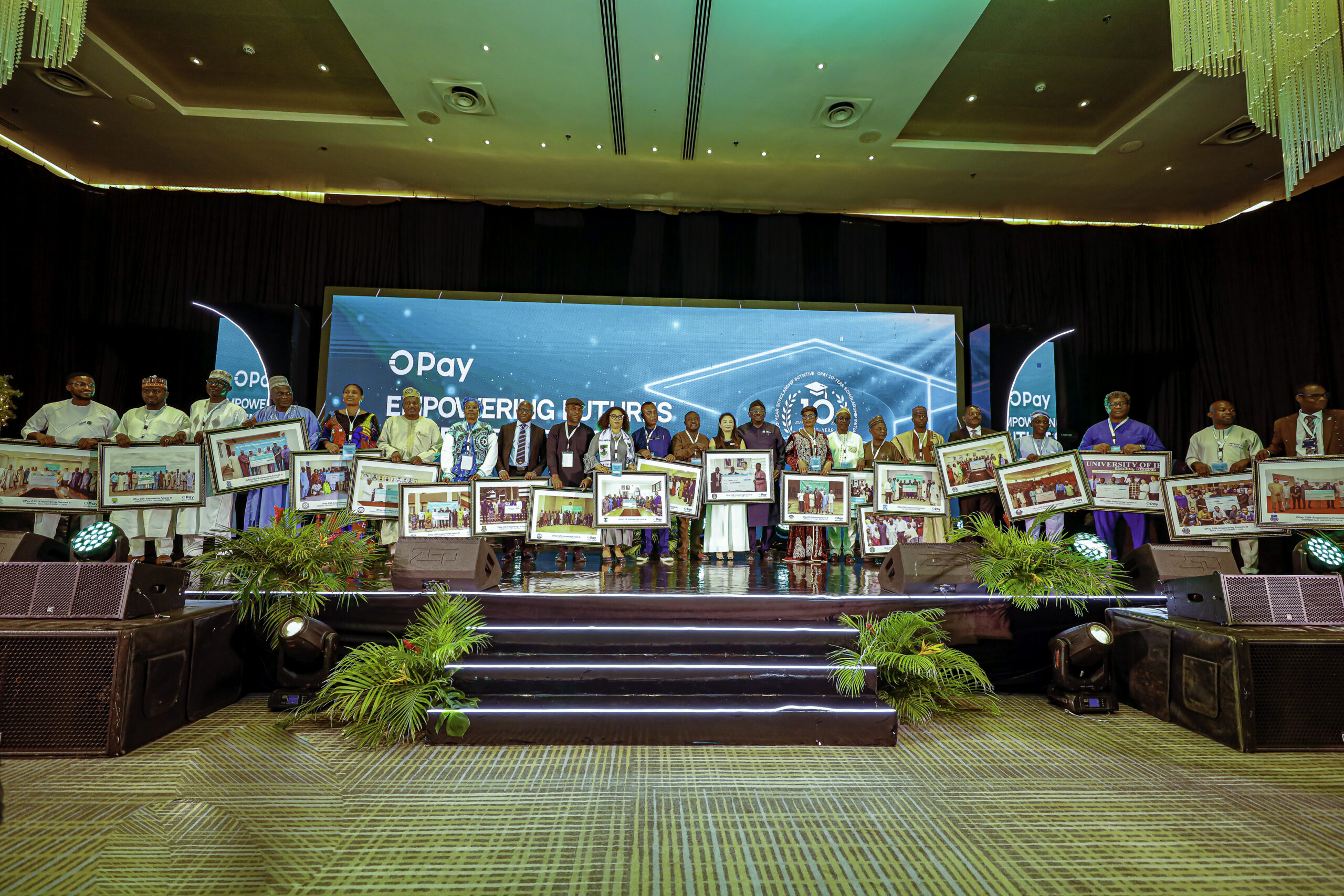
Getting into a tertiary institution is only half the journey. Staying in school, paying fees on time, and having the right support system can be the bigger challenge. Over the past year,
OPay has stepped into that gap, not just as a fintech company, but as a partner in the ambition and aspirations of thousands of students.
Through its long-term scholarship initiative, OPay has committed N1.
2 billion over 10 years to support outstanding and indigent students across more than 20 partner tertiary institutions nationwide. What began as tuition support has grown into something more profound, a structured investment in young people who have the capacity but need financial backing to stay focused on their studies.In campuses from Ife to Zaria and Calabar, OPay scholarship beneficiaries have shared stories of relief and renewed confidence. For many, the scholarship meant their parents no longer had to borrow money for school fees. For others, it meant more time in the library and less time worrying about part-time work. In a country where education remains one of the strongest ladders to upward mobility, this kind of support goes beyond money; it restores dignity and hope.
But OPay’s Corporate Social Responsibility (CSR) journey is not stopping at the scholarship initiative.
Building on the strong foundation already laid, OPay is launching OPay Scholars, a bold expansion that moves from financial support to full career development. The 2026 edition will introduce OPay Futures and a National Innovation Challenge, where students can propose practical solutions to real-world problems. It will also feature a focused webinar session and a bootcamp led by industry experts, providing scholars with direct access to knowledge in technology, entrepreneurship, and career growth.
Most notably, the 2026 edition will create a structured career development pathway, culminating in a grand finale of OPay’s second annual Empowering Futures Conference.
This platform will not only celebrate academic excellence but also spotlight creativity, leadership, and innovation among Nigerian students.
At a time when many young Nigerians are asking, “What next after school?”, OPay is helping to answer that question. By combining financial aid with mentorship, exposure and opportunities for innovation, the company is positioning education as both a safety net and a springboard.
OPay’s impact over the past year proves one thing clearly: when businesses invest consistently in people, communities grow stronger. And in 2026, OPay Scholars is set to support ambitions and actively shape the future, one student, one idea, and one opportunity at a time.

By Attah Ede, Makurdi
The Benue State government has debunked reports in some sections of the media including DAILY ASSET NEWSPAPER over alleged owing of Workers’ Salary.
Deputy Governor, Dr. Sam Odey who refuted the media claims on Sunday in Makurdi said the state government was only carrying out workers verification exercise, which according to him, they will be paid accordingly after the conclusion of the exercise.
Odey, who said the state government remains committed to the welfare of workers, urged media organizations to always verify the sources of their information before going public.




No Troop Casualty in Al-Minuki Operation – DHQ
ShareThe Defence Headquarters says no Nigerian soldier was killed during the operation that eliminated the terrorist commander, Abu Bilal Al-Minuki....


Police Probe Suspects’ Escape from Detention in Rivers
ShareThe Police Command in Rivers has begun disciplinary proceedings on an officer Ekawhe Thomas, over alleged negligence that led to...

Nigerian Army Reviews Strategies, Hails Operational Gains at First 2026 Bi-Annual Conference
ShareBy David Torough, Abuja The Chief of Army Staff (COAS), Lt.-Gen. Waidi Shaibu, has called on commanders and senior officers...
Group Pushes for Unified Response to Tackle Nigeria’s Hypertension Crisis
SharePresident of the Nigerian Hypertension Society (NHS), Prof. Simeon Isezuo, has called for collective action to combat hypertension and other...
Menstrual Hygiene: Stakeholders Seek Affordable Sanitary Products for Girls
ShareA Non-Governmental Organisation, MAHCare Foundation, has called for increased awareness and support to address period poverty among women and girls...

One Year into OPay’s N1.2 billion 10-year Scholarship Initiative, What’s Next?
ShareGetting into a tertiary institution is only half the journey. Staying in school, paying fees on time, and having the...

Benue Not Owing Workers’ Salary – Odey
ShareBy Attah Ede, Makurdi The Benue State government has debunked reports in some sections of the media including DAILY ASSET NEWSPAPER over...

2028 Olympic Games Qualifier: Super Falcons to Discover Opponents Today
ShareNigeria’s Super Falcons will find out their opponents for the 2028 Los Angeles Olympic Games women’s football qualifiers this week. The Confederation...
Nigeria Intensifies Surveillance as Ebola Outbreak Spreads in Central Africa
ShareThe Nigeria Centre for Disease Control and Prevention (NCDC) has stepped up surveillance and emergency response following an Ebola outbreak in the Democratic Republic of...
Kaduna Senatorial Aspirants Sign Peace Pact Ahead APC Primaries
ShareFrom Agbo Emmanuel, Kaduna Ahead of the forthcoming party primaries, senatorial aspirants across the three senatorial zones of Kaduna State on Saturday have signed a peace pact aimed at ensuring violence free...