
Health
Nigeria Intensifies Surveillance as Ebola Outbreak Spreads in Central Africa

The Nigeria Centre for Disease Control and Prevention (NCDC) has stepped up surveillance and emergency response following an Ebola outbreak in the Democratic Republic of the Congo and a confirmed imported case in Uganda.
Although Nigeria has recorded no confirmed case of Ebola, NCDC emphasised that they were maintaining heightened vigilance due to increasing regional mobility and the risk of cross-border transmission.
In a public health advisory signed by NCDC Director-General, Dr. Jide Idris, the agency said it was closely monitoring developments in affected countries and coordinating preparedness efforts with the Port Health Services and other stakeholders.
“Response activities are ongoing in affected areas, and we are ensuring continued vigilance within Nigeria’s public health system,” Idris said.
Highlighting preparedness measures activated, Idris said NCDC had strengthened nationwide surveillance systems for Ebola and other epidemic-prone diseases, while intensifying event-based monitoring and coordination with state health authorities.
Other measures include enhancing laboratory and diagnostic readiness, strengthening infection prevention and control awareness in healthcare settings, and expanding community engagement and public risk communication.
He further said the agency was closely tracking global and regional developments to ensure a rapid response if the situation changed.
Ebola Virus Disease is a severe and often fatal viral infection transmitted through direct contact with the blood, bodily fluids or contaminated materials of infected persons or animals.
According to the NCDC, the disease has an incubation period ranging from two to 21 days.
It typically begins with symptoms such as fever, weakness, headache, muscle pain and sore throat before progressing to vomiting, diarrhoea and, in severe cases, unexplained bleeding.
The director-general warned that early detection and isolation are critical in preventing outbreaks from escalating.
Idris advised healthcare workers across the country to maintain a high index of suspicion for Ebola in patients presenting symptoms consistent with the disease, particularly those with recent travel or exposure history linked to affected areas.
He urged medical personnel to strictly adhere to infection prevention protocols, including hand hygiene, use of personal protective equipment, early isolation of suspected cases and prompt reporting through established surveillance channels.
Idris appealed to Nigerians against panicking or spreading misinformation, stressing that there was currently no confirmed Ebola case in the country.
“Residents are advised to maintain regular hand hygiene, avoid contact with bodily fluids of sick persons and refrain from handling dead animals or bushmeat from unknown sources.”
He also encouraged members of the public to promptly report unusual illnesses to health facilities and rely only on verified information from official public health authorities.
The latest alert has renewed concerns about the possibility of regional spread, particularly in countries with high levels of movement and trade across borders.
Nigeria’s extensive travel connections and large population make preparedness essential, especially given the country’s previous experience managing Ebola outbreaks.
Nigeria was internationally praised for containing the 2014 Ebola outbreak after swift tracing and isolation measures prevented widespread transmission following the arrival of an infected traveller from Liberia.
The World Health Organisation (WHO) declared the ongoing Ebola outbreak linked to the Bundibugyo virus in the DRC and Uganda a Public Health Emergency of International Concern (PHEIC), warning of significant regional and global risks.
The decision, announced on May 16 by the WHO Director-General Tedros Ghebreyesus under the International Health Regulations (2005), follows rising infections and deaths, alongside evidence of cross-border transmission.
However, the organisation clarified that the situation did not yet meet the threshold for a pandemic emergency.
Data from WHO showed that as of May 16, eight laboratory-confirmed cases, 246 suspected infections, and 80 suspected deaths have been recorded in Ituri Province in eastern DR Congo.
The affected areas include Bunia, Rwampara and Mongbwalu, where clusters of unexplained community deaths have raised alarm.
In Uganda, two confirmed cases including one fatality were reported in the capital, Kampala, within 24 hours of each other.
Both individuals had recently travelled from DR Congo, marking confirmed international spread of the virus.
Unlike other strains of Ebola, there are currently no approved vaccines or targeted treatments for the Bundibugyo variant, raising concerns among global health authorities.
The Niger State Private Health Facilities Agency (NiSPHFA) has sealed 12 unregistered Islamic medicine stores in Minna and a health facility in Katcha Local Government Area (LGA).
The Executive Chairman of NiSPHFA, Dr.
Abdullahi Suleiman, disclosed this while receiving members of the Islamic and Prophetic Medicine Practitioners’ Association of Nigeria (IPMPAN) in Minna.The enforcement is part of the agency’s renewed efforts to protect residents from unsafe healthcare practices and ensure compliance with minimum standards.
Suleiman said the facilities were sealed over alleged non-compliance with regulatory standards.
According to him, the enforcement is not aimed at persecuting healthcare providers but at ensuring residents have access to safe, quality, and standard-compliant healthcare services.
“Our responsibility is to protect the people by ensuring that anyone providing healthcare services operates within the required standards,” he said.
He urged genuine alternative medicine practitioners to register with NiSPHFA, saying registration would enable the agency to identify operators, monitor their activities, and protect residents from unsafe products and practices.
Suleiman also announced plans to organise a trade fair for verified alternative medicine practitioners to promote legitimate practices and improve public confidence in alternative healthcare.
He emphasised the need for practitioners to maintain minimum standards of hygiene, sanitation, safe preparation and storage of medicines, proper packaging, and infection prevention.
“Practitioners should refer patients whose conditions are beyond their capacity to appropriate health facilities. Such referrals will help reduce avoidable health risks,” he said.
The chairman said sustained enforcement, stakeholder collaboration, and improved compliance would enable NiSPHFA to safeguard residents and promote a safer, more accountable, and quality-driven healthcare system across the state.
He said the NiSPHFA enforcement team inspected 10 health facilities in Katcha local government and identified various irregularities requiring improvement.
Suleiman said the affected facilities were issued 21-day notices to correct the identified deficiencies.
“One of the facilities inspected was sealed for non-compliance with established standards,” he said.
He added that the agency also secured the support of the local government area in identifying and addressing facilities operating with irregularities.
IPMPAN Chairman, Abdullahi Haske, commended the state government for establishing NiSPHFA.
He pledged the association’s cooperation in ensuring that its members complied with regulatory requirements.
Stakeholders have called for improved implementation, tracking and accountability of health sector budgets to strengthen healthcare delivery and advance Universal Health Coverage (UHC) in Kaduna State.
They made the call during an engagement on strengthening participatory budget processes, health budget tracking and advocacy on Saturday in Kaduna, with emphasis on the 2027 budget process and implementation of the Annual Operational Plan (AOP) for the health sector.
Seth Luke, a Civil Society Coach on strengthening participatory budget processes under the Open Government Partnership (OGP) Kaduna, said the engagement was aimed at strengthening the capacity of OGP Technical Working Groups and state and local government accountability mechanisms to effectively participate in budget processes and advocacy.
Seth said the engagement was particularly focused on the health sector, including tracking the implementation of the Annual Operational Plan as the state commenced preparations for the 2027 budget.
“We want to see how we can track the implementation of the Annual Operational Plan for the health sector and, from our findings, bring out recommendations around improving funding and other areas that require attention,” he said.
He said the government needed to prioritise health financing beyond budgetary allocation by ensuring effective implementation of approved programmes and projects.
According to him, budget allocation represents government plans based on expected revenue, but available resources should be prioritised toward activities capable of improving healthcare and service delivery at the grassroots.
Seth urged participants to use the knowledge and findings from the engagement to engage relevant government stakeholders on improving health financing and budget implementation.
He also encouraged them to extend the knowledge gained to other sectors and continuously engage government on budgeting, accountability and service delivery.
Similarly, Garba Mohammed, Co-Chair of the Kaduna Maternal Accountability Mechanism (KADMAM), said the engagement was aimed at reviewing health budget performance against key indicators linked to maternal mortality reduction and child survival.
Mohammed said participants examined first and second quarter performance, particularly in areas such as family planning, Maternal, Newborn and Child Health (MNCAH), nutrition, malaria, immunisation and essential medicines.
He said family planning interventions largely involved commodities at the primary healthcare level, while MNCAH activities remained largely donor-dependent.
Mohammed commended the Kaduna State Government for meeting the Abuja Declaration benchmark of allocating at least 15 per cent of its annual budget to health.
He, however, expressed concern over gaps in the implementation of some critical health budget lines, stressing that allocation alone was not enough to improve health outcomes.
“We have looked at the budget allocation, and Kaduna State has met the 15 per cent Abuja Declaration benchmark. We commend the state for that. However, there are still issues around budget performance in critical health indicators,” he said.
He said the findings would be used to identify advocacy priorities and engage key government decision-makers, including the Ministry of Health, Planning and Budget Commission, Ministry of Finance and other relevant authorities.
Mohammed said participants were expected to understand the relevant health budget lines and their implementation status and use the knowledge to undertake evidence-based advocacy in their respective organisations.
Meanwhile, Yusuf Guje, Executive Director, Civic Impact for Sustainable Development Foundation (CISDF), and a participant at the programme, told the News Agency of Nigeria (NAN) that the engagement was timely in strengthening the capacity of civil society and accountability mechanisms.
Guje said the programme would deepen participants’ capacity in budget tracking, project monitoring and social auditing, particularly within the health sector.
He described the health sector as a critical pillar of development, saying civil society organisations had an important role to play in complementing government efforts through effective monitoring and accountability.
He said CSOs needed to strengthen their ability to analyse budgets, track expenditure and visit healthcare facilities to determine whether appropriated and released funds were being properly utilised.
“Civil society needs to really improve on how effectively we analyse the budget, how we track the spending, and go down to the various facilities to see how well the money appropriated and released is being utilised,” Guje said.
He said effective monitoring would help determine the extent to which communities benefited from government investments in healthcare.
According to him, Kaduna State’s commitment to Universal Health Coverage could only be strengthened through sustainable health financing and effective accountability mechanisms.
Guje described CSOs as representatives of communities that often lacked the knowledge, skills and platforms required to engage government on public policies and resource allocation.
He therefore urged civil society actors to continuously strengthen their capacity to represent citizens effectively, particularly in health financing advocacy and accountability.
“As civil society, we need to remain committed to holding the government accountable where necessary and tracking the entire health financing process,” he said.
Guje said the ultimate objective of budget tracking and social accountability was to ensure value for money in public expenditure on health.
He added that effective monitoring of public finances would contribute to improved healthcare delivery and better health outcomes at the grassroots. (NAN)
Cross River Government has made enrolment in the state Health Insurance Scheme compulsory for all civil and public servants in the state.
The Head of Service, Bassey Okon, announced this in a circular dated Sept.
3, following the official relaunch of the Formal Sector Enrolment Programme of the Cross River State Health Insurance Agency.According to the circular in Calabar, at the weekend, the directive takes immediate effect.
Okon stated that the policy was meant to ensure that all the civil and public servants had access to affordable, quality, and timely healthcare services, while strengthening the welfare and productivity of the state workforce.
He directed all the civil and public servants to enroll in the scheme and comply with the registration and documentation requirements of the agency.
The circular also introduced a mandatory requirement for officers to attach valid health insurance enrolment cards to official correspondences relating to personnel matters.
“Correspondences concerning promotion, confirmation of appointment, loan applications, study leave, training or sponsorship, transfer or secondment, as well as other personnel-related requests or benefits, would not be processed without the attachment of a valid health insurance enrolment card,” it stated.
To facilitate the enrolment process, the government established enrolment points at the Office of the Head of Service, New Secretariat, Calabar, and the Ministry of Health, Old Secretariat, Calabar.
Okon directed all Heads of Ministries, Departments, and Agencies (MDAs) to ensure that officers under their supervision were duly informed about the circular and made to comply with the enrolment requirement without delay.
He also urged concerned officers to take advantage of the designated enrolment points for guidance and assistance and to complete their enrolment as required.
He further directed all the heads of the MDAs to bring the contents of the circular to the attention of all civil and public servants under their supervision. (NAN)




Group wants PGF, Wike to Work Together for Tinubu’s Re-election
ShareA political pressure group `Jagaban Apex Alliance (JAA)’, has called on Gov. Hope Uzodinma-led Progressive Governors Forum (PGF) and FCT...


Oborevwori Mourns Catholic Priest, Fr Anthony Ozele
ShareFrom Francis Sadhere, Delta Delta State Governor, Rt. Hon. Sheriff Oborevwori, has expressed condolences to the Catholic Diocese of Warri...


2027: Wike’s Support for Tinubu, Personal – PDP
ShareThe Peoples Democratic Party (PDP) and Nyesom Wike appear to be operating on parallel lanes regarding the 2027 presidential poll...
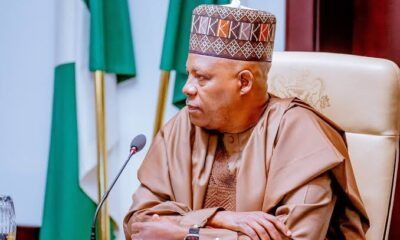

Tinubu Forgave Northern Govs Who Opposed Him in 2023, Says Shettima
ShareVice President Kashim Shettima has said President Bola Tinubu demonstrated political maturity by forgiving northern governors who opposed his presidential...


Soludo Charges PR Practitioners to Champion Strategic Communication, Rebuild Public Trust
ShareFrom Sylvia Udegbunam, Enugu The Anambra State Governor, Prof. Chukwuma Charles Soludo, has charged public relations practitioners to champion strategic...


PenCom Extends Deadline for Online Verification Exercise to Dec
ShareBy Tony Obiechina, Abuja The National Pension Commission (PenCom) has extended the deadline for the mandatory online verification and enrolment...


NASS Transmits 2026 Constitution Review Bills to 36 States
ShareBy Ubong Ukpong, Abuja The National Assembly has transmitted the Constitution of the Federal Republic of Nigeria, 1999 (Sixth Alteration)...


Presidency to Obi: Quit 2027 Race Over Anambra Debt Claims
ShareBy Tambaya Julius, Abuja The Presidency has challenged former Anambra State Governor and presidential candidate of the Nigeria Democratic Congress...


Police, Varsity Deepen Security Pact against Cultism, Campus Threats
ShareThe Cross River Police Command and the University of Cross River State (UniCross) have resolved to deepen their collaboration to...


Police Rescue Two Kidnap Victims, Arrest Three Suspects in Ondo
ShareThe Police Command in Ondo State said it has rescued two kidnapped victims and arrested three suspects at Isua-Akoko in...