
NEWS
2027: My Support Only for Tinubu Re-election, not APC – Wike

By Laide Akinboade, Abuja
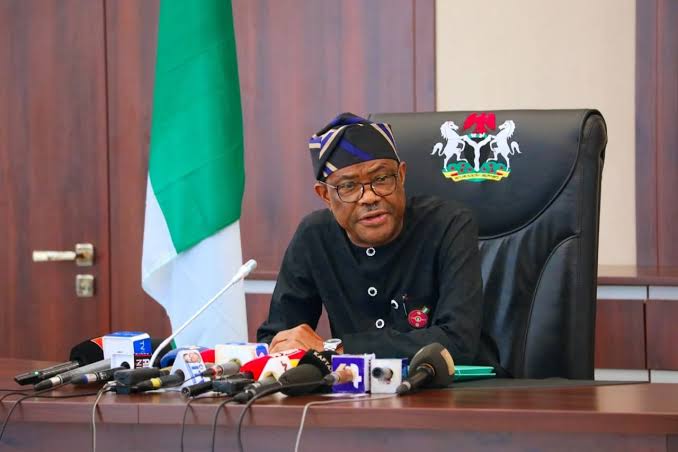
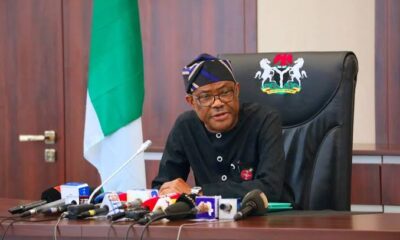
The Federal Capital Territory (FCT) Minister, Nyesom Wike, has reiterated that his support for the reelection of President Bola Tinubu remained sacrosanct, saying he never promised that the Peoples Democratic Party (PDP) will not field candidates in governorship, National Assembly and States House of Assembly elections.
The Minister said the rainbow coalition does not have anything to do with the All Progressives Congress (APC), describing the coalition as a platform for other political parties that are pleased with the good works of the President and are supporting his reelection.
In a statement on Tuesday, by his Senior Special Assistant to the Minister on Public Communications and Social Media, Lere Olayinka, the FCT Minister, who said he won’t be the one to help people to win elections in their States, noted that “politics is local and those having problems in their States should resolve them instead of using the reelection of the President to whip up sentiments.”
Wike pointed out that he never met with the All Progressives Congress (APC) before himself and other members of the G5 supported the President in 2023, and that for 2027, his support is for the president only.
The Minister said politics is no longer about coming from fourth position to be governor, it is about genuinely mobilising support and winning elections from the polling units.
He asked; “In Imo State under Governor Hope Uzodinma, how did APC win two senate seats in 2023, in an election held the same day with that of the President and APC had less than 15 percent in the presidential election? Was it a rainbow coalition? Were the voters confused?
“Was it the rainbow coalition that also made APC to win National Assembly elections in Ebonyi, Abia and Enugu States where the President did not have ten percent of the votes?
“If in 2023, the voters in Imo, Abia, Enugu and Ebonyi voted APC in the Senatorial election and voted another party in the presidential election, they won’t be confused in 2027 provided we all support the president genuinely this time?
The Minister urged all stakeholders to put the presidential election first, saying; “after the President must have been reelected, we can all go and face elections in our States.”
“What I said and stand for is that I will mobilise support for the reelection of the President. I never promised anyone that PDP will not field candidates to contest governorship, National Assembly and States House of Assembly elections.
“Most importantly, the rainbow coalition has nothing to do with the APC. Rather, it is own way of mobilising support across political parties for Mr President, who has done well to deserve a second term,” he said.
By David Torough, Abuja
The Independent National Electoral Commission (INEC) has strengthened its engagement with the African Union (AU) ahead of Nigeria’s 2027 general elections, as the continental body begins a pre-election and needs assessment mission to evaluate the country’s electoral preparedness.
The AU delegation, led by former Ethiopian Deputy Prime Minister and Minister of Foreign Affairs, Demeke Mekonnen, paid a courtesy visit to INEC as part of the mission scheduled for September 13 to 19, 2026.
The delegation was received by INEC’s Acting Chairman, Professor Rhoda Gumus, who represented the Commission’s Chairman, Professor Joash Ojo Amupitan, SAN.
Mekonnen said the mission was aimed at assessing Nigeria’s preparations, identifying potential gaps and recommending measures that could contribute to credible and successful elections.
He said the AU would focus on key areas including voter registration, electoral technology, logistics, funding, inclusion, transparency, electoral disputes, security and result management.
According to him, the pre-election period remains critical to the overall success of the electoral process, particularly in ensuring credible voter registration, transparent procedures and public confidence.
“We want to facilitate support and identify gaps, and for possible remedies and corrections for the successful election process,” Mekonnen said.
Responding, Gumus welcomed the AU delegation and described the mission as timely and important to Nigeria’s democratic development.
She said INEC and the AU shared a commitment to democratic standards, institutional integrity and credible electoral governance across Africa.
Gumus disclosed that INEC was preparing for the 2027 elections on an unprecedented scale, with the number of registered voters approaching 100 million, 176,846 polling units and a workforce of more than 1.4 million personnel.
She added that recent off-cycle elections had provided the Commission with opportunities to test reforms introduced under the new electoral legal framework.
The Acting Chairman also highlighted the use of the Bimodal Voter Accreditation System (BVAS), result viewing through the IReV portal and coordination with security agencies as measures aimed at improving electoral administration.
She said INEC was also working with the National Identity Management Commission (NIMC) through the Continuous Voter Registration Portal to audit, verify and clean the voter register ahead of the 2027 polls.
However, Gumus acknowledged that Nigeria’s vast geography and complex political environment continued to pose technological, logistical and political challenges to election management.
“Electoral integrity is a multi-sectoral endeavour, and international technical support remains vital to bridging operational gaps,” she said.
She identified several areas in which AU technical assistance would be useful, including digital training for ad-hoc election staff, e-learning tools, ICT simulations, election-monitoring systems, measures to counter disinformation, AI-driven deepfake detection and strategic communication.
Gumus also called for greater support for inclusive electoral processes, particularly through gender-mainstreaming and frameworks addressing the needs of persons with disabilities, internally displaced persons, women and other underrepresented groups.
She assured the delegation that INEC would maintain transparency and cooperation throughout the AU mission, including its engagements with political parties, civil society organisations, security agencies, media executives and development partners.
Gumus reaffirmed the Commission’s commitment to independence, neutrality and professionalism, stressing that its administrative decisions would be guided by the law and that the outcome of the 2027 general elections would reflect the sovereign will of Nigerian voters.
From Attah Ede, Makurdi
In a bid to mitigate the impact of flooding, the National Emergency Management Agency (NEMA) in collaboration with Benue State Emergency Management Agency, with support from UNDP, UNICEF and World Bank Partners, on Tuesday organised a Full-scale Flood Disaster Response Simulation Exercise in Makurdi, the Benue State capital.
The simulation exercise is aimed at raising awareness on flood hazards and clarifying the roles of communities and stakeholders in responding to the 2026 flood prediction, particularly in parts of Benue State.
The simulation exercise, code-named “Uwar Uma,” provides an opportunity for all participating stakeholders to develop a common understanding of the exercise, operational procedures, roles and responsibilities, communication arrangements and the mechanisms for coordinated response.
Speaking at the event, the Acting Zonal Director of National Emergency Management Agency (NEMA), Sulieman Mohammed, explained that the exercise is intended to ensure that participants are familiar with the bottom-up emergency response approach, beginning at the community level and progressively escalating through the Local Emergency Management Committee (I.EMC), the State Emergency Management Agency (SEMA) and, where necessary, to the Federal level.
According to him, Benue State remains highly exposed to flooding due to its extensive river systems, floodplains, seasonal rainfall and the concentration of settlements and economic activities around the River Benue and its tributaries.
He added that the prevailing flood risk therefore demands that preparedness and response arrangements remain proactive, coordinated and practical, insisting that early warning information must translate into timely community action, evacuation, rescue, relief and recovery support.
Mohammed urged the stakeholders to maintain discipline, professionalism and show strong commitment to teamwork and give particular attention to the safety of personnel, volunteers and members of the public throughout the simulation.
He insisted that the principles, procedures and lessons from the programme should be applied during the field exercise and subsequently captured during the Hot Wash and After-Action Review.
The Acting Zonal Director commended the Government and people of Benue State, the Benue State Emergency Management Agency, Local Emergency Management Committees, participating communities, government institutions, security and response agencies, humanitarian organisations and technical partners for their commitment to strengthening flood preparedness and resilience in the State.
“I particularly appreciate our development and humanitarian partners, including UNOCHA, UNDP, UNICEF and the World Bank, for their valuable support towards the successful conduct of this exercise. Your continued partnership contributes significantly to strengthening disaster risk reduction, preparedness and response capacities in Nigeria”, he said.
In his remark, the Executive Secretary of Benue State Emergency Management Agency, Dr. James Iorpuu, said the workshop was aimed at strengthening the State preparedness, testing Agency response mechanisms, and improving inter-agency coordination for effective disaster management in the state.
The Executive Secretary who was represented by the Administrative Secretary, Atii Samuel Atii, maintained that the Agency is fully committed to ensuring that the State remains proactive in disaster risk reduction and response.
He expressed appreciation to NEMA for the continued support and partnership and thanked participants, facilitators, security agencies, and partners for attending the event, saying their presence shows commitment to the safety and wellbeing of the people of Benue State.
The exercise was attended by stakeholders included members of Local Emergency Management Committees (LEMCs), the Nigeria Security and Civil Defence Corps (NSCDC), dam managers, the Fire Service, the Nigeria Police, Disaster Response Units of the Nigerian Army, Navy, and Air Force, the Nigerian Red Cross Society, State Ministries of Health and Water Resources, local divers, and community volunteers.
By Tony Obiechina, Abuja
The National Bureau of Statistics (NBS) on Tuesday disclosed that headline inflation has eased to 15.39 percent in August, 2026.
The NBS in its latest Consumer Price Index (CPI) figures for August 2026 said the development followed the completion of the recent rebasing exercise which centred on a new CPI base year of 2024 and a weight reference period of 2023.
It noted that the Consumer Price Index (CPI) increased to 146.3 in August 2026 and reflects a 1.0-point increase from the preceding month.
Prince Adeyemi Adeniran, Statistician General of the Federation said in a statement that the month-on-month headline inflation rate in August 2026 was 0.
71%, which was 0.86% lower than the rate recorded in July 2026 (1.57%).This shows that the average prices of items are increasing at a decreasing rate in August 2026.
The latest report notes that the three major contributors to the headline inflation were Food and non-alcoholic Beverages: 6.16%, Restaurants & Accommodation Services: 1.99%, and Transport: 1.64%; while the least contributors were Recreation, Sport, and Culture: 0.05%, Alcoholic Beverages, Tobacco, and Narcotics: 0.06%, and Insurance and Financial Services: 0.07%.
The report further said the Food inflation rate in August 2026 was 19.57% on a year-on-year basis, lower than 25.30% recorded in August 2025. Also, on a month-on-month basis, the Food Inflation rate in August 2026 was 1.02%, down by 4.55% points from July 2026 (5.56%). This shows that the average prices of food items are increasing at a decreasing rate in August 2026. The decline in the rate can be attributed mainly to changes in the average prices of Palm Oil, Carrots, Pepper, Onions, Cassava Flour, Beef, Yam Flour, Water Yam, Melon (Egusi), Fresh Ginger Fresh Fish, Irish Potatoes, Wheat Grain, Frozen Chicken, Turkey Meat, Yam Flour, among others.
Core Inflation, which excludes the prices of volatile agricultural produce and energy, stood at 13.29% in August 2026 on a year-on-year basis. On a month-on-month basis, the core inflation rate was -0.06% in August 2026, down by 0.21% compared to July 2026 (0.15%).
The inflation rate of the sub-indices for August 2026 shows that the monthly change recorded were Farm Produce (1.35%), Energy (-0.36%), Services (0.12%), Goods (0.45%) and Imported Food (0.91%).
Meanwhile, the inflation rate on a year-on-year basis recorded were as follows; Farm Produce (21.52%), Energy (4.69%), Services (15.38%), Goods (14.74%) and Imported Food (12.82%).
Urban and Rural Inflation Rates:
On a year-on-year basis, the urban inflation rate in August 2026 was 15.88%. On a month-on-month basis, the urban inflation rate was 0.28% in August 2026, down by 1.62% compared to July 2026 (1.90%).
The rural inflation rate in August 2026 was 14.23% on a year-on-year basis. On a month-on-month basis, the rural inflation rate in August 2026 was 1.79%, up by 1.01% compared to July 2026 (0.78%).
In analysing price movements under this section, the statement noted that CPI is weighted by consumption expenditure patterns that differ across States and locations. Accordingly, the weight assigned to a particular Food or Non-Food item may differ from State to State making interstate comparisons of consumption basket inadvisable and potentially misleading.
In August 2026, the All-Items inflation rate on a Year-on-Year basis was highest in Lagos (23.68%), Zamfara (22.56%), and Enugu (22.06%), while Sokoto (2.11%), Kebbi (3.72%) and Jigawa (3.81%) recorded the lowest rise in Headline inflation on a Year-on-Year basis. On a Month-on-Month basis, however, August 2026 recorded the highest increases in Rivers (6.92%), Osun (5.61%) and Kano (5.59%), while Anambra (-8.83%), Bauchi (-7.13%), and Borno (-7.09%) recorded the lowest rise in the Month-on-Month inflation.
In August 2026, Food inflation on a Year-on-Year basis was highest in Adamawa (38.85%), Zamfara (37.96%), and Bayelsa (36.20%), while Borno (-4.04%), Jigawa (-0.23%) and Kebbi (3.47%) recorded the slowest rise in Food inflation on a Year-on-Year basis. On a Month-on-Month basis, however, August 2026 Food inflation was highest in Katsina (9.48%), Rivers (8.86%) and Osun (8.32%), while Taraba (-12.42%), Borno (-12.15%), and Bauchi (-8.88%) recorded the slowest rise in Food inflation on a Month-on-Month basis.



2027: My Support Only for Tinubu Re-election, not APC – Wike
ShareBy Laide Akinboade, Abuja The Federal Capital Territory (FCT) Minister, Nyesom Wike, has reiterated that his support for the reelection...

INEC, African Union Strengthen Electoral Partnership Ahead of 2027 General Elections
ShareBy David Torough, Abuja The Independent National Electoral Commission (INEC) has strengthened its engagement with the African Union (AU) ahead...

NEMA Begins Flood Simulation Exercise for Multi-Stakeholder Preparedness in Benue
ShareFrom Attah Ede, Makurdi In a bid to mitigate the impact of flooding, the National Emergency Management Agency (NEMA) in...

Release My Academic Records, Obi Tells UNN, Other Institutions
SharePresidential candidate of Nigeria Democratic Congress (NDC), Peter Obi, has authorised University of Nigeria, Nsukka (UNN) and other academic institutions...


Dangote IPO: A Caution for Short Term Investors amid the Hype
ShareBy Kenechukwu Aguolu With the Dangote Refinery Initial Public Offering (IPO) opening on Monday, September 14, the excitement among Nigerian...

Nigeria’s Inflation Rate Slides to 15.39 Per Cent in August – NBS
ShareBy Tony Obiechina, Abuja The National Bureau of Statistics (NBS) on Tuesday disclosed that headline inflation has eased to 15.39...


Insecurity: NAF, Army Get Fresh Boost for War against Terror, Banditry
ShareBy David Torough, Abuja The Federal Government has stepped up efforts to strengthen Nigeria’s security architecture, with the Nigerian Air...

2027: INEC Cleans Voter Register with NIN Ahead Elections
ShareBy David Torough, Abuja The Independent National Electoral Commission (INEC) has commenced a systematic integration of National Identification Numbers (NIN)...

ENSIEC Assures 90 Per Cent Readiness for LG Election
ShareFrom Sylvia Udegbunam, Enugu The Enugu State Independent Electoral Commission (ENSIEC) said the commission is over 90 per cent set...
Group Backs Ekpo, Vows Ward-by-Ward Campaign for APC in Karu
ShareBy Tambaya Julius, Abuja The Association of South-East Igbo Winds has thrown its weight behind the All Progressives Congress (APC),...