
POLITICS
Group Backs Ekpo, Vows Ward-by-Ward Campaign for APC in Karu

By Tambaya Julius, Abuja
The Association of South-East Igbo Winds has thrown its weight behind the All Progressives Congress (APC), promising aggressive grassroots mobilisation across the 11 electoral wards of Karu Local Government Area of Nasarawa State ahead of the 2027 general elections.
The group made its position known during an engagement with the APC candidate for Karu/Gitata Constituency in the Nasarawa State House of Assembly, Dr.
Abraham Habu Ekpo, on Saturday in Mararaba, where members described him as a credible, dependable and people-oriented politician capable of providing effective representation.The association said Ekpo’s character, credibility and direct engagement with residents had strengthened its confidence in his candidacy, declaring its readiness to mobilise support for him and other APC candidates across the council.
Speaking during the engagement, Ekpo thanked the group for its support and commitment to the APC, saying his decision to contest on the party’s platform was informed by his belief in its progressive ideals and development-oriented agenda.
“Progress is about propelling growth, bringing development, advancing the cause of humanity and giving it dignity. That is why we are part of the progressives,” he said.
Ekpo said his ambition was driven by a desire to contribute to the development of Karu and promote policies that would place the people at the centre of governance.
“My ambition was driven by a desire to contribute to the development of Karu and promote a government that places people at the centre of its policies,” he said.
The candidate also promised to pursue greater inclusion for residents who have lived, worked and contributed to the economic growth of Karu, irrespective of their states of origin.
According to him, people who make meaningful contributions to the development of a community deserve a sense of belonging and should not be treated as outsiders.
He said inclusion would form a key part of his legislative agenda if elected into the Nasarawa State House of Assembly in 2027.
Ekpo further canvassed support for the APC, arguing that the Nasarawa State Government under the party had recorded achievements in infrastructure, road construction and peace-building across the state.
He cited the ongoing flyover project in Mararaba among projects he said the APC could showcase to voters as evidence of its development agenda.
The APC candidate also stressed the importance of sustaining relative peace in the state, saying a peaceful environment was necessary for economic growth, investment and meaningful development.
He urged residents of Karu to support the APC and its candidates in the 2027 elections.
Members of the Igbo association expressed confidence in Ekpo, describing him as a politician whose character, credibility and dependability had earned their trust.
They commended him for engaging directly with the members, saying the interaction had further strengthened their resolve to support his political ambition.
The group declared that its commitment would extend beyond verbal support, promising coordinated mobilisation across the 11 electoral wards of Karu.
“In all these 11 wards, we are prepared and ready to follow the APC. We are ready to support you and all other candidates going forward,” the members declared.
From Sylvia Udegbunam, Enugu
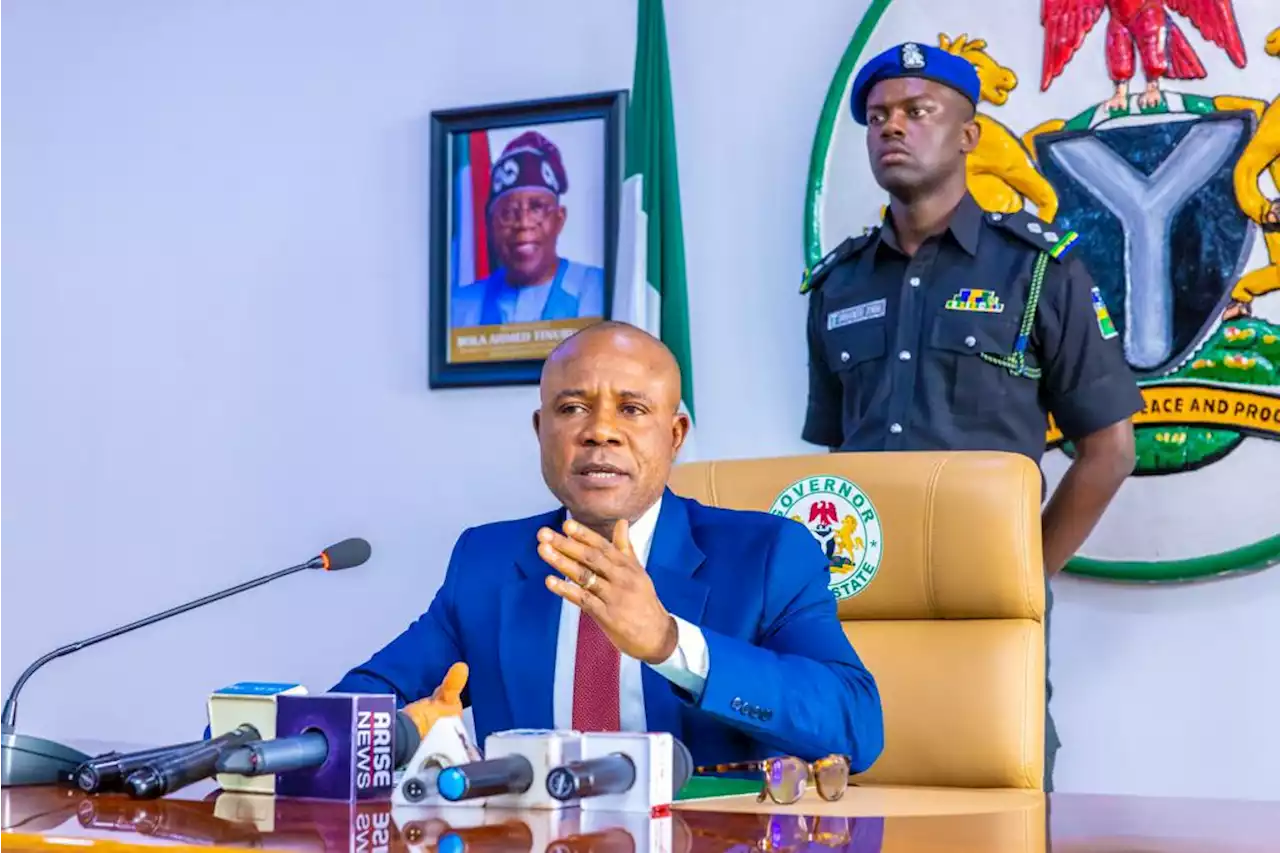
Enugu State Governor, Dr. Peter Mbah, has reaffirmed his administration’s commitment to creating an enabling environment for trade, investment and industrial development as part of efforts to accelerate economic growth and improve the wellbeing of residents.
Governor Mbah, represented by the Commissioner for Trade, Investment and Industry, Dr.
Sam Ogbu-Nwobodo, disclosed this at the Amadeo Business Summit 5.0 in Enugu.The five-day summit, themed “Sustaining Growth & Soaring,” brought together business leaders, entrepreneurs, professionals, government institutions and other stakeholders at the Amadeo Event Centre to explore strategies for sustainable business growth and economic development.
The Commissioner noted that the state government remained committed to promoting investment, supporting businesses and industries, improving the ease of doing business and creating favourable conditions for investors to thrive.
He described the private sector as a critical partner in driving sustainable economic development, generating employment and expanding opportunities for the people. He also assured investors that Enugu remained open to credible investments and strategic partnerships capable of strengthening the state’s productive base.
The Permanent Secretary of the Ministry of Trade, Investment and Industry, Ifeanyi Onah deliverimh a goodwill message urged participants to apply the knowledge and insights gained at the summit to their respective fields and businesses, while encouraging them to participate in the next edition, Amadeo Business Summit 6.0, to sustain the exchange of ideas and strengthen business collaboration.
The summit featured sessions on business leadership, transformation, youth empowerment, skills development, entrepreneurship, real estate, finance and small and medium-sized enterprise development. The state government reiterated its commitment to supporting initiatives that promote trade, investment and industrial growth in line with Governor Mbah’s “Tomorrow Is Here” agenda.

By Tambaya Julius, Abuja
The First Lady, Senator Oluremi Tinubu, has assured Nigerians that President Bola Tinubu will deliver on his promise to transform the country and usher in prosperity if re-elected for a second term in the 2027 general elections.
She gave the assurance in Lafia, Nasarawa State, during the grand rally of the North-Central Grassroots Mobilisation Network, organised to mobilise support for the re-election of President Tinubu and Vice President Kashim Shettima.
The rally attracted a large turnout of APC supporters from across the North-Central geopolitical zone, alongside top party leaders, including the APC National Chairman, Prof.
Nentawe Yilwatda; Imo State Governor, Senator Hope Uzodimma; and other governors from the region.Speaking at the event, Mrs. Tinubu said the President’s Independence Day message, titled “From Reforms to Prosperity,” reflected the administration’s commitment to translating ongoing economic reforms into improved living conditions for Nigerians.
She said the economy was beginning to stabilise, while foreign exchange pressures were easing and investors were returning to the country.
“The Independence Day message of Mr President was titled ‘From Reforms to Prosperity’. Therefore, Mr President is saying that they are going to reform the sectors, but now is the time for prosperity, and we can see our economy is stabilising,” she said.
The First Lady also commended governors for their infrastructure development efforts, noting that their contributions were helping to advance the country’s development.
Mrs. Tinubu said the Federal Government was also intensifying efforts to address food insecurity and malnutrition, particularly among vulnerable groups, including children, pregnant women and breastfeeding mothers.
She explained that the administration’s food bank programme was designed to improve access to nutritious food and provide support for malnourished children to help them grow healthily.
“As you see now, we have just finished the food bank programme, where we are helping every child and mothers who are pregnant and also breastfeeding.
“This is to ensure that they can have more nutritious food, and also the children that are malnourished can get treatment and food to grow healthy,” she said.
She added that young people in schools were also benefiting from government support, urging party supporters to take the administration’s achievements and policies to their respective communities.
Mrs. Tinubu described President Tinubu as a bold leader willing to make difficult decisions in the interest of the country, expressing confidence in his ability to lead Nigeria towards prosperity.
She urged residents of the North-Central region to convince voters that the country could achieve better outcomes if President Tinubu and Vice President Shettima secured another term.
The First Lady further said the administration was committed to building a stronger economy, safer communities and a greater Nigeria.
She called on the electorate to support the APC at all levels in the 2027 general elections, arguing that continuity would help sustain the government’s policies and development agenda.
“Therefore, vote for continuity, vote for capacity, vote for prosperity, vote for the re-election of Mr President and all the candidates of APC from top to bottom,” she added.
Other speakers at the rally also urged Nigerians to vote for President Tinubu and APC candidates in the 2027 elections, describing continued support for the party as an opportunity to sustain the administration’s programmes and development plans.
By Kayode Oladele
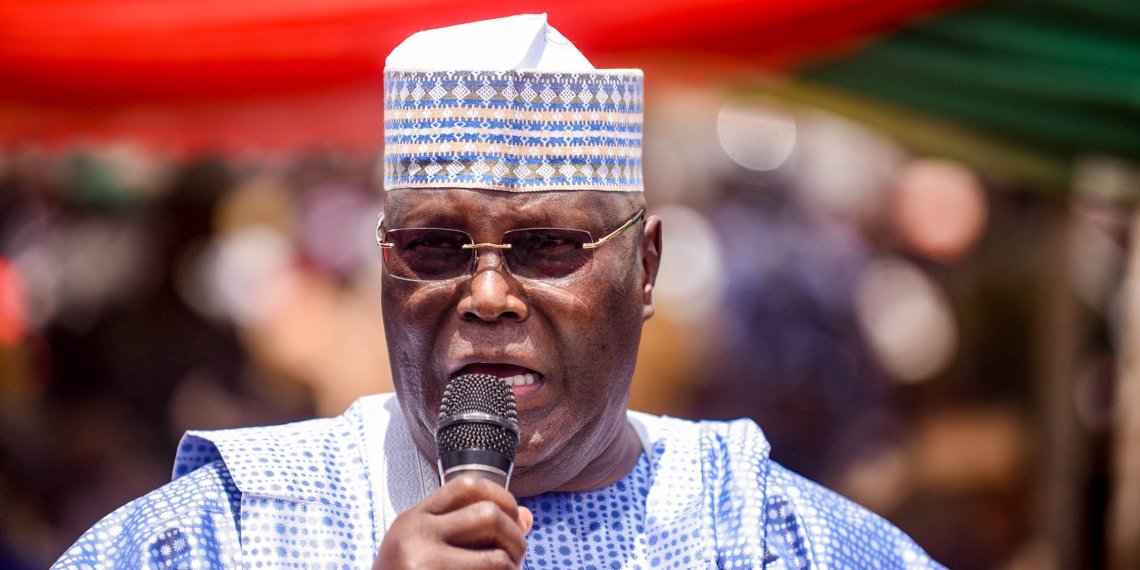
Alhaji Atiku Abubakar, former Vice President of Nigeria and presidential candidate of the African Democratic Congress, (ADC), has returned to the centre of Nigeria’s economic debate with a proposal that deserves careful scrutiny.
In his Independence Day policy statement, Alhaji Atiku Abubakar promised Nigerians what he described as a capped and budgeted production subsidy tied to verified petrol refined in Nigeria.
Imported petrol, he said, would not qualify. The subsidy would support domestic refining, its costs and beneficiaries would be disclosed and independently audited and the benefit would be expected to reach Nigerians through lower pump prices.On the surface, the proposition is attractive, particularly at a time when Nigerians are understandably concerned about transportation costs and their effect on virtually every aspect of daily life. However, once the attractive packaging is removed, Atiku’s proposal raises a very familiar economic question.
If the government deliberately reduces the cost of producing petrol so that it can be sold more cheaply, who pays the difference? The answer is the Nigerian public.
Atiku has insisted that his proposal is different from the old subsidy arrangement and that distinction should be acknowledged. The previous system was largely associated with subsidising imported petrol. Atiku proposes instead to support domestic production, with the subsidy tied to verified locally refined fuel. However, moving the subsidy from importation to production does not make its cost disappear. It merely changes the point at which public resources enter the petroleum value chain.
If crude that could otherwise be sold at its economic value is supplied to qualifying refineries at a discount, the difference represents an opportunity cost to the Federation. Atiku himself has acknowledged this. The relevant question, therefore, is not whether the subsidy has a cost.
It plainly does. The questions are how much it will cost, how long it will last, where the resources will come from and whether the expected reduction will actually reach the Nigerian standing at the petrol pump.
This is where the proposal becomes far less straightforward than its political appeal suggests.
Atiku says the subsidy will be capped. What is the cap? He says it will be budgeted. What is the proposed annual budget? What volume of locally refined petrol will qualify? What will be the subsidy per barrel or litre? What happens if international crude prices rise substantially or the exchange rate moves sharply? What is the maximum financial exposure of the Federation? How will qualifying production be verified? Most importantly, what enforceable mechanism will guarantee that the financial benefit given to producers is passed through the distribution chain to the consumer? These are questions of elementary public finance.
The APC Presidential Campaign Council has already asked Atiku to disclose the proposed subsidy rate, annual expenditure ceiling, eligible volume, funding source and safeguards against diversion, smuggling and fraudulent claims. Those are legitimate questions.
If Atiku believes the assumptions being advanced by the APC are wrong, he should provide his own figures. Nigerians need more than the promise that petrol will become cheaper. They deserve to see the arithmetic behind that promise. Anyone asking Nigerians to entrust him with the management of their economic resources should be prepared to put numbers behind his policies.
There is also the legal and regulatory question. Atiku’s running mate, Rotimi Amaechi, has now said that an Atiku administration would seek an amendment to the Petroleum Industry Act if the existing law prevents the proposed production subsidy from being implemented.
That statement is significant because it confirms that the relationship between the proposal and the present petroleum regulatory framework is not an imaginary concern raised by political opponents. It is a matter that Atiku’s own ticket may require legislative action.
This brings us to an even more fundamental issue. Nigeria has travelled the subsidy road before. For years, enormous public resources were committed to keeping petrol prices artificially low. The arrangement became a major burden on public finances and was associated with smuggling, abuse and distorted economic incentives. Resources that could otherwise have been available for roads, schools, hospitals, security, power and other public purposes were committed to sustaining the system.
It is therefore striking that Atiku, who has long presented himself as an advocate of market reform and previously supported subsidy removal, now proposes another subsidy as part of his answer to Nigeria’s economic difficulties.
The mechanism may be different and fairness requires us to acknowledge that difference. However, Nigerians are still entitled to ask what has changed in his economic thinking and why an intervention he once regarded as unsustainable has returned, albeit in a redesigned form, to the centre of his petroleum policy. Politics should not erase institutional memory.
The contrast with President Bola Ahmed Tinubu’s reform direction should also be properly understood. The choice is not between subsidising petrol and simply abandoning Nigerians to high transportation costs.
Tinubu’s alternative is to move government intervention away from permanently subsidising every litre of petrol consumed and towards changing the underlying economics of transportation through alternative fuels, domestic refining, infrastructure and competition. That distinction, in
My opinion is fundamental.
Under the old subsidy arrangement, the government attempted to make petrol cheaper by absorbing part of its cost. As consumption increased and international prices and the exchange rate moved, the potential burden on the treasury also increased. Tinubu’s alternative seeks to reduce Nigeria’s dependence on petrol itself.
This is the thinking behind the expansion of Compressed Natural Gas and electric mobility. Nigeria is richly endowed with natural gas. Rather than continue depending overwhelmingly on petrol and diesel for road transportation, the government is seeking to use more of that domestic resource to power vehicles while developing electric transportation and mass transit.
The principle is straightforward. If commuters can move more cheaply using CNG or electric transportation, the government does not have to subsidise every litre of petrol consumed in Nigeria in order to reduce transportation costs. If commercial transport operators increasingly move from petrol to domestically available gas, Nigeria can progressively reduce the vulnerability of transportation costs to international petroleum prices and foreign exchange pressures.
The Federal Government reported in September that more than 120,000 vehicles had been converted to CNG, with more than 400 certified conversion centres and over 90 CNG refuelling stations operating across the country. The government has also reported lower fares on some routes served by CNG and electric public transportation.
These are government reported figures and they must ultimately be measured against what Nigerians actually experience across the country. The important point is the direction of policy. The objective is to create alternatives to petrol rather than make the treasury permanently responsible for reducing the price of petrol.
Domestic refining is another essential part of the alternative. For decades, Nigeria lived with the contradiction of being a major producer of crude oil while depending heavily on imported refined petroleum products. A more sustainable petroleum economy should refine more of what Nigerians consume at home while encouraging sufficient competition among refiners, distributors and retailers.
Competition matters because deregulation without competition can leave consumers exposed to concentrated market power. The ultimate objective should therefore be a market with adequate domestic refining capacity, multiple suppliers, alternative fuels and efficient distribution so that competition increasingly influences prices rather than an open ended commitment from the public treasury.
This is where the difference between Atiku’s proposal and Tinubu’s approach becomes clear. Atiku proposes using public resources to reduce the production cost of locally refined petrol in the expectation that the benefit will reach consumers through lower pump prices. Tinubu’s approach is to maintain market based petrol pricing while expanding domestic refining and developing alternatives to petrol, particularly CNG and electric transportation.
Put simply, Atiku proposes another government subsidy to make petrol cheaper. Tinubu’s reform seeks progressively to make Nigerians less dependent on petrol. That is a fundamental policy distinction.
Atiku is entitled to present his alternative to Nigerians. However, he must also submit that alternative to the discipline of numbers. Saying that a subsidy will be capped does not tell us the cap. Saying it will be budgeted does not tell us the budget. Saying it will be transparent does not tell us the annual fiscal exposure. Saying that consumers will benefit does not explain how the government will guarantee that the benefit reaches them.
These details matter because Nigeria cannot afford economic policy built around promises whose costs become clear only after implementation.
President Tinubu took the difficult decision to confront a subsidy system that had become a serious burden on the public treasury. The transition has created pressures for Nigerians and the government must acknowledge and respond to them. The answer, however, should be to make the reforms work better, deepen domestic refining, accelerate CNG infrastructure, expand electric and mass transportation, encourage genuine competition and strengthen the productive economy until Nigerians increasingly feel the benefits.
There is nothing wrong with questioning Tinubu’s reforms. Indeed, Nigerians should question them and demand results. However, questioning the speed or effectiveness of reform is different from concluding that the country should once again commit public resources to suppressing the effective price of petrol.
Atiku says his own subsidy will be different. Then let him show Nigerians precisely how different it will be. Let him state the proposed subsidy rate, the eligible volume, the annual ceiling, the source of funding, the expected duration and the mechanism for ensuring that the benefit reaches consumers. Let Nigerians see the figures and judge the proposal on its actual economic consequences rather than its immediate political attractiveness. That, in my view, is where the debate should be.
Nigeria cannot permanently subsidise its way out of structural economic problems. There will always be political pressure to postpone difficult decisions. There will always be an election around the corner. There will always be an attractive argument for making an expensive commodity cheaper through government intervention. However, somebody ultimately pays the bill. Therefore, before Nigerians are asked to embrace another subsidy arrangement, Atiku should tell them exactly what that bill will be.
Giving an old economic instrument a new design does not remove its cost. Nigeria has travelled the subsidy road before and knows the dangers that can accompany it. The more sustainable course is to confront the weaknesses in the present reforms, accelerate the alternatives, expand domestic production and competition and make those reforms work for ordinary Nigerians rather than return the public treasury to the endless business of paying the difference at the petrol pump.
Kayode Oladele is a Nigeria -US Attorney, former member of the House of Representatives and former Chairman of the House Committee on Financial Crimes.



2027: Yona Donates APC Campaign Banner, Seeks Constituents Support
ShareBy Tambaya Julius, Abuja The Councillor representing Tattara/Kondoro Electoral Ward and Chief Whip of the Karu Legislative Council, Hon. Barr....

Pope Leo to Have Surgery after Lump Found on Lung
SharePope Leo XIV has announced he will be operated “in the coming days” after a nodule was found on his...


Motorists Express Worry over Non-access to NNPC Petrol Discount
ShareMany motorists said in spite of the discount in pump price of petrol at the Nigerian National Petroleum Company Ltd...


Tuberculosis: Benue Assembly Passes Law, to Protect Patients from Discrimination
ShareBy Laide Akinboade, Abuja The Benue State House of Assembly has passed into law a landmark legislation aimed at eliminating...

President Tinubu’s 30-Day Fuel “Discount” Cannot Repair the Damage of Subsidy Removal
ShareBy Daniel Nduka Okonkwo The Federal Government has issued a stark warning: restoring petrol subsidies could push the exchange rate...


Troops Neutralize Explosive Devices planted in Zamfara Community
ShareFrom Ifeanyichukwu Nwannah, Gusau The troops of Operation Fansan Yamma (OPFY) have neutralised Explosive Devices Planted along Magami–Hannutara–Dansadau road, Maru,...


Mbah Reaffirms Enugu’s Commitment to Trade, Investment, Industrial Growth
ShareFrom Sylvia Udegbunam, Enugu Enugu State Governor, Dr. Peter Mbah, has reaffirmed his administration’s commitment to creating an enabling environment...


Concerns About the 2027 General Elections
ShareBy Jibrin Ibrahim As the countdown to the 2027 elections reached 100 days this week Tuesday, Joash Amupitan, chairman of...

World Bank Report Confirms Economic Reforms Yielding Results – Tinubu
SharePresident Bola Tinubu said the World Bank’s October 2026 Nigeria Development Update confirms his administration’s economic reforms are yielding results...

Bandits Burn Houses, Business Premises in Niger Border Community
ShareFrom Dan Amasingha, Minna Suspected bandits have attacked Kigbera village in Konkoso Ward, Borgu Local Government Area of Niger State,...