
Foreign News
29 People Die of Leptospirosis in Fiji


Fiji says that it has recorded 991 cases of leptospirosis with 29 deaths this year, 53 cases of typhoid with five deaths and 965 confirmed cases of dengue fever.
This was according to the Health Ministry on Wednesday.
Leptospirosis is caused by bacteria that enter the body through skin or eyes, nose or mouth, especially when the skin is broken.
Drinking contaminated water such as floodwaters may also cause infection.
In humans, it can cause a wide range of symptoms, some of which may be mistaken for other diseases. Some infected persons, however, may have no symptoms at all
Fijians were being urged to be aware of the symptoms associated with leptospirosis, typhoid, dengue and diarrhoea (LTDD) cases and to seek medical assistance early as reports showed that many infected people were presenting themselves late to the hospital.
Fiji’s Minister of Health, Ifereimi Waqainabete said on Thursday that public awareness would enable Fijians to seek health services quicker and receive treatment timely to reduce deaths.
“So we’ve seen in certain areas, what we call acute febrile illness where our people are presenting with symptoms like fever, malaise, joint pain and diarrhea.
“We are working to ensure that we will be able to control the surges, and identify the areas where there is a surge,’’ said the minister.
Fiji Medical Association President, Basharat Munshi, said people should not ignore the symptoms, even if they’re mild, as it can lead to further complications and even deaths.
In the Pacific island countries, the summer season increased people’s risk of contracting leptospirosis due to higher rainfall and frequent flooding.
The health ministry has encouraged everyone to get rid of potential mosquito breeding places, such as empty containers inside and outside homes that may collect water, including discarded tyres, flower vases and pot plant bases. (Xinhua/NAN)

By Eze Okechukwu, Abuja
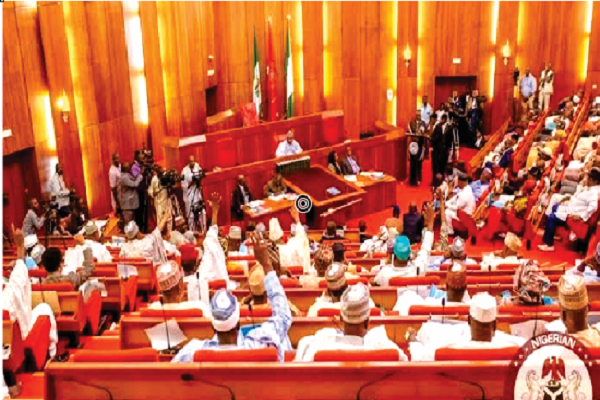
The Senate yesterday ordered mandatory health screening for every international passenger arriving Nigeria airports, seaports, land borders as Ebola resurfaces in the Democratic Republic of Congo with a scare case reported in the FCT.
The resolution followed an urgent motion by Senator Francis Fadahunsi, who warned that with Lassa fever already ravaging states, Nigeria cannot afford another outbreak.
“Protecting our entry points is far cheaper than managing Ebola,” Fadahunsi told the chamber.
Lawmakers insisted screening must be total and indiscriminate — no exemptions based on nationality or departure country because infected travellers can transit through safe-listed nations.
Senator Diket Plang raised the stakes further, demanding immediate funding for NCDC and Port Health Services, including release of withheld funds and emergency budget.
Senate President Godswill Akpabio said the Federal Government has started releasing Ebola response funds but ordered relevant committees to track every kobo.
“Ascertain whether the funds were released and judiciously utilised. Any outstanding debt must be released by the Finance Ministry without delay,” Akpabio directed.
At least 72 civilians who had been prospecting for gold in a border region of Sudan have been killed in air strikes, a regional rights group said.
Emergency Lawyers, based in the Sudanese capital, Khartoum, said jets targeted the so-called artisanal miners at a popular gold mining site on Saturday.
Neither the Egyptian government nor the de facto Sudanese authorities have so far commented.
Cairo has previously faced accusations of deadly strikes on gold prospectors as part of a crackdown on illicit activity along its southern border.
Emergency Lawyers noted the previous alleged attacks and said they represented not only a violation of Sudan’s sovereign territory but demonstrated the government’s lack of control over the region.
“The deliberate targeting of unarmed civilians violates international humanitarian law and the right to life,” it said in a statement on Sunday. “These acts may constitute war crimes.”
It noted that its death toll was provisional and could rise.
The Paris-based Sudan Tribune reported that the death toll could far exceed the number reported by Emergency Lawyers, citing a survivor of Saturday’s attack who said many more people had been injured.
Eyewitnesses said the attack began around 06:00 local time (04:00 GMT), with the aircraft firing more than five missiles directly at the miners’ camps, destroying them and excavation pits with people still inside, the newspaper wrote.
The Sudan Tribune reported claims in June that Egyptian forces had used drones and artillery to target artisanal mining sites in the same region, killing several, after sporadic incidents of Egyptian border guards of burning equipment, torching temporary shelters, and firing live ammunition to disperse mine workers.
Days later, Egypt’s border agency announced that it and the military had begun a sweeping security campaign along the border to foil illegal migration, drug smuggling and illegal mining.
At the same time, Sudan’s de facto leader announced an investigation into the alleged strikes, which were said to have killed dozens.
Gold lies at the core of the border tensions.
Sudan’s ongoing civil war has led to a surge in artisanal mining – and often risky practice conducted by civilians with rudimentary tools and without official permission – particularly in remote areas near its borders.
Gold-rich areas lie along porous borders in terrain historically associated with cross-border smuggling routes, with artisanally mined gold potentially feeding into those channels.
Egypt’s border force said in June that it had seized 86 tonnes of gold ore along with amateur prospecting equipment.
Artisanal mining has also reportedly continued in Sudan’s conflict zones and smuggled gold may be a source of income for armed insurgent groups.
This has raised concerns of illicit Sudanese gold undermining the legitimate Egyptian gold market.
Several German fighter jets will take part in the Northern Atlantic Treaty Organisation (NATO) annual nuclear defence exercise this week as troops from 17 countries take part in the Steadfast Noon drill.
The German Air Force said three Tornado jets will take part in the exercise hosted by Italy, which starts Tuesday and runs for about a week and a half.
The jets are normally stationed in Büchel in the German state of Rhineland-Palatinate.
NATO has not revealed the exercise scenario but said its scale would be comparable to last year’s drill, which involved around 2,000 personnel and more than 70 aircraft.
Last week, NATO’s head of nuclear policy, Nassima Barrows, said the exercise was designed to demonstrate the alliance’s readiness and ability to defend its territory.
No real nuclear weapons will be used, she added.
NATO said the exercise was not linked to current events or directed at any specific country.
Military experts say the drills, held regularly in October, include practising the safe transport of weapons from underground storage facilities to aircraft and mounting them on fighter jets.
Only practice bombs without real nuclear warheads are used during the drills.




Troops Neutralise over 60 Terrorists, Rescue70 Kidnap Victims in One Week
Share By David Torough, Abuja The Armed Forces of Nigeria (AFN) have neutralised more than 60 terrorists and rescued at...


Accident Victims’ Remembrance Day: FRSC Records 7,156 Crashes, 3,445 Deaths
ShareThe Federal Road Safety Corps (FRSC) has recorded 7,156 road traffic crashes, resulting in 3,445 deaths and 22,292 injuries across...


Mutfwang Inaugurates State-owned Security Outfit, Operation Rainbow
ShareFrom Jude Dangwam, Jos Plateau State Governor, Caleb Manasseh Mutfwang, has inaugurated 353 operatives of the state-owned security outfit, Operation...


Otu Woos Investors, Promises Incentives, Support for Businesses in C’River
ShareCross River State Governor, Bassey Otu has called on private-sector investors to invest in the state, with assurances of incentives,...
2027: Tompolo Deploys 50 Vehicles in Enugu, C’River for Tinubu’s Re-election
ShareGrand Patron of the PBAT Door-to-Door Movement, High Chief Oweizidei Government Ekpemupolo, has donated 50 vehicles for President Bola Tinubu’s...


2027 Election: Wike Rallies Supports for Tinubu, Aduda
ShareBy Laide Akinboade, Abuja The Minister of the Federal Capital Territory (FCT), Nyesom Wike, on Monday, rallies supports for President...

NDIC Insists on Timely, Transparent Valuation of Failed Banks’ Assets
ShareBy Tony Obiechina, Abuja The Nigeria Deposit Insurance Corporation (NDIC) has raised concerns over the failure of some borrowers of...


Xenophobia: Nigeria’s Patience Running Out, Fani-Kayode Warns South Africa
ShareBy David Torough, Abuja Nigeria’s High Commissioner to South Africa, Femi Fani-Kayode, has warned that Nigeria’s patience is wearing thin...


2027 Polls: INEC Purges 1.6m Invalid Names from Voter Register
ShareBy David Torough, Abuja The Independent National Electoral Commission (INEC) has removed 1,608,660 confirmed invalid registrations from Nigeria’s voter register...


2027: Tompolo Deploys 50 Vehicles in Enugu, Cross River for Tinubu’s Re-election
ShareGrand Patron of the PBAT Door-to-Door Movement, High Chief Oweizidei Government Ekpemupolo, has donated 50 vehicles for President Bola Tinubu’s...