
Foreign News
80% African Countries May Miss COVID-19 Vaccination Goal -WHO


The World Health Organisation (WHO) said on Thursday that Africa could miss the goal of vaccinating the most vulnerable 10 per cent of its population against COVID-19 before the end of September.
New WHO data shows nearly 80 per cent of countries on the continent, or 42 out of 54, are off track on meeting the global target set in May by the World Health Assembly, if the current rate of vaccine deliveries and inoculations continues.
The Assembly, which is the world’s highest health policy-setting body, challenged all Governments to vaccinate 10 per cent of their population by the end of September.
So far, nine African countries, including South Africa, Morocco and Tunisia, have met the goal, and three more could be joining them at the current pace.
Two additional countries could meet the target if vaccinations are sped up.
“With less than a month to go, this looming goal must concentrate minds in Africa and globally,” Dr Matshidiso Moeti, WHO Regional Director for Africa said in a statement.
“Vaccine hoarding has held Africa back and, we urgently need more vaccines but as more doses arrive, African countries must zero in and drive forward precise plans to rapidly vaccinate the millions of people that still face a grave threat from COVID-19.”
Africa received nearly 21 million vaccine doses in August through the COVAX solidarity initiative: an amount equal to the previous four months combined.
More vaccines are expected from COVAX and the African Union by the end of the current month, WHO said, which could see enough doses delivered to meet the 10 per cent target.
Even though countries ramped up vaccinations following the increased shipments last month, 26 nations have used less than half their doses.
Overall, Africa has received 143 million vaccines, and 39 million people, or roughly three per cent of the continent’s population, are fully inoculated. In comparison, the figure is 52 per cent in the United States and 57 per cent in the European Union.
“The inequity is deeply disturbing. Just two per cent of the over five billion doses given globally have been administered in Africa.
“Yet recent rises in vaccine shipments and commitments shows that a fairer, more just global distribution of vaccines looks possible,” Moeti said.
WHO urged countries to continue to address operational gaps and continually improve, adapt and refine their vaccination campaigns.
Thirty governments have submitted data on operational readiness which reveals that one in two has not conducted reviews critical to assessing and fine-tuning progress
Furthermore, one in three has not updated their National Vaccine Deployment Plans, which instruct all COVID-19 vaccination actions in each country.
WHO is providing countries with tailored policy advice and technical guidance and support to improve logistics, planning and monitoring.
Meanwhile, the agency reported that COVID-19 cases are declining slightly in Africa but remain “stubbornly high”.
An increase in new cases in Central, East and West Africa, pushed numbers up to nearly 215,000 for the week ending Aug. 29
Twenty-five countries, over 45 per cent, are reporting high or fast-rising caseloads, while over 5,500 deaths were reported during the same period.
Moeti underscored the need to remain vigilant.
“Although Africa’s third wave peaked in July, the decline in new cases is at a glacial pace – far slower than in previous waves,” she said. “The pandemic is still raging in Africa and we must not let our guard down. Every hour, 26 Africans die of COVID-19.”
WHO is closely monitoring the spread and evolution of COVID-19 variants in Africa.
The highly transmissible Delta variant has been found in 31 countries, while the Alpha variant has been detected in 44 countries and the Beta variant in 39.
The new C.1.2. variant, first reported to WHO in July, has been identified in 114 cases in South Africa. Four other African countries have reported single cases, while cases have been very low internationally. (NAN)







Poland plans to ban mobile phones in all primary schools from next academic year under draft legislation approved by the government on Tuesday.
The proposal, which will now be submitted to parliament, would take effect on September 1, 2026.
In Poland, primary school education runs through the eighth grade.
The planned law would prohibit the use of mobile phones and other devices capable of recording audio or video during lessons and breaks.
The ban would apply to both public and private schools, the Education Ministry said.
Exceptions would be permitted when the use of a phone is required for teaching purposes, educational support, or for health and safety reasons.
Education Minister Barbara Nowacka said the measure is a response to calls from teachers for stricter rules on smartphone use in schools.
She said that more than half of Poland’s schools have already introduced similar restrictions on a voluntary basis.
The government also approved a package of measures aimed at strengthening child protection online, which must likewise be approved by parliament.
The proposals include tighter restrictions on minors’ access to websites containing pornography and measures designed to speed up the removal of illegal online material.
Under the plans, operators of adult-content websites would be required to verify users’ ages anonymously, without collecting browser data or personal information.

Authorities in the Democratic Republic of Congo (DRC) have reopened the main airport in Ituri Province, the epicentre of the country’s ongoing Ebola outbreak, after a 10-day suspension of commercial flight operations.
The airport in Bunia, the capital of Ituri, resumed operations on Tuesday following the implementation of health and safety measures aimed at containing the spread of the disease.
The DRC is currently battling a major outbreak of Ebola, a highly contagious haemorrhagic fever that is suspected to have claimed at least 246 lives in the country and neighbouring Uganda, according to the Africa Centres for Disease Control and Prevention.
On May 23, authorities halted all commercial flights to and from Bunia Airport in eastern DRC, a region already affected by armed conflict. During the closure, only humanitarian and medical flights were permitted to operate.
Health Minister Samuel Roger Kamba said the temporary shutdown was necessary to allow authorities to introduce measures designed to safeguard travellers and limit the risk of transmission.
Announcing the reopening on Tuesday, the transport ministry said an assessment of the outbreak response and monitoring systems had been conducted.
“Conditions are now in place for a gradual and safe resumption of flights.”
The government said the reopening would be carried out progressively while health authorities continue efforts to contain the outbreak.
Health authorities in the Democratic Republic of Congo are celebrating after five patients, who had Ebola and now recovered, were allowed to leave the hospital.
The current outbreak is suspected to have killed almost 250 people.
But those infected can get better and officials stress that people should seek medical help if they believe they have contracted the virus.On Sunday, there was a ceremony for a group of four nurses who were discharged from a hospital in Bunia, the provincial capital of Ituri, the epicentre of the outbreak.
“We were really demoralised because we knew that at some point… we were going to die. That was it… I’m telling you, if you have never been isolated, you will not know that it’s not easy,” Nurse Etienne Ezo told the Reuters news agency as he reflected on his experience.
The first survivor, a laboratory worker, to have recovered left hospital last week.
Health workers are on the frontline in the battle against the spread of the virus and are often the most at risk.
“This encouraging milestone bears witness to the effectiveness of field interventions: early detection, medical care, contact tracing and community engagement,” DR Congo’s Institute of Public Health wrote on social media.
Its director, Dr. Mwamba Kazadi, described the recoveries as a victory worth celebrating, adding that early detection and strong care make a difference.
Tedros has called on communities to work with medical staff after some residents attacked health centres over strict burial rules. The bodies of those suspected of having died of Ebola are not allowed to be handled by grieving relatives, regulations which clash with local traditions.
In a joint statement with the Congolese government on Sunday, he said local communities are “at the heart of the solution” and that “success” in their response depends on their trust and engagement.
“Persistent challenges include early detection and isolation of cases, contact tracing, safe and dignified burials, robust infection prevention and control in health facilities, and strong community awareness.
“The Government and WHO call on all communities to continue adopting protective behaviours, including regular hand hygiene, early care seeking in health facilities, and sharing accurate information.”
There are now more than 1,000 suspected Ebola cases in the DR Congo, and at least 246 deaths. Neighbouring Uganda has reported nine confirmed cases and one death.
But in some affected areas, there is a sense of normality. In Bunia, schools and markets are open as people continue to go about their daily activities.
The current outbreak – the 17th in DR Cngo’s history – is caused by the Bundibugyo species of Ebola, which has no approved vaccines, though some are being worked on now.
While cases are concentrated in DR Congo’s Ituri, North and South Kivu provinces, and some in Uganda’s capital Kampala, people have also been tested outside of Africa.
Health officials in Brazil said on Saturday that they were investigating two suspected Ebola cases in São Paulo state.
Meanwhile, protests have erupted in the Kenyan town of Nanyuki over US plans to construct an Ebola quarantine facility for American citizens at an air base.
Residents marching through the streets say the facility may expose local people to infection and an outbreak of the virus. There have been no recorded cases of Ebola in the country.




Tinubu To Commission Fruit Juice Factories, BIPC Motorcycle Assembly Plant In Benue
ShareFrom Attah Ede, Makurdi President Ahmed Bola Tinubu is set to visit Benue State to commission the newly built ultra modern Bensono Concentrate Plant, Benva Juice Factory, and the Motorcycle Assembly...


Dangote Refinery Surpasses Capacity Target, Eyes 1.4m bpd Expansion
ShareBy David Torough, Abuja Dangote Petroleum Refinery and Petrochemicals has achieved a major operational milestone by increasing its crude oil processing capacity to 700,000 barrels...


Alia Appoints New Acting Head of Service in Benue
ShareFrom Attah Ede, Makurdi Benue State Governor, Rev Fr .Hyacinth Alia has approved the appointment of Dr. Ihu Eunice Ogbenyi as new Acting Head of Service (HoS)...
Oshonaike Hails Steady Progress of Nigerian Table Tennis Players
ShareSeven-time Olympian Olufunke Oshonaike said Nigerian table tennis players are making steady progress in spite of the challenges they face in competing...
Poland Bans Smartphones in Primary Schools
SharePoland plans to ban mobile phones in all primary schools from next academic year under draft legislation approved by the government on Tuesday. The...
Reps Minority Picks Ugochinyere as New Leader
ShareBy Ubong Ukpong, Abuja Following the defection of the former minority Leader of the House of Representatives, Kingsley Chinda, the minority caucus has nominated Hon. Ikenga...
Kano Revokes Private School Licences over Sexual Abuse
ShareFrom Aliyu Askira, Kano The Ungogo Local Government Area of Kano State has withdrawn the licences of all private schools within its jurisdiction following allegations that...


CBN Approves Regular Commercial Operations for Abbey Mortgage Bank
ShareBy Tony Obiechina, Abuja Abbey Mortgage Bank Plc, one of Nigeria’s longest‑standing primary mortgage banks, has secured regulatory approval from...


Owo Church Massacre: Court Sentences Four to Death for Terrorism
ShareBy David Torough, Abuja More than three years after the gruesome attack on St. Francis Xavier Catholic Church, Owo, Ondo...
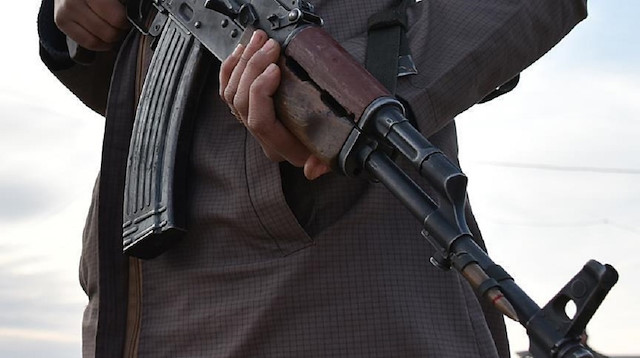
Terrorists Abduct Adelabu’s Sister, Twin Sons, kidnap Six Students in Zamfara
ShareBy Eze Okechukwu, Abuja and Ifeanyichukwu Nwannah, Gusau The nation’s worsening insecurity came into sharp focus on Wednesday, as separate incidents of...