
OPINION
Humphrey Nwosu as Compass for Electoral Reforms

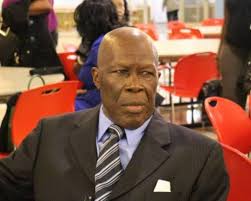
By Taiwo Adisa
One of the major actors in the June 12, 1993 election debacle, Professor Humphrey Nwosu, breathed his last on Thursday, October 24, in the United States of America, at the age of 83. He had served as the Chairman of the National Election Commission (NEC), now the Independent National Electoral Commission, between 1989 and 1993, his tenure terminated by the fiendish exchanges occasioned by the savage annulment of the election.
Professor Nwosu was a Professor of Political Science who was named the Chairman of the electoral body by former military leader General Ibrahim Babangida in circumstances similar to how former President Goodluck Jonathan named Professor Attahiru Jega into that same position on June 8, 2020.
Both IBB and Jonathan had previously not met with the men they named as the nation’s chief electoral officers. Nwosu served creditably, even though the military denied the nation the fruits of his service as NEC Chairman.
While in office, he was the executor of Babangida’s transition as it galloped from one bumpy end to another. The man was, however, determined to get something out of the assignment. He showed he was in office and in power in his determination to improvise a model into practical life mechanically.
He left no one in doubt that he was out to give back to the country of his birth from the pool of the political theories he had read and taught in the university. Working in the shadows of Babangida’s Political Bureau Report, which was the foundation of the regime’s unwinding transition programme, Nwosu applied his theoretical craft and modelled the Option A4 (Open Ballot System) and the Modified Open Ballot System.
With IBB’s regime having adopted a two-party system, it seemed a perfect fit for the elections and the results turned in at different intervals to the satisfaction of Nigerians. There was the local government election, state elections and then the National Assembly elections. At a stage, the nation was treated to a Diarchy, with a full-fledged National Assembly making laws for a military ruler. Everything looked set for the June 12, 1993, presidential poll, which was to crown a tedious transition programme that started in 1986.
Nwosu was upbeat that the law was on his side, despite the serpentine spirit donned by the infamous Association for Better Nigeria (ABN) of Senator Arthur Nzeribe and Abimbola Davies, lurking. Nwosu was prevented from announcing the presidential election in full, as the regime cited a midnight judgment secured by the ABN. Even at that, the whole nation was merely awaiting the official confirmation of what they already knew, Chief MKO Abiola, candidate of the Social Democratic Party (SDP) had defeated Alhaji Bashir Tofa of the National Republican Convention (NRC).
It was an election globally confirmed as the freest and fairest in the nation’s history but the Babangida junta denied Nwosu the accolades, it denied Chief Abiola the chance to savour his victory and drew back the hands of Nigeria’s democratic clock.
For years, Nwosu kept mute on the circumstances that surrounded the testy period of the annulled election but in June 2008, he spoke to TheNEWS magazine, just ahead of the public presentation of the book that chronicled his public service experience. He first told the magazine that he had a sense of history when the appointment fell on his lap and that he believed there was a need to produce a practical situation from the theories.
He said: “I felt I had to do my best to this nation to also convince the person who appointed me that I could do my best for Nigeria and satisfy my conscience and my constituency-the university community. You know, when members of the academic community are given a public assignment; people say they’re just talking theory and that you have to blend theory with practice.”
He described the June 12, 1993 election as a special moment in the nation’s history and said: “So you’ll find that June 12 as a movement was indeed the day Nigerians opted for a democratic political order. They didn’t care, and the parties cut across ethnic, state, and regional boundaries. And Nigerians were highly mobilized and they expressed their choices freely without interference. There was no stuffing of ballot boxes, and there was no manipulation, intimidation, or harassment. Nigerians came out as a body, just like people in the United States and Britain, and voted freely. No intimidation, no one lost his life anywhere, it was God-ordained.”
Indeed, the annulment of the election, which was announced by Babangida on June 23, 1993, was like a prison sentence for Nigeria’s democratic process. Alarm bells rang across the nation. There were threats of war. Many died. Many got maimed and countless went missing as protests engulfed the nation. The nation was on tenterhooks for years. With Nigeria on the brink of disintegration, power changed hands quickly.
General Sani Abacha replaced the Ernest Shonekan contraption left by a “stepping aside” General Babangida. He initially dangled the carrot before the political class but later unleashed his iron-fisted fangs. He battled the pro-democracy agitators with crude despotism. MKO Abiola, who had declared himself president, was arrested, and his wife Kudirat was killed, just as many top pro-democracy campaigners.
No doubt, the aftermath of the annulled June 12 was a broken regime and a fractured nation, culminating in the birth of a wobbling democracy. Democracy in its true form, having been dented with hefty blows in the series of leadership change from Babangida to Shonekan to Sani Abacha, whose death in 1998 paved the way for General Abdulsalami Abubakar to midwife the current Republic within eleven months.
As stated by Nwosu above, most of the kudos for the turnout of the June 12 election were largely due to his modelling efforts. He fashioned out Option A4, which ushered in the freest poll in the annals of Nigeria’s elections. In the interview published by The NEWS, Nwosu justified the decision by the Babangida administration to adopt a two-party structure and declared that a multi-party system would not yield the desired democratic objectives. He said that mushroom political parties cannot defend democracy as they would not be able to muster the structure across the country.
With what we have seen in recent years, Nwosu was right. Though the late Chief Gani Fawehinmi, SAN, had fought for the democratisation of the political party registration process, the fact remains that the multiplicity of parties may not necessarily serve the democratic cause. These days, many political parties are there for political jobs. They either withdraw in favour of the highest bidder a few days before the election, or they are the first to address the media to endorse the outcome of elections, all for a fee.
Incidentally, Prof Nwosu had recognised such shenanigans long before his demise and had equally recommended a revisit of his electoral models. He told TheNEWS: “I feel we should revisit the electoral reforms, modified open ballot system and option A4. We should go back to the two-party structure. We may even allow a third party for those who feel they cannot be accommodated in the two.
You could see in the days of SDP and NRC that you can have integrated parties that look to value consensus, parties that raise national consciousness, parties that have spread all over the country, and parties that cut across ethnic, and religious groupings. I am seriously addressing this issue because I believe in it, and I think that some Nigerians believe in it.”
In this era of troubled elections, I believe that Nwosu’s models should be revisited. His Option A4 should serve as our electoral compass going forward. The modified system and all that Nwosu brought to the table needed to be re-examined by the National Assembly, such that they could give the nation an electoral law that would work for all.
The factional chapter of the All Progressives Congress (APC) in Benue State has dismissed speculation that some of its prominent members have defected after attending a political meeting held at the residence of former governor Samuel Ortom.
In a statement issued on Sunday in Makurdi by the party’s State Publicity Secretary, Daniel Ihomun, the party clarified that the meeting—organized by the Strategic Partnership Group—was aimed at supporting the second-term aspirations of President Bola Ahmed Tinubu.
The gathering, which took place at Ortom’s residence, reportedly had in attendance several notable Benue indigenes, including Dr. Mathias Byuan, Executive Director (Housing Finance and Accounts) at the Federal Housing Authority, as well as Michael Kaase Aondokaa (SAN), Pius Akutah (PhD), Jeffrey Kuraun, and Sebastian Hon (SAN).
Ihomun said the attendance of APC members at the meeting should not be misconstrued as a sign of defection from the party. He stressed that members of the APC remain open to engaging with groups and stakeholders committed to the success of Tinubu’s administration and the implementation of his Renewed Hope Agenda.
According to the statement, the party believes that national development requires collaboration that transcends political affiliations, noting that the APC welcomes a growing coalition of Nigerians supporting the president’s policies.
The Benue APC further stated that it would continue mobilizing residents of the state—regardless of party loyalty—to support and vote for Tinubu in the 2027 presidential election.
The party also described claims that those who attended the meeting had abandoned the APC for other political platforms as “falsehoods being peddled by mischief makers,” insisting that such insinuations were baseless.
Ihomun reaffirmed the party’s confidence in the Renewed Hope Agenda, saying it would continue to deliver progress and prosperity for Nigeria.
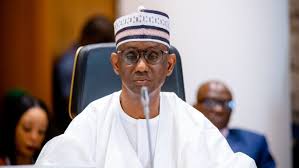
By Aaron Mike Odeh
Nigeria’s security environment has, for decades, remained one of the most complex governance challenges confronting successive administrations. From insurgency in the North-East to banditry in the North-West, separatist agitations in the South-East, and piracy in the Gulf of Guinea, the nation has struggled to maintain a coherent and coordinated security strategy.
Within this difficult context, the office of the National Security Adviser has emerged as a central pillar in shaping the country’s security architecture. Today, under the leadership of Nuhu Ribadu, many analysts believe Nigeria is witnessing the emergence of a new security order driven by intelligence coordination, institutional reforms, and strategic partnerships.The Office of the National Security Adviser has evolved significantly since Nigeria’s return to democratic governance in 1999. Several distinguished personalities have served in the role, each facing different security realities. Among the most influential was Aliyu Mohammed Gusau, a respected intelligence strategist who served multiple times and played a significant role in strengthening Nigeria’s intelligence coordination during the early democratic period. His tenure helped institutionalize the strategic importance of intelligence agencies in supporting presidential decision-making.
Following him were individuals such as Abdullahi Sarki Mukhtar and Owoye Andrew Azazi who served during turbulent periods marked by rising militancy and the early stages of insurgency in the North-East. Their tenures highlighted the increasing complexity of Nigeria’s security challenges as non-state actors began to challenge the authority of the state.
The administration of former President Goodluck Jonathan later saw the appointment of Sambo Dasuki, whose tenure coincided with the most intense phase of the Boko Haram insurgency. Although significant security operations were conducted during that period, controversies surrounding arms procurement funds later overshadowed the office and sparked national debates on transparency and accountability in security management.
Under the presidency of Muhammadu Buhari, the role was occupied by Babagana Monguno, a retired military general who coordinated Nigeria’s counter-insurgency efforts for nearly eight years. His tenure was characterized by large-scale military operations against insurgent groups and the continued struggle to contain banditry and kidnapping across several regions of the country.
The appointment of Nuhu Ribadu in 2023 by President Bola Ahmed Tinubu marked a significant shift in Nigeria’s security leadership profile. Unlike many of his predecessors who emerged primarily from the military establishment, Ribadu’s background combines law enforcement expertise, anti-corruption activism, and international policy experience.
Ribadu first rose to national prominence as the pioneer chairman of the Economic and Financial Crimes Commission where he led one of the most aggressive anti-corruption campaigns in Nigeria’s history. His efforts earned international recognition and helped reposition Nigeria’s reputation in global financial governance circles. Beyond Nigeria, he later engaged with international institutions and policy research networks, expanding his exposure to global security and governance frameworks.
One of Ribadu’s most notable contributions since assuming office has been the strengthening of intelligence-driven security operations. Instead of relying solely on military force, his approach emphasizes intelligence gathering, strategic coordination among security agencies, and preventive security measures. This shift has improved communication between the military, intelligence services, and law-enforcement agencies, creating a more integrated national security framework.
Another critical dimension of Ribadu’s strategy is technological modernization. Security operations are increasingly supported by surveillance technologies, data analysis tools, and modern intelligence systems that enhance early threat detection and operational efficiency. In an era where security threats evolve rapidly, such technological integration is essential for maintaining national stability.
Equally important is Ribadu’s emphasis on international cooperation. Nigeria’s security challenges are not isolated from regional and global dynamics. Terrorism, arms trafficking, cybercrime, and financial crimes often operate across national borders. Through diplomatic engagement and intelligence collaboration with international partners, Ribadu has strengthened Nigeria’s ability to confront transnational security threats.
His political experience has also played a role in shaping his strategic outlook. Having previously contested elections and participated in democratic politics, Ribadu possesses an understanding of governance, political negotiation, and public accountability. This political awareness complements his security background and helps bridge the gap between national security policy and democratic governance.
However, the success of any national security framework ultimately depends on collective national support. Security challenges do not discriminate based on religion, ethnicity, or political affiliation. Terrorism, banditry, and organized crime threaten all Nigerians regardless of background. For this reason, building a stable and secure Nigeria requires unity of purpose across political parties, religious communities, and ethnic groups.
Supporting capable leadership in national security institutions is therefore a patriotic responsibility. While no system is perfect and challenges remain, the emerging security strategy under Ribadu represents a renewed effort to modernize Nigeria’s security architecture and restore public confidence in state institutions.
In many ways, Nigeria appears to be witnessing the emergence of a new security order—one that integrates intelligence, technology, diplomacy, and community engagement. If sustained with strong institutional backing and national unity, this approach could significantly strengthen Nigeria’s ability to protect its citizens and safeguard its democratic future.
Aaron Mike Odeh, A Public Affairs Analyst, Media Consultant and Community Development Advocate wrote from Post Army Housing Estate Kurudu Abuja.
By Richard Ikiebe
Some politicians depend on massive turnout to win, while others thrive when citizens are too afraid to leave their homes to vote. The recent stream of videos from Benin City, of attacks on politicians and the vandalism of a party state secretariat, reprises a familiar script in Nigeria’s fear-based politics.
They are harrowing reminders that this second logic is still an active strategy.In political theory, “politics of fear” refers to the deliberate production and amplification of fear to secure power, shape opinion and justify the measures. In a landscape already saturated by insecurity and weak institutions, violence against segments of the electorate and opposition figures is a cheap and effective way to intimidate, exhaust and demobilise the opposition.
The goal is not to win the argument before the people. It scares enough people off the path to the polling booth so that a small group of loyalists remains. Those forced to abdicate their civic role reconsider and say, “Politics no concern me.” Thus, indifference becomes the first layer.
The next layer is cautious observation. This involves citizens who still watch, talk, and complain. They “sidon look,” attentive but disengaged. They have not entirely abandoned the system they no longer believe in; fear hardens their posture into resignation.
Stories of past electoral violence, thuggery at polling units, ballot snatching, and clashes with security forces add to the mix. Stay away begins to appear quite reasonable and justifiable: nothing will change, they will rig it anyway, and you might get hurt trying. At that point, “sidon look” turns fear and private cynicism into self-preservation and public silence.
Political fear is largely manufactured, crafted and transmitted through headlines, rumour and threats. Around every election, gruesome violence stories multiply about “unknown gunmen,” and neighbourhoods that had been “taught a lesson.” The discreet advice: today is not the day to move around.
With thugs and “area boys” at polling centres, masked security officers with uncertain loyalties, every citizen walking towards the polling unit is forced to ask themselves: is my single vote worth this risk? And the absence of credible protection reinforces the feeling. For many, even the determined, the answer is no. The result is low, skewed turnout, a quiet victory for the architects of fear.
In Nigeria’s patron-client landscape, fear largely travels through intermediaries. Traditional rulers, market leaders, transport union bosses and community gatekeepers sit between political elites and ordinary citizens, wielding mostly economic authority. In a healthy democracy, they would mobilise people to participate freely and defend their rights.
In our reality, these intermediaries “advise” citizens on which candidates must win to “deliver” results, and which parties must not gain a foothold in the community. The pressure for them ranges from loss of access to removal from office, or worse – physical harm. Under such conditions, their instructions become menacing signals not to come out at all. Bloc voting and mass apathy are the unlikely twins, the result of organised fear.
Fear-based politics has a simple electoral logic. High turnout creates uncertainty and genuine possibilities for change; low, selective turnout protects those already in control. When urban youth, minorities, or disillusioned swing voters decide it is safer to stay home, the electorate is filtered.
Those who remain are loyalists, dependants in patronage networks, or people mobilised by local intermediaries who can guarantee safety in return for forced obedience. In that narrower Nigeria, a winner need not be broadly popular. Fear has already structured the electorate in their favour.
As the Independent National Electoral Commission (INEC) releases the timetable for next year’s elections, fear-based politics risks hardening into the system’s default setting. Voters betrayed or endangered in 2015 and 2023 are already inclined to withdraw. Every election cycle that rewards intimidation and demobilisation tells politicians, this works, do more of it.
If this continues, elections will rest on the consent of a shrinking, skewed slice of the population, and state legitimacy will continue to erode steadily. Over time, a culture of learned helplessness takes root; the people assume that “they” will always rig elections, and the alternative begins to feel impossible. And democracy is devoid of popular choice.
Breaking this cycle requires justified outrage and a deliberate effort to change both the emotional climate of elections and the structures that make fear politically profitable. First, physical risks must be visibly reduced. Election security cannot be an afterthought or a mere show of force; it must credibly guarantee that voters can come and go unharmed, and that perpetrators and sponsors of violence face real consequences.
Second, intermediaries must be protected. Traditional rulers, religious leaders, and market associations will stay influential, while law and public scrutiny must limit how their authority is coerced or weaponised.
Third, fear narrative must shift through counterstrokes of courage, solidarity and efficacy. Civic and political education must speak directly to fear and “sidon look,” helping citizens recognise demobilisation tactics and see abstention as a costly choice, and not neutral self-protection.
If fear remains a most reliable political instrument, each election will become another expression of a paper-thin democracy that evaporates at the polling unit. The challenge is to move from rule by fear to rule by consent, from a politics defined by who stays away to one genuinely shaped by who dares to show up.
Dr Richard Ikiebe is a Media and Management Consultant and Teacher.



Let Eid Mark a National Reset — CAN
ShareCongratulates Muslims on Eid-el-Fitri, urges unity amid economic, security challenges By Laide Akinboade, Abuja The Christian Association of Nigeria (CAN),...
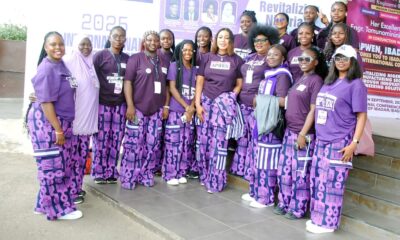

IWD:APWEN Bayelsa Celebrates Female Engineers, Launches Mentor-Mentee Pairing Program
ShareFrom Mike Tayese, Yenagoa The Association of Professional Women Engineers of Nigeria (APWEN), Bayelsà chapter has celebrated the International Women’s...

Julius Berger Delivers Landmark CSR Activities in Rivers State
ShareBy Mike Odiakose, Abuja Julius Berger Nigeria PLC, the nation’s premier engineering construction powerhouse, is not only building bridges and...

Adebayo: Age Not the Issue, Nigeria Needs Leaders Who Truly Love the Country — Archbishop Kanu
ShareBy Mike Odiakose, Abuja Former Prelate Emeritus of the Methodist Church of Nigeria, Archbishop Uche Kanu, has said that Nigeria’s...


Cleric, Followers Observe Eid despite Sultan’s Directive
ShareA Sokoto-based Islamic scholar, Sheikh Musa Lukuwa, yesterday led his followers in observing Eid al-Fitr prayers in defiance of a directive issued...

CAF Executive Member Calls for Rejection of Abject Afcon Decision
ShareThe decision to strip Senegal of the 2025 Africa Cup of Nations title is “abject” and “we have to denounce...


Oil Crosses $110 a Barrel after Gas Field Strike
ShareOil prices rose above $110 (£82.78) a barrel after Iranian media reported an airstrike hitting a facility on the world’s largest natural gas field. The...


Army Conducts Shooting Exercise, Kaduna Residents Told Not to Panic
ShareThe Headquarters, 1 Division Nigerian Army, says it will conduct its First Bi-Annual Range Classification Exercise for 2026 from March 23 to 27, at the Nigerian Air...

How God Changed My Story after 16 Years in Music, Says Spyro
ShareAfrobeats singer Spyro has revealed that 16 years of perseverance and struggle in the music industry finally paid off three...

Asake Reaffirms Loyalty to Olamide, Downplays Split Rumours
ShareAfrobeats star Asake has reiterated his unwavering loyalty to his former label boss and mentor, Olamide, amid speculation of a...