
NEWS
President Tinubu, the North and Distortions of Politics

By Tunde Rahman
Two years in the saddle, has President Bola Tinubu undercut the North in running the country’s affairs and distributing political appointments and infrastructure? Has he reneged on the promise to the Northern elites three years ago in Kaduna that he would run an all-inclusive government, protect the national interest and be fair to the North?
It was in a bid to answer these critical questions that governors, ministers and other top government functionaries from the Northern region converged on Arewa House, Kaduna on July 29 and 30, 2025, under the auspices of the Ahmadu Bello Memorial Foundation as, to present their scorecards and tell the region what they had all done for it since May 2023.
Ultimately, the intervention by the governors and government functionaries yielded a verdict that outrightly rejected what the questions inherently suggest. They reeled out impressive strides recorded by the administration in infrastructure and security.
According to them, President Tinubu has done a lot for the North. Whatever underdevelopment in the region should not be attributed to him but to Northern leaders who neglected the area for many years.
However, it was apparent that the motive beneath the frenzied conversation about the Tinubu administration’s achievements is not so much what the President has done–or not done–for the North regarding distribution of national offices and infrastructure.
It was, essentially, the interests of some Northern elites angling to shape political decisions and the politics of 2027 at play. As my friend, the Publisher of The Cable and former Editor of Thisday, Simon Kolawole, would say, “it’s all politics”, and this time, 2027 politics.
It’s a page from an old politics playbook: couching the political elite’s views, opinions, and interests as those of the larger society where they operate. To achieve their aim, they deploy all kinds of subterfuge, including ethnicity or religion.
Richard Sklar hints at this when he states that “tribalism is an instrument in the hands of political elites.”
This is evident in the outburst of the New Nigeria Peoples Party leader, Senator Rabiu Musa Kwankwaso, who recently accused President Tinubu of marginalizing the North in infrastructure development. However, available evidence points to the contrary.
According to the Director-General, Budget Office, Dr. Tanimu Yakubu, who should know, more than half of the capital budgets for 2024 and 2025 were allocated to projects and programs in Northern Nigeria. “Contrary to politically-motivated narratives, Northern Nigeria is not on the margins; it is at the heart of federal investment priorities.
Over 50% of the capital budget for 2024 and 2025 is traceable to projects and programs in the North when major national trunk infrastructure and water basin investments are properly accounted for,” he declared
Tanimu outlined flagship projects and interventions that prove the administration’s commitment to developing the North.
These include the Abuja–Kano Expressway dualization, ₦12.1 trillion Sokoto–Badagry Superhighway, the most ambitious cross-regional road project in decades, spanning 1,068 km, costing ₦3.63 trillion, with 30% of it already approved by President Tinubu for the project’s initial rollout in Sokoto and Kebbi; Kano–Maradi Standard Gauge Railway, a Sahel trade corridor enabler; Zungeru–Kano Power Transmission Line, boosting industrial power supply; Funtua and Bauchi Inland Dry Ports for agro-export and logistics; and Expansion of Airport Runways in Katsina, Maiduguri and Kaduna.
But first, there’s a need for recourse to Tinubu’s promise to the North before he was elected president. On October 17, 2022, Tinubu came before the Northern elite to present his agenda for the region and solicit their votes.
This was in the run-up to an election where former vice president Atiku Abubakar, the Peoples Democratic Party candidate in the poll, had fouled the air, fanning the embers of ethnicity, telling the North he belonged to it and was the best candidate to protect the Northern interest. There was tension in the land.
The nation’s fault lines were being toyed with. Atiku’s erstwhile presidential running mate in the 2019 election, who had become the Labour Party candidate, Mr. Peter Obi, was also unrelenting, ratcheting up ethnic and religious sentiments for his candidacy.
It was against this backdrop that Tinubu mounted the podium at the Arewa House. Tinubu and Atiku were leading other candidates in the North at the time. Thus, the North had become divided, and the atmosphere at the talks venue was charged. In a measured but purposeful tone, Tinubu told the gathering that as president, he would consolidate on the investments of the late President Buhari administration in all sectors to build on the gains recorded. He spoke of his plans to ensure that insecurity was nipped in the bud in the North and across the country, harness the resources that abound in every part of the nation for greater economic development, and utilise the country’s vast natural resources through strategic investment in infrastructure.
Speaking specifically and cautiously on his plans for the North, he said, among other things, that the region has a comparative advantage in agriculture, and that under his presidency, the North would emerge as the hub of agribusiness in Africa through massive investment in the sector in collaboration with the private sector. “Agriculture is of special interest to me. It is both an economic and existential issue for every country. Experience in the last seven years has shown the potential of agriculture in solving the problem of unemployment and boosting our GDP,” he said.
On his plans for education and reducing out-of-school children in the North, he said that working with both states and local governments to reform and retool the system, he would provide the required leadership and mobilise investment for the sector’s development. According to him, these reforms will give special attention to the welfare and training of teachers and lecturers as necessary catalysts for the better system the North desires.
He identified some priority roads and hydropower projects in the North that had either not been followed through on, and new ones he would introduce to aid the region’s development.
His lucid presentation and the way and manner in which he calmly but firmly responded to the questions thrown at him were pretty impressive. I know this as a fact because I was there. With that event, the North and Tinubu entered into a pact. In the 2023 presidential election results, the North voted well for Tinubu, giving him about 60% of the votes that brought him to power.
Are there gaps in what he promised the North and what he delivered to them? Has President Tinubu mistreated the North two years down the road? I do not think so! The President has kept faith with his promise. However, there is room for improvement. Ongoing projects in the North, like the Sokoto-Badagry Highway, Abuja-Kaduna-Kano reconstruction work, Mambilla Hydroelectric Dam, Baro Inland Port, and Ajaokuta Steel Mill, should be vigorously pursued.
The views expressed at the Kaduna two-day summit titled “Assessing Electoral Promises: Fostering Government-Citizens’ Engagement for National Unity” were interesting, though admittedly mixed. The Chairman of the Arewa Consultative Forum (ACF) Board of Trustees, Bashir Dalhatu, alleged that the Tinubu government had neglected the region, especially in its budget allocations and infrastructural development. “Two years into President Tinubu’s four-year tenure, the feeling among the people of the North is, to put it mildly, completely mixed,” he said, citing specific federal budget figures to underscore the alleged neglect.
Some contrasting submissions offset such a grim prognosis. Kaduna State Governor Uba Sani and Governor Inuwa Yahaya of Gombe State said the President is committed to fulfilling his promises to the North. At the same time, Secretary to the Government of the Federation George Akume affirmed that President Tinubu’s administration would leave no region behind. Vice President Kashim Shettima, represented by Dr. Aliyu Moddibo, his Special Adviser on General Duties, noted that the current administration’s inclusive reforms were in line with Nigerians’ economic reality.
Minister of Budget and National Planning Atiku Bagudu stated that the administration is implementing policies to transform Nigeria’s economy and fulfil the promises made to Nigerians. “The President has complete faith in Nigeria. He does not make decisions based on ethnicity or region. His government is rooted in fairness and inclusivity,” he said.
On the fight against banditry and terrorism, National Security Adviser (NSA) Nuhu Ribadu said the Tinubu administration had made giant strides in protecting lives and properties. Ribadu said Nigerian security forces had subdued and eliminated some of the terrorist leaders, who had unleashed terror along the Kaduna-Abuja highway, making it safer for travellers. The NSA noted that the once-troubled highways from Zamfara to Katsina, Kaduna-Abuja, and Kaduna to Birnin Gwari, which were a nightmare for travellers, can now be travelled at night due to security improvements. “Politics will not allow people to credit us for all that,” he added.
In the final analysis, the Kaduna Governor gave the Northern leaders food for thought when he declared that the Northern woes should not be blamed on President Tinubu. “Yes, President Tinubu made promises. But let’s be honest: he has kept faith with the North in many critical areas – security, agriculture, education, and economic inclusion. The real question is, have we kept faith with our people as Northern leaders?”
Rahman is Senior Assistant to the President on Media & Special Duties.
 | ReplyReply allForwardAdd reaction |
NEWS
West Africa: How WAHO Successfully Harmonized Procedure Manuals for Health Disciplines and Professions

By David Torough
After three days of serious brain-storming sessions in Abuja, the West African Health Organization (WAHO), has successfully developed harmonised procedure manuals for all Health Disciplines and Profession in the ECOWAS region.
The manuals, described by an official of the heath body as one of the most technical documents ever produced by WAHO , provide clear, standardised guidance on Professional conduct and ethics — the values that must govern our practice; Clinical and operational procedures — how we deliver safe, evidence-based care and; Licensing, registration, and discipline — how we assure competence and accountability.
Other areas covered by the manuals include continuing professional development — how we keep our workforce current and relevant and; Cross-border practice and mutual recognition — how we enable our professionals to serve where they are most needed, without compromising standards.
Speaking at the closing of the workshop on Saturday, Nigeria’s Coordinating Minister of Health and Social Welfare, Professor Muhammad Ali Pate, described the development of the manuals as a landmark achievement that has now moved the ECOWAS Region from aspiration to action.
“Over the past days, you have worked tirelessly to address a long-standing challenge in our sub-region: the fragmentation of standards, procedures, and expectations that guide our health professionals,” the minister told the participants, made up of representatives of Professional Regulatory Bodies, Heads of Health Training Institutions, Development Partners and other resource persons.
The minister, who was represented by the WAHO Liaison Officer for Nigeria, Dr. Dakum Longji Benji, further said, “When a nurse trained in Ghana, a doctor trained in Senegal, a pharmacist trained in Nigeria, or a laboratory scientist trained in Sierra Leone steps into a facility anywhere in our region, our people can now be assured of the same quality, the same safety, and the same professionalism.”
Recalling the words of Nelson Mandela: “Health cannot be a question of income; it is a fundamental human right,” the minister declared: “Today, I can say with pride that you have given practical meaning to those words.
He noted that the strength of any health system lies not in its buildings or equipment, but in its people — in the competence, professionalism, and integrity of its health workforce, adding that the manuals developed during the workshop complement the great strides WAHO has already made in harmonising training curricula across the region.
“You have now translated those curricula into daily practice — from the classroom to the clinic, from the laboratory to the community,” he stated.
He charged the participants to first, return to their respective countries as champions of these manuals, and work with their regulatory councils, training institutions, and ministries of health to domesticate, adopt, and enforce them.
“Second, let us ensure these manuals are living documents — regularly reviewed, updated with new evidence, and responsive to emerging health threats and technologies.
“Third, let us hold ourselves accountable. The true test of this workshop will not be in this hall, but in our hospitals, health centres, and communities, where a mother, a child, or an elderly patient encounters a health professional they can trust,” he said.
He commended WAHO under the leadership of the Director-General for its vision and leadership, just as he thanked all the experts, rapporteurs, facilitators, and development partners who contributed their knowledge, time, and resources to this success.
In his remarks, the Representative of the Deans of Faculties, Professor Vodouhe Ulrich, said WAHO should ensure the wide dissemination of the harmonised procedure manuals developed during the workshop, making them accessible to health training institutions and professionals throughout the ECOWAS region.
On his part, the representative of the West African Colleges, Professor Yao Tettey, recalled that at the opening ceremony, he had described the document that were about to be finalised as the foundation of all our professional documents, noting that following the three-day deliberations, “I am even more convinced of its importance.
“Over the past three days, we have engaged in extensive discussions, exchanged ideas, expressed differing opinions and ultimately reached a consensus on important technical issues. Together, we have produced a document of considerable technical and practical value. It is not simply another procedural manual. It is a comprehensive reference that reflects our collective professional experience and addresses practical needs that are not adequately covered in conventional textbooks.”
He therefore appeal to everyone responsible for the remaining stages of the process to ensure that the document is properly finalised, thoroughly reviewed and submitted to the West African Health Organisation. He also appealed to WAHO to ensure that the finalised manuals are widely disseminated and made accessible to health professionals, training institutions and students across the region.
“These manuals should serve not only as procedural references but also as practical training resources for current and future generations of health professionals. Their value will ultimately depend on how effectively they are used to strengthen professional practice and improve the quality of healthcare delivery in our Member States,” he said.
Professor Awa Seck, who spoke on behalf of the ECOWAS Chairmanship, commended WAHO for its leadership in bringing us together and providing the institutional framework necessary to advance this important regional initiative.
“The quality of our deliberations demonstrates that we are moving in the right direction towards more consistent and harmonised professional practices across the ECOWAS region. I also extend our sincere appreciation to the Government of the Federal Republic of Nigeria for its hospitality and the excellent arrangements made for this workshop,” she remarked.
According to Prof Seck, the principal objective of this meeting was to finalise harmonised procedure manuals for health professionals, thereby providing our countries with practical tools to improve the quality of healthcare delivered to our populations
“The progress achieved represents an important milestone in the development of common professional standards and harmonised procedures across the region,” she noted.
The President of the Regional Council, Professor Koffi Balogou, thanked everyone participant for the dedication demonstrated throughout the workshop, as he expressed confidence that the remaining tasks would be completed and that the final documents would be of considerable value to health professionals across our region.
In his closing remarks, the Director-General of WAHO, Professor Palokinam T. PITCHE, noted that the documents developed during the three-day workshop “represent some of the most technically demanding work undertaken within our regional efforts to harmonise health professional training and practice,” stressing that at WAHO, “we place considerable importance on technical rigour, professional competence, transparency and the quality of our work.”
Prof PITCE, who was represented by Professor Joseph OLORUNDA, explained that it was in furtherance of this commitment that WAHO brought together experienced professionals and recognised experts who understand the realities of health training, regulation and service delivery in the ECOWAS Member States.
According to him, “the development of these manuals builds on the substantial work already undertaken to harmonise health professional training curricula across the ECOWAS region. Those harmonised curricula have attracted interest beyond West Africa, demonstrating the technical value of the region’s collective efforts.”
He said: “Our objective is not simply to produce documents, but to establish comprehensive and practical reference materials that can guide professional training and practice. The expertise assembled here has enabled us to develop resources that reflect the particular needs of our region while remaining relevant to wider professional standards. The significance of this work extends beyond the documents themselves. We are laying the foundations for greater professional mobility, mutual recognition of qualifications and improved consistency in healthcare delivery across ECOWAS Member States.
“Our ambition is to create an environment in which appropriately qualified health professionals can practise across national borders within a harmonised framework of professional standards. A health professional trained in one Member State should be able to contribute effectively to healthcare delivery in another, subject to the applicable regulatory requirements. This is an essential dimension of regional integration
“The work being undertaken today will also benefit future generations of health professionals, who will inherit clearer professional guidance and more consistent standards.”
The Director-General further reminded participants that the work was not yet complete, pointing out that the documents must be carefully reviewed, edited and finalised to ensure that they meet the required technical and professional standards.
“Once finalised, WAHO intends to facilitate access to these materials through its institutional platforms, including its website. The aim is to make the manuals available to health professionals, training institutions, regulatory authorities and other relevant stakeholders. Their use and reproduction will be subject to the applicable copyright and intellectual property arrangements. Where necessary, WAHO will also facilitate technical support to institutions seeking guidance on the practical application of the manuals. The ultimate objective is to ensure that these documents are not merely published but effectively used to strengthen healthcare delivery,” he said.
From Shabanyan Kantiok, Kaduna
The Christian Association of Nigeria in Chikun Local Government Area of Kaduna State has urged Christian leaders and residents to support the 2027 Kaduna Central Senatorial candidate of the All Progressives Congress, Senator Shehu Sani, while appealing for the reinstatement of traditional rulers removed during the administration of former Governor Nasir El-Rufai.
The CAN chairman in Chikun made the appeal recently when Sani met with 48 zonal leaders of the association in Sabo Tasha, headquarters of the local government area, to seek their prayers and support ahead of the 2027 general elections.
The chairman urged the former senator to leverage his relationship with Governor Uba Sani to facilitate the return of the affected traditional rulers, saying such a move would promote reconciliation and strengthen relations between the government and the affected communities.
He expressed optimism that reinstating the monarchs would generate massive electoral support for the APC-led administration in Kaduna State during the 2027 elections.
The CAN chairman also appealed to Governor Uba Sani to upgrade the Sa Gbagyi traditional stool to first-class status, arguing that Chikun, which hosts the Kaduna State capital, deserved such recognition.
He said the elevation would reflect the importance of the Gbagyi traditional institution and the strategic position of Chikun in the state, urging the governor to consider the request in the interest of the people.
The CAN leadership also appealed for more political appointments for Chikun indigenes, lamenting that the local government currently had no commissioner in the Kaduna State cabinet.
Welcoming Sani, the chairman described the visit as significant, noting that the former senator was the first politician to approach the Christian community for such an engagement.
He said the meeting provided an opportunity for the community to communicate its concerns and expectations to political leaders.
The CAN chairman also cautioned against portraying the APC as a party belonging to a particular religious group, insisting that it should accommodate Nigerians irrespective of their religious affiliations.
“The APC is for everybody. It should not be seen as a party belonging to one religion,” he said.
He further lamented what he described as the inadequate representation of Chikun in the distribution of political appointments, arguing that the local government had qualified professionals capable of contributing meaningfully to governance.
“We are appealing that in the next dispensation, Chikun should be considered for key political appointments. We have qualified people who can serve,” he said.
Speaking during the engagement, Sani urged pastors to rise above religious and ethnic sentiments when making political choices, arguing that Nigeria needed leaders capable of uniting people across different divides.
He cautioned against what he described as selective empathy in responding to killings and insecurity, insisting that the lives of victims should matter irrespective of their religious or ethnic identities.
The former senator maintained that the condemnation of violence should not depend on whether victims belonged to a particular religious or ethnic group, stressing that every Nigerian deserved protection.
He also questioned the silence of some political and religious actors over security challenges during previous administrations, urging Nigerians to apply the same standards of accountability to leaders across political divides.
Sani further argued that opposition to President Bola Tinubu’s administration should not be driven solely by ethnic or religious considerations but should be based on an objective assessment of government policies and performance.
He challenged opposition politicians to account for their records in public office and explain their contributions to improving the lives of Nigerians rather than concentrating solely on criticising the current administration.
The APC senatorial candidate also encouraged pastors and Christian leaders to participate actively in politics, saying religious leaders should not completely abandon the political space to politicians.
He said his visit was aimed at building bridges across religious communities, seeking the prayers of the pastors and securing their support ahead of the 2027 Kaduna Central senatorial election.
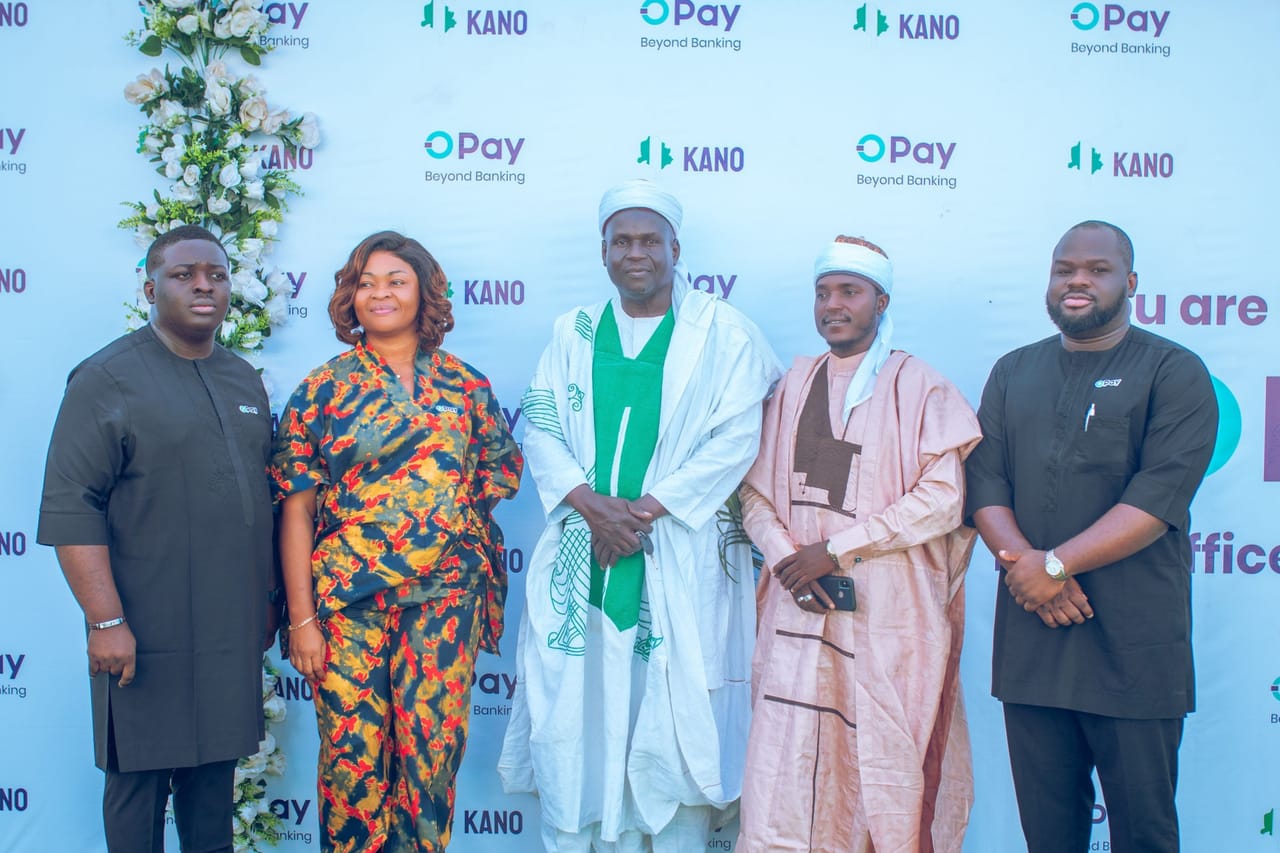
OPay, Nigeria’s leading digital bank, has opened a new office in Kano State, strengthening its presence in Nigeria and bringing its financial services and customer support closer to individuals, businesses and communities across the state.
The new office, located on Hadeja Road by Yankaba Market, is part of OPay’s continued investment in Nigeria and its commitment to making financial services more accessible, affordable, convenient, safe, and reliable for Nigerians.
It will serve as a support hub for customers, merchants and business partners, providing a closer point of contact for assistance, business engagement and service-related needs.
With Kano serving as an important centre for trade, commerce and businesses in Northern Nigeria, the new office will help OPay better understand and respond to the needs of people and businesses in the region.
It will also strengthen engagement with local merchants and business owners, helping them access the digital payment solutions they need to serve their customers and manage their daily transactions more easily.
Speaking at the opening, Ifeoma Mba, Chief People Officer, OPay, said:
“Our commitment is to be closer to the people and communities we serve.
Opening this office in Kano means more customers and businesses can access the support they need, while giving us a better opportunity to understand their needs. We are proud to continue investing in Nigeria and supporting more people and businesses through accessible digital financial services.”
Since commencing operations in Nigeria in 2018, OPay has continued to provide digital financial services that help individuals and businesses make payments, transfer money, pay bills, save and manage their everyday financial needs.
The opening of the Kano office further reaffirms OPay’s long-term commitment to Nigeria and its role in supporting the country’s financial inclusion goals.
By bringing its people, services and support closer to local communities, OPay is helping more Nigerians participate in the digital economy and giving businesses more opportunities to serve their customers.
OPay’s business operations across Nigeria continue as usual, with its services available to customers and merchants.
As OPay continues to deepen its physical presence across the country, its focus remains on making financial services more inclusive through technology.
About OPay
OPay was established in 2018 as a leading digital bank in Nigeria with the mission to make financial services more inclusive through technology.
The company offers a wide range of payment services, including money transfers, bill payments, card services, airtime and data purchases, and merchant payments, among others.
Renowned for its fast and reliable network and strong security features that protect customers’ funds, OPay is licensed by the CBN and insured by the NDIC with the same insurance coverage as commercial banks.




West Africa: How WAHO Successfully Harmonized Procedure Manuals for Health Disciplines and Professions
ShareBy David Torough After three days of serious brain-storming sessions in Abuja, the West African Health Organization (WAHO), has successfully...


2027: CAN Seeks Return of Sacked Traditional Rulers in Kaduna
ShareFrom Shabanyan Kantiok, Kaduna The Christian Association of Nigeria in Chikun Local Government Area of Kaduna State has urged Christian...

OPay Opens New Kano Office, Strengthens Commitment to Nigeria’s Financial Inclusion
ShareOPay, Nigeria’s leading digital bank, has opened a new office in Kano State, strengthening its presence in Nigeria and bringing...

Rigging Years Before Elections: Why Tinubu, Parliament Favours Staggered Balloting
Share Silhouette of Donald Andoor e‐mail; doandoor@gmail.com There is a growing need for Nigerians to look beyond the ballot box and...

Akpabio Congratulates Nigeria’s Golden Girls, Flamingos
ShareThe President of the Senate, Godswill Akpabio has sent a hearty congratulations to the Nigerian Under-17 Women’s National Team on...
Customs Generates N1.4tn Revenue in Two Months
ShareBy Julius Tambaya, Abuja The Nigeria Customs Service (NCS) generated a total of N1.419 trillion in revenue between September and...

ADC Crisis: Court Battle Threatens Opposition’s 2027 Game Plan
ShareBy David Torough, Abuja The crisis rocking the African Democratic Congress (ADC) has intensified following the Federal High Court judgment...


FG Secures $200m World Bank Support to Boost Aquaculture
ShareBy David Torough, Abuja Nigeria’s annual fish supply deficit has exceeded 2.2 million tonnes, forcing the country to spend close...

CBN Introduces New Regulatory Framework for Non-Security VASPs, others
ShareBy Tony Obiechina, Abuja The Central Bank of Nigeria (CBN) has introduced a comprehensive regulatory framework for non-security virtual assets...

Group tasks Women Journalists on Reporting Impact of Coal Mining in Enugu
ShareFrom Sylvia Udegbunam, Enugu A non-governmental organisation, Renevlyn Development Initiatives, has called on women journalists in Enugu State to intensify...