
FEATURES
Behind Governor Sule’s Vision: How Labaran Magaji is Keeping Nasarawa on Course.

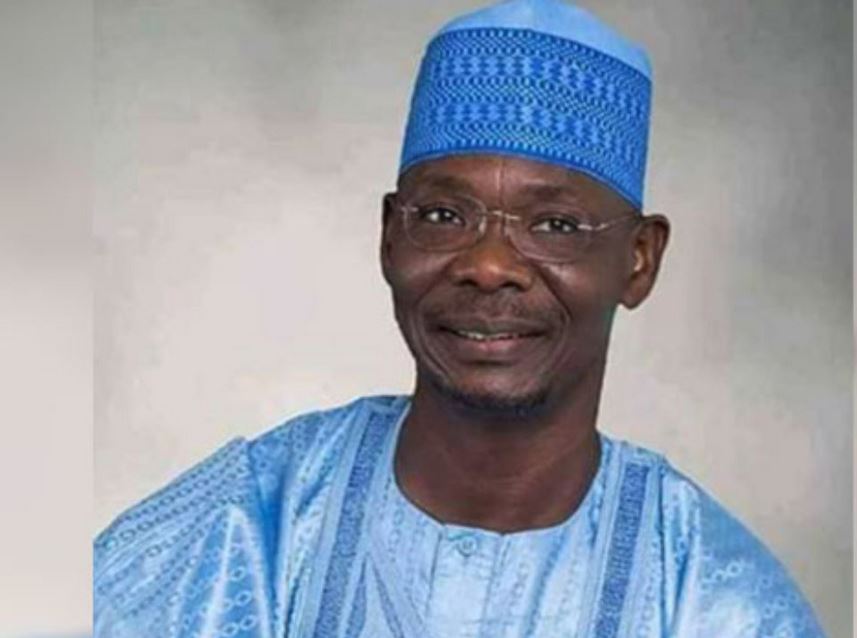
From Abel Leonard Zwanke
When the Secretaries to the State Governments (SSGs) from across Nigeria gathered in Jos, Plateau State recently, for their annual conference organized by the Office of the Secretary to the Government of the Federation, it was expected that seasoned administrators would mount the podium and share perspectives on governance.
Yet, among the many voices that spoke, one stood out for his clarity, depth, and conviction, Barrister Labaran Magaji, the Secretary to the Government of Nasarawa State.Representing the vision of Governor Abdullahi Sule with exceptional eloquence, Magaji delivered a presentation that left many delegates impressed.
His submission was not only a reflection of the policy thrust of the Sule administration but also a testimony to his own growing stature as one of the stabilising forces in Nasarawa’s governance structure. His speech was described by a delegate from the South West as “practical, well-grounded, and delivered with the confidence of someone who understands the heartbeat of his state.”Speaking with journalists after the SSGs conference in Jos, Barrister Labaran Magaji, stressed that governance must be anchored on accountability and performance. According to him, no matter the size of a budget or the beauty of a policy document, real development will only happen when ministries, departments and agencies (MDAs) are held to high standards of delivery and transparency. He described the SSG as the bridge between vision and implementation, ensuring that government policies do not remain mere promises.
Magaji explained further that peace and trust are central to any development agenda. He noted that while infrastructure and industrialisation remain priorities for Nasarawa, the state has equally invested in stability, community engagement, and conflict prevention. “Peace is the soil in which progress grows,” he remarked, adding that Governor Abdullahi Sule’s leadership has created an enabling environment for projects and investments to thrive.
The Nasarawa SSG also cautioned against early politicking, saying this is the time for leaders to focus on delivery rather than ambition. He urged his colleagues across the states to commit to building lasting legacies by ensuring projects are completed and lives are impacted positively. According to him, premature political distractions could derail the momentum of development that citizens urgently need.
Reflecting on his own stewardship, Magaji said he hopes to be remembered as an administrator who translated policies into tangible results. “It is not about how many ground-breakings we attend but how many lives are touched by the work we do,” he concluded, emphasising that the true measure of governance lies in trust, transparency, and visible change in people’s daily lives.
For close observers of Nasarawa politics and governance, this was not surprising. Since assuming the position of SSG, Labaran Magaji has become a bridge between policy and implementation, between the governor and the people, and between bureaucracy and political leadership. His style of leadership has earned him the trust of civil servants, the confidence of politicians, and the respect of citizens who see him as a steady hand working behind the scenes to make governance work.
Governor Abdullahi Sule came into office with a clear vision of industrialisation, infrastructural renewal, and social development. Translating such a vision into reality requires more than just political will—it requires a system anchored by competent hands. In this regard, Labaran Magaji has played a pivotal role.
Civil servants in the state speak of his accessibility and fairness. According to Mrs. Hauwa Ibrahim, a director in the Ministry of Finance, “The SSG has created an atmosphere where we can speak freely and contribute ideas. He is not only approachable but ensures that due process is followed in every decision. That has reduced tension among workers and helped build confidence in the system.”
Political actors, too, acknowledge his balancing act. Hon. Usman Bala, an APC chieftain in Awe Local Government, noted: “Magaji is one of those who has been able to manage political differences without making enemies. He knows how to carry everyone along, and that’s why he enjoys the governor’s confidence.”
It is no exaggeration to say that under Magaji’s coordination, the governor’s programmes, from road projects and investments in power to educational reforms, have enjoyed smoother execution. His understanding of both legal frameworks and grassroots realities has given him a unique edge in harmonising the diverse arms of governance in Nasarawa.
Trust in governance is often hard-earned, yet Magaji appears to have mastered the craft of building it. Stakeholders point to his honesty and consistency as key to his growing acceptance.
Comrade Daniel Ango, a civil service union leader, explained: “In the past, workers used to feel alienated. But Magaji has made the governor’s office more open. He listens and even when he cannot solve a problem immediately, he explains why. That sincerity makes a difference.”
Beyond the civil service, ordinary citizens also appreciate his interventions. From ensuring timely government responses during community crises to supervising relief distribution transparently, Magaji has quietly earned a reputation as someone who does not compromise public trust.
Political commentators argue that Magaji’s rise within the Sule administration is both strategic and deserved. According to Dr. Alfred Umbugis, a political science lecturer at Nasarawa State University.
“Governance is not only about the governor. The SSG is a key player who ensures that decisions are implemented effectively. Labaran Magaji has demonstrated capacity and loyalty, which is why he is becoming more visible. He represents a younger generation of technocrats who combine knowledge with loyalty to leadership.”
Similarly, journalist and publisher Donatus Nadi observed that Magaji “has succeeded in aligning the governor’s industrialisation drive with the daily running of government. You need someone who can translate policy into actionable frameworks, and that is exactly what Magaji has been doing.”
The political climate in Nasarawa is not without its challenges. With multiple interests competing for influence, and with the 2027 governorship race already generating speculation, the role of the SSG becomes even more delicate.
Magaji has so far managed to maintain neutrality, focusing instead on governance. A legislator in the Nasarawa State House of Assembly, Hon Solomon Akwadhiki in an interview said: “Magaji’s strength lies in the fact that he does not allow himself to be dragged into petty politics. His loyalty is to the governor and the state, not to factions. That makes him reliable.”
Such a balancing act is rare in Nigeria’s political space, where government officials often tilt toward factions. He recently issued a statement as directed by the governor to go after political appointees who aligns themselves to aspirants for 2027 elections waring them to resign or face strict punishment.
Observers argue that his style has contributed to Nasarawa’s relative political stability compared to some neighboring states.
While Governor Sule takes the lead in negotiating investment deals, attracting industries, and pushing infrastructure projects, Magaji ensures that the bureaucratic machinery is aligned with those ambitions. Insiders at Government House, Lafia, note that the SSG’s office has become a hub of coordination, ensuring that ministries deliver on targets.
This coordination role became evident during the visit of president Bola Ahmed Tinubu to commission the flyover underpass Bridge, state Secretariate and other projects when the state’s response was praised for its orderliness. Though the governor led from the front, Magaji’s hand in ensuring smooth inter-ministerial cooperation, stakeholders’ arrangement and maintaining protocols unmistakable.
More recently, his role in ensuring government projects are executed, functional and better office vehicles are purchased and distributed to securities, MDAs and government ministers has drawn commendation. “He personally supervised the process, making sure standard vehicles are purchased and got to the proposed people directly. That’s not something you see every day,” said Mrs. Ruth Yakubu, a community leader in Doma.
Yet, behind the official image lies a man with deep roots in the community. Magaji’s humility and ability to relate across social divides are often cited as key to his effectiveness.
“He has not allowed office to change him. When you meet him, you see someone who is simple, respectful, and ready to listen. That’s why many people trust him,” said Alhaji Musa Adamu, a traditional leader in Toto Local Government.
Labaran Magaji’s journey to the SSG’s office is marked by resilience, preparation, and service. Trained as a lawyer, he cut his teeth in legal practice and public service before venturing into politics. Over the years, he built a reputation as a grassroots mobiliser and an advocate of good governance.
His first major political outing was his bid for elective office where he contested the primaries for senate position in the Western zone where though he did not clinch the position, he gained visibility and respect across Nasarawa. He was appointed the Commissioner for Justice and Nasarawa state Attorney General. His legal background proved useful, as he became a resource person on governance, law, and civic engagement.
When Governor Sule appointed him as Secretary to the State Government, many saw it as a strategic decision to inject both loyalty and competence into the administration. Today, those who doubted his capacity have been convinced by his performance.
As Nasarawa continues on its path of development, stakeholders believe Magaji’s role will remain indispensable. His ability to interpret and implement the governor’s vision while keeping the machinery of government stable has made him a cornerstone of the Sule administration.
For now, Labaran Magaji remains content working behind the scenes, ensuring that governance does not derail. But his rising profile has sparked conversations about his future political prospects. Whether he chooses to remain a technocrat or step fully into partisan politics, one thing is certain: his imprint on the governance of Nasarawa State is already undeniable.
As Professor John Adeyemi, a governance expert, summed it up: “Every administration needs someone who stabilises the system. In Nasarawa, that person is Labaran Magaji. He may not always be in the headlines, but his impact is everywhere.”
Abel Leonard Zwanke is a veteran journalist and writes from Nasarawa
 | ReplyReply allForwardAdd reaction |
Business News
Wasted Years In The Printing Profession: Can Clement Koko’s Bold Leadership Usher In A New Dawn?
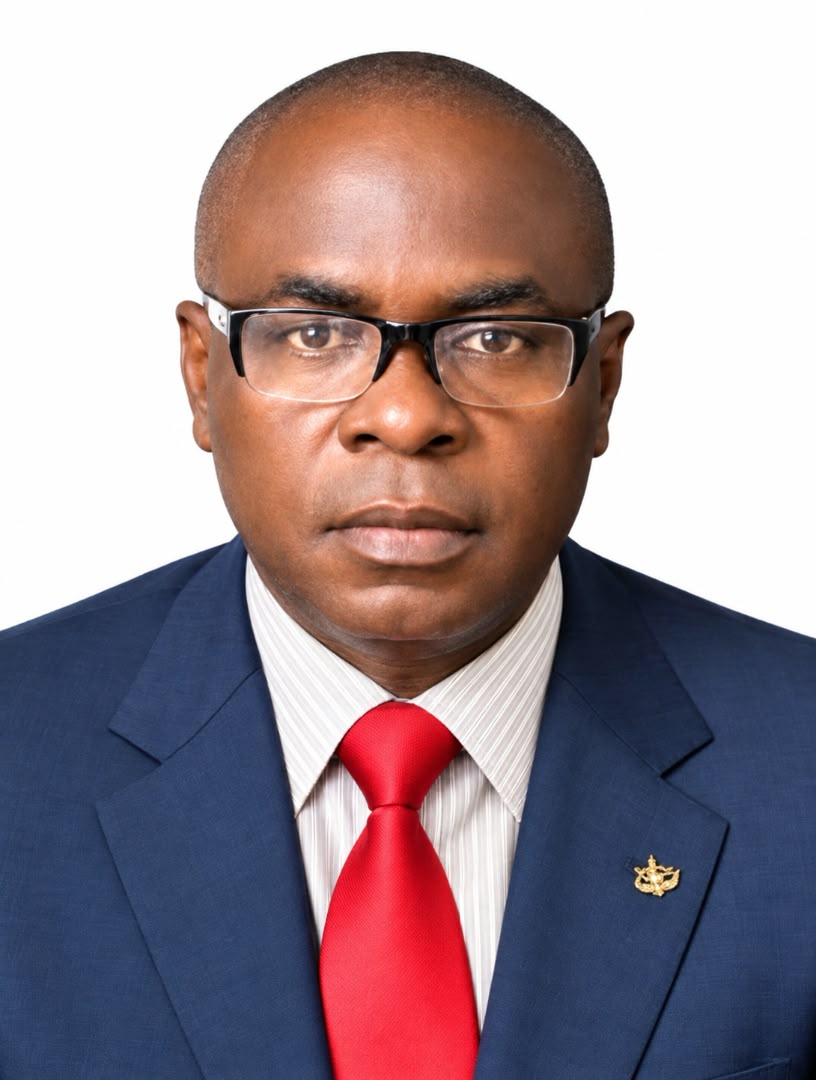
After Years of Leadership Crises and Missed Opportunities, the New CIPPON President, Clement koko Takes the Battle to Paper Manufacturers in Search of Solutions to the Industry’s Challenges
By Pius Ade Babaleye
There comes a time in the history of every profession when its members must pause, reflect, and ask themselves a fundamental question: How much progress have we made, and how many opportunities have we lost because of leadership failures, internal disagreements, and misplaced priorities?
*For Nigeria’s printing industry, that question has become increasingly important.
*For years, professional printers have battled the rising cost of paper and other printing materials, dwindling profit margins, difficult business conditions, and the struggle to sustain their businesses in an increasingly challenging economy. Yet, beyond these economic realities, the profession has also endured institutional disagreements, leadership crises, and divisions that have weakened its collective voice and distracted attention from the pressing needs of practitioners.
The painful question is whether the printing profession could have achieved much more if its leaders had devoted greater attention to the welfare of members, industrial development, and the pursuit of practical solutions rather than allowing personal interests and institutional rivalries to overshadow the collective mission.
*While the past cannot be rewritten, the future can still be rescued.*
Today, a new opportunity appears to be emerging following the bold initiative of the newly elected National President of the Chartered Institute of Professional Printers of Nigeria (CIPPON), Mr Clement Koko, who has demonstrated a willingness to move beyond rhetoric and confront one of the most pressing challenges facing printers: the high cost and accessibility of printing materials.
His recent engagement with paper manufacturers in Ogun State may well become a defining moment in the renewed quest to reposition Nigeria’s printing industry for growth, stability, and prosperity.
*THE YEARS WE LOST: WHEN LEADERSHIP CRISES OVERSHADOWED PROFESSIONAL PROGRESS*
No profession can achieve its full potential when the energy that should be devoted to development is continually consumed by internal struggles.
Nigeria’s printing industry has not been immune to this unfortunate reality. Over the years, disagreements surrounding leadership, institutional relationships, and the direction of the profession have contributed to an atmosphere in which collective advancement has too often struggled to receive the attention it deserves.
While professional disagreements are not unusual in any organised sector, the real concern arises when such disagreements become prolonged, distract from the welfare of practitioners, or prevent institutions from working together to address shared challenges.
The consequences are felt most severely by ordinary printers, particularly small and medium-sized business owners who must contend daily with the high cost of materials, overhead expenses, staff salaries, equipment maintenance, and customers who expect affordable services despite rising production costs.
For these practitioners, professional leadership must mean more than titles, positions, ceremonies, and public pronouncements.
It must translate into tangible benefits.
It must mean advocacy for better business conditions, stronger relationships with manufacturers, improved access to raw materials, professional development, and policies that support the survival and expansion of printing businesses.
The printing profession has lost valuable time to crises and disagreements. The priority now must be to recover that lost ground through purposeful leadership, genuine unity, and measurable achievements.
The challenge before the present leadership is therefore not merely to manage an institution but to rebuild confidence in the capacity of professional associations to deliver meaningful results.
CLEMENT KOKO: A PRESIDENT TAKING THE BATTLE TO THE MANUFACTURERS
In what deserves commendation as a practical and forward-looking initiative, the new National President of CIPPON, Mr Clement Koko, has taken a step towards confronting the high cost of printing materials through direct engagement with paper manufacturers.
Rather than allowing the concerns of printers to remain confined to meetings, complaints, and conversations within professional circles, the CIPPON president led a national delegation of printing stakeholders on a working visit to two paper-manufacturing companies in Ogun State.
The companies visited were Everest Paper Manufacturing Company in Ibefun and Nixin Paper Mills in Sagamu.
The mission was straightforward but significant: to open a channel of communication between professional printers and paper manufacturers, explore areas of mutual cooperation, and seek practical ways of improving access to essential printing materials.
At both facilities, the delegation was welcomed by the respective management teams and conducted around the production facilities to gain firsthand insight into their manufacturing operations.
The factory tours were followed by roundtable discussions with company executives, during which the participants explored opportunities for cooperation and ways of establishing a more productive relationship between manufacturers and professional printers.
This approach deserves recognition because it takes the conversation directly to the source of a critical industry challenge.
A leader who identifies a problem and mobilises stakeholders to seek solutions has already taken an important step towards delivering results.
Although the ultimate success of this initiative will depend on its practical outcomes, Mr Koko’s decision to pursue direct engagement represents a promising beginning.
It is a reminder that professional leadership must be measured not simply by what leaders say but also by the problems they are prepared to confront.
*WHY PRINTERS DESERVE THIS KIND OF LEADERSHIP*
The high cost of printing materials has become a serious concern for practitioners across Nigeria.
Paper remains one of the essential inputs in printing, publishing, packaging, advertising, education, branding, and numerous other commercial activities. When its price rises sharply, the impact spreads throughout the entire value chain.
Printers face the difficult task of adjusting their charges without losing customers. Publishers struggle to control production costs. Small printing businesses find it increasingly difficult to compete, while consumers ultimately bear some of the additional costs.
The situation calls for sustained engagement among manufacturers, distributors, professional associations, and other relevant stakeholders.
It is important, however, to recognise that paper prices can be influenced by several factors, including production costs, imported inputs, foreign exchange, transportation, energy, distribution expenses, and market conditions.
Consequently, no single factory visit can automatically resolve every pricing challenge confronting the industry.
Nevertheless, direct engagement creates an opportunity to understand these factors better, explore more efficient supply arrangements, and determine whether professional printers can benefit from more competitive purchasing options.
*That is precisely why the initiative deserves encouragement.*
If sustained through constructive negotiations and clear follow-up arrangements, the engagement could open the door to improved supply relationships, bulk-purchasing opportunities, greater price transparency, and more predictable access to paper.
These are the kinds of practical interventions that can make a meaningful difference in the daily lives of printing professionals.
*AN ENCOMIUM TO MR CLEMENT KOKO: LEADERSHIP MUST BE ABOUT SERVICE, NOT SELF-INTEREST*
Special commendation goes to Mr Clement Koko, the newly elected National President of CIPPON, for demonstrating an encouraging willingness to confront an issue that directly affects the economic survival of professional printers.
His initiative sends an important message to the printing community: the challenges of the profession cannot be overcome by sitting back and waiting for circumstances to improve.
They require engagement, consultation, courage, strategic thinking, and a determination to explore solutions, even when the problems are complicated.
The significance of his action lies not in the factory visit alone but in the leadership philosophy it represents.
It reflects an understanding that the office of a professional leader is a platform for service, responsibility, advocacy, and problem-solving.
At a time when many printers are anxious about the future of their businesses, initiatives that seek to address the cost of production deserve to be encouraged, strengthened, and sustained.
Mr Koko deserves commendation for taking this step early in his tenure and for bringing relevant stakeholders together around an issue of common concern.
His approach also presents an opportunity to rebuild confidence in professional leadership by demonstrating that the needs of practitioners can be placed at the centre of institutional priorities.
The printing industry does not need leaders who are satisfied with occupying positions; it needs leaders who are determined to make those positions count.
It needs leaders who can listen to the complaints of ordinary members, understand the realities of the marketplace, engage powerful stakeholders, and pursue outcomes that improve the working conditions of practitioners.
It needs leaders who appreciate that the strength of a professional institution is ultimately reflected in the progress of the people it represents.
*Mr Koko has taken a commendable first step in that direction.*
The expectation now is that this initiative will be followed by sustained negotiations, clear communication, and practical arrangements capable of producing measurable benefits.
If these engagements eventually translate into better purchasing opportunities and more competitive material costs, the entire printing community will have reason to celebrate.
For now, the industry has every reason to encourage this promising initiative while holding its leadership to the standards of accountability and performance that professional service demands.
*ASSPPON AND CIPPON: THE TIME FOR GENUINE COLLABORATION IS NOW*
Another encouraging aspect of this development is the participation of the Association of Professional Printers of Nigeria (ASPPON) alongside CIPPON.
The challenges confronting printers do not recognise institutional boundaries. Whether a practitioner belongs to one association or another, the impact of high material costs, difficult market conditions, and economic uncertainty remains largely the same.
This reality makes cooperation between professional institutions not only desirable but necessary.
ASPPON and CIPPON have important roles to play in advancing the interests of professional printers. Where their efforts complement one another, the profession stands to benefit.
The participation of Malam Abubakar Indagi, National Secretary-General of ASSPPON, alongside Pius Ade Babaleye PAB, Coordinator of ASSPPON Ikeja Division, and other members of the national delegation demonstrates the importance of collective engagement.
*The industry needs more of this spirit of cooperation.*
The time has come to move beyond unnecessary divisions and concentrate on the issues that matter most to practitioners.
How can printers obtain paper at more competitive prices?*
*How can small businesses survive the rising cost of production?*
*How can local manufacturers and professional printers develop mutually beneficial relationships?*
*How can professional institutions create more opportunities for their members?*
These are the questions that deserve the attention, energy, and intellectual resources of the profession’s leadership.
When professional associations unite around the economic welfare of their members, the entire industry becomes stronger.
The present engagement should therefore be seen as an opportunity to deepen cooperation between ASSPPON and CIPPON and establish a more consistent framework for addressing challenges affecting the profession.
*FROM FACTORY VISITS TO TANGIBLE BENEFITS: THE REAL TEST AHEAD*
While commendation is appropriate, the printing industry must also recognise that a promising initiative is only the beginning of a longer process.
The real measure of success will be what happens after the delegation returns from the factories.
*Will the discussions lead to concrete supply arrangements?*
*Can manufacturers and professional associations develop commercially sustainable purchasing options for printers?*
*Will members receive regular updates on the progress of negotiations?*
*Can the initiative be extended to benefit practitioners beyond the major commercial centres?*
*These questions should guide the next phase of the engagement.*
*To turn the initiative into a lasting achievement, the following steps deserve serious consideration:*
1. *Establish a sustained manufacturers’ engagement programme.*
ASSPPON and CIPPON should maintain regular dialogue with paper manufacturers and explore opportunities for long-term cooperation.
2. *Explore direct and bulk-purchasing arrangements.*
Where commercially feasible, professional associations could investigate collective purchasing models that may help members reduce procurement costs.
3. *Promote transparency throughout the supply chain.*
Constructive discussions with manufacturers and distributors could help practitioners better understand price variations and identify opportunities to improve purchasing efficiency.
4. *Develop a structured partnership framework.*
Future agreements should define the responsibilities of participating parties, the proposed benefits, and realistic performance targets.
5. *Keep members informed.*
Regular updates will help printers understand the progress made, the challenges encountered, and the opportunities that emerge from the engagement.
6. *Measure success through practical outcomes.*
The impact of the initiative should be assessed through improvements in supply access, purchasing conditions, business opportunities, and other measurable benefits to practitioners.
These measures would help ensure that the visit becomes more than a memorable event. They could transform it into the foundation of a sustainable industry-development programme.
*A NEW DAWN MUST NOT BE ANOTHER MISSED OPPORTUNITY*
The history of the printing profession should teach its leaders an important lesson: opportunities for progress must not be allowed to disappear beneath the weight of internal disagreements, personal ambitions, or institutional rivalries.
The industry has already spent valuable time confronting challenges that required unity, strategic thinking, and collective action.
*The future must be different.*
The new leadership of CIPPON has an opportunity to demonstrate that professional institutions can regain the confidence of their members by concentrating on practical problems and delivering measurable results.
*Mr Clement Koko’s engagement with paper manufacturers provides an encouraging starting point.*
It is now important for the leadership of both CIPPON and ASSPPON to build on this development, sustain the conversations, and pursue arrangements that can genuinely improve the operating conditions of professional printers.
The industry also needs a renewed commitment to professionalism, accountability, innovation, skills development, and the promotion of local production.
Printing remains an important part of Nigeria’s economic and social infrastructure. From books and educational materials to newspapers, packaging, commercial documents, advertising, and corporate branding, the industry continues to support activities that touch almost every aspect of national life.
Allowing the profession to remain weakened by avoidable divisions and persistent operational challenges would represent a missed opportunity for practitioners and the wider economy.
*This is why the present moment matters.*
It offers an opportunity to recover lost ground, restore confidence, and redirect professional leadership towards the welfare of members and the sustainable development of the industry.
*MY MESSAGE TO THE NEW CIPPON PRESIDENT*
As the Coordinator of ASSPPON Ikeja Division, I commend Mr Clement Koko for taking this bold initiative and encourage him to remain focused on the issues that directly affect the welfare of professional printers.
*The expectations are high, but so is the opportunity to make a meaningful difference.*
The printing community needs leadership that listens, consults, negotiates, and delivers. It needs institutions that work together despite their differences. Above all, it needs a professional environment in which the survival and growth of printing businesses receive the attention they deserve.
*Mr Koko has taken a step worthy of recognition.*
May he build on this foundation with consistency, transparency, and a determination to turn promising discussions into practical achievements.
May the collaboration between CIPPON and ASSPPON grow stronger, and may the printing industry finally begin to recover the valuable years lost to unnecessary crises and missed opportunities.
The ultimate victory will not be measured by the number of factory visits undertaken, meetings held, or statements issued. It will be measured by the positive difference professional leadership makes in the lives and businesses of ordinary printers.
The time has come to replace leadership crises with leadership achievements, self-interest with service, division with unity, and endless complaints with practical solutions.
*THE INDUSTRY MUST MOVE FORWARD*
The visit to Everest Paper Manufacturing Company in Ibefun and Nixin Paper Mills in Sagamu represents an encouraging development in the continuing search for solutions to the high cost of printing materials in Nigeria.
It reflects the value of engagement, the importance of collaboration, and the need for professional leaders to confront challenges directly.
*To Mr Clement Koko, the new National President of CIPPON, goes a well-deserved commendation for taking this initiative.*
To the national leadership of ASSPPON and every member of the delegation goes recognition for participating in an effort aimed at advancing the collective interests of the printing profession.
The years lost to institutional disagreements cannot be recovered in the literal sense, but the lessons they have taught must guide the decisions of today.
The future of the profession must be built on purposeful leadership, professional unity, sustainable partnerships, and results that practitioners can see and feel.
The printing industry has waited long enough for meaningful progress. The journey towards recovery must begin with bold ideas, continue with determined action, and culminate in tangible benefits for printers across Nigeria.
This is the opportunity before the new CIPPON leadership. This is the responsibility of ASSPPON and other industry stakeholders. And this is the moment for the printing profession to move forward together.
Kudos to Mr Clement Koko for taking the initiative!
Pius Ade Babaleye
ASSPPON Ikeja Division Coordinator

By Aderonke Ojediran
As Nigeria marks its 66th Independence anniversary, the debate over leadership, public trust and accountability remains central to the country’s democratic experience.
For citizens, the question is not simply whether political leaders make mistakes.
It is also about how they respond when they do, how they explain their decisions and whether they remain accountable to the people they serve.This debate has recently been brought into sharper focus by comments from Lagos Deputy Governor, Dr Obafemi Hamzat, who is also the All Progressives Congress (APC) governorship candidate for the 2027 election.
From housing and the cost of accommodation to Lagos’ notorious traffic, some of Hamzat’s public comments have generated criticism and discussion, raising a broader question.
Must a leader always say the right thing, make the right decision and satisfy every public expectation to be considered worthy of leadership?
The question goes beyond one politician or one election.
Obviously, it touches on the difficult balance between citizens’ expectations and the realities of governing a population of millions, with competing needs, interests and circumstances.
Mr Emmanuel Okara, a sports analyst, believes leaders are human, but accountability remains non-negotiable.
The challenge, therefore, is to distinguish between an honest mistake, poor judgment, a legitimate change of position and a failure to act in the public interest.
According to Mr Dipo Ishola, a retiree, politicians should be held accountable for actions taken while in office because they are custodians of public trust and resources.
His position reflects a basic principle of democratic governance: public office is not merely a position of authority. It is a responsibility exercised on behalf of citizens.
Political leaders make decisions that affect the cost of living, employment, education, healthcare, housing, transportation and the general welfare of the population.
Their words and actions therefore attract greater scrutiny.
As Ishola noted, words spoken by private citizens can carry greater significance when expressed by people entrusted with public responsibility.
Mr Taiwo Olapade, a political analyst and Lagos resident, similarly said politicians were often held to higher standards because of the responsibilities entrusted to them and the public resources under their control.
He said government policies should ultimately improve citizens’ lives, although their effects might not be distributed equally.
According to him, leaders should be prepared to make difficult decisions when necessary, but should also explain the reasons for those decisions and their expected long-term benefits.
He added that governments should regularly review policies to ensure that they remained relevant to citizens’ needs.
Nigeria’s long-running debate over fuel subsidy removal provides one example.
In January 2012, the administration of former President Goodluck Jonathan announced the removal of the petrol subsidy, triggering nationwide protests and opposition from labour unions, civil society groups and political actors.
Tinubu, then a prominent opposition politician and former Lagos governor, was among those who criticised the policy and supported opposition to the removal.
On May 29, 2023, however, Tinubu, in his inaugural address as president, announced that the petrol subsidy was gone.
His administration subsequently defended the reform as necessary to address fiscal pressures and pursue longer-term economic changes.
The two episodes occurred under different administrations and in different economic circumstances.
They nevertheless provide a useful illustration of a recurring question in politics: Can a position opposed under one administration become justifiable under another?
Mr Lanre Adewole, a member of the Obafemi Hamzat Advisory Council, believes politicians can legitimately change their positions when they gain a better understanding of an issue or are presented with compelling evidence.
Adewole said historical perspectives and precedents should guide governments when explaining policies whose immediate effects might be difficult for citizens to bear.
He also stressed the importance of palliative measures to cushion the effects of economic reforms, including subsidy removal.
“The legitimacy of a decision depends not only on the intentions behind it but also on the evidence supporting it, its implementation and its consequences.
He nonetheless noted that describing a decision as necessary or beneficial in the long term “does not, by itself, make it a sound policy.”
According to Adewole, unpopular decisions can be justified where government has credible evidence that they are likely to address a difficult problem and produce broader benefits.
The important distinction, he said, was between a policy that was unpopular because it tackled a difficult problem and one that was unpopular because it was poorly designed, inadequately explained or unfairly implemented.
The Lagos conversation where housing costs and traffic congestion are part of the daily experience of many residents, comments by political office holders about these issues can quickly become matters of public debate.
Hamzat’s advice to young workers struggling with high rents to consider living with parents or relatives, sharing accommodation or choosing housing they can afford has attracted criticism as well as discussion about the realities of housing in Lagos.
The deputy governor was reported to have also advised residents not to spend more than 40 per cent of their income on rent.
Some may view the advice as practical in a city where accommodation is expensive. Others may argue that personal financial discipline does not address the structural problem of housing affordability.
Both perspectives point to a wider question: what policies can make decent housing more accessible to workers whose incomes have not kept pace with rents?
The issue goes beyond where an individual chooses to live. It involves housing supply, land costs, wages, transportation, urban planning and the broader cost of living.
A similar debate followed Hamzat’s description of Lagos traffic as a “lifestyle” during an appearance at Podfest Naija.
He was speaking in the context of Lagos’ creative industry and how commuters consume podcasts and other content while travelling.
Following criticism of the comment, Hamzat said the remark had been taken out of context and explained that he was discussing how traffic had become part of the daily experience of many Lagos residents.
For commuters, however, traffic is more than a cultural experience.
It can mean late arrival at work, reduced family time, additional transport costs, fatigue and lost productivity.
That is why the broader discussion should also consider practical solutions, including public transportation, road infrastructure, traffic management and urban planning.
Public comments should be assessed in context, but context should not prevent citizens from asking whether leaders adequately understand the problems they are addressing.
A politician’s choice of words may reveal a weakness in communication without necessarily providing a complete picture of the person’s approach to governance.
Conversely, a well-expressed statement does not automatically demonstrate effective leadership.
The more substantive question is whether a leader can translate an understanding of citizens’ problems into workable policies and measurable improvements.
Okara, the sports analyst, argued that leaders in government and business should be willing to make difficult or unpopular decisions where the long-term benefits justified them.
He said such leaders must communicate with the people and explain the expected benefits of their decisions.
He further argued that human beings were capable of changing as they learn and gain new experiences and that individuals should not be judged solely by the baggage of past controversies.
For Toyin Onigbanjo, founder of August Secrets, governance remained a collective responsibility.
That perspective recognises the role of citizens, public institutions, civil society, businesses and other stakeholders in promoting effective governance.
According to her, citizens often look to leaders for solutions to problems that have accumulated over many years.
The expectation can sometimes approach a demand for perfection, as though political office should eliminate ordinary human weaknesses such as uncertainty, error or changing judgment.
But political leaders are not religious figures, because they exercise public authority within institutions and should therefore be assessed against the responsibilities attached to public office.
Political leadership should not depend on unquestioning admiration or personal loyalty.
A leader should be able to make a mistake without every action being dismissed. At the same time, a leader should be expected to acknowledge errors and accept responsibility for their consequences.
The humanity of a leader may help explain a mistake. It does not automatically excuse it.
Beyond one comment
As Nigeria marks 66 years of independence, the question of leadership remains closely connected to the expectations citizens have of the state and those who govern it.
The anniversary offers an opportunity to reflect not only on Nigeria’s political journey but also on the responsibilities that accompany public office and citizenship.
In his 2026 Independence Day address, President Bola Tinubu described the anniversary as an opportunity to reflect on Nigeria’s journey and the difficult choices made in recent years.
He also said the government’s focus should now be on turning economic reforms into broadly shared prosperity.
For citizens, expectations remain straightforward: public institutions should be responsive, public resources should be responsibly managed and government decisions should ultimately improve people’s lives.
In return, public officials are expected to demonstrate integrity, transparency and a willingness to account for their actions.
The challenge is to ensure that criticism of leaders is based on evidence rather than personal dislike, while also ensuring that appeals for understanding do not become a shield against legitimate scrutiny.
The same standard should apply regardless of party affiliation, political popularity or past controversy.
With the 2027 governorship election approaching, discussions about political leadership in Lagos are likely to intensify.
Hamzat has already unveiled a development agenda focused on areas including job creation, infrastructure, education, healthcare and security.
The debate surrounding his public comments therefore provides an opportunity to consider how voters assess candidates whose statements may attract both support and criticism.
One comment, taken in isolation, may not adequately establish a candidate’s overall approach to governance.
Equally, a public statement should not be dismissed simply because it comes from a politician whom someone supports.
A fuller assessment requires attention to a candidate’s public record, policy proposals, understanding of the state’s challenges, approach to accountability and explanation of how proposed solutions would be implemented.
Citizens may also ask whether a candidate has demonstrated the ability to listen to criticism, respond to public concerns and adjust policies when evidence shows that changes are necessary.
These questions are particularly relevant in Lagos, where housing affordability, transportation, waste management, flooding, employment and access to public services affect residents in different ways.
The task is not to demand that a candidate be perfect. No leader can reasonably satisfy every citizen or avoid every error.
The more practical question is whether the person seeking public office is willing to listen, learn, explain decisions, correct mistakes and remain accountable to the people.
Democracy does not require citizens to regard politicians as saints. Neither does it require them to accept every explanation offered by those in power.
It requires citizens to distinguish between personality and performance, promises and results, a genuine change of position and an unexplained contradiction.
It also requires political leaders to recognise that public office comes with obligations that go beyond personal intentions or the popularity of their statements.
A difficult decision should be supported by evidence and clearly explained.
A policy that causes hardship should come with a credible explanation of its purpose, expected benefits and consequences.
A mistake should remain open to scrutiny, while a change of position should be explained.
Ultimately, the question is not whether a leader can avoid every error or satisfy every citizen. No leader can reasonably guarantee either.
The more important question is whether the leader is willing to listen, learn, explain decisions, correct mistakes and remain accountable to the people.
As Nigerians reflect on 66 years of independence and Lagos residents prepare to make political choices in 2027, the challenge is to look beyond isolated comments without ignoring them, test claims against evidence and assess candidates by their records, proposals and willingness to answer for their actions.
The ballot box is not a search for a saint. It is a decision about who should be entrusted with public power and who will be held accountable for how that power is used.(NAN)
By Tony Obiechina
At the Nigeria Sovereign Investment Authority NSIA), the mandate to deploy patient capital is anchored in a clear objective: to invest in sectors capable of delivering both long-term commercial returns and measurable national impact.
Few sectors embody this dual imperative more clearly than healthcare.NSIA’s entry into healthcare was therefore guided by a straightforward but ambitious proposition: that high-quality healthcare services—many of which were previously inaccessible in Nigeria or available primarily through overseas treatment—could be made more accessible and affordable within the country.
This ambition led to the establishment of NSIA Advanced Medical Services Limited (“MedServe”), the Authority’s wholly owned healthcare subsidiary, with a strategic focus on advancing oncology, diagnostics and, subsequently, other specialised medical services across Nigeria.
Building on this foundation, Aminu Umar-Sadiq, Managing Director & Chief Executive Officer at NSIA has placed healthcare investment within a broader institutional framework—one that goes beyond the development of individual facilities to building sustainable healthcare capacity, strengthening local expertise, and creating platforms capable of delivering measurable outcomes over the long term.
Through MedServe, NSIA has translated this strategic vision into operational healthcare infrastructure with national significance.
The MedServe–LUTH Cancer Centre (MLCC) in Lagos, commissioned in May 2019, became the first oncology centre in Nigeria to offer 3D Conformal Radiotherapy and today houses the largest concentration of radiotherapy equipment in West Africa.
The centre’s strategic value became particularly evident during the COVID-19 pandemic, when international travel restrictions significantly constrained access to overseas medical treatment. At a critical moment for patients requiring specialised care, MLCC provided continuity of advanced cancer treatment within Nigeria, demonstrating the importance of resilient domestic healthcare capacity.
This investment has been complemented by the MedServe Kano Diagnostic Centre (MKDC) and the MedServe Umuahia Diagnostic Centre (MUDC), which introduced advanced radiology and pathology services to regions where such capabilities had previously been limited or unavailable.
The results are both substantial and measurable. Since inception, MLCC has delivered more than 25,000 radiotherapy sessions and 10,000 chemotherapy treatments to approximately 15,000 unique patients. The centre has also recorded instances of reversed medical tourism, with Nigerians being referred from overseas providers on account of the quality and cost-effectiveness of services available locally.
Treatment costs remain significantly below comparable international services, in many cases at less than half the cost of treatment abroad. It is estimated that these interventions have prevented more than US$200 million in foreign exchange outflows that would otherwise have been associated with overseas treatment and related expenses.
Across Kano and Umuahia, more than 410,000 patients had received pathology and radio diagnostic services by December 2025, supporting earlier detection, contributing to improved clinical decision-making and patient outcomes.
These figures represent more than service volumes. They demonstrate healthcare capacity built locally, specialised skills retained within the country, and tangible value delivered to Nigerians.
Building a Sustainable Oncology Ecosystem
Sustainable healthcare transformation requires more than physical infrastructure. It depends on an ecosystem in which infrastructure is supported by human capital development, clinical research, knowledge transfer and integration with leading international institutions.
Recognising that oncology remains an emerging specialty in Nigeria, NSIA, through MedServe, adopted a holistic approach centred on three priorities: developing a pipeline of skilled oncology professionals; strengthening clinical research and trial capacity tailored to African populations; and establishing partnerships with leading global medical institutions.
As part of this effort, MedServe instituted an annual Oncology Summit to bring together clinicians, researchers, regulators and academics, creating a platform for knowledge exchange, professional development and collaboration.
MedServe has also established partnerships with globally respected institutions, including Memorial Sloan Kettering Cancer Center, the University of Maryland Medical Center and Bio Ventures for Global Health. These collaborations are helping expand access to clinical trials and innovative approaches in oncology, radiology and pathology.
To date, MedServe has participated in two global cancer trials focused on prostate and breast cancer—an important step towards strengthening Nigeria’s role in international clinical research and ensuring that evidence generated through global healthcare innovation is increasingly relevant to African populations.
This ecosystem-led approach reflects the broader investment philosophy championed under Aminu Umar-Sadiq’s leadership: that sustainable impact is achieved not simply by deploying capital into assets, but by creating the institutional, technical and human-capital foundations required for those assets to deliver value over generations.
Expanding National Access: The Next Phase
Building on the outcomes achieved to date, MedServe has embarked on a structured expansion of its healthcare footprint across 13 states.
The expansion is designed to balance established urban centres—including Lagos, the Federal Capital Territory and Kaduna—with other participating states such as Oyo, Sokoto, Delta and Yobe. The objective is to bring specialised diagnostic and treatment capabilities closer to more Nigerians while creating a more geographically diversified healthcare network.
The next phase comprises the development of 13 new diagnostic centres, three additional oncology centres and three cardiac catheterisation laboratories, introducing cardiology as a new service line within the MedServe platform.
Scale, however, must be accompanied by operational resilience. To this end, MedServe has established long-term partnerships with global equipment manufacturers Siemens and GE. These partnerships cover equipment supply, maintenance, training and bulk procurement efficiencies, supporting high service uptime, consistent quality and the long-term sustainability of the expanding network.
The financing structure supporting this expansion is equally significant. In line with NSIA’s mandate to mobilise capital and catalyse foreign investment, MedServe secured up to US$24.3 million in blended financing from the International Finance Corporation (IFC) and the International Development Association (IDA).
The financing represents an innovative approach to healthcare investment, helping to lower the cost of capital while supporting affordability and demonstrating growing multilateral confidence in Nigeria’s healthcare sector.
With the commissioning of new centres scheduled to commence from mid-2026, NSIA, through MedServe, remains focused on expanding equitable access to high-quality healthcare services across Nigeria.
The country’s healthcare narrative must continue to evolve. It should no longer be defined predominantly by outbound medical tourism, but increasingly by domestic resilience, expanding capacity and measurable national capability.
The ambition is not simply to build more healthcare facilities. It is to demonstrate that world-class, dignified and accessible healthcare can be developed, operated and sustained in Nigeria.
The journey remains ongoing, but the direction is clear. Through disciplined capital deployment, strategic partnerships, long-term institutional commitment and strong execution, NSIA will continue to support the development of healthcare infrastructure capable of serving both the current and future generations of Nigerians.
For NSIA, the measure of success ultimately extends beyond the infrastructure delivered. It lies in the capacity created, the patients served, the expertise retained, the investment attracted and the extent to which Nigeria’s healthcare system becomes stronger, more resilient and increasingly capable of meeting the needs of its people at home.




Actress Ademoye Rejects Apology over Movie Demonetization
ShareNollywood actress and filmmaker, Bimbo Ademoye, has rejected an apology from a man who filed a copyright claim against her...


Army Rescues 21 Kidnap Victims after Gun Battle with Terrorists in Niger
ShareBy David Torough, Abuja Troops of the Nigerian Army’s 18 Brigade have rescued 21 kidnapped victims following a fierce gun...


CBN Digitalises Fiscal Data Reporting Across 36 States, FCT
ShareBy Tony Obiechina, Abuja The Central Bank of Nigeria (CBN) has commenced the digitalisation of sub-national fiscal data reporting across...


NNPC Audit: Kyari Denies N210trn Missing Funds
ShareBy David Torough, Abuja Former Group Chief Executive Officer of the Nigerian National Petroleum Company Limited (NNPCL), Mele Kyari, has...

2027: APC Bets on Reforms, Unveils Tinubu’s Blueprint
ShareBy Eddy Ochigbo, Abuja The All Progressives Congress (APC) has unveiled an ambitious four-pillar manifesto for President Bola Tinubu’s proposed...


Troops Neutralise over 60 Terrorists, Rescue70 Kidnap Victims in One Week
Share By David Torough, Abuja The Armed Forces of Nigeria (AFN) have neutralised more than 60 terrorists and rescued at...


Accident Victims’ Remembrance Day: FRSC Records 7,156 Crashes, 3,445 Deaths
ShareThe Federal Road Safety Corps (FRSC) has recorded 7,156 road traffic crashes, resulting in 3,445 deaths and 22,292 injuries across...

Mutfwang Inaugurates State-owned Security Outfit, Operation Rainbow
ShareFrom Jude Dangwam, Jos Plateau State Governor, Caleb Manasseh Mutfwang, has inaugurated 353 operatives of the state-owned security outfit, Operation...


Otu Woos Investors, Promises Incentives, Support for Businesses in C’River
ShareCross River State Governor, Bassey Otu has called on private-sector investors to invest in the state, with assurances of incentives,...
2027: Tompolo Deploys 50 Vehicles in Enugu, C’River for Tinubu’s Re-election
ShareGrand Patron of the PBAT Door-to-Door Movement, High Chief Oweizidei Government Ekpemupolo, has donated 50 vehicles for President Bola Tinubu’s...