
Education
Education Betrayed, Hope Delayed

By Ukertor Gabriel
Nigeria’s university system finds itself at a familiar and distressing crossroads once again. The Academic Staff Union of Universities (ASUU) has initiated a two-week warning strike, not out of convenience or defiance, but as a crucial reminder of the government’s unfulfilled commitments.
Central to this deadlock is the Federal Government’s failure to honor the renegotiated agreement of 2009, designed to address the systemic failures in welfare (salaries and allowances), funding, infrastructure, etc. within Nigerian universities.Rather than pursue dialogue and demonstrate commitment, the Minister of Education, Dr. Alausa, has opted for confrontation.
His recent declaration “No work, no pay” even before the strike commenced is not only counterproductive but also unbecoming of a democratic government that professes to value education as the cornerstone of national renewal.To threaten intellectuals rather than engage them reflects a profound misunderstanding of the current situation. It indicates a government unwilling to uphold its promises and a minister disconnected from the realities facing the nation’s deteriorating tertiary sector. Strikes are a very painful and unfortunate strategy to get the government to listen and act. It should not be so.
The 2009 Agreement: A Covenant, Not a Favour
The 2009 ASUU–Federal Government Agreement is not an antiquated document; it remains a vital symbol of Nigeria’s commitment to its scholars and students. That is why it is not going away. This agreement was established to ensure improved remuneration, enhanced infrastructure, research funding, and respect for university autonomy. Fifteen years on, the fundamental commitments remain largely unmet.
Governments have consistently deferred responsibility, cloaking themselves in committees (committees to review the finished work of committees) and half-hearted measures. In Nigerian governance, we know when a government does not wish to solve a problem, it hides under several committees to look into the same issue. Yet, every administration has publicly acknowledged that no nation can progress beyond the quality of its universities.
When ASUU calls for the implementation of this agreement, it is not seeking privilege; it is advocating for justice. A contract freely entered into must be honoured; this is the essence of governance rooted in integrity, The Minister’s “No Work, No Pay” Threat: A Leadership Shortcoming
Dr. Alausa’s reference to “no work, no pay” may seem legally convenient but is politically and morally indefensible. It implies that the government prioritises chastising and castigating scholars over resolving the crisis.
This approach is flawed on multiple fronts: It criminalises legitimate dissent. Industrial action in pursuit of collective bargaining is a democratic right, not an act of insurrection, it exacerbates brain drain. Repeated threats and withheld salaries drive Nigeria’s most talented individuals abroad. Each departing scholar represents a significant loss of national investment, it undermines negotiation. Dialogue should be founded on trust and respect, not coercion, Threats indicate weakness, not strength, and Directing Vice Chancellors as house boys to implement an odd threat is very demeaning.
A responsible minister would pursue reconciliation rather than retribution. Leadership in education demands empathy, vision, and the humility to listen, not the arrogance of command.
Renewed Hope Must Commence with Honoured Promises
President Bola Ahmed Tinubu campaigned on a platform of Renewed Hope, pledging to reform education, restore confidence in public universities, and prioritise human capital development.
Yet, recent actions contradict this vision. The ongoing impasse sends a message that the government’s word cannot be trusted—an assertion that undermines both domestic morale and international credibility.
If this administration genuinely believes in Renewed Hope, then such hope must transcend mere rhetoric. It must be realised through action: Release withheld salaries and promotion arrears, Grant academic staff and the university system generally a befitting salary, implement the 2009 agreement as renegotiated with clear timelines, Fund university revitalisation through transparent budgetary commitments.
Reaffirm academic freedom and institutional autonomy as you promised during your campaign anything less would be disingenuous.
A Moral and National Obligation
Nigeria’s universities are not merely workplaces; they are the engines of national progress. Every laboratory, library, and lecture hall shapes the next generation of doctors, engineers, and leaders.
To neglect them is to jeopardise the country’s future.
To the government, this situation transcends a mere labour dispute; it is a moral test of leadership. To the minister, this represents a moment for humility, not hostility. And to the public, it serves as a reminder that silence in the face of injustice is complicity.
The time has arrived for Nigeria to honour its commitments, respect its intellectuals, and restore faith in public education. Threats cannot foster excellence, only commitment can.
Conclusion: Honour the Agreement, Secure the Future
Let it be unequivocally stated: ASUU’s call is not against Nigeria; it is in support of Nigeria. It is a call to restore dignity, rebuild trust, and demonstrate that the nation’s leaders comprehend the true meaning of honour.
Dr. Alausa’s “no work, no pay” ultimatum is the incorrect response to the right question. The genuine solution lies in honest dialogue, faithful implementation, and respect for the sacred covenant established in 2009 and renegotiated under his watch.
If this administration genuinely seeks Renewed Hope, it must commence by renewing its integrity, through action, not threats.
Nigeria’s scholars have waited long enough. It is time for the government to fulfil its commitments. Seize this opportunity and end this very unfortunate recurrent strikes in the university system once and for all as you told Nigerians during the campaigns.
Prof. Ukertor Gabriel writes from University of Abuja

The Joint Admissions and Matriculation Board has announced a slight adjustment to the arrival time for candidates sitting the 2026 Unified Tertiary Matriculation Examination, particularly those scheduled for the first session.
In a notice issued via its official X handle on Monday, the board stated that candidates for the first session are now expected to arrive at their examination centres by 7:00 a.
m. , instead of the earlier scheduled 6:30 a.m.JAMB added that the examination will commence at 8:30 a.m. and end at 10:30 a.m.
“Attention 2026 UTME Candidates: This is to notify you of a slight adjustment to the arrival scheduled time, particularly for the first session, which is now 7:00am as against the earlier published 6:30am, while the scheduled start time for the session is now 8:30 am and end time 10:30 am,” the notice read.
The board also clarified that candidates are not required to reprint their examination slips following the adjustment.
The full daily timetable, as shared by JAMB, includes four sessions running from Monday to Friday, with adjusted timings across all batches to ensure smoother operations at Computer-Based Test (CBT) centres nationwide.
This adjustment comes in response to long-standing feedback from candidates and parents regarding the challenges of very early morning travel, including safety concerns on roads before dawn and logistical difficulties for those coming from distant locations.
The UTME is scheduled to be held from Thursday, April 16, to Saturday, April 25, 2026.
By Tony Obiechina, Abuja
The Federal Ministry of Education has announced the commencement of applications for the second cohort of the National Technical and Vocational Education and Training (TVET) Programme.
The ministry said the programme is part of efforts to boost skills acquisition and tackle unemployment among Nigerian youth.
In a statement issued by the ministry’s Director of Press and Public Relations, Boriowo Folasade on Monday, the ministry said the applications will open on Monday, April 13, 2026, at 4 pm.
It further invited interested Nigerians to participate in the nationwide initiative aimed at strengthening technical capacity, promoting entrepreneurship, and enhancing job creation.
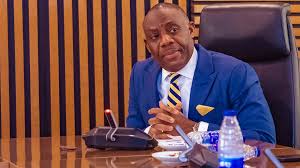
The Minister of Education, Maruf Alausa, described the programme as a key strategy for human capital development.
She said the initiative is designed to equip young Nigerians with industry-relevant skills needed to succeed in a rapidly evolving economy.
Alausa said the programme aligns with the Renewed Hope Agenda of President Bola Tinubu, adding that it reflects the administration’s commitment to expanding access to skills-based education and fostering sustainable livelihoods.
He also said the Federal Government is investing in the productive capacity of young people through practical training and recognised certification, creating pathways for self-employment, innovation, and long-term economic growth.
“In strengthening this programme, the Federal Government is investing in the productive capacity of our youth. By providing practical training and recognised certification, we are creating pathways for self-employment, innovation, and long-term economic growth,” the Minister said.
The statement noted that as part of efforts to expand opportunities in emerging sectors, the Ministry is collaborating with the Federal Ministry of Arts, Culture and Tourism to strengthen training in creative and cultural industries, with a view to unlocking the potential of Nigeria’s creative economy.
According to the statement the TVET Programme will provide intensive six-month and one-year hands-on training in accredited centres across the 36 states and the Federal Capital Territory. He added that participants will receive a monthly stipend of N22,500 and a nationally recognised certificate upon successful completion.
Boriowo added the training areas include construction, ICT, automotive technology, creative media, agriculture, fashion and garment production, cosmetology, tourism and hospitality, catering services, and leather works.
The Ministry further stated that applicants are required to demonstrate commitment to the programme and must be available for full participation throughout the training period, adding that attendance will be monitored using biometric verification systems, with stipends tied to compliance.
By Tambaya Julius, Abuja
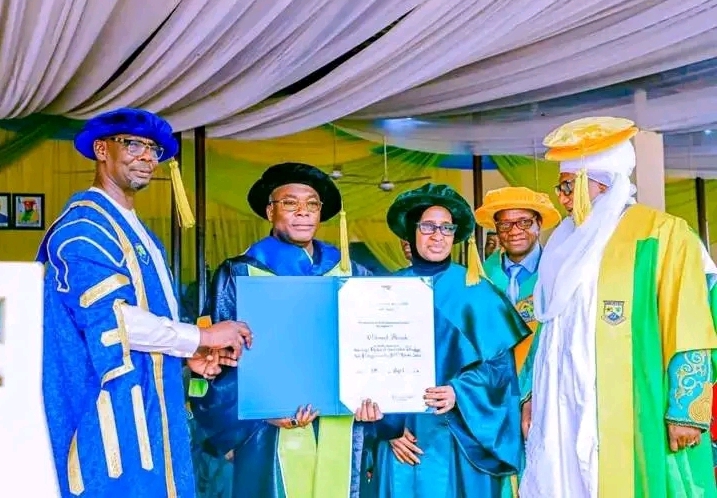
The Nasarawa State University, Keffi over the weekend celebrated its 25th silver jubilee anniversary and combined 8th convocation ceremony, where over 25,000 students were awarded with various academic degrees.
The grand event, held over the weekend at the school main Campus Keffi, was confirmed and honoured with Doctor of Philosophy (PhDs), Master’s degrees, First Degrees, and Postgraduate Diplomas on graduating students across different faculties.
The ceremony also confirmed honorary doctorate degrees on prominent personalities for their contributions to global leadership, business, and development.
Among the prominent personalities honoured were the President of Tanzania, Samia Suluhu Hassan; Abdul Samad Rabiu, Chairman of BUA Group; and Mahmood Ahmad.
The awards recognised their outstanding contributions to global leadership, development, and their roles in advancing socio-economic development both within Africa and globally.
During the ceremony, the Governor of Nasarawa State, Abdullahi Sule, awarded a cash prize of five hundred thousand Naira (N500,000) each to 82 first-class graduates, while the overall best graduating student was awarded N1 million.
The governor explained that the initiative was designed to promote excellence among students and aligns with the state government’s broader agenda of investing in education and human capital development. According to him, recognising academic achievement is essential in inspiring younger generations to pursue excellence.
Sule emphasised that rewarding hard work and dedication would encourage students across the state to strive for distinction in their academic pursuits. He noted that such incentives serve as a catalyst for improved performance and a stronger educational system.
As part of activities marking the institution’s 8th convocation and 25th anniversary celebrations, the governor commissioned several infrastructure projects at the University.
The newly inaugurated projects include the Alumni Secretariat, the Department of Accounting Postgraduate E-Library, as well as the university’s second gate and access road. He commended the university management for its commitment to infrastructural development and academic excellence.
The two-day celebration attracted a wide array of dignitaries from across Nigeria, including Governors, Ambassadors, Vice-chancellors, professors, traditional rulers, Business Men, and key stakeholders in the education sector.
In her address, the Vice-Chancellor of Nasarawa State University, Keffi, Prof. Sa’adatu Hassan Liman, warmly welcomed guests and expressed appreciation to the university’s leadership for their continued support.
She specifically acknowledged the Chancellor, HRH. Shehu Chindo Yamusa the Emir of Keffi, as well as the Pro-Chancellor, Prof. Atahiru Jiga, and members of the governing council for their impactful leadership.
Liman credited the institution’s progress to strong governance and visionary leadership, noting that both staff and students have benefitted from an enabling academic environment.
“I have acquired knowledge and experience in this institution due to impactful and good leadership,” she said.
She further urged students to prioritise their education and draw inspiration from the leadership and values upheld by the university. According to her, such commitment is essential for contributing meaningfully to Nigeria’s academic advancement and global competitiveness.
“Apply your knowledge positively, contributing to the advancement and educational success of Nigeria and the global community,” she appealed.



Nigeria To Host 5th High Level Ministerial Meeting On AMR
ShareBy Laide Akinboade, Abuja Nigeria said it has concluded arrangement to host the 5th high level ministerial meeting on Antimicrobial...


Sule Inaugurates N2.8bn Loko Township Roads
ShareNasarawa State Governor, Abdullahi Sule has inaugurated a 3.2-kilometre Loko Link and Township Roads project worth N2.8 billion in Nasarawa...


2026 Unity Cup: Don’t Exclude NPFL Players from Eagles, Ekpo Tells Chelle
ShareFormer Nigerian international Friday Ekpo has advised Super Eagles head coach Eric Chelle not to exclude players from the Nigeria...

Cameroon Separatists Pause Fighting Ahead Pope Visit
ShareAnglophone separatists in Cameroon have announced a period of “safe travel passage” and halted fighting ahead of Pope Leo XIV’s visit to the conflict‑hit region this week. Leaders...


Over 2,000 PhD Candidates Jostle for PTDF Overseas Scholarship
ShareThe Petroleum Technology Development Fund (PTDF) has commenced the second phase of interviews for the 2026/2027 PhD award under its...
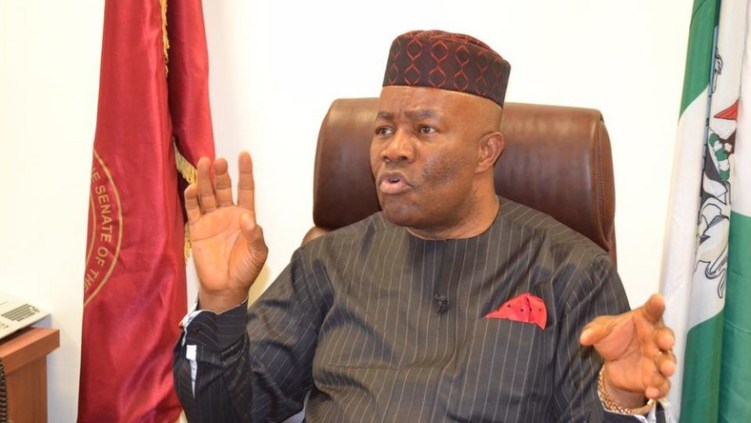
Akpabio Ties Worsening Insecurity to Gang up Against Tinubu
ShareBy Eze Okechukwu, Abuja The Senate President, Godswill Akpabio has linked the worsening insecurity across the country to a gang up by opposition politicians,...


Yobe Hits 100 Per Cent Budget Implementation in Five Years
Share Yobe State Governor, Mai Mala Buni said the state has recorded 100 per cent budget implementation from 2021 to...

ADC Braces Odds, Holds National Convention amid Court Tussle
ShareBy David Torough, Abuja The African Democratic Congress (ADC) on Tuesday held its national convention in Abuja despite ongoing legal...

Tinubu Unveils New Tax Order, Ends ‘Broken’ Revenue System
ShareBy Tony Obiechina, Abuja President Bola Tinubu has declared that Nigeria is charting a new economic course, vowing to abandon...


Otu, Retired Naval Chief Bag UNICAL Honorary Degrees
ShareFrom Ene Asuquo, Calabar The Governor of Cross River State, Prince Bassey Otu, has been conferred with an honorary doctorate...