
Education
Education Betrayed, Hope Delayed


By Ukertor Gabriel
Nigeria’s university system finds itself at a familiar and distressing crossroads once again. The Academic Staff Union of Universities (ASUU) has initiated a two-week warning strike, not out of convenience or defiance, but as a crucial reminder of the government’s unfulfilled commitments.
Central to this deadlock is the Federal Government’s failure to honor the renegotiated agreement of 2009, designed to address the systemic failures in welfare (salaries and allowances), funding, infrastructure, etc. within Nigerian universities.Rather than pursue dialogue and demonstrate commitment, the Minister of Education, Dr.
Alausa, has opted for confrontation. His recent declaration “No work, no pay” even before the strike commenced is not only counterproductive but also unbecoming of a democratic government that professes to value education as the cornerstone of national renewal.To threaten intellectuals rather than engage them reflects a profound misunderstanding of the current situation. It indicates a government unwilling to uphold its promises and a minister disconnected from the realities facing the nation’s deteriorating tertiary sector. Strikes are a very painful and unfortunate strategy to get the government to listen and act. It should not be so.
The 2009 Agreement: A Covenant, Not a Favour
The 2009 ASUU–Federal Government Agreement is not an antiquated document; it remains a vital symbol of Nigeria’s commitment to its scholars and students. That is why it is not going away. This agreement was established to ensure improved remuneration, enhanced infrastructure, research funding, and respect for university autonomy. Fifteen years on, the fundamental commitments remain largely unmet.
Governments have consistently deferred responsibility, cloaking themselves in committees (committees to review the finished work of committees) and half-hearted measures. In Nigerian governance, we know when a government does not wish to solve a problem, it hides under several committees to look into the same issue. Yet, every administration has publicly acknowledged that no nation can progress beyond the quality of its universities.
When ASUU calls for the implementation of this agreement, it is not seeking privilege; it is advocating for justice. A contract freely entered into must be honoured; this is the essence of governance rooted in integrity, The Minister’s “No Work, No Pay” Threat: A Leadership Shortcoming
Dr. Alausa’s reference to “no work, no pay” may seem legally convenient but is politically and morally indefensible. It implies that the government prioritises chastising and castigating scholars over resolving the crisis.
This approach is flawed on multiple fronts: It criminalises legitimate dissent. Industrial action in pursuit of collective bargaining is a democratic right, not an act of insurrection, it exacerbates brain drain. Repeated threats and withheld salaries drive Nigeria’s most talented individuals abroad. Each departing scholar represents a significant loss of national investment, it undermines negotiation. Dialogue should be founded on trust and respect, not coercion, Threats indicate weakness, not strength, and Directing Vice Chancellors as house boys to implement an odd threat is very demeaning.
A responsible minister would pursue reconciliation rather than retribution. Leadership in education demands empathy, vision, and the humility to listen, not the arrogance of command.
Renewed Hope Must Commence with Honoured Promises
President Bola Ahmed Tinubu campaigned on a platform of Renewed Hope, pledging to reform education, restore confidence in public universities, and prioritise human capital development.
Yet, recent actions contradict this vision. The ongoing impasse sends a message that the government’s word cannot be trusted—an assertion that undermines both domestic morale and international credibility.
If this administration genuinely believes in Renewed Hope, then such hope must transcend mere rhetoric. It must be realised through action: Release withheld salaries and promotion arrears, Grant academic staff and the university system generally a befitting salary, implement the 2009 agreement as renegotiated with clear timelines, Fund university revitalisation through transparent budgetary commitments.
Reaffirm academic freedom and institutional autonomy as you promised during your campaign anything less would be disingenuous.
A Moral and National Obligation
Nigeria’s universities are not merely workplaces; they are the engines of national progress. Every laboratory, library, and lecture hall shapes the next generation of doctors, engineers, and leaders.
To neglect them is to jeopardise the country’s future.
To the government, this situation transcends a mere labour dispute; it is a moral test of leadership. To the minister, this represents a moment for humility, not hostility. And to the public, it serves as a reminder that silence in the face of injustice is complicity.
The time has arrived for Nigeria to honour its commitments, respect its intellectuals, and restore faith in public education. Threats cannot foster excellence, only commitment can.
Conclusion: Honour the Agreement, Secure the Future
Let it be unequivocally stated: ASUU’s call is not against Nigeria; it is in support of Nigeria. It is a call to restore dignity, rebuild trust, and demonstrate that the nation’s leaders comprehend the true meaning of honour.
Dr. Alausa’s “no work, no pay” ultimatum is the incorrect response to the right question. The genuine solution lies in honest dialogue, faithful implementation, and respect for the sacred covenant established in 2009 and renegotiated under his watch.
If this administration genuinely seeks Renewed Hope, it must commence by renewing its integrity, through action, not threats.
Nigeria’s scholars have waited long enough. It is time for the government to fulfil its commitments. Seize this opportunity and end this very unfortunate recurrent strikes in the university system once and for all as you told Nigerians during the campaigns.
Prof. Ukertor Gabriel writes from University of Abuja
Maryam Umar, a limb difference student, is set to graduate with a Bachelor of Science degree in Economics from the Gombe State University.
Umar, who successfully completed her Level 400 course work, examinations and project, achieved this feat after overcoming educational and financial challenges.
In an interview on Monday in Gombe, Umar said that the intervention by the Academic Staff Union of the University (ASUU) made her journey to attain university education a reality.
Umar recounted that she started primary education at the age of 11 at Hammadaji Primary School in Gombe metropolis, adding that she could not immediately proceed to secondary school due to challenges.
The foot-writer student later attended Government Day Secondary School, Nasarawo, Gombe, where she obtained a senior school certificate.
“Many people doubted my ability to attend university because of physical and financial challenges.
“Nevertheless; I sat for the Joint Admissions and Matriculation Board (JAMB), and National Examinations Council (NECO) examinations, and passed both, but could not proceed due to lack of sponsorship.
“Apparently, my predicament widely circulated in the national dailies attracted the attention of the ASUU,” she said.
She said that the union visited her family home, verified her educational credentials, and subsequently offered her scholarship.
Umar said that handwriting proved to be a major obstacle because she writes with her toes during lectures, tests and examinations.
“During my first test, I couldn’t finish within the allocated time and reported the matter to the union.
“The ASUU chairman subsequently wrote to my Head of Department, requesting an additional time for me during tests and examinations. The department granted the request and continued to support me throughout my studies,” she said.
Umar also commended her lecturers for their support and understanding.
She recalled that when a journalist visited the university, and inquired about her academic performances, the records rated her as being more punctual than most of the able-bodied students.
Umar also expressed joy over the successful completion of her degree programme without any academic failure.
“I am happy that I am about to graduate. I give God the glory because I have had no problem academically.
“Some students who I started schooling together had withdrawn or dropped out,” she said.
While urging people living with disabilities not to allow their conditions to distract them from pursuing their dreams, Umar enjoined them to shun street begging.
“You should not see begging as the only option. I once begged on the street, but now I am about to achieve my dream of becoming a graduate.” (NAN)
The Cross River State government on Saturday said it had closed down no fewer than 58 schools in Calabar South, Calabar Municipality, Odukpani and Yakurr local government areas of the state.
Commissioner for Education in the state, Professor Stephen Odey, disclosed this in Calabar, the state capital.
According to him, the ministry’s Department of Quality Assurance has intensified crackdown on schools operating without Approval To Operate (ATO) across the state.
He noted that the exercise was part of the state’s ongoing efforts to sanitise the education sector, enforce compliance with established regulations and ensure acceptable standards for teaching and learning.
The commissioner further explained that the exercise was aimed at protecting learners and ensuring that schools operated in safe, conducive and properly regulated environments.
Odey stressed that the government would not compromise the standards required for operating educational institutions in the state.
The commissioner explained that the exercise was not intended to witchhunt school proprietors, but rather, ensure that all schools met the prescribed minimal requirements for establishing and managing educational institutions.
He urged proprietors of unapproved schools to regularise their operations by obtaining the necessary approval, warning that any school sealed by the government and reopened without authorisation would face appropriate sanctions.
According to him, the enforcement exercise will continue across the state’s 18 local government areas, until the objectives of the sector’s ongoing cleanup are achieved.
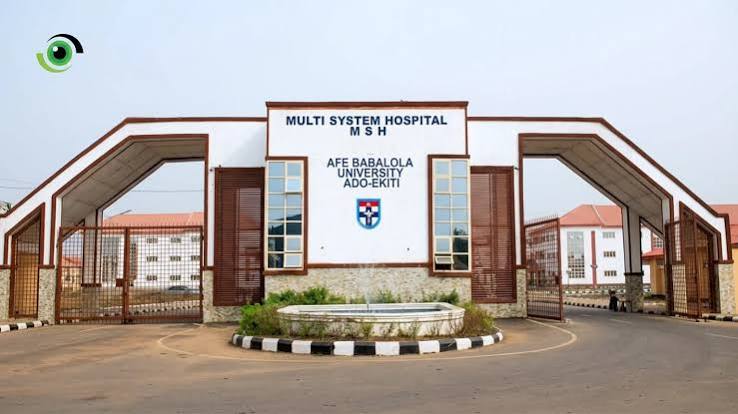
Afe Babalola University, Ado-Ekiti (ABUAD), has called for a renewed commitment to Nigerian-made herbal medicines, urging Nigerians to reduce their dependence on imported traditional medicines from countries such as China and India.
The university said Nigeria’s continued reliance on foreign herbal products, despite its indigenous medicinal resources and growing research capacity, amounted to a form of economic and medical dependence that must be urgently addressed.
ABUAD said the country must build confidence in locally produced medicines, strengthen scientific research into traditional remedies and establish effective marketing strategies to make Nigerian products competitive in the domestic market.
The call was made at the AB Pharmaceuticals Business Summit, organised by ABUAD in collaboration with pharmaceutical marketers. Three pharmaceutical products developed by the university AB Mal, ABUAD Virucidine and AB Health Animation 250mg were presented as part of efforts to expand the reach of its products.
Speaking at the summit, the Deputy Director of AB Pharmaceutical Services, Afolabi Oluwatoyin, said the initiative was driven by the university founder’s vision of ensuring that Nigerians could increasingly rely on medicines developed and produced locally.
Oluwatoyin said the ultimate objective was not merely commercial profit but a broader commitment to local pharmaceutical development, research and national self-reliance.
According to her, Nigeria has continued to patronise imported traditional medicines while locally developed alternatives struggle to secure comparable public acceptance and market penetration.
She argued that the country needed a deliberate shift in attitude towards locally developed medicines, adding that effective marketing partnerships would be essential to achieving this objective.
She said, “The ultimate reason we are here today is to establish a marketing plan that will help us take these products to the Nigerian people.
“We have served the Indians enough, and we have served the Chinese enough. We have embraced different forms of multi-level marketing and imported their traditional medicines, while Nigerians continue to work hard to promote these foreign products.
“It is time for a revolution, and a revolution does not necessarily require a crowd. Sometimes, it takes one determined individual to change the world. We have seen people change the course of history, including in South Africa, and we believe that a similar change can begin here.
“The aim of Aare Afe Babalola in developing ABUAD pharmaceutical products is not money. We all know that money is not his ultimate motivation. His vision is for Nigeria to begin treating its people with medicines produced locally.
“Before the advent of orthodox doctors, our people relied on traditional medicines, including those derived from local resources, and these medicines served them. However, we have yet to embrace our own products with the same enthusiasm with which we promote Chinese medicines and other foreign alternatives.
“If you knew the volume of imported medicines entering Nigeria every day, you would be amazed. A significant amount of our economic resources goes into purchasing foreign products. We must begin to reverse this trend by investing in, producing and marketing medicines developed in Nigeria.”
In her address, the university’s Vice-Chancellor, Professor Smaranda Olarinde, also emphasised the need to reduce Nigeria’s dependence on imported pharmaceutical products.
She noted that it was high time the country created an ecosystem in which universities, industry, regulators, healthcare professionals, investors and consumers worked together to move promising innovations from the laboratory to the marketplace.
In his response, the Chairman of the Association of Pharmaceutical Products Marketers of Nigeria (APPMAN) in Ekiti State, Peter Ajayi, commended Afe Babalola for his vision across various fields, saying the association would do everything within its capacity to ensure the products reached prospective consumers.




Sanwo-Olu Celebrates Prince Olusi at 90
ShareLagos State Govornor Babajide Sanwo-Olu of has described Prince Tajudeen Olusi, Chairman of the Governance Advisory Council of the Lagos...


Akwanga Set to Host Dignitaries for Spotlight Magazine Launch
ShareBy Tambaya Julius, Abuja Akwanga, Nasarawa State, is set to host prominent personalities from within and outside the state as...

Mbah Tasks SEDC on Gas Pipeline, Support for Industrial Revolution
ShareFrom Sylvia Udegbunam, Enugu Enugu State Governor, Dr. Peter Mbah, has urged the South East Development Commission (SEDC) to prioritise...


PVCs of 2026 Registrants Not Available Yet — INEC
ShareThe Independent National Electoral Commission (INEC) said Permanent Voter Cards (PVCs) for persons who registered between Jan. 5 and July...


Rainbow Coalition: Wike Assures APC Governors Have Nothing to Fear
ShareBy Laide Akinboade Abuja Minister of the Federal Capital Territory (FCT), Nyesom Wike, has defended the emerging political coalition supporting...

Group Welcomes Appointment of Adeleke as Tinubu’s Campaign Coordinator
ShareFrom Ayinde Akintade, Osogbo The Imole Campaign Council (TICC) has welcomed the appointment of Governor Ademola Adeleke as the Osun...


FG Raises Pensions from N12.15bn to N14.83bn for 241, 000 Retirees
ShareBy Tony Obiechina, Abuja The Director-General of the National Pension Commission (PenCom), Omolola Oloworaran, on Tuesday disclosed that more than...

Wike Accuses NLC of Politicizing FCT Teachers’ Strike
Share By Tambaya Julius, Abuja The Minister of the Federal Capital Territory (FCT), Nyesom Wike, has accused the Nigeria Labour Congress...

APC Unveils Revised 2027 Presidential Campaign Council, Retains Yari, DG
ShareBy Tambaya Julius, Abuja The All Progressives Congress (APC) has unveiled its revised Presidential Campaign Council for the 2027 general...

Tinubu’s Re-election: Don’t Allow Repeat of 2023, Tompolo Tells Lagos
ShareLeader of the PBAT Door-to-Door Movement, Government Ekpemupolo, has advised the people of Lagos State not to allow a repeat...