
POLITICS
Jigawa ADC Rejects Rejig of State Structure by Party National Leadership

By Mike Odiakose, Abuja
The Jigawa State chapter of the African Democratic Congress (ADC) has rejected the rejig of the state structure by the party’s national leadership, describing it as unconstitutional and a threat to internal democracy.
State Secretary Dr.
Musa Isa Matara issued a stern warning from Dutse on Sunday, stating that the state’s functional and formidable structure must be respected to maintain grassroots confidence.Matara explained that the ADC in Jigawa had already established a transparent leadership harmonisation process with its coalition partners before undue interference emerged from Abuja.
The chapter specifically rejected the attempted imposition of a new secretary for the Membership Registration, Mobilisation, and Revalidation (MRMR) Committee, whom they claim is linked to external political elite interests.
Dr Matara detailed how the state stakeholders had previously reached a unanimous consensus on leadership roles, including the endorsement of Bashir Adamu Jimbo as National Chancellor of Policy and Special Duties.
He argued that the recent attempt by national actors to alter the MRMR committee list, which originally featured Dr Yau Balarabe Musa as chairman, undermines the sacrifices made by local members to build the party.
The secretary emphasised that the Jigawa branch will not accept decisions made “over its head” by individuals who have not invested time or resources into the state’s specific political landscape.
This internal rift highlights growing pains within the ADC as it attempts to manage its expanding coalition ahead of the 2027 general elections.
Addressing the high-profile rumours regarding former Governor Sule Lamido, Matara clarified that the state chapter has no objection to the elder statesman joining the ADC-led coalition.
However, he insisted that Lamido’s entry must follow established due process and involve engagement with existing state structures rather than being facilitated through top-down impositions.
The state leadership warned that ignoring these procedural requirements could weaken the party’s credibility as a national opposition force.
By Mike Odiakose, Abuja
The Amir and National Head of the Ahmadiyya Muslim Jama’at of Nigeria, Alatoye Abdulazeez, has urged Nigerian youths to unite politically and strategically, identifying Adewole Adebayo as a potential leader capable of driving national transformation if given collective support.
Speaking during an interview, Abdulazeez emphasized that Nigeria’s progress hinges largely on the ability of young people to organize themselves beyond tribal, religious, and financial inducements, and to rally behind credible leadership.
According to him, while several young candidates have emerged in past elections, their failure to build strong alliances allowed older political forces to maintain dominance.
He noted that the case of Adebayo, a lawyer and businessman who contested under the Social Democratic Party (SDP), presents an opportunity for a different political direction if youths can act in unity.
“If the younger generation is sure that Adewole Adebayo can deliver, they should team up with him, get things right, and encourage other youths across tribes to see themselves as one,” Abdulazeez said.
He stressed that Nigeria is currently in what he described as a “storming stage” of nationhood, where divisions along ethnic and regional lines continue to hinder development.
He warned that unless a “national norm” is established—where citizens prioritize unity over sectional interests—the country may struggle to reach its full potential.
The cleric further advised youths to avoid electoral inducement and reject divisive politics, urging them instead to focus on long-term nation-building.
“We must move from where we are to the next stage. Otherwise, we will keep moving in the same direction,” he added.
Beyond politics, Abdulazeez reiterated the Ahmadiyya motto, “Love for All, Hatred for None,” as a guiding principle for national cohesion, stressing that religion should be a force for peace rather than division.
He condemned terrorism and violence carried out in the name of religion, insisting that such acts contradict Islamic teachings.
On governance, he acknowledged efforts by President Bola Ahmed Tinubu, noting that while progress has been made in some areas, more attention is needed in critical sectors such as power and economic management.
Abdulazeez concluded with a call for collective responsibility among citizens, particularly the youth, to reshape Nigeria’s future through unity, moral discipline, and active participation in governance.
“Leadership is not just about those in office,” he said. “It is also about those who choose them.”
End
From Sylvia Udegbunam, Enugu
The Enugu State Independent Electoral Commission (ENSIEC) have released a revised timetable for the 2026 local government elections.
ENSIEC Chairman, Prof. Christian Ngwu, presented the updated schedule to journalists in Enugu.
Ngwu said the framework outlines activities leading to elections on Sept.
26 and re-run polls on Oct. 10.He explained the adjustments followed the repeal of the Electoral Act 2022 and enactment of the Electoral Act 2026.
“The revised timetable aligns with the new law and other relevant statutes guiding elections in the state,” he said.
He recalled ENSIEC earlier issued a notice on Aug. 20, 2025 alongside an initial timetable.
According to him, party primaries will be held from Jan. 23 to May 26.
“Campaigns will begin on April 29 and end on Sept. 25, 24 hours before polling,” Ngwu added.
He said submission of nomination forms closes on May 29, while candidates’ particulars will be published on June 19.
“The final list of candidates will be released on July 27,” he stated.
Ngwu added that submission of polling agents ends on Aug. 31, while the official notice of poll comes on Sept. 11.
He confirmed elections will be held on Sept. 26, with voting from 8:00 a.m. to 3:00 p.m. using the open secret ballot system.
“In case of inconclusive results, re-run elections will be conducted on Oct. 10,” he said.
Ngwu stressed the timetable was issued under the commission’s constitutional mandate and in compliance with the Electoral Act 2026.
By David Torough, Abuja
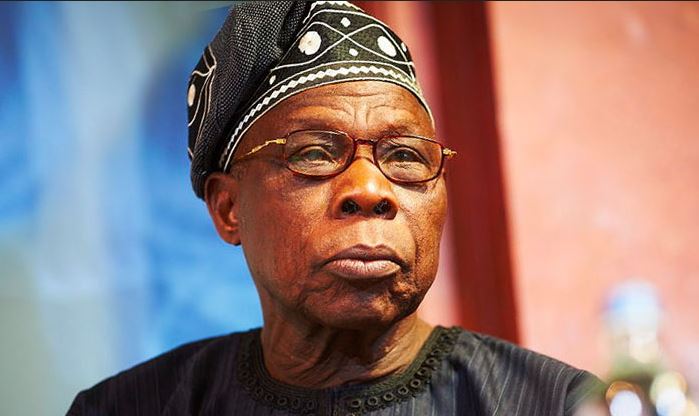
Former Presidents Olusegun Obasanjo and Goodluck Jonathan have issued a strong call for national unity, institutional reforms, and economic transformation, warning that Nigeria’s future depends on collective responsibility and a democracy that delivers tangible results.
Both leaders, who spoke at separate high-level engagements on Thursday, converged on a common message: Nigeria stands at a critical crossroads and requires urgent, coordinated action from citizens, leaders, and institutions.
At the 6th Annual Colloquium marking the 65th birthday of Itua Ighodalo, Obasanjo stressed that no external force would fix Nigeria’s problems unless Nigerians themselves unite across divides.
Represented by Prof. Adedeji Daramola, he emphasised that nation-building is a shared duty requiring contributions from all segments of society.“Until we come together to work and fix Nigeria, nobody will fix it for us,” Obasanjo declared, urging citizens—from grassroots traders to political elites—to take ownership of the country’s development.
He highlighted the importance of youth inclusion, describing young people as central to Nigeria’s future, and called for greater investment in technology and innovation to harness the country’s demographic advantage.
Echoing reformist sentiments, economist Eghosa Osagie advocated for increased local production, while Opeyemi Adamolekun of Enough is Enough Nigeria criticised the commercialization of politics. Technology investor Iyinoluwa Aboyeji pointed to infrastructural imbalances, noting that digital connectivity remains heavily concentrated in Lagos.
Meanwhile, at a policy convening in Abuja organised by the Goodluck Jonathan Foundation, Jonathan underscored the need to align democracy with economic growth to ensure its sustainability.
He warned that democracy, both globally and in Nigeria, faces increasing pressure from economic hardship, insecurity, and declining public trust. According to him, elections alone are insufficient without transparent institutions and policies that foster innovation and enterprise.
Jonathan raised concerns about governance effectiveness, comparing Nigeria’s democratic system with alternative models in countries like China and the United Arab Emirates, where structured leadership selection and economic progress have been notable.
Despite this, he maintained that freedom and justice remain democracy’s defining strengths, cautioning that any system that fails to uphold these values loses its legitimacy.
“Our democracy has endured, but endurance alone is not enough,” Jonathan said, stressing that economic performance is key to sustaining public confidence.
Both leaders agreed that Nigeria must not choose between democracy and development but instead ensure that both reinforce each other. They urged policymakers, civil society, and the private sector to act decisively in bridging governance gaps and delivering inclusive growth.
The convergence of views from the two former presidents reflects a growing consensus among stakeholders that Nigeria’s progress hinges on unity, accountable leadership, youth empowerment, and a democratic system capable of improving the lives of its citizens.


Nigeria’s Hidden Killings: One-Man Rule Looms – Adebayo
ShareIn a searing and emotionally charged interview, a presidential aspirant and leader of the Social Democratic Party recounts his harrowing...
Heading Towards Elections with Democracy on Crutches
ShareBy Chidi Amuta Nigerian politicians have once again carried out another successful coup against the people. They have fired up...

2027: Ahmadiyya Leader Sees Hope in Adewole Adebayo if Youths Organise
ShareBy Mike Odiakose, Abuja The Amir and National Head of the Ahmadiyya Muslim Jama’at of Nigeria, Alatoye Abdulazeez, has urged...

OGD 2027 : Why Ogun East Must Produce a Ranking Senator
ShareBy Prince Taiwo Nodiru All over the world, especially in the nations where democracy thrive, the legislative assignments are germane...


Nigeria To Host 5th High Level Ministerial Meeting On AMR
ShareBy Laide Akinboade, Abuja Nigeria said it has concluded arrangement to host the 5th high level ministerial meeting on Antimicrobial...

Sule Inaugurates N2.8bn Loko Township Roads
ShareNasarawa State Governor, Abdullahi Sule has inaugurated a 3.2-kilometre Loko Link and Township Roads project worth N2.8 billion in Nasarawa...


2026 Unity Cup: Don’t Exclude NPFL Players from Eagles, Ekpo Tells Chelle
ShareFormer Nigerian international Friday Ekpo has advised Super Eagles head coach Eric Chelle not to exclude players from the Nigeria...
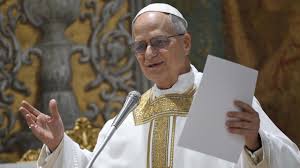

Cameroon Separatists Pause Fighting Ahead Pope Visit
ShareAnglophone separatists in Cameroon have announced a period of “safe travel passage” and halted fighting ahead of Pope Leo XIV’s visit to the conflict‑hit region this week. Leaders...


Over 2,000 PhD Candidates Jostle for PTDF Overseas Scholarship
ShareThe Petroleum Technology Development Fund (PTDF) has commenced the second phase of interviews for the 2026/2027 PhD award under its...
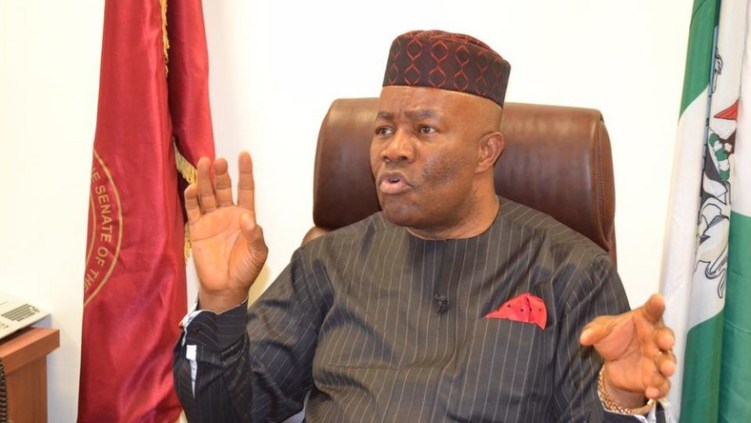
Akpabio Ties Worsening Insecurity to Gang up Against Tinubu
ShareBy Eze Okechukwu, Abuja The Senate President, Godswill Akpabio has linked the worsening insecurity across the country to a gang up by opposition politicians,...