
BUSINESS
Wage Award: Civil Servants Seek Prompt Payment of Two Months Arrears


Many federal civil servants have called on the Federal Government to clear the outstanding two months arrears of N35 000 wage award.
The government workers spoke on Monday in Abuja.
They decried the delay in payment of the arrears.
Ibrahim Abbas, a medical worker, said that there could be no reason acceptable for the long delay in clearing the outstanding arrears of the wage award.
According to him, the money is needed now to cushion the effect of the worsening economic hardship.
“The condition of government workers has never been this bad. The Federal Government needs to take all necessary steps to clear the outstanding arrears of the wage award,” he said.
Abbas, however, commended the Federal Government for the recent payment of the third tranche of the wage award.
Another civil servant, Patrick Ugo, also urged the Federal Government to pay up the arrears without further delay.
“The government should realise that the present minimum wage of N70,000 is unrealistic. The wage award will give the workers some relief.
“I urge the Federal Government, through the Accountant-General of the Federation, to pay the outstanding two months, totaling N70,000 with the March salaries, ” he said.
Sule Aliu urged the Federal Government to make the N35,000 wage award a permanent addition to the monthly salaries of civil servants.
According to Aliu, this will go a long way in alleviating the financial pressure of the workers.
Sani Garba urged the Federal Government to always fulfill its obligations to civil servants without delay to prevent labour agitation.
According to Garba, the government should consider the present economic realities and make the wage award a permanent addition to the present salary.
The wage award was a temporary payment to workers, approved in 2023 to ease the burden of fuel subsidy removal, supplementing salaries while a new national minimum wage was being negotiated.
It was to act as a cost-of-living adjustment, but payments faced delays, causing frustration and leading to ongoing demands from labour unions for full implementation and clearance of arrears.
In April 2025, the Federal Government announced that it would pay the outstanding five months of the N35,000 wage award arrears to workers.
The Office of the Accountant-General of the Federation (OAGF), said that the Federal Government had earlier paid five months of the wage award in installments.
It said that the outstanding arrears would be paid in installments of N35,000 per month for five months.
The OAGF said that the Federal Government was determined to fully implement all policies and agreements regarding staff remuneration and welfare to enhance productivity and efficiency.
But after the first installment was paid in May, 2025, the second instalment was not paid until August, 2025, while the third instalment was recently paid on March 6.
This leaves an outstanding payment of two months, amounting to N70,000
Meanwhile, the Federal Government said that it was committed to clearing the remaining two months arrears of N35,000 wage award without further delay.
Bawa Mokwa, the Director, Press and Public Relations, Office of the Accountant-General of the Federation (OAGF), said that the payment was subject to the availability of funds.
Mokwa said that with the payment of the third tranche in February, there were two remaining tranches to exhaust the wage award arrears.
“Contrary to insinuations in some quarters, the Federal Government has not reneged on payment of the wage award arrears. The payment of the third tranche clearly attests to this.
“The Federal Government will continue to pay the wage award in installments of N35,000 per month until the outstanding arrears is exhausted,” he said.
The nation’s aggregate Company Income Tax (CIT) for Q4 2025 is reported to be 1.49 trillion, the National Bureau of Statistics (NBS) said.
The figure is contained in the NBS Company Income Tax (CIT) Q4 2025 Report released in Abuja on Wednesday.
According to the report, the figure shows a decrease of 49.
81 per cent on a quarter-on-quarter basis from N2. 96 trillion recorded in Q3 2025.The report said domestic CIT received was N819.83 billion, while foreign CIT payment was N668.21 billion in Q4 2025.
It said on a quarter-on-quarter basis, activities of extraterritorial organisations and bodies recorded the highest growth rate with 75.15 per cent,
The report said this was followed by Education and real estate activities at 54.
20 per cent and 27.25 per cent respectively.“On the other hand, accommodation and food services activities recorded the lowest growth rate at -67.11 per cent, followed by activities of households as employers, undifferentiated goods and services producing activities of households for own use at -63.49 per cent .
“It said mining quarrying was recorded at -49.63 per cent.”
In terms of sectoral contributions, the report showed that the top three activities with the highest contribution in Q4 2025 were financial and insurance activities at 18.17 per cent, manufacturing at 17.30 per cent and mining and quarrying at 15.04 per cent.
It said on the other hand, the activities of households as employers, undifferentiated goods and 0.002 per cent.
“This was followed by water supply, sewage, waste management and remediation activities with 0.04 per cent.
The report, however, said, on a year-on-year basis, CIT collections in Q4 2025 increased by 13.38 per cent from Q4 2024.
The Managing Director/Chief Executive Officer of the Nigerian Independent System Operator, Abdu Bello, has disclosed that Nigeria’s power sector was losing between N5bn and N8bn monthly to transmission inefficiencies, even as he revealed that targeted interventions by the operator have begun to cut losses and improve grid stability.
Bello made this known on Wednesday during the organisation’s first anniversary celebration held at its headquarters in Utako, Abuja, where he presented a detailed scorecard of reforms and operational milestones recorded since its establishment.
Recall that NISO was officially created on April 30, 2024, by the Nigerian Electricity Regulatory Commission following the unbundling of the Transmission Company of Nigeria under the Electricity Act, 2023.
Speaking on one of the most pressing challenges inherited by the operator, Bello said the transmission loss factor at inception was alarmingly high, with severe financial implications for the power sector.
“One of the greatest problems we encountered at the inception of NISO was that we recorded a very high transmission loss factor. At some point, it was close to 10 per cent, costing about N5bn to N8bn monthly,” he said.
He, however, noted that deliberate operational measures have started yielding results.
Adopting a broader tone, the NISO boss said the past year had been defined by institution-building, system stabilisation, and market reforms aimed at repositioning Nigeria’s electricity sector.
He explained that NISO was established to function as an independent system operator with responsibility for system operations, market administration, planning, and enforcement of grid codes and market rules.
On institutional development, he said the organisation had prioritised governance and coordination across the electricity value chain.
A major highlight of the address was NISO’s push to digitise grid operations through advanced monitoring systems.
Bello disclosed that the operator is accelerating the deployment of Supervisory Control and Data Acquisition/Energy Management Systems to enable real-time grid visibility.
He added that the organisation was also deploying telemetry systems and Internet-of-Things-based metering infrastructure across generation units, transmission lines, and substations.
According to him, the initiative would enable near-real-time electricity market settlements and significantly improve operational efficiency.
Bello also revealed that NISO has intensified efforts to tackle grid instability and recurring system collapses through technical reforms and stricter compliance enforcement.
He noted that compliance with this directive has already improved grid frequency stability.
He further disclosed plans to introduce grid “islanding”, a strategy that segments the national grid to prevent widespread outages.
On market operations, Bello said NISO has taken steps to improve transparency, enforce compliance with market rules, and strengthen coordination among industry players.
He added that NISO is playing a central role in coordinating emerging state electricity markets following recent sector reforms.
The NISO boss also linked recent fluctuations in power generation to gas supply challenges, stressing the need for stronger coordination between the power and gas sectors.
He assured that regulators and stakeholders are working to address the issue and prevent future disruptions.
In a significant development, Bello disclosed that Nigeria has achieved trial synchronisation of its national grid with the West African power system, opening new opportunities for cross-border electricity trade.
He explained that the integration would allow Nigeria to export excess power and earn foreign exchange.
These interventions are contributing to improving system discipline and reliability together. On electricity market development and strengthening, we have made deliberate efforts to strengthen market credibility and transparency.
NISO was carved out of the Transmission Company of Nigeria as part of sweeping reforms introduced by the Electricity Act, 2023, to liberalise and decentralise Nigeria’s power sector.
The reform seeks to separate system operations from transmission ownership, improve transparency, and create a more competitive electricity market.
Despite these reforms, Nigeria’s power sector continues to face structural challenges, including transmission constraints, gas supply shortages, liquidity issues, and weak infrastructure.
NISO’s first-year performance signals a shift towards data-driven grid management and coordinated planning, although sustained investment and policy consistency will be required to deliver long-term stability.
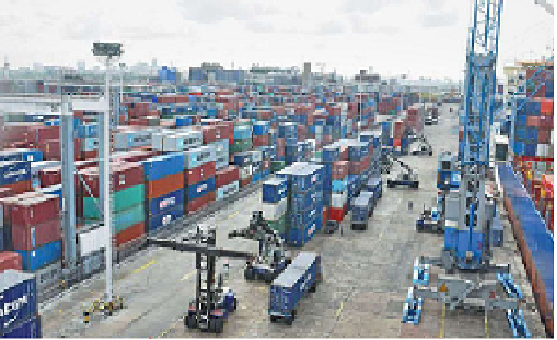
The Nigerian Ports Authority (NPA) said 41 ships carrying petroleum products, food items and other goods are expected at Lagos ports on Wednesday.
The NPA disclosed this in its Daily Shipping Position obtained on Wednesday in Lagos.
According to the bulletin, the vessels are expected between April 8 and April 14.
The authority said 24 of the ships would carry containers loaded with various goods.
“Seventeen ships will berth with bulk sugar, fresh fish, salt, general cargo, gypsum, aviation fuel, diesel, naphtha, gasoline, gas oil and wheat,” it added.
The NPA said 16 ships and tankers had already arrived and were awaiting berthing at the three ports.
According to the authority, the vessels carry general cargo, wheat, diesel, aviation fuel, petrol, gasoline, blend stock, containers, crude oil, fertiliser and fresh fish.
It added that 21 ships were discharging urea, containers, base oil, fresh fish, soya beans, gas and fertiliser at Lekki Deep Sea Port, Apapa and Tincan Island Port.



JAMB Adjusts Arrival Time for 2026 UTME
ShareThe Joint Admissions and Matriculation Board has announced a slight adjustment to the arrival time for candidates sitting the 2026 Unified Tertiary Matriculation Examination, particularly...


Frimpong Dies after Robbery Attack on Team Bus
ShareGhanaian footballer Dominic Frimpong has been killed during an armed robbery on his club side Berekum Chelsea’s team bus as they returned from an away...


Leo Becomes First Pope to Visit Algeria at Start of Major Africa Tour
SharePope Leo XIV wants to “turn the world’s attention to Africa”, according to a senior Vatican official, as he embarks on a...

FG Opens Applications for Second Cohort of TVET
ShareBy Tony Obiechina, Abuja The Federal Ministry of Education has announced the commencement of applications for the second cohort of...


Customs Deploys AI Training to Boost Revenue Drive
ShareBy Tambaya Julius, Abuja The Comptroller-General of the Nigeria Customs Service, Adewale Adeniyi, has called for deeper collaboration between the Service and...

Insurance Gross Claims Rise to N724.5bn in Q4 2025
Share The Insurance Market Performance Report says the insurance industry recorded a spike in its gross claims hitting N725 billion...


Again, Suspected Herdsmen Invade Benue Communities, Kill 14
ShareFrom Attah Ede, Makurdi No fewer than 14 persons, including a mobile police officer, have been killed in renewed attacks...

ICPC Slams Fresh Nine-count Corruption Charge on El- Rufai
ShareBy David Torough, Abuja The Independent Corrupt Practices and Other Related Offences Commission has filed an amended nine-count charge against...


Justin Bieber Headlines Coachella with Nostalgia-fuelled Set
ShareJustin Bieber made a nostalgia-fuelled return to the major stage as Coachella’s much-anticipated headline act. The 32-year-old spent much of...


Sule Rewards First-Class Graduates, Honours Tanzania’s President at NSUK 8th Convocation
ShareBy Tambaya Julius, Abuja The Nasarawa State University, Keffi over the weekend celebrated its 25th silver jubilee anniversary and combined...