
security
Weaponizing Displacement: How Electoral Manipulation and Abandoned IDP Populations May Be Fueling Insecurity in Nigeria


By Muhammed Gaddafi Yusuf
Institute for Peace and Conflict Resolution
Nigeria’s worsening insecurity crisis may be connected to a deeper and less discussed problem: the alleged political exploitation of vulnerable displaced populations during elections.
Across parts of Northern Nigeria, security concerns continue to grow over the intersection between electoral malpractice, displacement, weak border governance, and armed banditry. While direct evidence remains difficult to establish because of the covert nature of political operations, emerging security debates increasingly suggest that vulnerable migrants and internally displaced persons (IDPs) may sometimes be exploited for political purposes during elections and later abandoned within fragile communities, the implications are significant.Nigeria currently faces one of Africa’s largest displacement crises. Millions of internally displaced persons live in conditions shaped by poverty, unemployment, food insecurity, and weak state protection. In many rural and borderland communities already struggling with insecurity, these vulnerabilities create fertile ground for criminal recruitment and exploitation.
Security analysts have long warned that ungoverned spaces across Northwestern and Northeastern Nigeria provide operational environments for armed bandits, trafficking networks, kidnappers, and extremist groups. Weak state presence, porous borders, and economic desperation have contributed to the expansion of criminal economies across several regions.
What is increasingly attracting attention, however, is the possibility that electoral manipulation may indirectly contribute to these security problems.
Reports and local narratives from some politically contested areas have raised allegations that vulnerable populations are occasionally mobilized through patronage networks during elections, temporarily settled in strategic locations, or politically induced through survival-based incentives. Although such claims remain difficult to verify comprehensively, the broader concern lies in what happens after elections.
When displaced populations are abandoned without reintegration support, livelihoods, or long-term protection, they often remain trapped in fragile settlements characterized by unemployment, social exclusion, and weak governance. These conditions can increase vulnerability to criminal recruitment.
Research on insecurity in Northwestern Nigeria has repeatedly linked armed banditry to poverty, state absence, and socio-economic marginalization. Armed groups frequently exploit vulnerable populations for intelligence gathering, smuggling, trafficking, kidnapping operations, and recruitment.
The challenge therefore extends beyond electoral integrity. electoral malpractice is traditionally viewed as a democratic governance problem. However, its long-term consequences may also represent a national security threat. Weak electoral systems erode public trust, deepen political grievances, and contribute to anti-state sentiments. In conflict-prone regions, such dynamics can intensify instability. Humanitarian experts also warn that prolonged displacement creates severe human security risks. Many internally displaced persons lack stable housing, education, healthcare, and employment opportunities. Without adequate support systems, displaced youth may become susceptible to survival-based criminal economies.
The relationship between displacement and insecurity is therefore multidimensional. Political exploitation, weak governance, humanitarian neglect, and ungoverned territories can interact in ways that reinforce instability. Addressing these challenges requires more than military operations. the electoral institutions, humanitarian agencies, and security organizations must strengthen oversight mechanisms for vulnerable populations during elections. Border governance, reintegration programs, intelligence gathering, and community stabilization initiatives also require significant improvement. Ultimately, the protection of displaced populations should not only be viewed as a humanitarian obligation but also as a strategic national security priority.
1. Introduction
Nigeria’s democratic journey since 1999 has been persistently challenged by electoral violence, vote-buying, political intimidation, and allegations of institutional manipulation. Simultaneously, the country faces one of Africa’s most severe displacement crises driven by insurgency, communal conflicts, farmer-herder violence, and armed banditry. According to the International Organization for Migration (IOM), millions of Nigerians remain internally displaced, particularly across the North-East and North-West regions.
The convergence of political instability and humanitarian vulnerability has generated growing concerns regarding the exploitation of displaced populations during electoral processes. In several politically contested areas, allegations have emerged suggesting that vulnerable migrants and internally displaced persons are sometimes mobilized for political purposes, temporarily resettled in fragile communities, or manipulated through patronage systems linked to elections. Although direct empirical verification remains difficult because of the covert nature of such practices, the security implications of these allegations warrant scholarly attention.
Existing literature has extensively examined electoral malpractice, banditry, and displacement as separate phenomena. However, insufficient attention has been devoted to the possible intersection between politically manipulated displacement and the expansion of insecurity in Nigeria’s borderland and ungoverned territories. This article argues that the alleged political exploitation and subsequent abandonment of vulnerable displaced populations may contribute indirectly to armed recruitment, criminality, and the expansion of banditry. The paper situates electoral malpractice not merely as a democratic governance issue but also as a long-term human security and national security challenge.
Why the Issue Matters
Nigeria’s insecurity crisis is no longer limited to terrorism or rural banditry alone. Increasingly, security analysts are warning about the dangerous overlap between political manipulation, humanitarian vulnerability, and criminal recruitment. For years, elections in parts of Nigeria have been associated with allegations of vote-buying, political patronage, voter intimidation, and the exploitation of vulnerable populations. At the same time, millions of internally displaced persons continue to live in temporary settlements with limited access to jobs, education, healthcare, and state protection.
The concern emerging in security discussions is that when vulnerable populations are politically mobilized and later abandoned without reintegration or economic support, they may become susceptible to recruitment into criminal networks operating across fragile border communities. Although direct evidence of organized political recruitment pipelines remains difficult to verify, the broader security environment makes such fears difficult to ignore.
Across Northwestern Nigeria, armed banditry has expanded rapidly over the last decade. Kidnapping, illegal arms trafficking, cattle rustling, and cross-border criminality continue to threaten rural communities. Security experts frequently link these problems to weak governance, poverty, youth unemployment, and ungoverned territories. This raises an uncomfortable but important national question: what happens when politically vulnerable populations are left behind in exactly these fragile environments?
What Existing Evidence Suggests
Existing research already shows that:
- Electoral fraud weakens trust in democratic institutions;
- Displacement increases economic vulnerability;
- Ungoverned spaces create operational environments for criminal groups; and
- Prolonged marginalization can increase vulnerability to criminal recruitment.
While scholars have studied these issues separately, less attention has been devoted to how they may reinforce one another. Research on banditry in Northwestern Nigeria consistently identifies poverty, weak state presence, and socio-economic frustration as major drivers of insecurity. Humanitarian reports also show that many displaced persons remain trapped in cycles of dependency and exclusion. The danger is that fragile communities can become easy targets for recruitment networks linked to armed banditry, trafficking, and violent criminality.
5. Literature Review
5.1 Electoral Fraud and Democratic Weakness in Nigeria
Electoral fraud has remained a persistent feature of Nigeria’s democratic experience. Scholars have identified vote-buying, falsification of results, voter intimidation, and political violence as major impediments to democratic consolidation. Electoral malpractice undermines public trust, weakens institutional legitimacy, and fuels political instability.
The introduction of biometric technologies such as the Permanent Voter Card (PVC) and the Bimodal Voter Accreditation System (BVAS) represented efforts to reduce multiple voting and voter impersonation. Nevertheless, allegations of political patronage, voter inducement, and institutional compromise continue to shape public perceptions of Nigerian elections.
Daxecker, Di Salvatore, and Ruggeri (2019) argue that perceived electoral fraud contributes significantly to post-election instability and declining confidence in democratic institutions. Similarly, Omotola (2010) notes that electoral irregularities weaken state legitimacy and deepen governance crises.
5.2 Displacement and Human Insecurity
Nigeria hosts one of the largest internally displaced populations in Africa. The Boko Haram insurgency, banditry, communal conflicts, and environmental pressures have displaced millions of individuals across Northern Nigeria.
Human Security Theory emphasizes that security extends beyond military protection to include economic security, food security, health security, and protection from structural violence. IDPs often experience severe livelihood challenges, unemployment, social exclusion, and limited access to healthcare and education.
Prolonged displacement creates vulnerabilities that may increase susceptibility to criminal recruitment, trafficking, or participation in informal survival economies.
5.3 Ungoverned Spaces and Armed Banditry
Research on insecurity in North-western and North east Nigeria identifies weak governance, porous borders, and state absence as major drivers of armed banditry. Ojo (2020) argues that ungoverned spaces create operational environments for criminal networks and violent actors.
Banditry in Nigeria has evolved beyond cattle rustling into a complex security challenge involving kidnapping, extortion, illegal mining, arms trafficking, and cross-border criminality.
Relative Deprivation Theory provides insight into how socio-economic exclusion and frustration may increase the likelihood of participation in violence. Communities experiencing prolonged marginalization and weak state presence often become vulnerable to armed mobilization.
5.4 Political Patronage and Security Governance
Political patronage remains deeply embedded within Nigeria’s political system. Patron-client relationships often shape access to resources, political loyalty, and electoral mobilization.
In fragile environments characterized by displacement and poverty, patronage systems may exploit vulnerable populations through inducement-based mobilization or temporary political support structures. The absence of post-election social reintegration mechanisms can further intensify insecurity.
6. Theoretical Framework
6.1 Fragile State Theory
This study adopts Fragile State Theory as its primary analytical framework. Fragile State Theory explains how weak institutions, corruption, poor governance, and limited territorial control undermine state authority and security provision. In Nigeria, weak border governance, inadequate humanitarian management, and limited state presence within rural communities have contributed significantly to insecurity.
The theory is particularly relevant to this study because it helps explain how governance failures create environments where electoral malpractice, displacement, and criminality intersect. Fragile and poorly governed territories often become operational spaces for armed groups, traffickers, and criminal networks.
Within such contexts, vulnerable displaced populations facing poverty, exclusion, and weak institutional protection may become susceptible to political manipulation and criminal recruitment.
The theory therefore provides a useful framework for understanding how state weakness and governance failures contribute to the relationship between displacement, electoral manipulation, and insecurity in Nigeria.
Security Implications
The security implications of this issue extend beyond elections first, the politicization of vulnerable populations can deepen public distrust in democratic institutions and weaken state legitimacy. Second, abandoned displaced communities often emerge in areas already affected by weak governance, poor infrastructure, and limited security presence. Third, criminal organizations operating within ungoverned territories frequently exploit economic desperation and state absence to recruit vulnerable individuals.
This is particularly concerning in border communities where state authority remains weak and trafficking routes already exist. The intersection between displacement, political patronage, and insecurity therefore represents not just a humanitarian challenge but a long-term national security concern.
8. Findings and Discussion
The study identifies several pathways through which politically manipulated displacement may contribute indirectly to insecurity.
8.1 Politicization of Vulnerable Populations
Vulnerable displaced populations often depend on political actors, humanitarian support systems, or local elites for survival. In fragile contexts, such dependence may create opportunities for political exploitation through inducement-based mobilization.
Allegations of politically motivated relocation, temporary settlements, and electoral patronage networks have emerged in several conflict-prone regions. Although difficult to verify empirically, these allegations reflect broader concerns regarding the vulnerability of displaced populations within politically competitive environments.
8.2 Post-Election Abandonment and Socioeconomic Marginalization
The study finds that prolonged displacement, unemployment, and social exclusion create conditions of frustration and vulnerability. Communities abandoned after political mobilization may experience deteriorating living conditions and weak state support. Relative deprivation and economic desperation increase susceptibility to criminal economies and armed recruitment.
8.3 Ungoverned Spaces and Criminal Recruitment
Weak border governance and ungoverned territories provide safe havens for armed groups and criminal syndicates. Displaced populations concentrated within such environments may become vulnerable to recruitment into:
- armed banditry;
- trafficking networks;
- smuggling operations;
- kidnapping syndicates; and
- violent extremist groups.
The study argues that insecurity within borderland communities is sustained by the interaction between weak governance, poverty, displacement, and criminal opportunity structures.
8.4 Electoral Fraud as a Security Threat
The paper further argues that electoral malpractice should be understood not only as a governance problem but also as a national security threat. Political manipulation weakens institutional legitimacy, erodes public trust, and contributes to anti-state sentiments.The intersection between political patronage, displacement, and insecurity therefore represents a multidimensional governance crisis.
9. Policy Implications
The findings of this study have major implications for electoral governance, border security, humanitarian management, and counter-banditry strategies in Nigeria. First, electoral reform efforts must move beyond technical voting procedures to address the broader political economy of electoral manipulation. Second, humanitarian responses to displacement should incorporate long-term reintegration, livelihood support, and community stabilization mechanisms. Third, security agencies should strengthen intelligence cooperation within border communities and improve monitoring of criminal recruitment networks.
Fourth, governance interventions must prioritize state presence within ungoverned territories through infrastructure development, education, policing, and social protection.
10. Conclusion
This study examined the relationship between electoral manipulation, displacement, and insecurity in Nigeria. It argued that the alleged political exploitation and abandonment of vulnerable displaced populations may contribute indirectly to the expansion of armed banditry and criminality. Although direct empirical evidence remains limited due to the covert and politically sensitive nature of such activities, the convergence of weak governance, socio-economic exclusion, displacement, and insecurity creates conditions conducive to criminal recruitment. The study concludes that electoral fraud should not only be viewed as a democratic governance issue but also as a long-term national security concern with implications for border governance, social cohesion, and human security.
11. Recommendations
- Strengthen biometric voter verification systems and electoral oversight mechanisms.
- Improve border governance and surveillance within fragile communities.
- Establish independent monitoring mechanisms for vulnerable displaced populations.
- Expand livelihood and reintegration programs for internally displaced persons.
- Strengthen intelligence-sharing between electoral institutions and security agencies.
- Enhance community-based early warning systems in borderland regions.
- Increase accountability for political actors involved in electoral manipulation.
- Promote civic education and democratic participation within vulnerable communities.
References
Daxecker, U., Di Salvatore, J., & Ruggeri, A. (2019). Electoral fraud and post-election violence. Journal of Conflict Resolution, 63(9), 2172–2197.
International Organization for Migration. (2024). Nigeria displacement report. Geneva: IOM.
Ojo, J. S. (2020). Governing ungoverned spaces in Nigeria’s Northwest region. African Security Review, 29(3), 1–15.
Omotola, J. S. (2010). Elections and democratic transition in Nigeria under the Fourth Republic. African Affairs, 109(437), 535–553.
United Nations High Commissioner for Refugees. (2024). Nigeria emergency update. Geneva: UNHCR.
World Bank. (2023). Fragility and insecurity in Northern Nigeria. Washington DC: World Bank.
Yusuf, H. (2022). Banditry and insecurity in Northwestern Nigeria. Democracy and Security, 18(4), 320–338.
From Ifeanyichukwu Nwannah, Gusau and Sylvia Udegbunam, Enugu
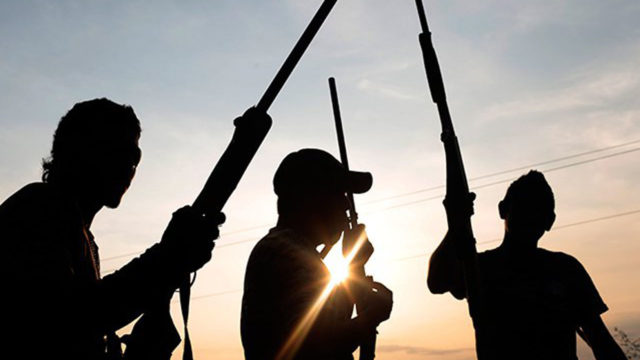
Nigeria’s security challenges deepened at the weekend as separate attacks in Zamfara and Enugu states left security personnel dead, civilians abducted, and fresh rescue operations underway.
In Zamfara State, troops of Operation FANSAN YAMMA foiled an attempted terrorist attack on a Forward Operating Base (FOB) at Kasuwan Daji in Kaura Namoda Local Government Area, killing several attackers and rescuing nine abducted civilians.
However, the operation claimed the lives of one Nigerian Army officer and one police officer, while two soldiers sustained gunshot wounds and were evacuated for treatment.According to the Nigerian Army, the terrorists attempted to infiltrate the military base around 1:40 a.m. on Saturday under the cover of darkness but were detected and engaged with overwhelming firepower, forcing them to retreat. Reinforcements immediately pursued the fleeing attackers, leading to the rescue of nine civilians who had been abducted from nearby communities.
The Army dismissed reports that six security personnel were killed during the attack, insisting that only one Army officer and one police officer lost their lives. It said troops have since secured the area and are conducting exploitation operations to determine the full extent of the terrorists’ casualties while reaffirming their commitment to sustaining offensive operations against armed groups across the North-West.
Meanwhile, in Enugu State, a joint security team has intensified efforts to rescue two victims abducted during an attack on St. Joseph Catholic Church, Inoyi, Affa Community, in Udi Local Government Area.
Police said operatives, working with Forest Guards and members of the Neighbourhood Watch Group, pursued the fleeing gunmen and succeeded in rescuing one of the abducted victims unharmed, while the attackers escaped with two others.
The Commissioner of Police, Mamman Giwa, directed the Area Commander in Oji River, the Command’s Violent Crime Response Unit, and the State Intelligence Department to deploy all operational and intelligence assets, including the Enugu State Command-and-Control Centre, to ensure the safe rescue of the remaining victims and the arrest of the perpetrators.
Although police confirmed that three persons were initially abducted, eyewitnesses said the attackers stormed the church during morning service around 8:30 a.m. and abducted a seminarian, the catechist and two other worshippers before fleeing.
Authorities in both states have assured residents that security operations have been intensified to restore safety, rescue those still in captivity, and bring the attackers to justice.
security
Troops Neutralise Over 102 Terrorists, Rescue 393 Kidnap Victims, Arrest 345 Suspects in July

By David Torough, Abuja
The Armed Forces of Nigeria (AFN) neutralised more than 102 terrorists and other criminal elements, arrested 345 suspects, and rescued 393 kidnapped victims across the country in July, underscoring an intensified nationwide offensive against insurgency, banditry, kidnapping and crude oil theft.
The figures were disclosed by the Director of Defence Media Operations, Major General Michael Onoja, during the Defence Headquarters’ monthly operational briefing in Abuja on Friday.
According to the military, troops operating across the six geopolitical zones sustained coordinated land and air offensives that also led to the voluntary surrender of 57 insurgents, while 59 firearms and 1,811 rounds of ammunition were recovered from criminal groups.
In the North-East, troops of Operation Hadin Kai recorded some of the most significant gains, neutralising 54 terrorists, arresting 102 suspects, rescuing 102 kidnapped victims, and facilitating the surrender of 57 insurgents and their family members.
Among the major breakthroughs was the killing of Abu Salim al-Barnawi, described as a senior Boko Haram/ISWAP commander and propaganda chief, during an operation in Kukawa Local Government Area of Borno State.
Operation Fansan Yamma in the North-West rescued the highest number of kidnap victims during the month, with 191 hostages freed, while 33 terrorists were neutralised and 66 suspects arrested.
Troops also foiled several mass abduction attempts and rescued dozens of civilians in Zamfara, Kaduna, Katsina, Kano and Sokoto states.
In the North-Central, Operation Savannah Shield rescued 11 victims, neutralised eight terrorists, and arrested 18 suspects, while Operation Enduring Peace recorded 18 rescued victims, 60 arrests, and two terrorists neutralised.
Operation Whirl Stroke also rescued 24 kidnapped victims, arrested 70 suspects, and killed five terrorists across Benue, Kogi, Nasarawa and Taraba states.
The military said sustained anti-kidnapping operations in the South-South led to the rescue of 37 civilians, the arrest of three suspected terrorists, the dismantling of 18 illegal refining sites, and the recovery of more than 250,500 litres of stolen petroleum products.
Troops also intensified efforts against crude oil theft and illegal refining operations in Rivers State.
In the South-East, Operation Udo Ka arrested 26 criminal suspects and rescued 10 civilians, while recovering weapons and dismantling criminal hideouts linked to armed groups.
The Defence Headquarters also highlighted the role of the Air Component in supporting ground operations, noting that precision air strikes and surveillance missions disrupted terrorist movements in Niger State and enabled the escape of kidnapped victims during separate operations.
Chief of Defence Staff, General Olufemi Oluyede, commended troops for the month’s operational successes and praised the synergy among the Armed Forces, other security agencies and local vigilante groups.
He also applauded security personnel involved in the successful rescue of 44 pupils and teachers abducted from schools in Oyo State, stressing that the victims were freed without any concession to their abductors.
Reaffirming the military’s commitment to national security, the Defence Headquarters urged Nigerians to continue supporting security operations by providing timely and credible intelligence, assuring the public that all information received would be treated confidentially.

The Police Commander in Rivers has arrested four suspected members of a kidnapping syndicate and rescued a woman abducted from her shop in the state.
The command’s Spokesperson, Blessing Agabe, disclosed this on Thursday in Port Harcourt.
Agabe said that a white-tinted minibus allegedly used by the gang was also recovered.
She also said that the rescue followed an intelligence-led operation by operatives of the command’s Violent Crime Rescue Unit.
According to her, the victim’s husband, Ikechukwu, 35, reported the abduction on July 11.
“The woman was attending to customers at her shop when armed men stormed the premises and abducted her. The suspects forced the victim into a white-tinted minibus before fleeing the scene.
“Following the report, the command launched an intelligence-driven investigation which led operatives to the gang’s hideout.
“Four male suspects, aged between 28 and 42, were arrested at the hideout. The victim was rescued unharmed during the operation.”
Agabe added that all the four suspects have confessed to their individual roles in the crime.
The spokesperson said efforts were ongoing to apprehend two other members of the syndicate still at large and to recover the firearms used in their operations.
She urged residents to provide prompt and credible information to the police, assuring that “every useful piece of information provided will be treated with the utmost confidentiality”.
She reiterated the command’s commitment to protecting lives and property through intelligence-led policing and lawful strategies aimed at bringing criminal elements to justice.


FG begins 2026 National Laureate Programme
ShareThe Tertiary Institutions National Laureate Committee has announced the commencement of the 2026 National Laureate Programme. The National Laureate Programme...
Still On Abubakar Malami, His Battles and Landmark Achievements
ShareBy Hajia Hadiza Mohammed As I stated in my previous article, some of my colleagues have queried my interest in...


Why Nigeria’s Births should not Worry Elon Musk
ShareBy Chinedu Moghalu Elon Musk has a gift for reducing significant anxiety to a sentence. “Nigeria alone had 4 million...

Neutralizing South Africa’s Xenophobic Excesses
ShareBy Chidi Amuta Nelson Mandela must be churning in his resting place. An exemplary life lived and a myth created...
Enugu Joint Security Operatives Rescue Abduction Victim
ShareFrom Sylvia Udegbunam, Enugu A joint security team comprising Police operatives, Forest Guards, and members of the Neighbourhood Watch Group...

Police Uncovers Two Illegal Arms Factories in Benue
ShareFrom Attah Ede, Makurdi Police in Benue State uncovered and destroyed two illegal firearm manufacturing factories, recovered three AK-47 rifles...


Troops Foil Bandits’ Attack, Rescue Nine Kidnap Victims in Zamfara
ShareFrom Ifeanyichukwu Nwannah, Gusau Troops of Sector 2, Operation FANSAN YAMMA, deployed at the Forward Operating Base (FOB) in Kasuwan...
The Fake DG Saga Holds a Mirror to All of Us
ShareBy Akin Fadeyi A man got tired of his wife’s alleged belligerent behaviour. She was never “available” and whenever she...


OPay is Okay: Trust Is Not Claimed – It Is Earned
ShareFor tens of millions of people across Nigeria, digital finance has changed everyday life. Paying bills, sending money, saving, and...


Wike Directs Immediate Demolition of Suspected Criminal Hideout in Abuja
ShareBy Laide Akinboade Abuja Minister of the Federal Capital Territory (FCT), Nyesom Wike has directed the immediate demolition of an...