
security
Weaponizing Displacement: How Electoral Manipulation and Abandoned IDP Populations May Be Fueling Insecurity in Nigeria


By Muhammed Gaddafi Yusuf
Institute for Peace and Conflict Resolution
Nigeria’s worsening insecurity crisis may be connected to a deeper and less discussed problem: the alleged political exploitation of vulnerable displaced populations during elections.
Across parts of Northern Nigeria, security concerns continue to grow over the intersection between electoral malpractice, displacement, weak border governance, and armed banditry. While direct evidence remains difficult to establish because of the covert nature of political operations, emerging security debates increasingly suggest that vulnerable migrants and internally displaced persons (IDPs) may sometimes be exploited for political purposes during elections and later abandoned within fragile communities, the implications are significant.Nigeria currently faces one of Africa’s largest displacement crises. Millions of internally displaced persons live in conditions shaped by poverty, unemployment, food insecurity, and weak state protection. In many rural and borderland communities already struggling with insecurity, these vulnerabilities create fertile ground for criminal recruitment and exploitation.
Security analysts have long warned that ungoverned spaces across Northwestern and Northeastern Nigeria provide operational environments for armed bandits, trafficking networks, kidnappers, and extremist groups. Weak state presence, porous borders, and economic desperation have contributed to the expansion of criminal economies across several regions.
What is increasingly attracting attention, however, is the possibility that electoral manipulation may indirectly contribute to these security problems.
Reports and local narratives from some politically contested areas have raised allegations that vulnerable populations are occasionally mobilized through patronage networks during elections, temporarily settled in strategic locations, or politically induced through survival-based incentives. Although such claims remain difficult to verify comprehensively, the broader concern lies in what happens after elections.
When displaced populations are abandoned without reintegration support, livelihoods, or long-term protection, they often remain trapped in fragile settlements characterized by unemployment, social exclusion, and weak governance. These conditions can increase vulnerability to criminal recruitment.
Research on insecurity in Northwestern Nigeria has repeatedly linked armed banditry to poverty, state absence, and socio-economic marginalization. Armed groups frequently exploit vulnerable populations for intelligence gathering, smuggling, trafficking, kidnapping operations, and recruitment.
The challenge therefore extends beyond electoral integrity. electoral malpractice is traditionally viewed as a democratic governance problem. However, its long-term consequences may also represent a national security threat. Weak electoral systems erode public trust, deepen political grievances, and contribute to anti-state sentiments. In conflict-prone regions, such dynamics can intensify instability. Humanitarian experts also warn that prolonged displacement creates severe human security risks. Many internally displaced persons lack stable housing, education, healthcare, and employment opportunities. Without adequate support systems, displaced youth may become susceptible to survival-based criminal economies.
The relationship between displacement and insecurity is therefore multidimensional. Political exploitation, weak governance, humanitarian neglect, and ungoverned territories can interact in ways that reinforce instability. Addressing these challenges requires more than military operations. the electoral institutions, humanitarian agencies, and security organizations must strengthen oversight mechanisms for vulnerable populations during elections. Border governance, reintegration programs, intelligence gathering, and community stabilization initiatives also require significant improvement. Ultimately, the protection of displaced populations should not only be viewed as a humanitarian obligation but also as a strategic national security priority.
1. Introduction
Nigeria’s democratic journey since 1999 has been persistently challenged by electoral violence, vote-buying, political intimidation, and allegations of institutional manipulation. Simultaneously, the country faces one of Africa’s most severe displacement crises driven by insurgency, communal conflicts, farmer-herder violence, and armed banditry. According to the International Organization for Migration (IOM), millions of Nigerians remain internally displaced, particularly across the North-East and North-West regions.
The convergence of political instability and humanitarian vulnerability has generated growing concerns regarding the exploitation of displaced populations during electoral processes. In several politically contested areas, allegations have emerged suggesting that vulnerable migrants and internally displaced persons are sometimes mobilized for political purposes, temporarily resettled in fragile communities, or manipulated through patronage systems linked to elections. Although direct empirical verification remains difficult because of the covert nature of such practices, the security implications of these allegations warrant scholarly attention.
Existing literature has extensively examined electoral malpractice, banditry, and displacement as separate phenomena. However, insufficient attention has been devoted to the possible intersection between politically manipulated displacement and the expansion of insecurity in Nigeria’s borderland and ungoverned territories. This article argues that the alleged political exploitation and subsequent abandonment of vulnerable displaced populations may contribute indirectly to armed recruitment, criminality, and the expansion of banditry. The paper situates electoral malpractice not merely as a democratic governance issue but also as a long-term human security and national security challenge.
Why the Issue Matters
Nigeria’s insecurity crisis is no longer limited to terrorism or rural banditry alone. Increasingly, security analysts are warning about the dangerous overlap between political manipulation, humanitarian vulnerability, and criminal recruitment. For years, elections in parts of Nigeria have been associated with allegations of vote-buying, political patronage, voter intimidation, and the exploitation of vulnerable populations. At the same time, millions of internally displaced persons continue to live in temporary settlements with limited access to jobs, education, healthcare, and state protection.
The concern emerging in security discussions is that when vulnerable populations are politically mobilized and later abandoned without reintegration or economic support, they may become susceptible to recruitment into criminal networks operating across fragile border communities. Although direct evidence of organized political recruitment pipelines remains difficult to verify, the broader security environment makes such fears difficult to ignore.
Across Northwestern Nigeria, armed banditry has expanded rapidly over the last decade. Kidnapping, illegal arms trafficking, cattle rustling, and cross-border criminality continue to threaten rural communities. Security experts frequently link these problems to weak governance, poverty, youth unemployment, and ungoverned territories. This raises an uncomfortable but important national question: what happens when politically vulnerable populations are left behind in exactly these fragile environments?
What Existing Evidence Suggests
Existing research already shows that:
- Electoral fraud weakens trust in democratic institutions;
- Displacement increases economic vulnerability;
- Ungoverned spaces create operational environments for criminal groups; and
- Prolonged marginalization can increase vulnerability to criminal recruitment.
While scholars have studied these issues separately, less attention has been devoted to how they may reinforce one another. Research on banditry in Northwestern Nigeria consistently identifies poverty, weak state presence, and socio-economic frustration as major drivers of insecurity. Humanitarian reports also show that many displaced persons remain trapped in cycles of dependency and exclusion. The danger is that fragile communities can become easy targets for recruitment networks linked to armed banditry, trafficking, and violent criminality.
5. Literature Review
5.1 Electoral Fraud and Democratic Weakness in Nigeria
Electoral fraud has remained a persistent feature of Nigeria’s democratic experience. Scholars have identified vote-buying, falsification of results, voter intimidation, and political violence as major impediments to democratic consolidation. Electoral malpractice undermines public trust, weakens institutional legitimacy, and fuels political instability.
The introduction of biometric technologies such as the Permanent Voter Card (PVC) and the Bimodal Voter Accreditation System (BVAS) represented efforts to reduce multiple voting and voter impersonation. Nevertheless, allegations of political patronage, voter inducement, and institutional compromise continue to shape public perceptions of Nigerian elections.
Daxecker, Di Salvatore, and Ruggeri (2019) argue that perceived electoral fraud contributes significantly to post-election instability and declining confidence in democratic institutions. Similarly, Omotola (2010) notes that electoral irregularities weaken state legitimacy and deepen governance crises.
5.2 Displacement and Human Insecurity
Nigeria hosts one of the largest internally displaced populations in Africa. The Boko Haram insurgency, banditry, communal conflicts, and environmental pressures have displaced millions of individuals across Northern Nigeria.
Human Security Theory emphasizes that security extends beyond military protection to include economic security, food security, health security, and protection from structural violence. IDPs often experience severe livelihood challenges, unemployment, social exclusion, and limited access to healthcare and education.
Prolonged displacement creates vulnerabilities that may increase susceptibility to criminal recruitment, trafficking, or participation in informal survival economies.
5.3 Ungoverned Spaces and Armed Banditry
Research on insecurity in North-western and North east Nigeria identifies weak governance, porous borders, and state absence as major drivers of armed banditry. Ojo (2020) argues that ungoverned spaces create operational environments for criminal networks and violent actors.
Banditry in Nigeria has evolved beyond cattle rustling into a complex security challenge involving kidnapping, extortion, illegal mining, arms trafficking, and cross-border criminality.
Relative Deprivation Theory provides insight into how socio-economic exclusion and frustration may increase the likelihood of participation in violence. Communities experiencing prolonged marginalization and weak state presence often become vulnerable to armed mobilization.
5.4 Political Patronage and Security Governance
Political patronage remains deeply embedded within Nigeria’s political system. Patron-client relationships often shape access to resources, political loyalty, and electoral mobilization.
In fragile environments characterized by displacement and poverty, patronage systems may exploit vulnerable populations through inducement-based mobilization or temporary political support structures. The absence of post-election social reintegration mechanisms can further intensify insecurity.
6. Theoretical Framework
6.1 Fragile State Theory
This study adopts Fragile State Theory as its primary analytical framework. Fragile State Theory explains how weak institutions, corruption, poor governance, and limited territorial control undermine state authority and security provision. In Nigeria, weak border governance, inadequate humanitarian management, and limited state presence within rural communities have contributed significantly to insecurity.
The theory is particularly relevant to this study because it helps explain how governance failures create environments where electoral malpractice, displacement, and criminality intersect. Fragile and poorly governed territories often become operational spaces for armed groups, traffickers, and criminal networks.
Within such contexts, vulnerable displaced populations facing poverty, exclusion, and weak institutional protection may become susceptible to political manipulation and criminal recruitment.
The theory therefore provides a useful framework for understanding how state weakness and governance failures contribute to the relationship between displacement, electoral manipulation, and insecurity in Nigeria.
Security Implications
The security implications of this issue extend beyond elections first, the politicization of vulnerable populations can deepen public distrust in democratic institutions and weaken state legitimacy. Second, abandoned displaced communities often emerge in areas already affected by weak governance, poor infrastructure, and limited security presence. Third, criminal organizations operating within ungoverned territories frequently exploit economic desperation and state absence to recruit vulnerable individuals.
This is particularly concerning in border communities where state authority remains weak and trafficking routes already exist. The intersection between displacement, political patronage, and insecurity therefore represents not just a humanitarian challenge but a long-term national security concern.
8. Findings and Discussion
The study identifies several pathways through which politically manipulated displacement may contribute indirectly to insecurity.
8.1 Politicization of Vulnerable Populations
Vulnerable displaced populations often depend on political actors, humanitarian support systems, or local elites for survival. In fragile contexts, such dependence may create opportunities for political exploitation through inducement-based mobilization.
Allegations of politically motivated relocation, temporary settlements, and electoral patronage networks have emerged in several conflict-prone regions. Although difficult to verify empirically, these allegations reflect broader concerns regarding the vulnerability of displaced populations within politically competitive environments.
8.2 Post-Election Abandonment and Socioeconomic Marginalization
The study finds that prolonged displacement, unemployment, and social exclusion create conditions of frustration and vulnerability. Communities abandoned after political mobilization may experience deteriorating living conditions and weak state support. Relative deprivation and economic desperation increase susceptibility to criminal economies and armed recruitment.
8.3 Ungoverned Spaces and Criminal Recruitment
Weak border governance and ungoverned territories provide safe havens for armed groups and criminal syndicates. Displaced populations concentrated within such environments may become vulnerable to recruitment into:
- armed banditry;
- trafficking networks;
- smuggling operations;
- kidnapping syndicates; and
- violent extremist groups.
The study argues that insecurity within borderland communities is sustained by the interaction between weak governance, poverty, displacement, and criminal opportunity structures.
8.4 Electoral Fraud as a Security Threat
The paper further argues that electoral malpractice should be understood not only as a governance problem but also as a national security threat. Political manipulation weakens institutional legitimacy, erodes public trust, and contributes to anti-state sentiments.The intersection between political patronage, displacement, and insecurity therefore represents a multidimensional governance crisis.
9. Policy Implications
The findings of this study have major implications for electoral governance, border security, humanitarian management, and counter-banditry strategies in Nigeria. First, electoral reform efforts must move beyond technical voting procedures to address the broader political economy of electoral manipulation. Second, humanitarian responses to displacement should incorporate long-term reintegration, livelihood support, and community stabilization mechanisms. Third, security agencies should strengthen intelligence cooperation within border communities and improve monitoring of criminal recruitment networks.
Fourth, governance interventions must prioritize state presence within ungoverned territories through infrastructure development, education, policing, and social protection.
10. Conclusion
This study examined the relationship between electoral manipulation, displacement, and insecurity in Nigeria. It argued that the alleged political exploitation and abandonment of vulnerable displaced populations may contribute indirectly to the expansion of armed banditry and criminality. Although direct empirical evidence remains limited due to the covert and politically sensitive nature of such activities, the convergence of weak governance, socio-economic exclusion, displacement, and insecurity creates conditions conducive to criminal recruitment. The study concludes that electoral fraud should not only be viewed as a democratic governance issue but also as a long-term national security concern with implications for border governance, social cohesion, and human security.
11. Recommendations
- Strengthen biometric voter verification systems and electoral oversight mechanisms.
- Improve border governance and surveillance within fragile communities.
- Establish independent monitoring mechanisms for vulnerable displaced populations.
- Expand livelihood and reintegration programs for internally displaced persons.
- Strengthen intelligence-sharing between electoral institutions and security agencies.
- Enhance community-based early warning systems in borderland regions.
- Increase accountability for political actors involved in electoral manipulation.
- Promote civic education and democratic participation within vulnerable communities.
References
Daxecker, U., Di Salvatore, J., & Ruggeri, A. (2019). Electoral fraud and post-election violence. Journal of Conflict Resolution, 63(9), 2172–2197.
International Organization for Migration. (2024). Nigeria displacement report. Geneva: IOM.
Ojo, J. S. (2020). Governing ungoverned spaces in Nigeria’s Northwest region. African Security Review, 29(3), 1–15.
Omotola, J. S. (2010). Elections and democratic transition in Nigeria under the Fourth Republic. African Affairs, 109(437), 535–553.
United Nations High Commissioner for Refugees. (2024). Nigeria emergency update. Geneva: UNHCR.
World Bank. (2023). Fragility and insecurity in Northern Nigeria. Washington DC: World Bank.
Yusuf, H. (2022). Banditry and insecurity in Northwestern Nigeria. Democracy and Security, 18(4), 320–338.

By David Torough, Abuja
The Armed Forces of Nigeria (AFN) rescued at least 48 abducted persons, neutralised several terrorists and arrested suspected criminals across the country between August 14 and 20, 2026, as troops intensified operations against terrorism, kidnapping, oil theft and other forms of criminality.
According to a statement by the Director of Defence Media Operations, Major General Michael Onoja, the operations recorded successes across the North East, North West, North Central, South South and South East theatres.
In the North East, troops of Operation Hadin Kai rescued three kidnapped victims from Gwamnare Forest in Ningi Local Government Area of Bauchi State, while five others escaped their captors and reunited with their families.
Two victims, however, were killed before troops intervened.Troops also rescued a 63-year-old Cameroonian national abducted along the Gwoza-Cameroon axis and recovered weapons, including an abandoned AK-47 rifle.
The military said 47 family members of terrorists, comprising women and children, surrendered to troops in Borno State between August 16 and 20. Six terrorist fighters also surrendered during the period, with the military attributing the defections to hunger, insecurity and internal factional clashes within terrorist enclaves.
In the North West, troops of Operation Fansan Yamma rescued 28 abducted victims across Zamfara, Katsina and Sokoto states. Several terrorists were also neutralised, while troops arrested suspects linked to kidnapping and the movement of explosives and supplies to terrorist groups.
The military said one suspect was arrested while transporting 180 units of explosives along the Kaura-Zurmi Road in Zamfara State, allegedly destined for terrorists in Katsina State. Further operations led to the arrest of suspected terrorist informants and collaborators.
In the North Central, troops of Operation Whirl Stroke compelled kidnappers to release 13 victims abducted along the Alloma-Ejule Road in Kogi State. Troops also neutralised suspected kidnappers and terrorists in Nasarawa and Benue states and arrested suspected arms traffickers and kidnappers.
Troops of Operation Enduring Peace in Plateau State recovered firearms and ammunition during operations following an attack on Mwar community in Mangu Local Government Area.
In Kwara State, Operation Savannah Shield troops rescued seven kidnap victims found wandering in bushes around Latandaji in Patigi Local Government Area and neutralised a terrorist in Ifelodun Local Government Area.
In the South South, troops of Operation Delta Safe arrested suspected kidnappers and recovered seven locally made pistols, ammunition and a camouflage vest from a suspect in Delta State.
The military also reported the disruption of three illegal refining sites in Rivers State, where about 85,000 litres of products suspected to be illegally refined Automotive Gas Oil were recovered from dugout pits, sacks and reservoirs.
In the South East, Operation Udo Ka troops dismantled illegal bunkering operations, arrested suspected criminal elements and recovered firearms and ammunition. Troops also discovered and safely disarmed multiple improvised explosive devices in Imo State and cleared 11 IEDs during operations in Ihiala Local Government Area of Anambra State.
The military said its operations were complemented by civil-military cooperation initiatives. During the week under review, the Nigerian Navy commissioned a solar-powered water project for residents of Ward F2 in Surulere, Lagos State, to improve access to potable water.
The Chief of Defence Staff, General Olufemi Olatubosun Oluyede, commended troops for their operational successes and expressed sympathy to families of civilians killed during the operations. He also wished injured security personnel a speedy recovery.
Oluyede further urged Nigerians, traditional rulers and community leaders to continue providing security agencies with useful information, while assuring citizens that the military would sustain its operations until peace and stability are restored across the country.

From Ayinde Akintade, Osogbo
Tension gripped Osogbo, the Osun State capital, on Wednesday after suspected gang members attacked the convoy of Governor Ademola Adeleke shortly after his visit to the palace of the Ataoja of Osogbo, Oba Jimoh Oyetunji, in an incident that left one person dead.
The shooting occurred hours after Adeleke received his Certificate of Return from the Independent National Electoral Commission (INEC), following his victory in the August 15 governorship election.
Adeleke had arrived at the Ataoja’s palace at about 3:15pm in a convoy of about 20 vehicles after leaving the INEC office in Osogbo.
He was received by the traditional ruler, to whom he reportedly presented his Certificate of Return.The meeting ended with prayers, after which the governor and his close aides left the palace hall through an exit reserved for the monarch and his wives.
According to eyewitnesses, gunfire erupted moments later as suspected attackers arrived in an unregistered Sienna space bus through the Ita-Olokan axis and allegedly opened fire around the palace.
Security personnel attached to the governor responded, leading to an exchange of gunfire that lasted between 12 and 15 minutes. The attackers were subsequently forced to retreat from the area.
The police, however, later disclosed that the incident may have been triggered by an attempt to gain access to music star David Adeleke, popularly known as Davido, who accompanied the governor to Osogbo.
Osun State Police Public Relations Officer, Abiodun Ojelabi, said preliminary investigations indicated that members of the Eye Confraternity were allegedly after Davido.
According to Ojelabi, one Adebayo Taoreed, popularly known as “Small Rugged,” an ex-convict and suspected member of the confraternity, allegedly attempted to gain access to Davido but was resisted by members of his security team.
The confrontation, he said, attracted other suspected gang members in the vicinity, who allegedly blocked the palace entrance and obstructed the movement of the governor’s convoy.
The police spokesman said the suspects later left the area but allegedly shot 60-year-old Tajudeen Yusuf at Ita-Olokan.
Yusuf was rushed to the University Teaching Hospital, Osogbo, where he was pronounced dead by doctors.
The development marked a sharp turn in an otherwise celebratory day for Adeleke, who had earlier received his Certificate of Return amid cheers from supporters.
Speaking at the presentation ceremony, the governor promised to work harder to improve the welfare of residents and expressed concern over the loss of lives during political activities.
“No election, political office or ambition is worth the life of a single citizen,” Adeleke said, while recalling victims of electoral violence.
He also announced plans by the Adeleke family, through the Springtime Development Foundation, to provide scholarships up to university level for children and dependants of those killed in electoral violence. The state government, he added, would establish a ₦500 million Election Violence Victims Endowment Fund.
Meanwhile, the shooting around the Ataoja’s palace sent traders, residents and other members of the public fleeing for safety. Witnesses said some shops were hurriedly shut as gunshots rang out.
A trader near the palace, identified as Munirat, said the attackers damaged part of the palace gate during the confrontation and later moved towards the Osogbo Central Mosque before escaping through the Ita-Olokan axis of the Osogbo-Ilesa Road.
Osun State Commissioner for Information and Public Enlightenment, Kolapo Alimi, earlier confirmed the attack on the governor’s convoy, saying the governor’s security personnel successfully repelled the assailants.
The police have commenced a full-scale investigation and intensified efforts to identify and arrest the fleeing suspects.
The Commissioner of Police (Election), Osun State Command, CP Samuel Etaifo, condemned the killing and urged residents to remain calm and avoid taking the law into their own hands.
As of the time of filing this report, security personnel remained deployed around the palace and adjoining streets, while the incident continued to generate tension in the state capital.
From Jude Dangwam, Jos
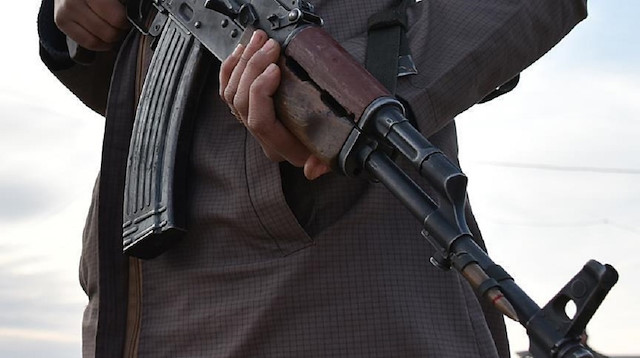
At least 24 people have reportedly been killed and several others injured after gunmen attacked Bin-Per community in Kombun District of Mangu Local Government Area of Plateau State, in the latest deadly assault on vulnerable communities in the state.
The attack occurred between midnight on Monday and the early hours of Tuesday, August 18, 2026, according to residents, who said the heavily armed assailants moved from house to house, forcing their way into homes and attacking sleeping residents.
An eyewitness, Daniel Musa, said the attackers opened doors and slaughtered people inside their homes.
“Our village came under attack last night and in the early hours of today, Tuesday, by heavily armed persons,” Musa said, adding that more than 20 deaths had been confirmed as of Tuesday morning, while several others sustained serious injuries and some residents remained missing.
Another resident, John Dalyop, described the attack as terrible and called on the authorities to take immediate action against those responsible.
The injured victims were reportedly taken to nearby hospitals for treatment, while community leaders and residents continued efforts to locate missing persons.
Security operatives were also said to have been deployed to the community on Tuesday morning to restore calm and prevent further attacks.
The Mwaghavul Youth Movement, however, put the reported death toll at 24 and said the attackers also burnt homes and destroyed crops, worsening the plight of families whose livelihoods depend largely on farming.
In a statement issued on Tuesday and signed by its Director of Public Affairs, Tubwot Joël Sunday, on behalf of the group’s President, Kyesmang Jonathan Yusuf, the movement expressed “deep grief, anger, and profound dissatisfaction” over the attack.
It said the scale of the destruction amounted to an attack not only on individuals but on the community’s “dignity, livelihood, and future.”
The group questioned the effectiveness and responsiveness of the government’s security architecture, particularly given what it described as repeated attacks on vulnerable communities across Mangu and other parts of Plateau State.
It also raised concern over increasing reliance on community self-defence, saying residents were being forced to confront heavily armed attackers because of inadequate protection.
While commending youths in Bin-Per and neighbouring communities for their courage and intervention, the movement stressed that community self-defence could not replace the responsibility of government and security agencies.
The group called on Plateau State Governor Caleb Manasseh Mutfwang and the Federal Government under President Bola Ahmed Tinubu to urgently reassess security arrangements in vulnerable communities.
It demanded improved intelligence gathering, proactive deployment of security personnel, rapid-response mechanisms and sustained protection capable of preventing attacks rather than merely responding after lives and property have been lost.
The movement also called for a transparent investigation into the Bin-Per attack and other attacks in Mangu and Plateau State, including the security response before, during and after the incident.
It demanded that those responsible for the killings, destruction of homes and farmlands be identified and brought to justice.
The youths further warned that the recurring loss of lives, destruction of homes and farmlands could no longer be treated as routine incidents, stressing that every life lost represents a Nigerian family devastated and every destroyed farm represents food, income and hope lost.
The movement mourned those killed, sympathised with the injured and displaced, and called for what it described as “government’s uncommon action” to end the cycle of violence.
As of the time of filing this report, efforts to obtain an official reaction from security authorities were unsuccessful.




Precious Adugbo Condemns Alleged Distortion of Pastor Komaiya’s ‘Supernatural Speed’ Sermon
ShareBy David Torough, Abuja Precious Adugbo, a member of The Master’s Place International Church, has condemned what he described as...


Military Rescues 48 Kidnap Victims, 47 Terrorist Family Members Surrender Nationwide – DHQ
ShareBy David Torough, Abuja The Armed Forces of Nigeria (AFN) rescued at least 48 abducted persons, neutralised several terrorists and...


Atiku Slams Tinubu Over Fuel Subsidy Policy
ShareBy David Torough, Abuja Former Vice President Atiku Abubakar has criticised President Bola Tinubu over the removal of petrol subsidy,...

Benue Gov’t Restates Commitment to Protection of AGYW, Non-Discriminatory Healthcare
ShareBy Attah Ede, Makurdi The Benue State Government has reaffirmed its commitment to protecting the dignity and rights of Adolescent...

UNICEF Training: Communication experts charge media practitioners to champion child-rights protection
ShareFrom Attah Ede and Sylvia udegbunam, Port Harcourt Seasoned communication experts and veteran broadcasters, on Thursday, enjoined media practitioners both...


UNICEF Trains Journalists on Ethical Reporting
ShareFrom Attah Ede and Sylvia Udegbunam, Port Harcourt The United Nations Children’s Fund (UNICEF), on Wednesday, opened a two- day...


Grammy-winning Singer, Angelique Kidjo Immortalised on Hollywood Walk of Fame
ShareFive-time Grammy winner, Angelique Kidjo, has become the first African musician to be honoured with a star on the Hollywood...


Singers Wande Coal, Davido Clash over Unreleased Collaboration, ‘Come My Way’
ShareNigerian singers Wande Coal and Davido have clashed on social media over an unreleased collaboration,“Come My Way”. The disagreement was...


Tonto Dikeh to Renovate Churches in Birthday Tribute to Pastor Jerry Eze
ShareActress and humanitarian Tonto Dikeh has announced a church support initiative through The New Wine Prophetic Tabernacle to mark the...


BBNaija S11: Kamsy Reveals Plans after Reality Show Exit
ShareEvicted Big Brother Naija Season 11 housemate, Kamsy Uzoma, has revealed her plans for life after leaving the reality show,...