
view point
State Police and Fear of Governors’ Abuse

By Tochukwu Jimo Obi
The debate over the creation of state police in Nigeria has continued to generate intense public discussion.
While many Nigerians believe that decentralising policing will improve security and enable quicker responses to local crimes, others remain worried that state police could become instruments of political oppression in the hands of state governors.
These concerns are genuine and should not be dismissed. However, rather than abandoning the idea of state police altogether, Nigeria should focus on building strong constitutional and legal safeguards that prevent abuse while allowing the country to enjoy the benefits of community based policing.
The greatest fear expressed by critics is that governors could deploy state police to harass political opponents, intimidate critics, manipulate elections, or suppress lawful dissent. Nigeria’s political history provides enough reasons for such apprehension. Yet, it is equally true that institutions, not individuals, determine whether power is abused. A carefully designed legal framework can ensure that no governor exercises unchecked authority over a state police force.
A critical safeguard would be the establishment of an Independent State Police Service Commission in every state. Such a commission must be constitutionally protected from political interference and should comprise representatives of the judiciary, the Nigerian Bar Association, civil society organisations, traditional institutions, and experienced security professionals.
Most importantly, the commission, rather than the governor, should be solely responsible for appointing the State Police Commissioner, recruiting officers, overseeing promotions, enforcing discipline, and dismissing personnel. This arrangement would significantly reduce the possibility of governors filling the police with political loyalists.
The Independent State Police Service Commission should also possess strong oversight and disciplinary powers. It must be empowered to investigate complaints against officers, sanction misconduct, and where a state police force is being used unlawfully, recommend federal intervention. Such powers would create institutional checks capable of addressing abuse before it threatens democratic governance or public confidence in law enforcement.
Equally important is the need to clearly define the governor’s role in state policing. Governors, as Chief Security Officers of their states, may legitimately set broad security priorities and policy directions.
However, they should have no authority to issue operational instructions in individual investigations, arrests, or prosecutions. Day to day policing decisions must remain strictly within the professional discretion of the Police Commissioner and senior officers, thereby insulating law enforcement from partisan political pressure.
The State House of Assembly must equally serve as a strong democratic watchdog. It should possess robust oversight powers to investigate allegations of abuse, summon police leadership for questioning, and scrutinise police budgets and expenditure.
Furthermore, the appointment of a State Police Commissioner should require legislative confirmation, while removal from office should only be possible through the recommendation of at least two thirds of the members of the State House of Assembly, with the concurrence of the Independent State Police Service Commission. Such multiple layers of approval would make arbitrary dismissal virtually impossible.
Beyond state institutions, there should be federal constitutional oversight to preserve uniform national standards. Whether through an expanded Nigeria Police Council or a newly established National State Police Oversight Commission, the Federal Government should retain responsibility for setting nationwide policing standards, monitoring compliance with constitutional principles, and intervening where fundamental rights are persistently violated. This would ensure that every state police force operates within the same democratic and professional framework across the federation.
Strong legal protections against political misuse must also be expressly written into the Constitution and any enabling legislation establishing state police. The law should clearly prohibit the deployment of state police for political purposes or against political opponents of governors.
In addition, every state should establish an independent Police Complaints Authority where citizens can report misconduct without fear of intimidation. Fast track courts should promptly hear cases involving alleged abuse of state police, particularly during election periods, while the Complaints Authority should publish regular reports detailing complaints received, investigations conducted, and disciplinary actions taken to strengthen transparency and public confidence.
Ultimately, the success or failure of state police will depend less on the concept itself than on the strength of the institutions that regulate it. If properly designed, these safeguards would strike the right balance between giving states greater control over local security and preventing governors from converting the police into political weapons.
The overriding democratic principle must remain that no single political office holder should exercise unchecked control over law enforcement. Instead, authority should be shared among independent commissions, the legislature, the judiciary, federal oversight institutions, and the public, thereby preserving professionalism, protecting citizens’ rights, and strengthening Nigeria’s democracy.
Tochukwu Jimo Obi, Obosi Anambra state.
view point
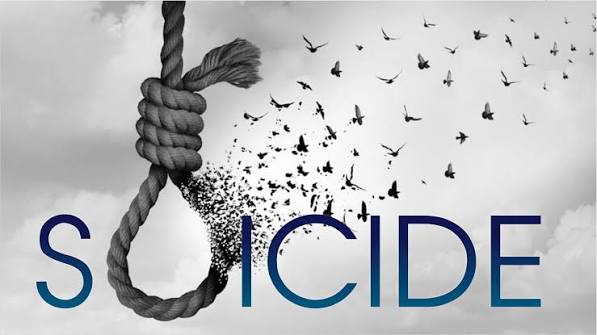
Attempted Suicide in Nigeria: Legislative Reform, Economic Hardship and the Right to Human Dignity
By Oluwaleye Adedoyin Grace
Should a person who survives a suicide attempt be punished or helped? This question challenges Nigeria’s continued criminalization of attempted suicide under section 327 of the Criminal Code Act and section 231 of the applicable Penal Code.
In a society grappling with economic hardship, unemployment, poverty and limited access to mental-health services, the appropriateness of criminal punishment deserves serious reconsideration.
Although these challenges do not explain every suicide attempt, they highlight the need to examine the circumstances in which people experience severe distress.This article argues that Nigeria should replace criminal punishment for attempted suicide with a support-centered approach that prioritizes prevention, medical care and rehabilitation, while maintaining appropriate safeguards and accountability.
THE HUMAN COST OF ECONOMIC HARDSHIP
Behind the debate on attempted suicide lies a painful reality that the law must not ignore: the struggle to survive. Imagine a father who wakes up every morning wanting to provide for his family but has been laid off and can no longer afford their basic needs. Imagine a single mother who spends the entire day selling pepper by the roadside, yet returns home unable to provide enough food for her four children. Imagine a graduate who spent years studying, holding on to the promise of a better future, only to face endless job applications, rejection and uncertainty. Imagine people sleeping under bridges, not because they have chosen such a life, but because they have nowhere else to go.
For some Nigerians, survival has become a daily struggle against hunger, homelessness and hopelessness. Behind closed doors, people carry burdens that are invisible to the public: unpaid bills, empty kitchens, disappointed children and the painful feeling of being unable to provide for those who depend on them. Although economic hardship does not explain every suicide attempt, its possible contribution to severe emotional distress cannot be dismissed.
This raises a fundamental question: when a person reaches a point of despair, should the law respond primarily with punishment, or should it also examine the circumstances in which that person has been struggling to survive? Criminalizing attempted suicide without adequately addressing the need for medical care, psychological support and social protection risks treating the visible crisis while neglecting some of the conditions that may have contributed to it.
A society must ask itself whether it is doing enough to help people survive before it punishes those who have lost the strength to keep fighting. Protecting human life requires more than prohibiting suicide; it requires building a society in which people in distress can access meaningful support, dignity and hope.
LEGAL FRAMEWORK GOVERNING ATTEMPTED SUICIDE IN NIGERIA
Section 327 of the Criminal Code Act criminalizes attempted suicide as a misdemeanor punishable by imprisonment for up to one year. Section 231 of the applicable Penal Code also criminalizes attempted suicide, prescribing imprisonment, a fine, or both.
The Constitution of the Federal Republic of Nigeria 1999, particularly sections 33 and 34, protects the right to life and human dignity. Although these provisions do not automatically invalidate the criminalization of attempted suicide, they are relevant to debates about whether punishing a person in distress is consistent with a humane approach to protecting life.
The National Mental Health Act 2021 provides an important framework for mental-health care in Nigeria. However, its existence does not by itself resolve the conflict between criminal punishment and a healthcare-centered response.
Reforming the law therefore requires reviewing the relevant criminal provisions and strengthening mental-health services, and an improved economic system so that decriminalization is accompanied by practical support.
ECONOMIC HARDSHIP AND THE CIRCUMSTANCES BEHIND SUICIDE ATTEMPTS
Economic hardship, unemployment, homelessness and food insecurity may contribute to severe distress for some individuals. In Nigeria, the rising cost of living has intensified concerns about access to basic necessities, particularly among vulnerable households and children living on the streets.
However, suicide attempts do not have a single cause. Mental-health conditions, personal experiences and social circumstances may also play significant roles. It would therefore be inaccurate to attribute every attempt to poverty or economic hardship.
The important legal question is whether criminal punishment adequately addresses the circumstances surrounding suicidal distress. Where a person needs medical attention, psychological support or social assistance, prosecution alone may fail to address those needs.
Nigeria should consequently consider a broader response that combines appropriate healthcare with effective social protection, while recognizing that each person’s circumstances require individual assessment.
CRIMINAL PUNISHMENT OR MEDICAL INTERVENTION?
Supporters of criminalization may argue that punishment discourages suicide attempts and reinforces the value of human life. However, the effectiveness of imprisonment as a deterrent requires evidence, and protecting life should involve more than prohibiting harmful conduct.
Criminal prosecution may also expose vulnerable individuals to stigma and discourage them from seeking help. These are important concerns when considering whether the criminal justice system is the most appropriate response to a person who survives a suicide attempt.
A healthcare-centered approach would priorities medical assessment, crisis intervention, counselling and rehabilitation according to individual needs. Decriminalization, however, must not mean abandoning people in distress. It should be accompanied by accessible mental-health services and appropriate safeguards for personal liberty and dignity.
Nigeria should therefore reconsider whether criminal punishment achieves its intended purpose more effectively than a properly funded system of prevention and support.
DECRIMINALIZATION AND THE RISK OF ABUSE
One concern about decriminalization is that individuals might attempt to exploit government assistance programmes. However, without reliable evidence, it would be speculative to conclude that removing criminal penalties would encourage suicide attempts for financial gain.
Nigeria can address potential abuse through transparent eligibility criteria, proper verification and accountability in the administration of public assistance. Emergency medical care should remain separate from eligibility for financial benefits, ensuring that people in crisis receive appropriate treatment without automatically qualifying for cash assistance.
The possibility of fraud should not overshadow the need to protect vulnerable individuals. A well-designed system can safeguard public resources while ensuring that people experiencing suicidal distress receive appropriate care and support.
RECOMMENDATIONS AND THE WAY FORWARD
Nigeria should review the Criminal Code Act and the applicable Penal Code provisions to replace criminal punishment for attempted suicide with a support-centered approach.
Government should strengthen mental-health services, emergency care, counselling and social protection for vulnerable individuals. Clear institutional responsibilities, adequate funding and safeguards against the misuse of public resources are also essential.
The government must look beyond criminal punishment and confront the economic conditions that leave many Nigerians struggling to survive. Tackling unemployment, reducing poverty, improving access to affordable food and housing, and creating sustainable employment opportunities should form part of a broader suicide-prevention strategy. A father who has lost his job, a mother struggling to feed her children and a graduate unable to secure employment need more than laws that punish suicidal behavior; they need practical opportunities and support to rebuild their lives.
Finally, reliable research and public awareness should guide policy decisions and help evaluate the effectiveness of suicide-prevention measures. Decriminalization must be accompanied by practical support to ensure that people in distress are not left without assistance.
CONCLUSION
Nigeria should reconsider the criminalization of attempted suicide and priorities prevention, medical care, rehabilitation and improved economic condition over punishment. Although protecting human life remains essential, criminal prosecution alone cannot adequately address the complex circumstances surrounding suicidal distress.
A support-centered approach, backed by accessible mental-health services, effective social protection and appropriate safeguards, would provide a more humane response. Ultimately, protecting life requires not merely punishing those who attempt to end theirs, but ensuring that help is available when they need it most.
Oluwaleye Adedoyin Grace, LLB. (Hons.)Join Rights Groups.
By Chidi Odinkalu
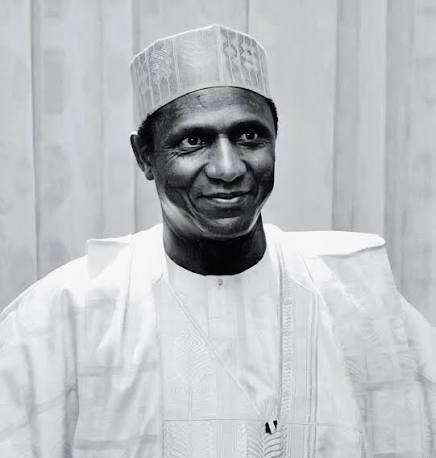
Nearly 20 years ago, while stumping for his party, the Peoples’ Democratic Party, out-going president, Olusegun Obasanjo, decided to confront head-on morbid rumours about the health of his hand-picked successor.
Umaru Musa Yar’Adua, then governor of Katsina State and the president’s man for the job, was said to be stricken in a hospital in Germany. From the podium, Obasanjo dialled before bellowing, “Umoru, are you dead?!” It was obviously not a question for a dead man.Yar’Adua was mercifully alive. He returned in time to be announced winner of a presidential election in 2007 widely described as “a charade”.
His tenure was dogged by concerns about ill-health until his death in May 2010.Presidential infirmity was not unknown to Nigeria.
Ibrahim Babangida was only 46 when he was flown out of the country for medical attention in 1986. The cause, Nigerians were informed, was “Radiculopathy”, a multi-syllabic tongue-twister that sent many newsrooms consulting diagnostic standard manuals.
In November 2009, President Yar’Adua required overseas hospitalization for “Acute Pericarditis.”
In the first 46 months of his first term as civilian president from 2015 to 2019, Muhammadu Buhari spent 407 days outside Nigeria, with about 242 days or nearly 60% of that devoted to health tourism overseas. He was 72 when he was inaugurated as civilian president, an age at which infirmity is not unknown in the ordinary course of human events.
Four things emerge from these instances. First, the wellbeing of a president is a legitimate matter of public and civic concern.
Second, like all human beings, Presidents can and do from time to time take ill. Babangida and Yar’Adua were much younger than President Tinubu is today, whatever his age may be.
Third, there was a time when presidential handlers believed they owed the country the benefit of some disclosure about the wellbeing of the President or lack of it. That, it seems, is history.
Fourth, irrespective of the health status of the president, the country must always avoid a leadership vacuum.
The twin crises of power and succession that accompanied the final months of the Umaru Musa Yar’Adua presidency brought this last point home with urgency.
In response, the National Assembly enacted a constitutional amendment designed to keep the country running when a president needs to take time off for running repairs. All it requires is for the president to temporarily transfer power to his Vice and notify the National Assembly appropriately.
On-going concerns about the health status of the incumbent suggest a presidency deeply enamoured of déjà vu or, as the Punch newspaper says, invested in treating constitutional provisions as an “ornamental” inconvenience.
In office for 41 months so far, President Bola Ahmed Tinubu has spent over 270 days (about 22%) outside the country, including over 100 days spent on 13 different trips of varying descriptions to France alone. The reason for the frequency of his visits to France is credibly suspected to be medical.
Rather than a temporary transfer of power as the constitution allows, it seems he may prefer instead to outsource it. To whom is not clear, but examples from other places could help.
In a study published in 1999, Herbert Abrams, writing about the United States, recounts that “Presidential infirmity, accompanied by a failure to fully inform the public, has been stamped indelibly on our history during the past two hundred years. Fourteen of the eighteen American presidents in the twentieth century had significant illnesses while in office….that were either concealed from the American people or underreported.”
Take for instance the case of Dr. Woodrow Wilson, the Nobel Prize-winning 28th president, who took the United States through the First World War and inspired the League of Nations. Returning home from Europe in July 1919 from signing the Treaty of Versailles which ended World War 1, Wilson preoccupied himself with the ultimately futile effort to persuade his country into the League.
In the middle of this effort, on October 2, 1919, President Wilson suffered a stroke. According to medical records released only in 1991, the stroke was so massive that it would have been “impossible for him ever to achieve more than a minimal state of recovery.”
Yet, as narrated by Christopher Andrew in his 1995 history of U.S. secret intelligence, For the President’s Eyes Only, Wilson’s second wife (the first died in 1914), Edith Galt, helped to “suppress accurate information about his health and to ensure that he continued as president for the remainder of his second term” until 1921.
On the other side of the Atlantic, the health of President Wilson’s contemporary and ideological adversary, Vladimir Ilich Lenin, was the subject of equally intense scheming between a shrewd wife and ruthless usurper. In 1922, Lenin elevated Josef Stalin to the position of General Secretary of the Central Committee of the Communist Party with sweeping powers over party matters. Shortly thereafter, Stalin drew Lenin’s ire when he (and another senior Central Committee member also from Georgia, Sergo Ordzonikidze) annexed Georgia.
Ill-health stayed in the hand of an angry Lenin who was struck down by a massive stroke in December 1922. To preserve the life of the Party’s greatest asset, the Politburo under Stalin’s influence restricted Lenin to working for a mere 10 minutes daily. Upon learning that Lenin was doing more, Stalin accosted Lenin’s wife, Nadezhda Krupskaya, warning her rather darkly, as recounted by Stalin’s biographer, Simon Sebag Montefiore, that if she did not ensure compliance “the Central Committee would appoint someone else as Lenin’s wife.”
In France, President Georges Pompidou repeatedly denied that he had anything less worrisome than a common cold until his death in office of cancer in 1974.
In 1981, Pompidou’s successor, Valéry Gisgard d’Estaing, lost in a close election to the inscrutable Francois Mitterrand. In the same year, President Mitterrand learnt that he had prostate cancer that had metastasized to the bones. Mitterrand promptly declared this a State Secret. Hiding it even from his wife, he ran for and won a second seven-year term in 1988, promising France that he was in robust health. In his debate with Jacques Chirac in 1988, Mitterrand infamously faced a more formidable challenge from an overwrought bladder in desperate need of relief.
As the Washington Post reported in January 1996, “Mitterrand’s cancer reached such a critical state in late 1994 that he was no longer able to carry out his duties and spent most of his time resting in bed.” The week after Mitterrand’s death in January 1996, his doctor, Claude Gubler, published a book, Le Grand Secret, detailing this grand deception. French authorities promptly banned the book because it allegedly breached medical confidentiality.
Closer home, Tunisia’s founding president for 32 years, Habib Bourgiba, chose to stay in office after being diagnosed with arteriosclerosis in 1983. In November 1987, Bourgiba, already enfeebled by dementia, gave his shocked compatriots a prime-time disquisition on the state of his testicles. His once-loyal prime-minister, General Zine Abdine Ben-Ali mercifully moved to confine Bourgiba under medical detention in the appropriately-named Monastir, where he died in 2000.
When he went on trial in 1994, shortly after his overthrow at the end of 31 years as Malawi’s leader, the court ruled Dr. Hastings Banda physically and mentally unfit to attend his own trial. He had in fact been “senile for years”. Yet, for 31 years until his ouster earlier in the same year, Dr. Banda held Malawians in thrall as the all-knowing Ngwazi. Real power had been outsourced to his “Official Hostess”, Mama Cecilia Kadzamira and her uncle, John Tembo.
In Malawi also, a dead president was wilfully mis-represented as merely unwell. After he died on 5 April 2012, Malawi’s presidency contrived to export the dead remains of President Bingu wa Mutharika to South Africa to enable them buy time for an unconstitutional succession by his brother and then foreign minister, Peter Mutharika. They mis-led Malawians with the announcement that the president “had…taken ill and had been flown to South Africa for specialist treatment.”
Whatever the medical dictionaries may say, the lesson of history is quite clear: infirmity can outsource the presidency under cover of “a bodyguard of lies.” Nigeria was supposed to have made this history in 2010, but the lessons do not seem to have been learnt.
A lawyer and a teacher, Odinkalu can be reached at chidi.odinkalu@tufts.edu

By Jibrin Ibrahim
As the countdown to the 2027 elections reached 100 days this week Tuesday, Joash Amupitan, chairman of the Independent National Electoral Commission (INEC), called a press conference to brief the Nation on their preparedness for the rapidly approaching polls.
His big story was that the commission will deploy artificial intelligence (AI) tools for result verification and to strengthen cybersecurity ahead of the 2027 elections.He announced the establishment of a dedicated AI division within its information and communication technology (ICT) department which will enable automated AI auditing tools that are integrated into the commission’s result verification process under a five-pillar AI governance framework.
He added that the use of AI would be subjected to mandatory human oversight and that the commission is working with international technology leaders and partners to integrate AI-driven anomaly detection tools into its systems.
He said the tools would be used to monitor database traffic and protect the commission’s systems against cyber intrusions and unauthorised alterations. Given current universal concerns over AI enabled abuses, I doubt that his words were very reassuring given the trust deficit Nigerians already have about INEC. Everything else he said was about their excellent state of preparedness for the elections.
There have been widespread concerns on Professor Amupitan’s political neutrality and the onus is on him to prove his credibility. As elections in the Fourth Republic roll by, Nigerians have become increasingly concerned about the decline of the electoral system as an institution that could guarantee the rights of citizens to freely choose those who exercise power on their behalf.
Since assuming office, the new Chairman of INEC has expressed commitment and readiness to rewrite Nigeria’s electoral history by ensuring the integrity of the 2027 elections surpasses previous elections. I definitely hope and pray that he is truthful.
The legitimacy of elections is derived from the existence of a level playing ground for competition and contestation. Where competition is eliminated or restricted, elections lose their democratic ingredient. One of the most profound threats to the 2027 elections is the systematic erosion of political competition through induced defections from political parties and the incremental decimation of opposition parties. This distortion of the political landscape could disincentive public participation in the 2027 elections, as voters will have limited political choices.
Constricting the political space and the gradual descent towards a one-party state threaten Nigeria’s democratic trajectory ahead of the 2027 elections. When political pluralism is overtly or covertly removed from electoral politics, authoritarianism creeps in, and it diminishes the legitimacy of electoral outcomes. My greatest fear for the 2027 elections is the growing concern of Nigerians that their votes may not count. The fear is that three major institutions: security agencies, INEC, and the judiciary might compromise the electoral process.
The widespread insecurity and escalating tensions in the country is not new but poses directly the question whether insurgency, banditry, communal conflicts, separatist agitations, and organised criminal violence could continue to overstretch Nigeria’s security architecture and create conditions to explain away State complicity in compromising the elections.
This expanded geography of insecurity undermines the likelihood of a safe and peaceful environment for elections. INEC may be constrained to organise elections in volatile and ungoverned spaces, while voters in conflict zones may be disenfranchised. Where insecurity impedes the deployment of election personnel, materials, and security assets, the credibility and inclusiveness of the electoral process are fundamentally compromised.
The increasingly prominent role of the judiciary in determining electoral outcomes is another facet of the problem. If INEC decides to go rogue, it could do a lot of damage. It would be recalled that in 2023 Justice Inyang Okoro led Supreme Court Presidential Petition Panel said that INEC is at liberty to prescribe the mode of collating results during an election and that IReV is not a collation centre and shouldn’t be a reason to invalidate the results of an election.
More recently, the Supreme Court has also affirmed the right of INEC to prescribe guidelines that affect political party primaries and membership. We recall that in June 2002, INEC rejected the registration applications of over 24 political associations.
It was the Supreme Court that declared its action void and ordered the registration of the associations. That judgment became a precedent that once an association had met the constitutional requirements, INEC was bound to comply with its registration in line with the decision of INEC v. Balarabe Musa (2003) 3 NWLR (Pt. 806). In 2007, INEC arbitrarily disqualified Atiku Abubakar from contesting the 2007 election because he had been indicted by a tribunal, even without conviction. It was still the same Supreme Court that restricted their powers and held that INEC had no power to disqualify a candidate from contesting the election.
Since then, almost all judgments seem to favour the administrative actions of INEC, even when they are a clog in the wheels of democracy. The fear now is that on-going attempts to block major opposition candidates.
In his address at the press conference on Tuesday, the INEC Chairman confirmed receipt of the Certified True Copy (CTC) of the Supreme Court judgment on the validity of key provisions of the Electoral Act 2026 following a legal challenge by the Zenith Labour Party (ZLP) affirming the constitutionality of some sections of the Electoral Act 2026.
The Supreme Court judgment concerns Sections 77(5), 77(6), 77(7) and 84(2) of the Electoral Act 2026, which regulate political parties’ membership registers and the nomination of candidates for elective positions.
The court, in a unanimous judgment delivered on 24 September 2026, restored the four provisions after the Court of Appeal had earlier voided them. The court ruled that section 77(5) provides that only members whose names appear on a political party’s membership register submitted to INEC at least 21 days before a primary, congress or convention can participate in the exercise. Section 77(6) requires political parties to use the membership register submitted to INEC for their primaries, congresses and conventions, while Section 77(7) provides that a party that fails to submit its register within the stipulated period cannot field a candidate in an election.
Section 84(2) provides that political parties shall nominate candidates for elective positions through direct primaries or consensus. The Supreme Court held that the provisions were consistent with the Nigerian Constitution and consequently restored the judgment of the Federal High Court, which had earlier dismissed the legal challenge to the provisions. INEC now has the tools to mess up opposition candidates if it decides to do so.
A professor of Political Science and development consultant/expert, Jibrin Ibrahim is a Senior Fellow of the Centre for Democracy and Development, and Chair of the Editorial Board of PREMIUM TIMES.




Attempted Suicide in Nigeria: Legislative Reform, Economic Hardship and the Right to Human Dignity
ShareBy Oluwaleye Adedoyin Grace Should a person who survives a suicide attempt be punished or helped? This question challenges Nigeria’s...

UBA Scores Legal Victory in N156bn Stallion Debt Case
ShareBy Tambaya Julius, Abuja United Bank for Africa (UBA) Plc has secured a favourable judgment in its N156 billion debt...

Nigeria Customs, Afreximbank Push Regional Border Modernisation
ShareBy Tambaya Julius, Abuja The Nigeria Customs Service (NCS) and the Customs administrations of Benin and Cameroon are working with...


NCDMB Heritage Energy Train 48 Nigerians in Subsea Engineering
ShareFrom Mike Tayese, Yenagoa The Nigerian Content Development and Monitoring Board (NCDMB), in partnership with Heritage Energy Operational Services Limited...
CAN: Tinubu Tasks Christians for Greater Unity
ShareBy Laide Akinboade, Abuja The first lady Senator Oluremi Tinubu, at the weekend urged all Nigerian Christians to ensure they...
Maka Oganiru Begins Operations, Pledges Africa’s Investment-ready Projects
ShareBy Tony Obiechina, Abuja New Africa-focused advisory firm aims to connect high-potential opportunities with global capital, institutional investors and strategic...

FG Tadks Varsities on Specialised Health Degree Programmes
ShareBy Tambaya Julius, Abuja The Federal Government has urged vice-chancellors of Nigerian universities to introduce degree programmes that address critical...

Presidency, Makinde Clash Over Alleged ₦250bn NLNG Fund for States
ShareBy Tambaya Julius, Abuja The Presidency has dismissed claims by Oyo State Governor Seyi Makinde that the Federal Government is...

UBA Wins N156bn Debt Recovery Case Against Stallion Group
ShareThe Court on Friday ruled in the Bank’s favour on all issues and granted all its prayers. United Bank for...

Senator Abba Moro: It is Time to Go Home
ShareBy Cleopas Agada For seven years in the National Assembly, what has Benue South actually felt? For a man who...