
NEWS
FG Partners Dangote Cement, Boosts Affordable Housing Delivery

By Tambaya Julius, Abuja
The Federal Government has reaffirmed its partnership with Dangote Cement Plc and other stakeholders in the housing sector to accelerate the delivery of affordable and inclusive housing across Nigeria as part of efforts to reduce the country’s housing deficit.
The commitment was reiterated at the 2026 Abuja International Housing Show (AIHS), where stakeholders also applauded Dangote Cement and the President of Dangote Industries Limited, Aliko Dangote, for their contributions to affordable housing, infrastructure development and Africa’s industrialisation.
Speaking during a visit to the Dangote Cement pavilion at the exhibition, the Minister of Housing and Urban Development, Dr. Muttaka Rabe Darma, said the Federal Government remained committed to working with the company to tackle Nigeria’s housing challenges.
Darma noted that the theme of this year’s exhibition, “Housing Solutions for Low-Income and Informal Workers in Africa,” aligns with the Federal Government’s agenda of expanding access to decent and affordable housing for low-income earners and workers in the informal sector.
Stakeholders at the event described Dangote Cement as a strategic partner in bridging Nigeria’s housing deficit through the production of quality building materials and sustained investments in infrastructure.
They also applauded Aliko Dangote for his commitment to Africa’s industrialisation and economic transformation, noting that his investments have continued to stimulate economic growth, create employment opportunities and promote sustainable development across the continent.
Founder and Chief Executive Officer of the Abuja International Housing Show, Festus Adebayo, described Dangote Cement as a dependable partner whose consistent support has played a significant role in the growth and success of the annual housing exhibition.
He disclosed that Dangote Industries Limited is the principal sponsor of the 20th edition of the exhibition, while Dangote Cement is showcasing innovative products and building solutions designed to support affordable housing delivery.
Speaking on behalf of the National Sales Director, Dolapo Alli, Dangote Cement’s Regional Sales Director for North Central, Bankole George, said access to decent housing is fundamental to human dignity, social stability, economic productivity and inclusive national development.
He identified the major constraints to affordable housing in Nigeria as the high cost of land, rising prices of building materials, limited access to mortgage financing, weak rental systems and restrictive planning regulations.
The Director advocated innovative financing mechanisms tailored to low-income earners and informal-sector workers, including micro-mortgages, rent-to-own schemes, cooperative savings programmes, employer-assisted housing initiatives and incremental housing loans.
Former Speaker of the House of Representatives, Rt. Hon. Aminu Waziri Tambuwal, urged lawmakers to champion legislative reforms that would improve access to affordable housing across the continent.
Former Senate President, Senator Anyim Pius Anyim, also called for innovative financing models to bridge Africa’s housing gap and expand home ownership opportunities for millions of people.
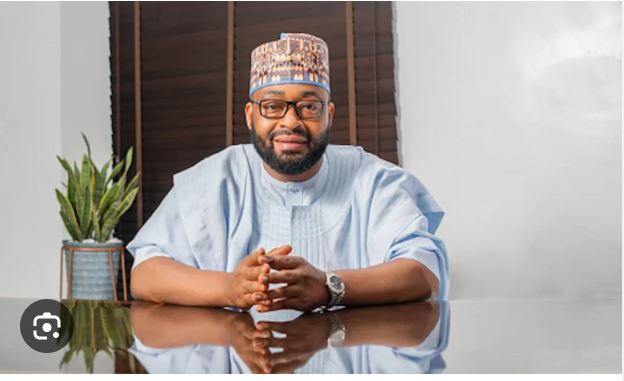
From Dan Amasingha, Minna
Niger State Governor, Mohammed Umaru Bago, has flagged off the reconstruction of the 5.43-kilometre Kontagora Township Dual Carriageway as part of his administration’s ongoing drive to modernize infrastructure and stimulate economic development across the state.
The groundbreaking ceremony, which was held on Monday in Kontagora, attracted government officials, traditional leaders, community stakeholders, and residents who turned out to welcome the governor and witness the commencement of the strategic road project.
The dual carriageway stretches from Barrack Junction to Makera Junction along Yauri Road and is expected to improve traffic flow, ease transportation, and boost commercial activities within Kontagora and its surrounding communities.
Governor Bago reaffirmed his administration’s commitment to delivering quality infrastructure that supports economic growth, enhances connectivity, and facilitates the movement of people, goods, and agricultural produce across the state.
He noted that Kontagora remains one of Niger State’s major commercial and agricultural centres, stressing that the reconstruction of the township road would further strengthen local businesses, improve access to markets for farmers, and create new economic opportunities for residents.
The governor explained that the project forms part of the broader urban renewal programme of the state government, which seeks to transform major towns through the provision of durable and modern infrastructure capable of supporting sustainable development.
The 5.43km township dual carriageway is expected to complement other ongoing road projects in Kontagora, including the 8.7-kilometre Kontagora Bypass expansion and the 19.4-kilometre Kontagora Western Bypass, all aimed at improving mobility and opening up the area for increased investment.
Residents expressed optimism that the reconstruction would reduce travel time, enhance road safety, and contribute to the socio-economic growth of the emirate and the state at large.
The latest project underscores the Bago administration’s continued investment in road infrastructure as a catalyst for economic transformation under the New Niger Agenda, with the government maintaining that strategic infrastructure remains central to its vision of improving the quality of life of Niger State citizens.

By David Torough, Abuja
The Minister of Information and National Orientation, Mohammed Idris, has called on bloggers, online content creators and digital influencers to embrace ethical journalism, responsible storytelling and fact-based reporting as they play an increasingly influential role in shaping public opinion.
Speaking at the Niger State Bloggers, Online Publishers and Content Developers Forum in Abuja on Monday, Idris said digital platforms present significant opportunities for innovation and civic engagement but stressed that such platforms must be used responsibly to promote truth, national unity and constructive public discourse.
He said democracy depends on a responsible media, noting that while freedom of expression is fundamental, it must be exercised with responsibility.
“There is no democracy that can thrive without a responsible media. You cannot carry freedom and abandon responsibility,” the minister said, adding that the administration of President Bola Ahmed Tinubu remains committed to protecting press freedom while promoting ethical journalism.
Idris urged bloggers and content creators to verify information before publishing, reject misinformation and disinformation, avoid sensationalism, and use their platforms to educate, inspire and contribute to national development.
He encouraged young Nigerians to view digital content creation not only as a means of earning a livelihood but also as a tool for civic engagement and nation-building, stressing that ethical communication is vital to strengthening democracy and building public trust.
The minister also highlighted the establishment of the International Media and Information Literacy Institute (IMILI), which he described as the world’s first UNESCO Category 2 Institute dedicated exclusively to Media and Information Literacy. He said the institute represents a major step toward advancing digital literacy and promoting responsible online engagement.
Idris further urged aspiring bloggers and digital entrepreneurs to continue developing their skills while maintaining professional standards to enhance the credibility of Nigeria’s online media ecosystem.
By Reuben Abati
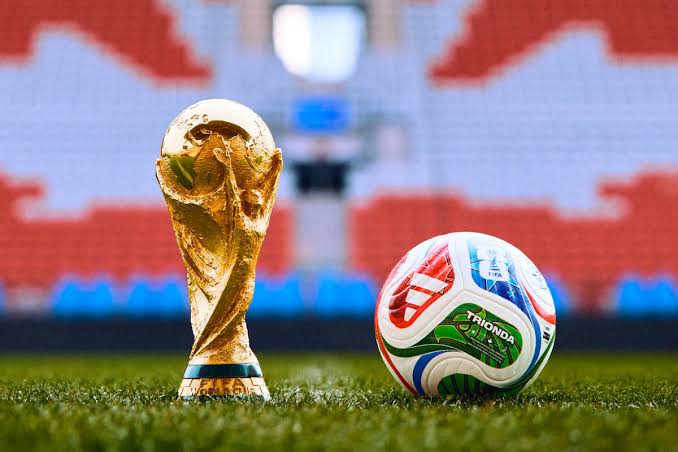
The straight-forward, honest and correct answer to the question raised above is: Yes. Spain won at the end of the day on Sunday, 19 July, 1-0 against Argentina, defending champions since Qatar 2022, and that was the climax of a tournament that lasted for 39 days during which 104 matches were played, by 48 teams from six Federations, participating (for the first time in the World Cup finals), in three countries – Canada, Mexico and the United States in 16 host cities – 11 in the United States (Atlanta, Boston Dalla, Houston, Kansas City, Los Angeles, Miami, New York City/New Jersey, Philadelphia, San Francisco Bay Area and Seattle; three cities in Mexico – Guadalajara, Mexico City and Monterrey, and two cities in Canada – Toronto and Vancouver.
This was the longest, most expansive, indeed the most expensive tournament ever in the history of the World Cup, with tickets selling as high as $2,000 and over $10,000 on the day of the final match. Spain’s victory was very well deserved. Supporters of Argentina and, particularly, the team’s talisman, Lionel Messi, had hoped that Argentina would win the World Cup back-to-back, but that did not happen.
Argentina actually failed to get one shot on target. Instead, Spain dominated the game from start to finish, with 20 shots and 12 on target, until Ferrand Torres scored the winning goal in the 106th minute.
The tally could even have been higher were it not for Argentine goalkeeper, Emiliano Martinez, who was busy throughout until he got a shot that made the difference from Torres. It was a sad goal, but it was also perfectly made. It was a historic moment.
Spain is the first nation ever to hold both the men’s and women’s FIFA World Cup titles at the same time. It is also the first country to be the reigning men’s Champion of the World Championship, the European Championship and the Olympics Championship simultaneously.
In addition, Spain won the Golden Ball in the final (Rodri), best young player (Pan Cubarsi) and the Best Goalkeeper with Golden Gloves (Unai Simon).
The Spanish team conceded only one goal and scored 14 goals throughout the tournament. To be fair, Argentina could have been beaten by more than one goal. The best team won. Spain played throughout as a complete team, with possession and positional football to win their Second World Cup title.
Argentina relied heavily on their goalkeeper, Emiliano Martinez, and Lionel Messi, easily the best player in the world who was reduced to tears at the end of what may well be, at 39, his last World Cup appearance. He will always be remembered as a legend of the tournament with 21 World Cup goals and clearly a first rank artist of the game at club, national and international levels, a genius and a master builder.
But despite the hype that heralded the final match, it was not even the most exciting match of the tournament. In that category would be the match between Netherlands and Japan in Group F, which ended 2-2, Algeria vs Austria, 3- 3, and Belgium vs Senegal in the Round of 32 at 3-2. The Teranga Lions of Senegal almost defeated Belgium! Argentina vs Cabo Verde which ended 3-2. Cabo Verde, a country of 529,000 people, the smallest country at the World Cup, which does not even have a properly organised national team had a fairy tale run, with its 40-year-old goalkeeper, Vozinha, who put up a memorable, remarkable performance.
That was a match! Cabo Verdeans nearly disgraced Argentina. In the Round of 16, Norway knocked out Brazil 2-1 to get to the quarter finals for the first time. Almighty Brazil was thrown out. England defeated Mexico in the Round of 16, but the same England was so disappointing in the semi-final match against Argentina playing a needless defensive game after going ahead with a goal in the first half.
They would later redeem their brand in the third-place play-off in which they defeated France. This was England’s best outing at the World Cup since 1966 when they won
the trophy, and now a bronze medal that was considered not good enough, even if they won 6-4 against one of the best teams in the world in the 2026 tournament.
There was also Argentina against Egypt, which Messi’s team won 3-2 in the Round of 16. Egypt felt cheated, so heartbroken, and had to complain about the officiating. On the whole, the World Cup 2026, in its expanded format projected the beautiful game so well, there is even now a lobby for further expansion to 64 teams in future editions.
The continent of Africa got a record 10 slots, nine of the teams reached the knock-out stage, and African countries were no spectators as they gave a good account with the competent performances by Morocco and Egypt, which both made it to the Quarter finals, and the Round of 16, before being eliminated by France and Argentina respectively.
DR Congo, appearing in the World Cup finals for a second time since 1974, drew against Portugal 1-1, defeated Uzbekistan, 3-1 and almost gave England a scare in the Round of 32, eventually losing 2-1. Our neighbour, Ghana, didn’t do too badly either, especially in their 0-0 match against England, and their 1–0 defeat of Panama.
But the star team from Africa was Cabo Verde which recorded a draw against Spain, the eventual winners of the tournament, held Uruguay to a 2-2 draw, and again drew with Saudi Arabia and almost defeated Argentina! Cote D’Ivoire did well too.
I will rather not talk about South Africa – those xenophobes – whose country should be busy answering questions at the International Court of Justice (ICJ). Nigeria, which by the way did not qualify for the World Cup, was everywhere at the tournament but actually nowhere in particular.
While 10 other African countries were competing with the rest of the world on the field of play, Nigeria was busy in the cheerleading corner through its artistes.
Afro-beat artiste Odogwu Burna Boy sang and danced with waist-twisting Colombian sensation, Shakira at the opening in Mexico Stadium on 11 June, and at the interlude of the closing in MetLife Stadium in New Jersey on 19 July.
Other Nigerian artistes – Rema, Davido and Ayra Starr – provided entertainment at other forums, while football was being played by capable nations. Nigeria was also a provider of talented footballers for other countries; a total of 15 players of Nigerian descent represented other countries at the World Cup.
While this recognition of Nigerian talent and stardom is remarkable, Nigerians would rather have their country on the main stage at the World Cup but that was something we could not do. Having missed the last two World Cup finals (2022, 2018), Nigeria should work harder to make it to the next World Cup in 2030 and the time to start is now not yesterday. Other countries start the preparations for the next World Cup, the moment a particular one ends. Nigeria’s story is different. The Nigeria Football Federation (NFA) usually waits till the last minute for the qualifying games to begin before running helter-skelter to get a coach, a team and oftentimes, the players are demoralised by the usual lack of organisation and a sense of direction. The problem is that nobody ever learns from past mistakes in Nigeria’s House of Football.
Meanwhile, there are very clear lessons to be learnt from the just concluded FIFA World Cup 2026 about the excitement that football attracts, the co-ordination and organisation by the world football body, FIFA, the high standards of the facilities in all the venues, and the quality of play showing off modern football as an advanced art and science.
The weather was treacherous in many places: extreme, potentially dangerous weather with temperatures as high as 33C but in the end it was the world’s biggest sport that triumphed. The heat, humidity and poor air quality did not stop the fans from turning out in their numbers, an average of about 65,500 spectators per match and a record-breaking total of 6.81 million across the 104 matches. There were tender family moments that added colour to the
tournament, the Viking row with which Norway left an even bigger impression off the field of play, the display of natural beauty in the stands and at the fan centres, and the spectacle of mothers, and WAGs travelling all the way to the tournament to see their loved ones in action.
The mothers of Vozinha (Cabo Verde), Ismael Saibari (Morocco), Lamine Yamal (Spain) Nico Williams (Spain) celebrated special moments with their sons. Lamine Yamal was surrounded by family, especially his little brother, Keyne who was just as actively involved as his super star sibling.
It was heartwarming also seeing Marc Cucurella sharing his World Cup glory with his wife and three children! The diversity at the World cup was projected not just by the ethnic mix of some of the national teams, but also by the individuality of some of the players – Nico Williams with Ghanaian parents playing for Spain, and Lamine Yamal with a Moroccan father and a mother from Equatorial Guinea.
FIFA World Cup 2026 was played against the background of major geopolitical events: the 250th Independence anniversary of the United States, with President Donald Trump seeing it as part of his self-glorifying Freedom 250 personal project.
He was at the final match of the World Cup, and when Spain won, and took the trophy and the medals, Trump lingered around for the celebrations until he was politely nudged off the spotlight. It was also typical of him to have inserted himself into the process when he got FIFA to suspend a red card that had been issued to an American player, one of those Nigerian exports, Folarin Balogun.
There was also the on-going war in the Middle East between the United States/Israel and Iran. The Iran national team was treated as unwelcome guests in the United States. Immigration arrangements were marred by prejudice and discrimination.
FIFA-grade referee from Somalia, Omar Artan was barred from entering the United States, despite having a valid travel visa. He would have been the first Somali to officiate at a World Cup. The national team of Senegal was subjected to humiliating security checks at the tarmac as they arrived.
But by far the most embarrassing moment of the World Cup was the racism on display, especially the xenophobic abuse of Kylian Mbappe by Paraguayan Senator, Celeste Amarilla, who was incensed by France’s victory over Paraguay during the knock-out stage, and referred to Mbappe, the eventual Golden Boots winner and world record holder for the most goals at the World Cup, as a “colonized Cameroonian, who sucked on coconuts as a child and the most educated creatures he ever listened to were chimpanzees.” Mbappe responded by calling her a “a despicable woman, unworthy of her position.” The government of Paraguay distanced itself from Amarilla’s comments.
The French Football Federation lodged a complaint. There was also the Argentina vs. England semi-final clash, which had all the undertones of a re-enactment of the unresolved tension of the 1982 Falklands war. After a tension-soaked adversarial match, which Argentina won 2-1, some of the Argentine players put up a banner, “Las Malvinas son Argentinas”, turning the encounter into a political conflict, against FIFA’s established rules.
FIFA is investigating. By a twist of irony, when Argentina lost the final match to Spain on Sunday, 19 July, only one song matched the occasion: “Don’t Cry For me, Argentina”, complete with pathos.
All things considered, this was a successful World Cup, and the biggest beneficiaries are all the players and teams that made history, no surprise that the four teams that got to the finals are the FIFA-ranked top four men’s teams in the world – Spain, Argentina, France and England.
Gianni Infantino, who has now been endorsed by 200 of FIFA’s 211 member associations to be elected for a fourth term as FIFA president, despite his bootlicking, subservience, cozying up to US President Trump and, of course, the
host nations – Canada, Mexico and the United States – who had brilliant days in the sun. Football is also mythical and one myth has again been confirmed – that the reigning Ballon d’Or winner never wins the World Cup, and so it has been this year as it was in the examples of France’s Ousmane Dembele (2026), Italy’s Gianni Rivera (1970), Netherland’s Johan Cruyff (1974) and Marco van Basten (1988, 1992), France’s Michel Platini (1986), Italy’s Roberto Baggio (1994), and Brazil’s Ronaldo (R9), (1998).
FIFA World Cup 2026 was also a commercial success with a record-breaking total prize pot of $871 million, with the champions Spain, taking home $51 million, with gold rings for every member of the team, and the runners-up, Argentina – $34 million, and England in third place, $30 million. Every team also got something extra ($12.5 million).
My oh my. That was a profitable enterprise. The money train now moves to Morocco, Spain and Portugal in 2030 as host countries, with a further expanded 64-team format, to mark the centenary of the World Cup. It will be a shame if Nigeria again fails to show up, not necessarily for the money, in 2030, but national pride, now so badly wounded.
Reuben Abati, a former presidential spokesperson, writes from Lagos.




Bago Flags off Reconstruction of 5.43km Kontagora Township Dual Carriageway
ShareFrom Dan Amasingha, Minna Niger State Governor, Mohammed Umaru Bago, has flagged off the reconstruction of the 5.43-kilometre Kontagora Township...

Messi Breaks Silence after World Cup Loss
ShareArgentina captain Lionel Messi has broken his silence after his side’s heartbreaking defeat to Spain in the 2026 FIFA World...
Akume Urges Code of Conduct Tribunal to Adopt Digital Technology for Faster Justice Delivery
ShareBy David Torough, Abuja The Secretary to the Government of the Federation (SGF), Senator George Akume, has urged the Code...

Idris Urges Bloggers, Content Creators to Uphold Ethics, Support Nation-building
ShareBy David Torough, Abuja The Minister of Information and National Orientation, Mohammed Idris, has called on bloggers, online content creators...

COAS Declares Open Army Inter-division Competition
ShareThe Chief of Army Staff (COAS), Lt.-Gen. Waidi Shaibu, yesterday declared open the Nigerian Army Inter-Division Combat Platoon Obstacle Crossing...

MainPower Restores Power Supply to Parts of Enugu in Darkness
ShareFrom Sylvia Udegbunam, Enugu MainPower Electricity Distribution Limited (MEDL) has restored power supply to parts of Enugu metropolis, which witnessed...

2027 Benue APC Crisis: Alia, Akume Separately Presents INEC Nomination Forms To State Assembly Loyalists
ShareFrom Attah Ede, Makurdi The crisis rocking the All Progressives Congress, (APC) in Benue State may not ends soon, as...

Was the World Cup 2026 a Success?
ShareBy Reuben Abati The straight-forward, honest and correct answer to the question raised above is: Yes. Spain won at the...
When healthcare stops being a promise
ShareBy Hassan Olayinka Every community has a hospital that tells a story. Some tell stories of neglect, where broken equipment...

FG Partners Dangote Cement, Boosts Affordable Housing Delivery
ShareBy Tambaya Julius, Abuja The Federal Government has reaffirmed its partnership with Dangote Cement Plc and other stakeholders in the...