
POLITICS
Provide Evidence of Alleged Replacement of Nominated Candidates, INEC Challenges NDC

The Independent National Electoral Commission (INEC) has challenged the Nigeria Democratic Congress (NDC) to provide evidence that the commission replaced ANY of its nominated candidates for 2027 general elections.
Chief Press Secretary to the INEC Chairman, Adedayo Oketola, stated this in an interview with newsmen on Monday in Abuja.
Oketola said that the attention of INEC has been drawn to allegation by the NDC that the commission replaced some of the candidates purportedly nominated by the party with names alleged unknown to the party.
The allegation according to NDC is particularly in respect of some State House of Assembly constituencies in Anambra.
In his reaction, Oketola described the allegation that INEC went behind the NDC to obtain Form EC9 directly from individual aspirants and thereafter, uploaded their particulars as candidates without the authority of the party as serious.
He noted that such an allegation was capable of objective verification from the commission’s electronic and documentary records.
“Rather than make categorical assertions on matters that can readily be established from those records, the commission will examine the relevant records relating to the constituencies identified by the NDC.
“If the party has evidence implicating any official of the Commission in any unauthorised interference with its candidate nomination process, it should make such evidence and the particulars of the officials concerned available to the commission.
“Any credible allegation of misconduct by an official of the commission will be investigated in accordance with established procedures,” he said.
Oketola added that the allegations required some clarification regarding the role of INEC and the procedure for the nomination and submission of candidates by political parties.
“For the avoidance of doubt, INEC does not nominate candidates for political parties.
“The nomination of candidates is the responsibility of political parties, subject to compliance with the Constitution, the Electoral Act 2026 and other applicable laws, Regulations and Guidelines,” he said.
Oketola explained that the commission did not possess the legal authority to select a candidate for a political party or substitute its own preferred candidate for a person validly nominated by a political party in accordance with the law.
He further said that the candidate nomination portal provided by INEC was the platform through which political parties submit the particulars of their candidates using access credentials issued for that purpose.
He added that the activities carried out in relation to the submission of candidates through the portal were electronically recorded and were capable of verification from the commission’s records and audit trail.
Oketola said it was therefore possible to establish objectively the history and source of entries relating to any candidate whose name appears on the portal.
“Accordingly, the allegation that officials of the commission introduced or “smuggled” candidates into the NDC’s list is not a matter that should be determined by speculation.
“The electronic and documentary records relating to the affected constituencies are capable of establishing the relevant facts.
“It is equally necessary to clarify the distinction between INEC’s responsibility to monitor political party primaries and the responsibility of political parties to nominate and submit their candidates,” he said.
Oketola said that INEC’s monitoring of a political party primary did not amount to nomination of a candidate by INEC.
He also added that a report made by officials who monitor a primary did not confer upon the commission the power to choose a candidate for the political party.
He explained that the monitoring process served the statutory purposes prescribed by law and did not transfer the party’s responsibility for nomination to the commission.
“Where questions arise as to the person validly emerged from a political party primary, the effect of an appeal arising from that primary, or the validity of any subsequent attempt to alter the outcome of the nomination process.
“Those questions must be resolved strictly within the framework of the Electoral Act 2026 and other applicable laws.
“INEC cannot assume the role of a political party in choosing its candidates, nor can it disregard applicable statutory requirements governing the nomination and submission of candidates,” he said.
Oketola, however, emphasised that INEC had no institutional interest in the choice of candidate made by any political party.
He stressed that INEC’s responsibility is to administer the electoral process impartially and in accordance with the Constitution, the Electoral Act and applicable Regulations and Guidelines.
“Political parties also have a corresponding responsibility to ensure that their nomination processes, internal appeals, submission of candidates and use of the commission’s candidate nomination portal are undertaken strictly in accordance with the law and within the prescribed timelines,” he said.
Oketola reiterated that INEC would continue to discharge its responsibilities transparently, impartially and in accordance with the rule of law.
“Where legitimate concerns are raised concerning the candidate nomination process, the commission will address them on the basis of its records and the applicable law.
“The commission will neither nominate candidates for political parties nor lend itself to the imposition of candidates on any political party,” he said.(NAN)
From Rabiu Sanusi, Kano
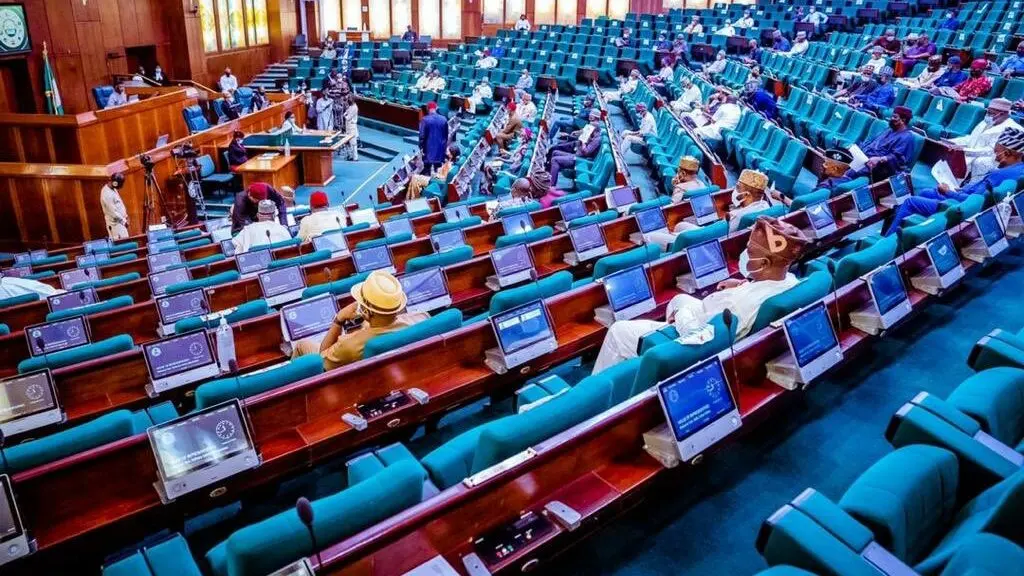
The House of Representatives has backed plans to increase Nigeria’s strategic petroleum reserve from 20 days to 90 days by 2027 in a move aimed at strengthening the country’s fuel security and ensuring a more reliable supply of petroleum products.
Chairman of the House Committee on Petroleum Resources (Downstream), Ugochinyere Ikeagwuonu, disclosed this in Abuja during a technical briefing, where the committee also passed a vote of confidence in the administration of President Bola Tinubu over its efforts to secure the nation’s petroleum pipelines.
Ikeagwuonu said the proposed expansion of the strategic reserve would be supported by sustained domestic petroleum supply, reducing the country’s vulnerability to supply disruptions.
The committee further reported that contributions from local refineries to Nigeria’s national petrol supply had increased by more than 75 per cent, with the country recording over 25 days of supply sufficiency and no reported shortfalls so far.
The development, according to the committee’s briefing, highlights the growing role of domestic refining in supporting the nation’s energy security.
In a related development, the committee established two subcommittees to investigate separate petitions concerning gas distribution licences issued by the Nigerian Midstream and Downstream Petroleum Regulatory Authority (NMDPRA) and allegations of abuse of office against Mumuni Dagazau, Executive Vice President, Downstream of the Nigerian National Petroleum Company Limited (NNPC Limited).
The proposed 90-day reserve target represents a significant policy ambition for Nigeria petroleum sector as the country seeks to strengthen supply resilience, improve energy security and reduce exposure to disruptions in fuel distribution.
The outcome of the planned investigations and progress towards the 2027 reserve target will remain important issues for the downstream petroleum industry.
From Francis Sadhere, Delta
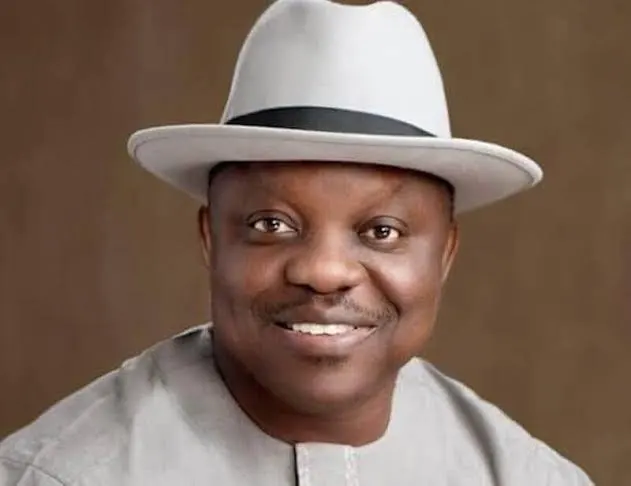
Former Governor of Delta State, Dr. Emmanuel Eweta Uduaghan, has died. He was 71.
Uduaghan, who governed the state from 2007 to 2015, reportedly passed away on the morning of Monday, October 19, 2026.
His death was announced in a statement signed by Toju Anire Uduaghan on behalf of the family, which described his passing as a devastating loss to the family, Delta State and Nigeria.
The family said the former governor was a beloved father, brother, uncle and patriarch, whose life and service touched many people across the state and the country.
“His passing has left us devastated. Words can hardly express the depth of our sorrow at the loss of a man who meant so much to our family and whose life and service touched countless others across Delta State and Nigeria,” the statement said.
Uduaghan held several key positions in the Delta State Government before becoming governor. He served as Commissioner for Health from 1999 to 2003 and Secretary to the State Government from 2003 to 2007.
He subsequently emerged as governor in 2007 and remained in office until 2015, during which the family said he demonstrated commitment to the human and infrastructural development of the state.
The family described his death as a profound loss, noting that he was a source of strength, a father figure and a respected elder whose memories and legacy would remain cherished.
“We are grateful to Almighty God for his life, his service, and the legacy he leaves behind,” the statement added.
The family prayed for the repose of his soul and divine comfort for relatives, friends, associates, former colleagues and others mourning his death.
“Your memory will forever remain in our hearts, and your legacy will endure in the lives of those you touched,” the family said in its farewell message.
Uduaghan’s death marks the loss of a former leader who occupied prominent positions in Delta State’s political and administrative history.
The family concluded its announcement with a prayer for his peaceful repose, saying, “May your gentle soul rest in perfect peace. Amen.”
By Tambaya Julius, Abuja
The Federal Government has urged vice-chancellors of Nigerian universities to introduce degree programmes that address critical manpower shortages and meet the growing demand for specialised healthcare and social services.
The proposed programmes include Audiology, Occupational Therapy, Speech and Language Therapy, Clinical Psychology and Medical Social Work.
The government said expanding training in these fields would help bridge gaps in specialist care and create more employment opportunities for Nigerian graduates.The Minister of Education, Dr.
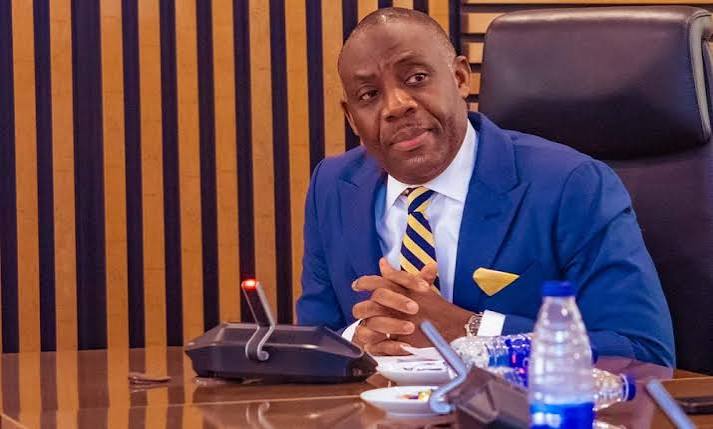
Tunji Alausa, also reaffirmed the Federal Government’s commitment to establishing autism centres across the six geopolitical zones to improve access to specialised care and support for persons on the autism spectrum and their families.Alausa said universities must align their academic programmes with national workforce needs and emerging societal challenges, stressing the importance of equipping graduates with practical skills for professional practice and employment.
He explained that developing the proposed programmes would strengthen Nigeria’s capacity to provide essential services locally, reduce dependence on limited specialist services and produce professionals capable of meeting the needs of the population.
The planned autism centres are expected to provide access to diagnosis, therapeutic services and research, while serving as regional support hubs for families, healthcare professionals and educational institutions.
The minister said the initiatives reflect the Federal Government’s commitment to strengthening local capacity and improving support for persons with autism and other developmental conditions.
He assured stakeholders that the government would continue to pursue reforms aimed at expanding access to relevant education, strengthening institutional capacity and promoting skills development.
Alausa also commended the Chairman of the Federal Government Committee for the Advancement of Audiology, Occupational Therapy and Speech and Language Therapy, Dr. Victoria Amu, for her dedication and commitment to advancing the specialised fields.
He urged vice-chancellors and other university administrators to work closely with Amu, relevant regulatory agencies and professional bodies to facilitate the introduction of the proposed programmes.
According to him, such collaboration would help ensure that the programmes meet the required academic and professional standards.
The minister reiterated the government’s commitment to building a responsive and inclusive higher education system that equips Nigerians with relevant skills, addresses critical manpower gaps and expands access to essential specialised services.
He added that the initiatives form part of broader efforts to develop human capital, improve service delivery and ensure that Nigeria’s education system responds effectively to national priorities and the needs of its citizens.



World Bank Tasks FG, States on Sustainable Cash Transfers
ShareBy Tambaya Julius, Abuja The World Bank has urged the Federal Government and state governments to establish a sustainable social...

NDLEA Nabs 85-year-old Woman, Seizes 407kg Cannabis
ShareThe National Drug Law Enforcement Agency (NDLEA) has arrested an 85-year-old grandmother and five other suspected drug traffickers during coordinated...

Economy would’ve Collapsed without Tinubu’s Reforms, Says Shettima
ShareVice President Kashim Shettima has said Nigeria’s economy would have collapsed had President Bola Tinubu not taken what he called...


House of Reps Seeks 90-Day Fuel Reserve for Nigeria by 2027
ShareFrom Rabiu Sanusi, Kano The House of Representatives has backed plans to increase Nigeria’s strategic petroleum reserve from 20 days...

56,000 Candidates Register for 2026 Private WASSCE
ShareThe West African Examinations Council (WAEC) said no fewer than 56,000 candidates registered for the 2026 West African Senior School...


JAMB Warns Varsities Against Issuing Admission Letters
ShareThe Joint Admissions and Matriculation Board (JAMB) has warned universities against issuing admission letters to candidates, insisting that only admissions...
Beyond Survival: Building A Healthier Nigeria For A Longer Life
ShareBy Yussuf Mubaraq Damilare What does it mean to live a long life if access to basic medical care remains...


Jigawa to Increase Corps Members Allowance – Namadi
ShareThe Jigawa government has announced plans to increase monthly allowance for the National Youth Service Scheme (NYSC) members posted to...


NCDMB, Dangote Push for Sustainable Nigerian Content
ShareFrom Mike Tayese, Yenagoa The Nigerian Content Development and Monitoring Board (NCDMB) and the Dangote Group have urged a decisive...

Oyedele Unveils Capital Market Master Plan, Targets $1trn Market by 2036
ShareBy Tony Obiechina, Abuja The Minister of Finance and Coordinating Minister of the Economy, Prof. Taiwo Oyedele, has unveiled the...