
BUSINESS
Badagry Deep-Seaport to Boost Maritime, Commercial Activities – BACCIMA

The Badagry Chamber of Commerce, Industry, Mines and Agriculture (BACCIMA) said the proposed Badagry Deep-Seaport will strengthen the area’s position as a maritime, logistics, industrial and commercial gateway.
The President of BACCIMA, Alhaji Idris Yahaya, said this in an interview in Lagos on Tuesday.
Yahaya made the remarks following the recent signing of a Memorandum of Understanding (MoU) between APM Terminals and Badagry Port Development Ltd.
for the proposed port development.APM Terminals signed the MoU on Sept. 9 for the development of the 2.
5 billion dollar Badagry Deep-Seaport.The Minister of Marine and Blue Economy, Adegboyega Oyetola, led a Federal Government delegation to Denmark to strengthen maritime cooperation and attract investment into Nigeria’s port infrastructure.
The minister’s Special Adviser, Dr Bolaji Akinola, disclosed this in a statement in Lagos.
The Federal Executive Council, in 2022, approved the concession of the Badagry Deep-Seaport under a Build, Own, Operate and Transfer (BOOT) model as part of efforts to bridge the country’s infrastructure gap through Public-Private Partnerships (PPPs).
The project, under the regulatory guidance of the Infrastructure Concession Regulatory Commission (ICRC), is expected to generate more than 53 billion dollars over its 45-year concession period.
Yahaya said Badagry was strategically located along the Lagos-Abidjan international trade corridor and close to the Republic of Benin, giving it access to the wider West African market.
“This development will stimulate growth in logistics, warehousing, manufacturing, agro-processing, haulage, maritime services, real estate, hospitality and other supporting industries, creating new opportunities for businesses,” he said.
The BACCIMA president described the MoU signing as a welcome development, saying the chamber had been advocating for the project for some time.
“This is a thing of joy for us at the chamber. We have been talking to the government from different angles.
“We have been in contact with the Minister of Marine and Blue Economy and Folashade, the Lagos State Commissioner for Trade, Co-operative and Investment, on these matters.
“Even, the minister personally responded to my question that the Federal Government had approved the port.
“But the only thing that remains is for the promoters to work harder with their co-promoters to ensure that it becomes a reality,” he said.
Yahaya said he was particularly pleased that Oyetola witnessed the signing of the MoU with APM Terminals, adding that the Managing Director of Badagry Port Development Ltd., Chief Didi Ndiomu, was also present.
He said Nigerians would derive significant benefits from the project when it became operational.
“There are uncountable benefits from this project. First of all, it will generate employment. Artisans will work there, engineers and many of our jobless youths will work there.
“The population of Badagry will increase tremendously.
“On the issue of power outages, some private companies may come to Badagry to invest in electricity, like we have in Victoria Island.
“I think the Federal Government has liberalised electricity issues, such that individuals or companies can start building power plants,” he said.
Yahaya added that a power company could establish a plant in Badagry because reliable electricity would be needed to support the port and other businesses that would emerge around it.
He said the project was long overdue and appealed to the promoters and the Federal Government to resolve any outstanding issues delaying its implementation.
Yahaya expressed optimism that the project, when completed, would transform the economic landscape of Badagry and create new opportunities for businesses and residents.(NAN)

The Federal Government has called for a stronger agricultural value chains, increased agro-industrialisation and improved market access to boost food security in Nigeria.
The Permanent Secretary, Federal Ministry of Agriculture and Food Security, Dr.
Marcus Ogunbiyi, made the call on Monday in Enugu during the Technical Session of the National Council on Agriculture and Food Security.The theme of the event is “Enhancing Agricultural Value Chains, Agro-Industrialization and Market Access for Economic Growth.”
Ogunbiyi, who doubled as the Chairman of the Technical Session, said that the country must move beyond subsistence farming and embrace a commercially driven agricultural system capable of supporting industries, improving farmers’ incomes and expanding export opportunities.
“Our task goes beyond increasing the volume of food produced.
“We must build an agricultural economy that creates wealth, supports industries, generates decent employment, expands exports, improves rural livelihoods and contributes meaningfully to national economic growth,” he said.
The Permanent Secretary identified inadequate storage and processing facilities, limited access to finance, poor logistics and weak links between farmers and processors as major challenges affecting the competitiveness of agricultural products.
He called for increased investment in agro-processing facilities, rural roads, irrigation, electricity, cold-chain infrastructure and modern technologies to reduce post-harvest losses and promote local value addition.
“Agro-industrialisation is central to the transformation we seek to achieve. It provides the bridge between agriculture and industry.
“It also enables agricultural production to serve as a reliable source of raw materials for manufacturing and other productive sectors of the economy.
“The value of this Council will ultimately be determined by the quality of its resolutions and the extent to which those resolutions are implemented,” Ogunbiyi stated.
He also urged state governments to identify priority commodities, establish clear production and processing targets, attract private-sector investment and strengthen partnerships with research institutions and development partners.
In his remarks, the Enugu State Commissioner for Agriculture and Agro-industrialisation, Patrick Uburu, said that the state government was committed to agro-industrialisation to boost farmers’ income, create jobs and generate wealth.
Uburu, who described the technical sessions as a platform for translating policies into practical solutions, urged delegates to prioritise farmers and agribusiness operators in their deliberations.
He emphasised the need for stronger collaboration among state governments, federal agencies and development partners to address food security challenges, noting that recommendations from the meeting should be measurable and implementable.
The commissioner called for practical policies and investments that would improve farmers’ productivity and expand market access for agricultural produce.
Technical Lead Policy Advisory, GIZ ECOWAS & Nigeria, Dr Abiodun Ihebuzor, advocated for stronger partnerships and increased investment in agricultural value chains to reduce post-harvest losses and improve food security in Nigeria.
Ihebuzor noted that previous engagements at the 46th Council in Calabar and the 47th Council in Kaduna had provided opportunities to advance agricultural development.
He expressed optimism that the current meeting would strengthen collaboration among government institutions, development partners and private-sector operators.
According to him, healthy soils, efficient markets and improved storage systems were essential to sustainable food security.
On her part, Geraldine Onu, Deputy Director, Administration and Supply, Enugu State Ministry of Agriculture and Agro-Industrialisation, disclosed that the State Government had intensified efforts to transform agriculture from subsistence farming to commercial and mechanical farming as part of its economic development agenda.
She noted that investments in irrigation, storage, processing and agricultural infrastructure were aimed at increasing production, attracting private investment, reducing post-harvest losses and improving farmers’ livelihoods.
“In Enugu State, under the visionary leadership of Gov. Peter Mbah, agriculture occupies a strategic position in the state’s economic transformation agenda.
“The initiatives include the 300,000-hectare agricultural land bank, the development of Smart Farm Estates across the 17 Local Government Areas, the 260 Farm Estate Programme and the establishment of a tractor assembly plant,” Onu added.(NAN)

A graduate of the University of Maiduguri, Shianya Ebwaseh, said the Nigerian Education Loan Fund (NELFUND) helped improve her Grade Point Average (GPA) to 3.50 through financial support that enabled her to concentrate on her studies.
Ebwaseh, who graduated from the Department of Zoology, Faculty of Life Sciences, said this in an interview on Monday in Maiduguri.
She said financial difficulties had previously affected her academic performance, as she struggled to meet her daily needs while pursuing her degree.
The graduate said she resorted to selling fried chips and groundnuts on campus to support herself, sometimes missing lectures because of the time and energy required to run the business.
According to her, the introduction of NELFUND’s student loan scheme relieved her financial burden through tuition support and a monthly N20,000 upkeep allowance.
“Before NELFUND, I struggled with my GPA because of financial challenges. I sometimes missed lectures after spending hours frying and packaging chips for sale.
“But when NELFUND came, I stopped the business and concentrated on my studies. My GPA improved to 3.50, which is Second Class Upper,” she said.
Ebwaseh said the financial support also enabled her to attend lectures regularly, purchase learning materials and prepare adequately for tests and examinations without constant worries about money.
She added that her examination scores improved significantly after she began receiving the support, attributing the change to increased concentration and financial stability.
The graduate, who said she accessed the scheme in her third year, described the application process as simple and encouraged other eligible students to apply.
She also said the programme had helped financially disadvantaged students remain in school, particularly those whose parents could not afford tuition fees and upkeep.
Ebwaseh appealed to the Federal Government to sustain the initiative, emphasising that withdrawing the support could expose many students to financial difficulties and possible dropout.
She said the scheme had given beneficiaries an opportunity to pursue their academic ambitions with fewer financial distractions.(NAN)
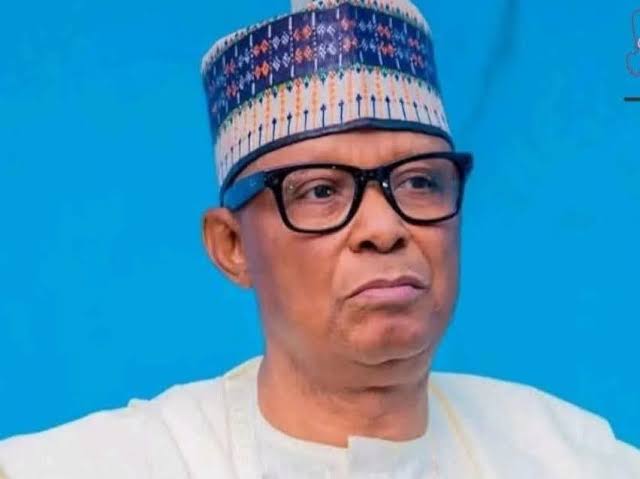
The Minister of Housing and Urban Development, Dr Muttaqha Darma, has called for synergy among government agencies in the housing sector to improve coordination and accelerate housing delivery.
Darma made the call in Abuja on Monday at the stakeholders’ conference on the proposed National Real Estate Regulatory Authority (NRERA).
The conference, themed “One vision, One Ecosystem, One National Housing and Real Estate Plan”, was organised by the Office of the Speaker, House of Representatives, and the House Committee on Housing and Habitat.
The minister said the lack of coordination among government agencies had affected the effective delivery of houses to Nigerians, noting that institutions in the sector operated independently.
“The players within the industry, all of us, operate in silos.
“Federal Housing Authority (FHA) does not even know what the Federal Mortgage Bank of Nigeria (FMBN) is doing. FMBN does not know what the Ministry of Finance Incorporated (MOFI) is doing,” he said.
According to him, the various institutions must work together towards a common goal rather than operate independently.
“Our target is to build houses for Nigerians. We are wasting our time because if we fail, it is us who fail, not the President,” he said.
The minister expressed support for the establishment of NRERA, saying the proposed authority would address the regulatory gaps in the real estate sector.
He said the ministry had reviewed the proposed legislation and recognised its potential to improve the sector.
Darma also disclosed that abandoned housing projects funded by the Federal Mortgage Bank of Nigeria (FMBN) across the country were worth about N38 billion.
He said a survey conducted by the ministry revealed abandoned FMBN-funded housing developments in every state of the federation, including the Federal Capital Territory.
“We realised about N38 billion of contributors’ money, your own money, all the Nigerian workers’ money. N38 billion is wasted,” he said.
He said that the poor management of workers’ contributions could discourage Nigerians from contributing to the National Housing Fund.
The minister urged the committee handling the proposed legislation to ensure that state governments were included in the regulatory framework.
He also called for safeguards to protect homebuyers, tenants, developers and mortgage lenders, including mandatory escrow accounts for buyers and standardised tenancy agreements.
The Managing Director and Chief Executive Officer of the Ministry of Finance Incorporated (MOFI), Dr Armstrong Takang, said effective regulation was necessary to restore investor confidence in Nigeria’s real estate sector.
Takang said the sector contributed 12.71 per cent to Nigeria’s Gross Domestic Product (GDP) as of June 2026, but remained largely unregulated.
He said the absence of a national licensing system had allowed unqualified individuals to operate as estate agents and developers without adequate accountability.
“Anyone can sell land, anyone can collect off-plan payments, run into tens of billions and get away with it. There are very few countries in the world where these are allowed,” he said.
He called for mandatory licensing of real estate operators and the protection of buyers’ funds through designated project accounts.
“An operator must be licensed with the authorities. No one should be operating in the real estate sector without a licence, no matter which part of the value chain they are involved in,” he said.
He added that buyers’ funds should be kept in protected project accounts and released to developers based on evidence of progress on construction.
Takang said effective regulation would attract domestic and foreign investment, protect citizens and support the Federal Government’s one-trillion-dollar economy target.
He urged the National Assembly to ensure the passage of the proposed legislation, describing it as critical to bringing order and transparency to the real estate sector.



Bayelsa Deputy Gov Tasks Nigerians on Effective Service
ShareFrom Mike Tayese, Yenagoa The Deputy Governor of Bayelsa State, Dr. Peter Akpe, has urged Nigerians to make selfless service...
CIPPON Urges FG to Protect Nigerian Printing Industry
ShareBy David Torough, Abuja The Chartered Institute of Professional Printers of Nigeria (CIPPON) has renewed its call on the Federal...

Mbah Declares Emergency on Nsukka-Adani Road
ShareFrom Sylvia Udegbunam Enugu Enugu State Governor, Peter Mbah has declared an emergency on the Nsukka-Adani Road, describing it as...


Oborevwori Mobilises Support for Tinubu, APC 2027 Victory
ShareFrom Francis Sadhere, Delta Delta State Governor, Rt. Hon. Sheriff Oborevwori, has called for massive support for President Bola Ahmed...
Growing Threat to Opposition Politics and Democracy
ShareBy Pius Mordi Democracy thrives on competition, tolerance, freedom of expression and the willingness of those in power to accommodate...

NCDMB, NLNG Commit $9m to Endowment of Professorial Research Chairs in Six Varsities
ShareFrom Mike Tayese, Yenagoa The Nigerian Content Development and Monitoring Board (NCDMB) and the Nigeria LNG Limited (NLNG) have launched...


2027: Obi Visits Benue, Vow to Unite Nigeria if Elected
ShareFrom Attah Ede, Makurdi The presidential candidate of the Nigeria Democratic Congress (NDC), Peter Obi, has vowed to unite Nigeria,...


Wike Targets Tourist Destination Status for Apo-Karshi Road
ShareBy Laide Akinboade, Abuja The Minister of the Federal Capital Territory (FCT), Nyesom Wike, has announced plans to transform the...


Alt Bank Appoints Gul Khan as Managing Director
ShareThe Alternative Bank Ltd (Alt Bank) has appointed Gul Khan as its new Managing Director, following approval by the Central...


2027: APC Restricts Campaign Spokespersons to Yari, Alake, Idris
ShareBy David Torough, Abuja The All Progressives Congress (APC) Presidential Campaign Council has overhauled its Directorate of Media and Strategic...