
BUSINESS
Abia Targets UNESCO Recognition of Heritage Sites

The Abia Government has elevated selected cultural and natural sites to state heritage and monuments as part of efforts to position them for recognition as UNESCO World Heritage Sites.
Commissioner for Information, Okey Kanu, said this while briefing newsmen on the outcome of the State Executive Council meeting on Monday in Umuahia.
Kanu said the State Executive Council had approved the declaration of selected heritage and natural sites as state heritage and monuments to strengthen their preservation and promotion.
He said the approved sites included the National War Museum, Ojukwu Bunker and Government College, all in Umuahia, as state monuments.
He also listed the Ibom Waterfall in Arochukwu and Ulochukwu Caves at Alayi Bende as state natural monuments.
According to him, the elevation of the sites would enhance their tourism potential and position them for possible recognition as UNESCO heritage sites.
Kanu also announced the designation of Aba as a Creative and Innovative City, saying the move was part of efforts to promote the state’s cultural, creative and tourism potential.
He further said that the retrofitting of the Ojukwu Bunker and National War Museum had reached about 80 per cent completion and was expected to be completed before the end of 2026.
The commissioner said that the projects, when completed, would enhance the preservation and historical value of the sites, improve visitor experience and increase their tourism potential.
Kanu said the Ministry of Arts, Culture and Creative Economy had commenced the development of the Ibom Waterfall Tourism Corridor in Arochukwu.
He said that initial development works, including the grading of access roads to the waterfall, had commenced, adding that the project was expected to be completed before the end of 2026.
According to him, the project is expected to unlock additional tourism and economic opportunities in the state.
He said that the ministry had also commenced the erection of monuments at strategic locations across the state to preserve Abia’s heritage and honour its heroes and heroines.
Kanu said one of the monuments would honour the heroines of the 1929 Aba Women’s Uprising, celebrating their courage, resilience, resistance and leadership.
The commissioner said that the initiatives reflected the state government’s broader efforts to preserve its historical and cultural assets while using them to drive tourism and economic development.
On tax rates in the state, Kanu said the rates being circulated were not new, adding that most dated back to 2020 and were introduced by the previous administration.
He said that the Abia Board of Internal Revenue could not increase tax rates without enabling laws and that no such increase had been introduced by the board.
Kanu also dismissed reports that an akara seller was paying N50, 000 in tax, describing the claim as false.
“Akara sellers don’t pay tax or levies, they pay daily tolls, and none can pay as high as N50, 000,” he said.
On gratuity payments, Kanu said that the state government had paid the batch covering 2001 to 2010, while preparations covering 2011 to 2025 were being processed.
He dismissed claims that the government was compelled by the opposition to commence gratuity payments, describing the narrative as misleading.
He explained that the government had incorporated gratuity provisions into its 2026 to 2030 Medium-Term Expenditure Framework to ensure that future arrears did not accumulate.
“This does not translate to the payments being terminated in 2031.
“So, as soon as the internal processes are done with, these payments will continue at pace and in batches,” Kanu said.(NAN)
The Federal Government is firming an initiative that will boost oil and gas swap plan, embedded with a regulator-mandated netting mechanism, the first of its kind around the world, to enable refiners to bring down refining costs.
The finer details of this complicated swap mechanism, pitched forward by the present administration, are being worked out by the various stakeholders
The spur is volatility in retail petrol prices, which have rocketed more than sixfold since President Bola Tinubu terminated decades-old fuel subsidies on his inauguration day in May 2023, and the promise the move holds for the affordability of the product, and other fuels.
Retail petrol has been defenceless against external pressures that have driven it to extreme price levels in Nigeria, since the US-Iran war started in February, up by 22.7 per cent.
This has continued to weigh on consumer budgets so profoundly that regulators are now stepping up consultations more tenaciously to introduce reforms to ease the pressure on businesses and households.
In August, the idea of a crude oil and gas swap system that pairs domestic producers up with refineries with a view to compressing input costs and delivery time was discussed at a meeting between the midstream sector’s top watchdog and the Nigerian Upstream Petroleum Regulatory Commission (NUPRC) in Abuja.
The structure is in the works. The proposal is currently engaging other players, with Eyesan noting that discussions on the crude oil component of the swap are still rudimentary.
The operational asset-exchange framework of the swap allows two distant producers, who are close to each other’s delivery points (refineries in this case), to switch volumes.
This gives them ample room to leverage the proximity of their bases to such destinations to save the massive logistics expenses involved in shipping crude across the supply chain.
The volume differences, quality API differentials, as well as delivery margins, are then netted off at a proposed commercial clearing house.
At the time, 27 of the 63 companies producing gas in the country had approved quotas to supply the market. However, just 23 of them were actively doing so.
The gas swap framework, on that score, permits operators unable to evacuate their gas for certain technical constraints to get a leg-up from counterparts with the facilities to supply the gas where it is needed.
It raises hope that the savings on logistics the swap is out to guarantee will directly impact the pump price of locally sold petrol, should the plan fly.
The scheme advances to the drafting stage, once consultation is over, where the energy sector’s technical committees will compose the credit-settlement laws, commercial netting-off guidelines and grade quality valuation standards, setting it up for adoption.
Implementation, if reasonably successful, might institutionalise a model from which oil-producing nations, especially those battling spikes in fuel costs internally, could borrow a leaf.
The netting-off feature of the scheme uniquely endows it with a luxury, which similar swap structures in other markets don’t offer.
Under the US crude location/quality swaps, which come closest, midstream operators can exchange cargoes of crude through clearing houses like ICE to avoid physical pipeline backhauls, based on mutual agreements between parties. However, regulation does not obligate such deals.
Dangote Petroleum Refinery, the continent’s largest, based in Lagos, added to the urgency to tame soaring refining costs recently when it revealed that involvement of middlemen raises feedstock costs by USD 3 to USD 4 per barrel in Nigeria.
That is so because crude pricing under Nigeria’s petroleum industry law is tied to Free-on-Board Dated Brent. Producers often claim that not factoring in international freight differentials while selling oil to the home market puts them at a disadvantage, unlike if it is exported.
Much as that is a regulation-backed practice, it unfairly leaves local refiners bearing a cost they are not actually liable for.
Beyond stretching logistics spending for refiners, the pass-on effect of the extra cost on fuel prices complicates affordability for consumers.
The refinery holds the biggest slice of the domestic fuel market, accounting for 87.6 per cent of petrol supply in May, according to the Nigerian Midstream and Downstream Petroleum Regulatory Authority (NMDPRA).
That affirms the overpowering implications a slight rise in the refining expenses of a refinery of that scale can have on the majority of Nigeria’s 242.4 million population, the continent’s largest.
The global costs of processing crude feedstock into finished products are accelerating to unprecedented levels across regions, due to a refining shortfall.
A note by Goldman Sachs, cited by Bloomberg in a report on August 31, suggested that the trouble has been compounded by attacks on refineries in the Middle East and Russia that are driving margins to new highs.
Russia had, in the last week of July, elongated its ban on petrol and diesel exports until January of the year ahead, making the global fuel market tighter.
Diesel is projected to be the worst-hit, with the New York-based investment bank anticipating the refining margins to reach $63 per barrel in the US and an average of USD 49 in the EU in 2027.
It marks a 133.3 per cent surge for US refiners and 157.9 per cent for their EU peers from previous forecasts.
As of August 26, the daily time rates of chartering a tanker from the Middle East to China had surpassed USD 600,000, the second time in history that has happened, Reuters stated, citing LSEG data, pressuring refining costs.
In India, a shortage of physical oil supply is pointing refiners to the expensive spot market as traders request premiums of USD 3 to USD 4 per barrel amid a narrow supply condition that shows no signal of improving soon.
The risk factor of transporting cargoes through troubled maritime routes is giving traders grounds to price crude higher.
Brazil’s state-owned oil company Petrobras, the largest in South America, reported in its half-year 2026 corporate results that average refining cost rose 15.1 per cent to USD 3.21 per barrel, compared to a year ago.
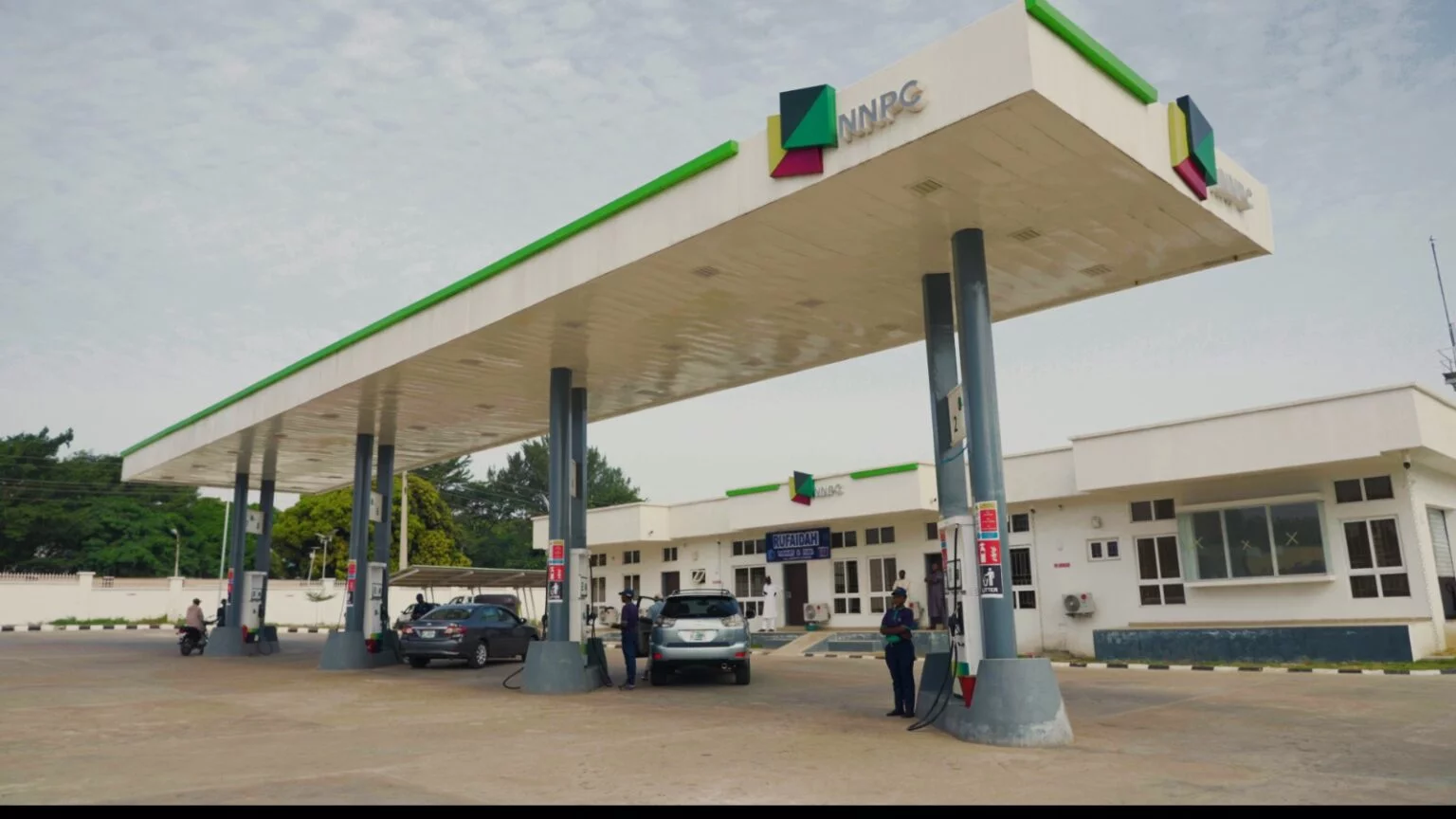
The Nigerian National Petroleum Company Limited (NNPC Ltd.) said it is activating multiple pathways aimed at transforming Nigeria into a global gas hub.
NNPC Ltd.’s Executive Vice President, Gas, Power & New Energy, Olalekan Ogunleye disclosed this on Monday, while speaking at the 2026 Gas Technology & Exhibition Conference (GASTECH), taking place in Bangkok, Thailand.
Ogunleye, who spoke on a panel themed: “The New LNG Order: Leadership Strategies for Energy Security and Growth” said as geopolitics, conflict and other factors continue to affect global energy supply and demand, Nigeria is leveraging its over 215 trillion cubic feet (tcf) of proven reserves to power domestic industrialization and expand export reach.
“Gas development and monetisation from Nigeria’s standpoint is a purely commercial play. NNPC Ltd. is implementing a Gas Master Plan (GMP) engineered as a gap-to-potential tool to move Nigeria from a 215tcf reserves position to above 600tcf,” Ogunleye stated.
He explained that the Company’s focus is hinged on reinforcing coordination, anchored on the Petroleum Industry Act (PIA), Decade of Gas Framework and the GMP, with the near-term target to ramp up national production of gas to 10 billion standard cubic feet per day (Bcf/d) by 2027 and 12 Bcf/d by 2030.
Ogunleye observed that Nigeria is already a reliable global supplier of gas on a major expansion drive, citing key LNG projects such as Trains 1-6 which produce 22 million tonnes per annum (MTPA) and has exported over 6,000 LNG cargoes since 1999, as well as Train 7 which is due for completion in 2027.
He said Nigeria’s geographical advantage (well-positioned for the Atlantic Basin and Asian markets) has placed the country as a strategic supplier to global markets, an advantage that is complemented by Nigeria’s substantial gas resource base and a national focus on gas development.
He said Nigeria’s domestic gas utilisation and gas for export are not mutually exclusive, as the country has adopted a dual pathway which leverages exports for foreign exchange earnings while advancing domestic gas utilization to create job opportunities, deepen energy security, and economic wellbeing.
Ogunleye said Nigeria has de-risked new LNG projects through a robust legal and regulatory framework supported by attractive fiscal incentives.
“With continued efforts towards stable security, competitive gas pricing and assured gas supply, there is no better time for investors and financiers to confidently participate in the development of Nigeria’s LNG projects,” Ogunleye concluded.
GASTECH is the world’s largest exhibition and conference focused on natural gas, LNG, hydrogen and low-carbon solutions. Now in its 54th edition, the conference brings together about 50,000 participants from over 150 countries ranging from energy experts, CEOs, policymakers, investors and technology leaders to discuss the future of energy security, LNG supply, infrastructure investment and decarbonisation.
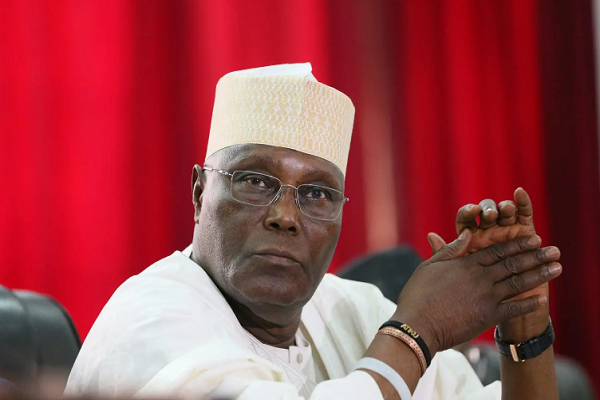
The Federal Government says the call by former Vice President Abubakar Atiku to bring back fuel subsidy will undermine the reforms already undertaken in the petroleum sector.
According to the Federal Government, it will also create legal and fiscal complications, and potentially discourage investment in domestic refining, including the Dangote Refinery and other modular refineries.
The government’s position was made known by Bayo Onanuga, the Special Adviser to the President on Information and Strategy.
The presidency was reacting to Atiku’s plan to bring back fuel subsidy if elected president come 2027.
Onanuga described the move as retrogressive, fiscally unsustainable and a product of “desperation to win the presidency”.
He said that Nigeria’s petroleum landscape had changed fundamentally since President Bola Tinubu announced the removal of petrol subsidy.
Also, the Minister of Finance and Coordinating Minister of the Economy, Taiwo Oyedele, said the removal of petrol subsidy had generated N15.8 trillion in resources for the federation between June 2023 and December 2025.
According to Oyedele, N5.4 trillion accrued to the Federal Government, while N10.4 trillion has been shared among states and local governments.
Tinubu in his response said that Atiku was ignorant of governance and economy.
The president spoke when he received Gov. Ademola Adeleke of Osun State at the State House recently.
He said that the plan by Atiku to reintroduce petrol subsidy was a demonstration of his high level of ignorance in governance and economy.
Atiku, a major contender for the country’s presidency, had promised to restore petrol subsidy if elected president.
Tinubu had announced the removal of fuel subsidy while taking the oath of office on May 29, 2023.
The decision saw the increase in pump price of petrol from below N200 to above N1.000, leading to increases in transportation, food, and other living costs.
Atiku, who is the presidential candidate of the major opposition party, the African Democratic Congress (ADC), had also supported the removal of petrol subsidy during the 2023 campaigns.
He has however, made the restoration of petrol subsidy a major part of his 2027 campaign, arguing that Nigerians have not seen sufficient benefits from the subsidy removal.
The former vice president alleged that the funds generated from the subsidy removal had not translated to food on the table of Nigerians as well as impacted on their lives.
On the oil and gas sector, he said that a new intervention should be designed around domestic refining, with support capped, budgeted and tied to verifiable production and consumer benefits.
According to him, every barrel of crude allocated under his proposal will be targeted and tracked to ensure that Nigerians benefit from the intervention.
Atiku said that his proposal was not a return to the opaque subsidy regime of the past, but a controlled mechanism that would support Nigerian refineries while ensuring that the benefits of cheaper crude feedstock were transmitted to consumers
A financial expert and President of the Capital Market Academics of Nigeria (CMAN), Prof. Uche Uwaleke, said that the debate should go beyond the immediate attraction of cheaper petrol.
According Uwaleke, Nigeria should be more concerned about the most economically sustainable way to use the country’s scarce public resources to improve the welfare of citizens over the long term.
He said that the old subsidy regime had become an enormous burden on public finances while also creating significant opportunities for arbitrage, smuggling, rent-seeking and other sharp practices.
Prof. Ken Ife, a prominent global financial analyst and development economist, faulted the political rhetoric of simply returning to a blanket fuel subsidy system to lower pump prices.
Ife said that Nigeria could not solve its deep-seated fuel and economic crises through artificial price-slashing at the point of sale.
According to him, returning to the old consumption-driven subsidy regime would re-introduce the distortions, inefficiencies, and massive fiscal leaks that historically crippled the country’s economy.
A civil servant, Ibrahim Abbas, said that Nigerians had expected that the removal of petrol subsidy would provide enough revenue to allow the Federal Government accelerate the development and upgrade of critical infrastructure to boost economic growth.
A retired civil servant, Sule Aliu, said that the economy had been particularly harsh on retirees since 2023 when petrol subsidy was removed. (NAN)




Abia Targets UNESCO Recognition of Heritage Sites
ShareThe Abia Government has elevated selected cultural and natural sites to state heritage and monuments as part of efforts to...
Nigeria Cuts Local Petroleum Refining Cost through Crude Swap Initiative
ShareThe Federal Government is firming an initiative that will boost oil and gas swap plan, embedded with a regulator-mandated netting...


NNPC Deepens Transformation Initiative to Turn Nigeria into Global Gas Hub
ShareThe Nigerian National Petroleum Company Limited (NNPC Ltd.) said it is activating multiple pathways aimed at transforming Nigeria into a...
Pi-CNG & EV Warns against Unauthorised, Illegal Conversions
ShareThe Presidential Initiative on Compressed Natural Gas and Electric Vehicles (Pi-CNG & EV) has warned motorists against the use of...


FIFA, CAF Begin Assessment of NFF Crisis
ShareFIFA and CAF officials on Monday began assessing the legal, governance, administrative and electoral implications of the developments within the...


UPDATE: Sacked Oba of Onise Risks Imprisonment as Contempt Proceedings Filed In High Court Against Him
ShareBy David Torough, Abuja The legal battle over the Onise of Ise stool in Lagos State has taken a new...


Livebridge Takes Healthcare, Relief to Over 1,000 Abuja IDPs
ShareBy Enuma Aghadinuno, Abuja Livebridge Properties and Investment Limited has extended medical and humanitarian support to more than 1,000 Internally...


2026 International Democracy Day: Group Tasks NASS on Special Seat Bill
ShareBy Laide Akinboade, Abuja League of Women Votersof Nigeria (NILOWV) on Tuesday, tasks the National Assembly on the quick passage...
Abia Targets UNESCO Recognition of Heritage Sites
ShareThe Abia Government has elevated selected cultural and natural sites to state heritage and monuments as part of efforts to...

TCN Announces Annual Maintenance at Ajaokuta Transmission Substation
ShareThe Transmission Company of Nigeria (TCN) has announced an annual preventive maintenance of its 330/132 Kilo Volt (kV) at Ajaokuta...